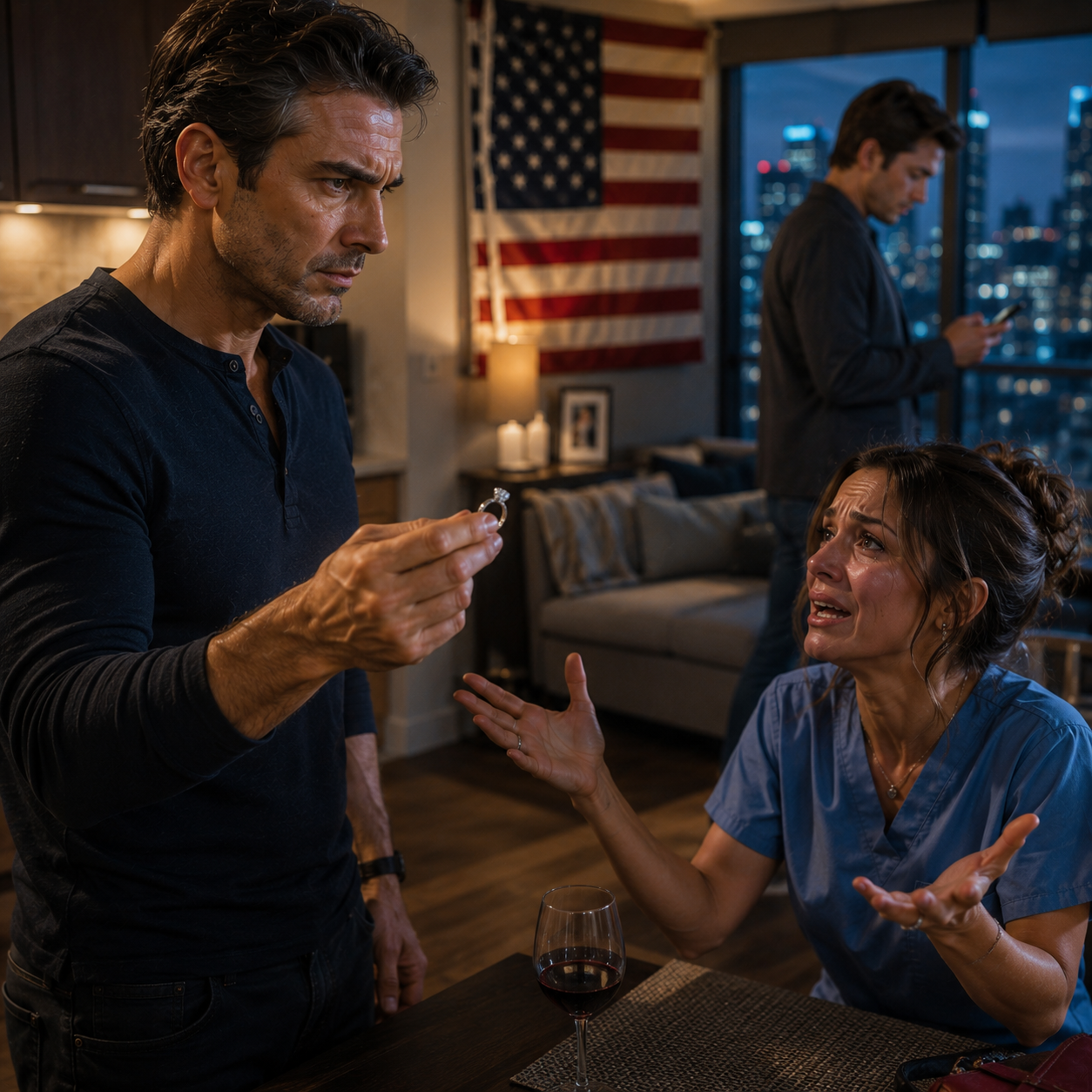
Warren was fifty-three years old and had reached a point in life where peace mattered more than excitement. He lived alone in a quiet apartment outside Denver, worked a stable management job for a regional supply company, played golf on weekends, and kept a small circle of close friends instead of chasing constant social noise.
After a difficult divorce in his forties, he promised himself one thing.
No more chaos.
No more relationships built on confusion and emotional games.
Then he met Autumn.
She was thirty-eight, confident, attractive, and worked as a dental hygienist at a private clinic across town. When they first started dating, Warren admired how calm she seemed compared to the instability he experienced in previous relationships.
For fourteen months, everything looked solid.
Autumn moved into his apartment.
They built routines together.
Weekend grocery trips.
Movie nights.
Coffee before work every morning.
Seven months earlier, Warren proposed with a one-carat white gold diamond ring that cost nearly two months of careful saving.
Autumn cried when he asked.
At least now he wondered whether those tears were ever truly about him.
From the beginning, Autumn described her ex-husband Holland as distant history.
According to her, the divorce happened years ago.
They barely spoke.
He moved away to Portland.
No lingering feelings.
No emotional complications.
Warren believed her because mature relationships require trust somewhere.
But trust quietly started cracking weeks before everything ended.
Autumn became distracted.
Phone always face down.
Random smiling at messages before locking the screen immediately.
Long showers carrying her phone into the bathroom.
When Warren asked whether something was wrong, she blamed stress from work.
Then Tuesday evening arrived.
Autumn walked into the apartment still wearing dark blue scrubs from the dental office and casually announced something that immediately changed the atmosphere in the kitchen.
“Holland wants to meet for coffee.”
Warren looked up slowly from the table.
“Okay.”
Autumn hesitated briefly.
“He wants to talk privately. You’re not invited.”
Silence filled the room instantly.
For several seconds Warren honestly thought she might realize how strange that sounded once spoken aloud.
She didn’t.
Instead she set down her purse calmly like this represented perfectly normal engagement behavior.
Warren stood slowly from the kitchen chair.
“Sure,” he answered quietly. “Then give me the ring back.”
Autumn blinked.
“What?”
“The ring,” Warren repeated while holding out his hand. “If you’re meeting your ex-husband privately and I’m specifically excluded, then you don’t need to wear my engagement ring while you do it.”
The expression on her face turned completely blank.
Like her brain temporarily stopped functioning.
Then irritation replaced shock almost immediately.
“Warren, that’s ridiculous.”
“No,” he answered calmly. “What’s ridiculous is your ex-husband suddenly reappearing after years and requesting private meetings with my fiancée.”
“It’s coffee.”
“It’s secrecy.”
Autumn rolled her eyes dramatically.
“You’re being insecure.”
“I’m being observant.”
That answer frustrated her immediately because calm responses left no emotional chaos for her to control.
Autumn sat at the kitchen table rubbing her temples like Warren exhausted her.
“Holland’s going through something,” she explained. “He reached out asking if we could talk.”
“What’s he going through?”
“I don’t know yet.”
Warren stared at her in disbelief.
“So your ex-husband contacts you after years of silence, refuses explaining why, asks for privacy from your fiancé, and you instantly agree?”
“Yes,” she answered. “Because I trust myself.”
That sentence bothered Warren deeply because trust inside relationships is supposed to involve both people, not just individual feelings.
Then another detail finally surfaced.
Warren asked how long Holland had been contacting her.
Autumn hesitated too long before answering.
“Six weeks.”
The kitchen suddenly felt colder.
“Six weeks?”
“It wasn’t serious.”
“You’ve been secretly messaging your ex-husband for six weeks while planning our wedding.”
“It wasn’t like that.”
Warren almost laughed hearing the predictability of the response.
Every dishonest situation somehow apparently became “not like that.”
Then more lies started unraveling.
Autumn originally claimed her marriage lasted five years.
Actually eight.
She claimed the divorce happened three years earlier.
Actually finalized only six months before meeting Warren.
One lie uncovered another until the entire relationship suddenly looked unstable.
Warren realized something horrifying.
He may have been rebound stability from the very beginning.
“You never got over him,” Warren said quietly.
“Yes I did.”
But her voice lacked conviction completely.
Then Warren asked the question that mattered most.
“If Holland asked to try again, what would you say?”
Autumn froze.
That silence destroyed everything more effectively than any confession ever could.
Finally she whispered:
“I don’t know.”
Those three words ended the engagement instantly.
Because after fourteen months together and seven months wearing his ring, she still did not know whether she chose Warren or her ex-husband.
That uncertainty told him exactly where he ranked emotionally.
Not first choice.
Safe choice.
Stable choice.
Backup choice.
And Warren reached an age where he refused becoming somebody’s backup plan.
“You can’t have both,” he said calmly. “You can’t explore feelings for Holland while keeping me waiting safely on the side.”
“That’s not what I’m doing.”
“It’s exactly what you’re doing.”
Autumn cried while slowly removing the ring from her finger.
The moment felt strangely quiet compared to how much future disappeared with that small movement.
“If I give you this,” she whispered, “we’re done.”
“If you meet him privately after six weeks of hidden messages,” Warren answered, “we’re done anyway.”
She dropped the ring into his hand.
Such a small object.
Such a massive symbol.
Thirty minutes later Autumn dragged two suitcases toward the front door.
Mascara smeared.
Voice shaking.
Before leaving, she asked one final question.
“If Holland wanted another chance… would that really matter more than everything we built?”
Warren stared at her quietly.
“It already does.”
She left without another word.
The apartment became silent immediately afterward.
Warren sat alone at the kitchen table turning the engagement ring slowly between his fingers while the entire relationship replayed differently inside his mind now.
The secret messages.
The emotional distance.
The sudden urgency around meeting Holland privately.
Looking back, the engagement probably ended weeks before Tuesday night.
Tuesday simply exposed it.
The next afternoon Autumn texted him.
“I met Holland. We talked for three hours. I need time to think.”
Warren read the message twice.
Then responded calmly.
“Take all the time you need. You’re single now.”
She called immediately afterward.
He ignored it.
Then more messages arrived explaining everything.
Apparently Holland’s second marriage collapsed.
Apparently he felt lonely.
Apparently they spent hours discussing their old marriage and unresolved emotions.
Warren found that detail especially interesting.
Because emotionally committed people do not spend three hours revisiting past intimacy with former spouses while engaged to someone else.
Autumn insisted it was closure.
Warren saw something different.
Exploration.
Testing possibilities.
Seeing whether old feelings still existed.
And she wanted the freedom to do all of that while safely keeping Warren available.
A few days later she returned for the rest of her belongings.
Warren boxed everything neatly and left it outside the apartment door before she arrived because he genuinely did not want another emotional conversation.
From the window he watched Autumn loading boxes into her car slowly while constantly glancing toward the apartment entrance hoping he might appear.
He didn’t.
Later that night another message arrived.
“I made a mistake. Holland and I realized we’re different people now. I want to fix things with you.”
Warren stared at the screen for a long moment.
The speed fascinated him.
Only days earlier she needed time exploring unresolved emotions with her ex-husband.
Now suddenly she wanted stability again.
“I’m not interested in being someone’s second evaluation,” he replied.
“Please,” she answered. “I was confused.”
That word irritated him immediately.
Confused people accidentally forget appointments.
They do not secretly reconnect with ex-spouses for six weeks while planning weddings.
Warren blocked her number after that.
Unfortunately her friends continued trying.
One afternoon her friend Piper called insisting Autumn felt devastated and simply made a mistake.
Warren responded quietly.
“No. She made a decision.”
That distinction mattered deeply to him.
Mistakes happen accidentally.
Autumn consciously chose secrecy.
Chose private meetings.
Chose emotional exploration with another man while engaged.
Those were decisions.
And decisions carry consequences.
Three months later Warren sold the engagement ring for half its original value.
The jeweler inspected it carefully before offering two thousand dollars.
Not ideal.
But somehow seeing the ring disappear permanently felt freeing too.
Around the same time he briefly dated a lawyer named Quinn.
Sharp mind.
Dry humor.
No emotional games.
During their second date Warren told her the entire story about Autumn.
Quinn looked genuinely stunned.
“She expected you to accept private meetings with her ex-husband while engaged?”
“Apparently I was insecure.”
“No,” Quinn answered immediately. “You were sane.”
That validation mattered more than Warren expected.
Because manipulative relationships slowly train people to distrust perfectly reasonable instincts.
Quinn and Warren eventually separated amicably after she reconnected with an old boyfriend from years earlier.
The irony almost made Warren laugh.
But unlike Autumn, Quinn handled everything honestly before crossing emotional boundaries.
That difference mattered completely.
Months later Warren accidentally saw Autumn again.
She sat inside a restaurant holding hands across the table with Holland.
His brother Felix noticed them too.
“Looks like she made her choice,” Felix muttered.
Warren shook his head calmly.
“She made it long before the coffee meeting.”
And strangely enough, seeing them together caused absolutely no pain.
Only clarity.
Because Warren finally understood something important about relationships at his age.
Love alone means nothing without certainty.
People who truly choose you do not secretly revisit old possibilities behind your back.
They do not need emotional experiments.
They do not need private closure meetings while wearing someone else’s engagement ring.
Most importantly, they do not keep you waiting safely while deciding whether somebody from the past feels more exciting.
Standing there outside the restaurant with cold evening wind moving through the parking lot, Warren realized he no longer felt angry at all.
Only peaceful.
Because loneliness hurts temporarily.
But becoming somebody’s backup option destroys dignity slowly over time.
And in the end, protecting that dignity turned out to matter far more than protecting the relationship itself.
![[FULL STORY] I Thought Stability Was Boring, Until I Lost the Man Who Loved Me for Real](https://social.rabedo.com/storage/thumbnails/1777636310_9f44d4f4-9313-42d4-aef4-029ea019d0c1.png)
![[FULL STORY] I Heard My Fiancée Admit She Was Marrying Me for Security… So I Canceled the Wedding Before Sunrise](https://social.rabedo.com/storage/thumbnails/1776933715_befdbf27-d635-426d-876f-01b7ee2771a7.png)


![[FULL STORY] My Wife Humiliated Me At Ladies’ Night, So I Sent One Note That Ended Our Marriage](https://social.rabedo.com/storage/thumbnails/1777822341_688042992_1930128904606942_4063681574136864482_n.jpg)