
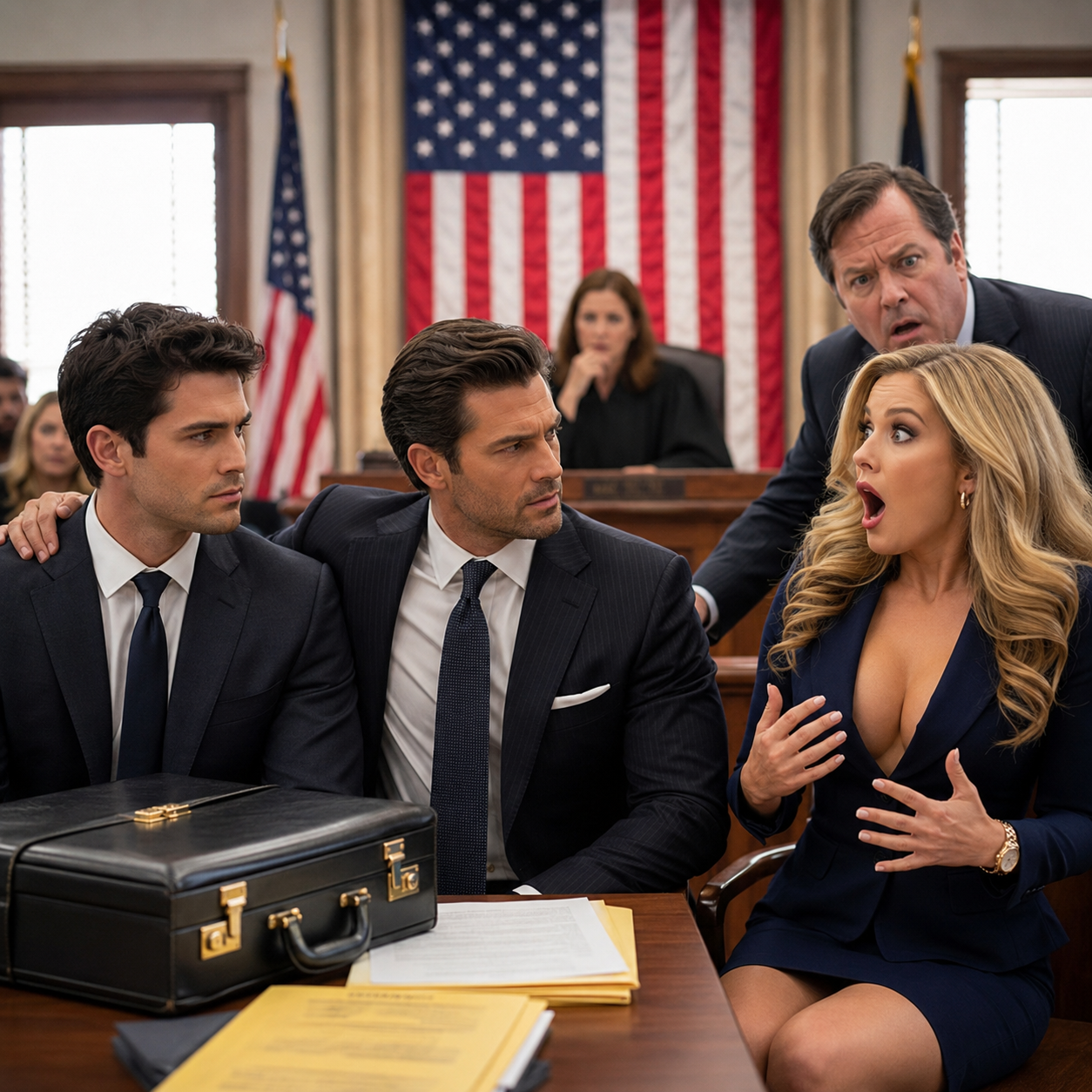
“It’s over, Tom. I’ve already spoken to a lawyer. These are my terms.”
Those were the first words Evelyn said to me after I’d spent ten hours in a woodshop teaching teenagers how to respect the grain of a piece of oak. I was covered in a fine layer of sawdust, my back ached in that familiar, satisfying way, and I was thinking about what to cook for dinner.
I didn't even have time to put down my keys.
Evelyn was sitting on the sofa we had picked out together three years ago. She looked immaculate—not a hair out of place, her silk blouse unwrinkled, her expression as flat as a sheet of sanded plywood. There were no tears. No "we need to talk" preamble. Just a manila folder on the coffee table and a look in her eyes that told me I was no longer a husband, but a line item she was looking to strike from her budget.
I stared at the folder. I didn't touch it. I didn't need to. I knew that folder contained the death certificate of my eight-year marriage.
"You’re not going to open it?" she asked, her voice tilting with a hint of practiced impatience.
"I think you're going to tell me what's in it regardless, Evelyn," I said, my voice sounding steadier than I felt. I walked to the kitchen, poured a glass of water, and leaned against the counter. I needed the distance. I needed the physical barrier of the kitchen island between us.
Evelyn leaned back, smoothing her skirt. "I want the house. I want seventy percent of the liquid assets. I want the SUV. And I expect spousal support for the next five years while I 'transition' my career."
I almost choked on the water. "The house? Evelyn, my grandfather left me the down payment for this place. I did the renovations myself. I built the deck, the kitchen cabinets, the built-ins in the library. This house is more me than it is us."
She gave me a thin, pitying smile. It was the kind of smile you give a child who doesn't understand why they can’t have candy for breakfast. "Tom, don't be emotional. It's a property. My lawyer, Alan Davis—he’s the best in the city, by the way—says that since we used marital funds for the mortgage payments and the materials for those 'projects' of yours, the equity is fair game. And frankly, with your salary? You couldn't afford the property taxes on this place, let alone the maintenance."
I felt a cold prickle of realization. This wasn't a sudden decision. This was a calculated strike. She had waited until the market peaked, until the renovations were finished, and until she had her "best in the city" lawyer lined up.
"And what about the savings?" I asked. "Seventy percent? We both contributed."
"I contributed more to the lifestyle," she snapped, her mask slipping for a fraction of a second. "I work in high-end real estate, Tom. I have an image to maintain. You... you teach kids how to make birdhouses. Let’s be realistic. You make enough to survive, but you certainly can’t afford a real legal battle. My attorney will bury you in motions and fees before you even get a chance to see a judge."
She stood up, picking up her designer handbag. "It’s better if you just accept the terms. Sign the papers by Friday, and I’ll let you keep your tools and your old truck. If you fight me, I’ll take those too."
She walked toward the stairs, then paused, looking back at me. "I’m staying at a hotel for the next few days. I expect you to have made a decision by then. Don't do something stupid, Tom. You don't have the resources to be difficult."
The front door clicked shut. Silence flooded the house, heavier than it had ever been.
I sat down at the kitchen table. For eight years, I thought I was building a life. I thought every cabinet I hung and every meal I cooked was a brick in a foundation of mutual respect. But Evelyn hadn't been building with me. She’d been observing me. She saw my quietness as a lack of ambition. She saw my hand-calloused fingers as a sign of a "simple" mind. She thought I was a man who could be intimidated into disappearing.
She wasn't just divorcing me. She was trying to strip-mine my soul.
I looked at the folder. Inside, the "terms" were even worse than she’d described. She wanted me out in thirty days. She wanted a portion of my modest pension. She wanted to leave me with nothing but my woodshop tools and a mountain of debt.
I spent that night in my workshop. I didn't build anything. I just sat on my stool, smelling the cedar and the linseed oil, feeling the weight of my own helplessness. She was right about one thing: I was a high school teacher. My savings were modest. A high-stakes divorce lawyer would cost more in a month than I made in a semester.
But as I looked at a photo on my workbench—an old, faded polaroid of two boys standing in front of a half-finished treehouse—a thought began to itch at the back of my mind.
It was a thought I had suppressed for five years. A thought wrapped in pride, anger, and the bitter memory of a funeral where no words were exchanged between the only two people left in the family.
I thought of Marcus.
Marcus Sterling. My older brother. The man who made a living out of being the most "ruthless" divorce attorney in the state. The man I hadn't spoken to since we nearly came to blows over our parents' estate.
Evelyn knew we were estranged. She’d been there for the final blowout. She’d even encouraged it, telling me Marcus was "toxic" and "greedy." She felt safe because she believed my pride was stronger than my survival instinct.
She thought I was alone.
I picked up my phone. My hands were shaking. I scrolled through my contacts, deeper and deeper, past coworkers and friends, until I found a number I had never deleted, despite telling myself a thousand times that I should.
I stared at the name: Marcus.
The clock on the wall ticked. 11:45 PM. Too late to call? Maybe. Or maybe, for a man like Marcus, the middle of the night was when the real work began. I took a deep breath, thinking of the way Evelyn had smiled at me—that cold, "I own you" smile.
I pressed the call button.
The ringtone felt like a countdown. One ring. Two rings. Three. My heart was thumping against my ribs like a trapped bird.
Then, the line picked up. Silence for a beat.
"Hello?" a voice rasped. It was deeper, sharper than I remembered.
"Marcus," I said, my voice cracking. "It's Tom."
There was a silence so long I thought the call had dropped. I could hear my own breathing, ragged and uneven. I was ready for him to hang up. I was ready for him to laugh. I was ready for him to tell me to go to hell.
But instead, Marcus said something that made the floor feel like it was shifting beneath my feet.
"I’ve been waiting for this call for five years, Tommy. Tell me who I need to destroy."


![[FULL STORY] I overheard my girlfriend calling me her "safe placeholder" while waiting for a better man, so I moved on with her sister.](https://social.rabedo.com/storage/thumbnails/1777305995_D4.png)
![[FULL STORY] She Chuckled: 'It's Amusing How You Get Envious When I Meet My Ex Perhaps You're Not Cut Out to](https://social.rabedo.com/storage/thumbnails/1777004023_T1.png)

![[FULL STORY] My Girlfriend Chose Lunch With Her Male Best Friend Over Picking Me Up From the ER](https://social.rabedo.com/storage/thumbnails/1777372317_60fa97b2-efb8-456b-a430-4b85f6d9f67b.png)