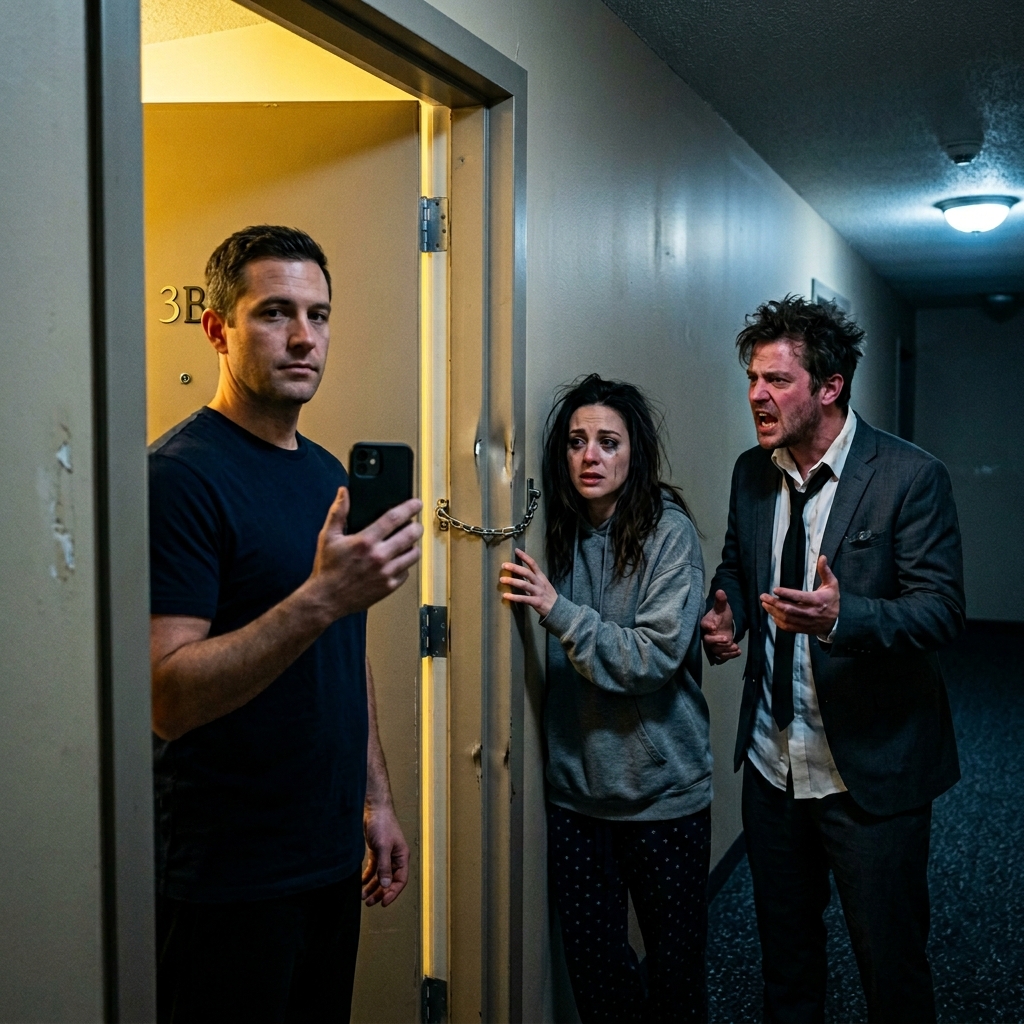

I still remember the way Ethan smiled when he said it.
He was sitting across from me in a mediation room, perfectly calm, hands folded on the table, voice soft and reasonable. Anyone watching from the outside would have thought he was the stable one. The patient one. The father simply trying to protect his child.
“Claire is a good mother,” he said, turning slightly toward the mediator, “but she’s emotional. She overreacts. She spirals. I don’t think that creates a stable environment for Lily.”
Then he looked directly at me.
“No judge is going to give full custody to someone who can’t control herself.”
I wish I could say I stood up and defended myself with strength. I wish I delivered some powerful response that silenced him. I didn’t. I sat there staring at the man I had been married to for fourteen years, and for one terrifying second, part of me wondered if he was right.
That is what emotional manipulation does to you.
It does not always arrive as screaming or threats. Sometimes it arrives as correction. As calm explanations. As someone telling you over and over that your feelings are proof you are defective, until one day you start apologizing for being hurt.
My name is Claire Donovan. I was forty-two when Ethan tried to convince a court that I was too unstable to raise our twelve-year-old daughter, Lily.
And for a while, people believed him.
Including me.
When Ethan and I first met, he seemed like everything I thought safety looked like. He was polished, confident, mature, and charming in that quiet way that makes people trust him immediately. He worked in medical device sales, wore tailored jackets, remembered everyone’s birthdays, and spoke with a steady voice that made every problem sound manageable.
My parents adored him.
My mother used to say, “Claire, that man knows how to take care of people.”
For years, I believed her.
From the outside, our life looked beautiful. A nice house outside Columbus, good schools, family vacations, coordinated Christmas cards, dinner parties, and smiling photos where everyone looked happy enough to convince strangers.
But photographs do not show what happens after the camera is put away.
They do not show the silence in the car.
They do not show the way a woman learns to measure her breathing before speaking.
They do not show the slow shrinking.
Ethan did not become cruel overnight. That would have been easier to recognize. Instead, he corrected me piece by piece.
“You’re remembering it wrong.”
“You always make things bigger than they are.”
“You’re too sensitive.”
“You get emotional, and then no one can talk to you.”
If I cried during an argument, he would sigh like I had disappointed him.
“See? This is exactly what I mean.”
So I learned to lower my voice. I learned to apologize quickly. I learned to rehearse difficult conversations before having them, because if my emotions showed, he would use them as evidence against me.
Little by little, I stopped trusting myself.
The real fear began when I saw it happening to Lily.
She was ten when I first noticed how much she had absorbed. One night at dinner, she spilled a little juice on the counter. It was nothing. Just a small orange puddle beside her plate.
Ethan exploded.
“Can you pay attention for once?”
Lily froze immediately.
Her shoulders pulled tight. Her face went blank. I recognized that expression because it was the same one I wore whenever Ethan’s mood shifted.
Later that night, while I tucked her into bed, she whispered, “Mom, why does Dad sound mad even when he’s talking normal?”
That question broke something in me.
Children know.
Even when adults pretend.
For the next two years, I became a full-time manager of tension. I predicted Ethan’s moods, softened his irritation, protected Lily from arguments, and tried to keep the house peaceful without letting anyone know I was constantly afraid of the next sharp comment.
He never hit us. That made everything harder to explain.
There were no bruises. No broken dishes. No screaming neighbors.
Just control.
He criticized how I parented, how I spent money, how I reacted, how I spoke, how I felt. In public, he joked about my “dramatic phases,” and people laughed because he smiled while saying it.
Once, after he disappeared for three hours during a barbecue and left me hosting alone, I got upset on the drive home. He chuckled and said, “You know everyone thinks you’re high-strung, right?”
I stared out the window the rest of the ride, unable to tell whether I was overreacting or finally reacting appropriately.
Then I found out about Vanessa.
It happened because Ethan left his smartwatch charging in the bathroom. A message flashed across the screen while he was downstairs showering after golf.
“Last night was worth the wait.”
No name.
No explanation.
But my body understood before my mind did.
When I confronted him, he did not even deny it. He looked annoyed, like I had interrupted something inconvenient.
“Her name is Vanessa,” he said. “And honestly, Claire, this marriage has been over for years.”
I laughed because it was such a cruelly convenient timeline. Apparently, our marriage had only become over once he found someone else.
He told me Vanessa understood him. Vanessa was calm. Vanessa was not exhausting.
Then he said, “You make everything emotionally unbearable.”
That sentence stayed in my head for months like poison.
The divorce began two weeks later.
At first, Ethan acted cooperative. He said we needed to handle things maturely for Lily’s sake. Then his attorney entered the picture, and everything changed.
His lawyer, Sheila Mercer, was sharp, expensive, and terrifyingly prepared. During mediation, she slid a folder across the table filled with screenshots from my old Facebook posts. Posts about anxiety. Posts about pandemic insomnia. Posts about motherhood feeling overwhelming sometimes.
Normal human struggles.
They tried to turn them into evidence.
Sheila said they were concerned about my emotional stability.
I felt sick.
“You’re using normal stress against me?” I asked.
Ethan sat beside her looking sympathetic, as if he had not spent years helping create that stress.
From that moment on, custody became a war over my emotions.
Ethan described me as unpredictable. Moody. Fragile. Too overwhelmed to provide stability. He brought up every time I cried, every panic-filled moment, every grief reaction, even photos of me crying outside my mother’s funeral.
He called it concern.
It was strategy.
Meanwhile, he moved into a luxury condo with Vanessa and reinvented himself online as Father of the Year. Museums with Lily. Brunches. Baseball games. Smiling captions about cherishing time with his daughter.
People loved the performance.
Lily did not.
She became quieter. Smaller. One evening she asked if she had to choose between us. I told her no, never. Then she stared at the floor and said, “Dad says you cry a lot because you can’t handle stress.”
My blood went cold.
Ethan was not just attacking me in court.
He was planting doubt in our daughter.
Three months into the custody battle, the court appointed a school counselor named Rebecca Nolan to evaluate Lily’s emotional well-being.
Rebecca was in her late fifties, calm and observant, with silver-blonde hair and the kind of steady presence that makes children feel safe. Ethan seemed confident around her immediately. He assumed anyone calm would side with him.
During my interview, I expected judgment. Instead, Rebecca asked questions no one had ever asked me gently before.
“How does conflict usually begin at home?”
“What happens when you disagree with Ethan?”
“How does Lily respond when there is tension?”
Halfway through, I started crying and apologized immediately.
Rebecca handed me tissues and said, “Claire, crying while discussing painful experiences is not instability.”
I almost broke apart right there.
For the first time in years, someone treated my emotions like evidence that I was human, not broken.
The evaluations lasted six weeks.
Then Lily’s teacher mentioned something that changed everything. Lily had been visiting the nurse’s office with stomach pain before weekends with Ethan. Four Fridays in one month.
Rebecca discovered the pattern and gently asked Lily why.
Lily broke down.
She told Rebecca, “Dad says Mom is unstable, and I need to watch her moods so she doesn’t fall apart.”
When I heard that, I felt physically ill.
Ethan had turned our child into an emotional guard dog against me.
That night I confronted him over the phone. I lost my temper for the first time in months.
“You are manipulating our daughter,” I said.
He laughed softly.
“See? This is exactly what I mean. You become hysterical instantly.”
Then he hung up.
Afterward, I stood in my kitchen shaking, and the worst part was that I questioned myself again.
Was I hysterical?
Had my anger proven his point?
That is how deeply gaslighting sinks in. It teaches you to doubt your own alarm bells.
A week before the custody hearing, my attorney called me into his office to read Rebecca’s report.
Ethan had spent months building a case that I was emotionally unstable.
Rebecca dismantled it line by line.
She wrote that Lily showed signs of emotional conditioning from her father. She described Ethan as image-conscious, emotionally controlling, and dismissive of normal emotional expression. She noted that Lily had begun monitoring my emotions because Ethan repeatedly suggested I was psychologically fragile.
Then I read the sentence that made me cry in my attorney’s office.
“The mother displays appropriate emotional responsiveness and consistent parental empathy. The father appears to pathologize normal emotional behavior in order to establish control dynamics.”
For the first time in years, someone saw the whole picture.
Not pieces.
All of it.
The custody hearing took place on a gray Thursday morning.
Ethan arrived in a navy suit, looking calm and confident. Vanessa sat behind him dressed like she was attending brunch. When Ethan glanced at me, he gave me that small sympathetic smile, the one that said he still believed he was the reasonable adult managing an unstable woman.
His attorney opened aggressively.
She described me as loving but overwhelmed. Emotional. Inconsistent. She referenced therapy, medication, crying during depositions, and anxious social media posts.
Then Ethan testified.
He sounded perfect. Controlled. Concerned. Heartbroken.
He said he only wanted what was healthiest for Lily. He called himself the stable parent. The dependable one. The organized one.
Every sentence felt polished.
Then my attorney called Rebecca Nolan.
The entire room changed when she sat down.
Rebecca did not sound emotional. She sounded certain. She explained Lily’s anxiety before visitation, her fear of disappointing Ethan, her hypervigilance, and her belief that my emotions were dangerous because Ethan had taught her to see them that way.
Then my attorney asked, “In your professional opinion, which parent demonstrates emotionally harmful behavior toward the child?”
Rebecca looked at the judge.
“The father.”
The courtroom went silent.
Ethan’s face changed for the first time.
Rebecca continued calmly. She explained that controlling people often frame themselves as logical while portraying others as unstable. She explained how someone can provoke emotional reactions and later use those reactions as proof.
Then she read from Lily’s counseling notes.
“Dad says Mom cries because she’s weak, and I need to help him keep her calm.”
I felt my chest collapse.
Then another line.
“If Mom gets upset, Dad says it proves she can’t handle life.”
Vanessa shifted uncomfortably behind him.
Ethan sat stiffly beside his attorney.
For the first time, he looked cornered.
Sheila tried to suggest Lily misunderstood him.
Rebecca did not waver.
“Children misunderstand isolated comments,” she said. “They do not develop sustained anxiety patterns from isolated comments.”
Then my attorney asked Rebecca to explain the difference between emotional instability and emotional suppression.
Rebecca said, “Healthy emotional adults cry under stress. They express pain. They seek support. Emotional suppression combined with control behaviors can be far more damaging within a family.”
Those words changed the air in the courtroom.
Ethan’s entire case depended on convincing the judge that emotions made me unsafe.
Rebecca showed that the real danger was his need to control them.
Then came the audio.
I did not even know Lily had recorded it.
My daughter had secretly captured Ethan talking during a drive home from dinner. His voice filled the courtroom speakers.
“Your mother falls apart over everything. Some people just aren’t mentally strong.”
Then Lily’s small voice asked, “Is Mom crazy?”
Ethan laughed softly.
“No, sweetheart. She’s just unstable.”
I started crying silently on the witness stand.
For one brief second, Sheila looked pleased, as if my tears helped her case.
Then Rebecca said calmly, “That response is entirely appropriate.”
I will never forget that.
Ethan began unraveling after that.
When questioned further, his calm mask cracked. He snapped that someone in the house had to stay rational. He admitted he believed “excessive emotionality” caused instability. When asked what counted as excessive, he looked at me and said, “Claire turns everything into a crisis.”
“Including your affair?” my attorney asked quietly.
Ethan’s jaw tightened.
Wrong move.
The final blow came when he denied ever speaking negatively about my emotional state to Lily.
My attorney played another recording.
Ethan’s voice again.
“You need to help Daddy stay patient with Mom because she gets irrational.”
This time, even Sheila closed her eyes.
She knew it was over.
After lunch, the judge gave her ruling.
I received primary custody.
Ethan was granted limited visitation, contingent on family counseling and a parental behavioral evaluation. The judge cited patterns of emotional manipulation toward both me and Lily.
Then she said something I will carry with me forever.
“Emotional expression is not evidence of parental instability. Weaponizing a child’s perception against the other parent is.”
Ethan’s face turned red.
Vanessa stared at the floor.
Outside the courthouse, Ethan cornered me near the parking garage.
“You made me look like a monster,” he hissed.
For once, I did not shake.
“No, Ethan,” I said. “You did that yourself.”
Then I walked away.
The aftermath was not simple, because healing never is. Ethan appealed twice and lost both times. Vanessa left him within the year. Apparently, once I was no longer available to absorb his control, she became the next target.
Lily started therapy regularly. Slowly, she became lighter. More talkative. More herself.
One evening, we were baking cookies when she accidentally dropped a whole bowl of flour across the kitchen. For a second, we both froze. Years of tension had trained us to expect anger.
Then Lily whispered, “Are you mad?”
I looked at the flour covering the floor, the cabinets, and both of our shoes.
Then I laughed.
Real laughter.
“No, baby,” I said. “It’s just flour.”
She laughed too.
And standing there in that messy kitchen, I realized peace does not always arrive loudly.
Sometimes peace is just nobody being afraid anymore.
A year later, I ran into Rebecca Nolan at the grocery store. I told her Lily was playing volleyball again and doing better, though some days were still hard. I admitted I still apologized too quickly when I cried.
Rebecca nodded and said, “That is often the final stage of control. When they no longer need to say it because you say it to yourself.”
She was right.
But the voice has grown quieter.
Last month, Lily turned fourteen. We celebrated at a small Italian restaurant with my parents and her two closest friends. Halfway through dinner, Lily stood up with her soda glass and said she wanted to make a toast.
She looked nervous, but she kept going.
“Thank you, Mom,” she said softly, “for teaching me that having feelings doesn’t make you weak.”
I cried immediately.
Mascara ruined. Nose red. Full emotional disaster.
And this time, I did not apologize.
Lily just hugged me while everyone smiled.
A few years ago, crying in public would have humiliated me.
Now it feels like proof that I survived.
Because Ethan was wrong.
My emotions did not make me unfit.
They helped me love my daughter through the hardest fight of our lives.
And in the end, the thing he tried to use against me became the very reason Lily knew she was safe.

![[FULL STORY] She Said, “I Need One Month to Act Like I’m on My Own Again. Don’t Make This Dramatic.” I Nodded, Changed My Address, and Made Sure Month One Was Also the Last One.](https://social.rabedo.com/storage/thumbnails/1777358593_A3.png)