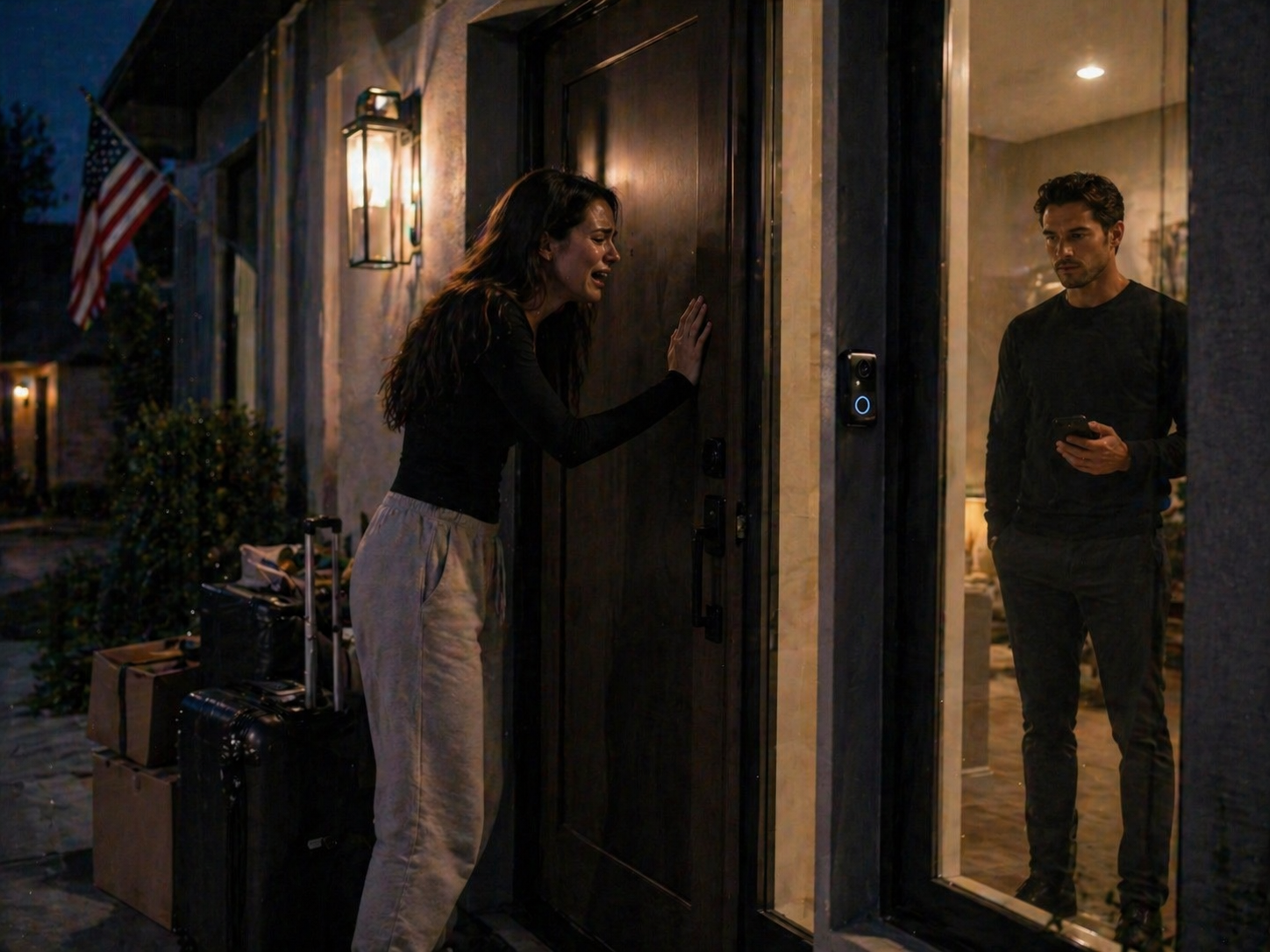
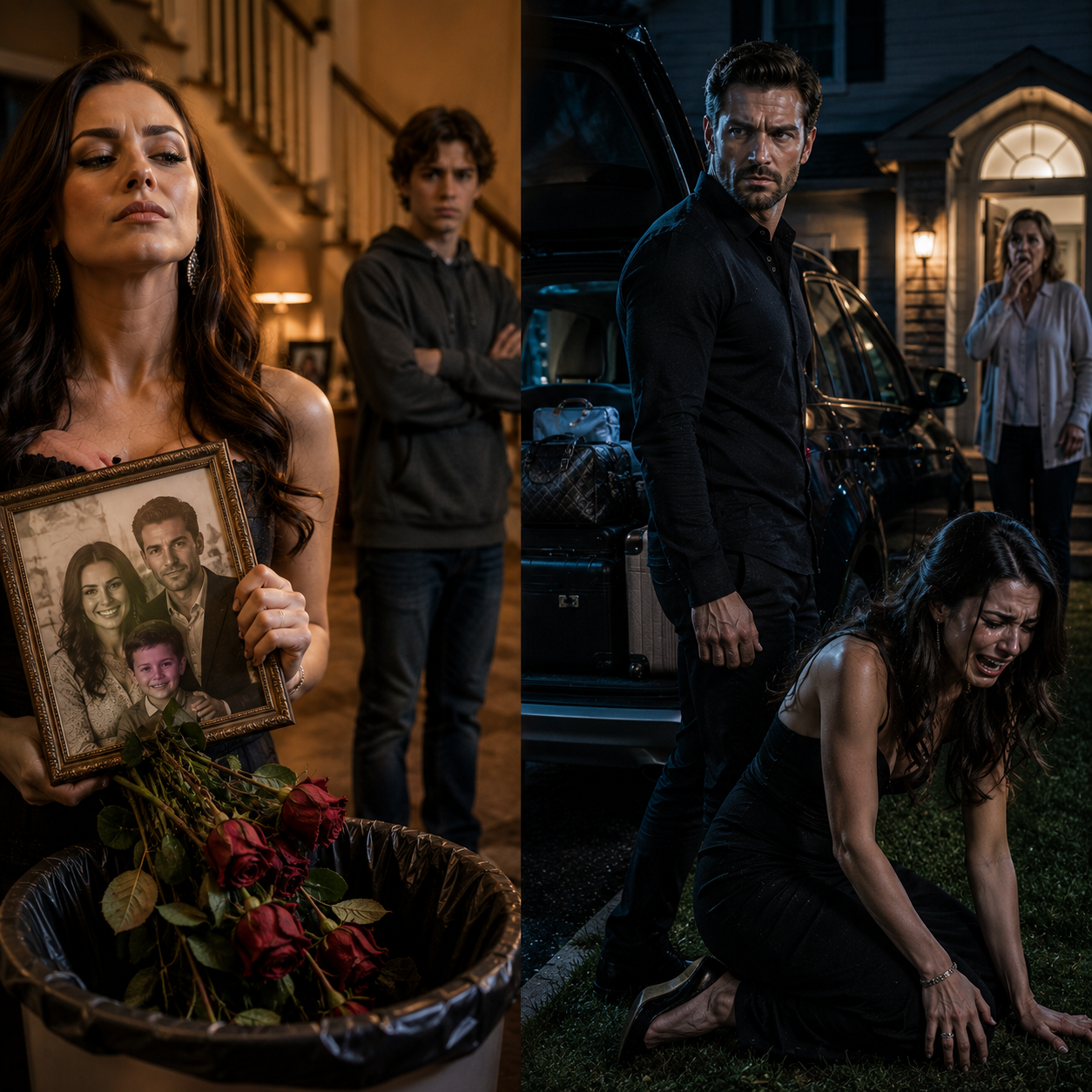
“I threw away the flowers your son bought for his mom’s grave. It’s weird that he still mourns her. I’m his mom now.”
My fiancée, Jennifer, said this while looking me straight in the eyes. She wasn’t even blinking. She didn’t look guilty. She didn’t look regretful. She looked like she had just told me she’d taken out the trash or changed the lightbulb in the hallway.
For a long second, the world went completely silent. You know that feeling when your brain just refuses to process a sentence because it’s too absurd to be real? That was me. I stood there in the kitchen, a glass of water in my hand, staring at the woman I was supposed to marry in less than two months.
Then, I spoke. My voice was lower than usual, dangerously calm.
“You’re right,” I said. “It is weird.”
Jennifer’s shoulders relaxed. A small, triumphant smile played on her lips. She actually thought I was agreeing with her. She thought she had finally "broken" me, or that I had finally seen the "logic" in her twisted world.
“I’m glad you finally understand, Daniel,” she said, reaching out to touch my arm. “It’s for the best. We need to start our own traditions without all that... baggage.”
I stepped back, her hand falling into empty air. I looked at her, really looked at her, and finished my sentence.
“It’s weird that you think throwing away an eleven-year-old boy’s flowers for his dead mother makes you anything close to a mom. It’s weird that you think you have any right to touch his grief. And it’s beyond weird that you thought I would ever let this slide.”
That was the moment I realized the woman standing in front of me was a stranger. And that was the moment I decided the wedding was over.
My name is Daniel. I’m thirty-eight, an architect. I deal with structures, foundations, and logic. If the foundation of a building is rotten, the whole thing will eventually collapse. I should have seen the cracks in my relationship with Jennifer sooner, but I was too busy trying to build a home for my son, Tyler.
Tyler is eleven. He’s a quiet kid, observant, with his mother’s eyes. His mother, Sarah, died four years ago. Cancer. It’s a cliché, isn’t it? The brave fight, the hospital bed, the final breath. But there’s nothing cliché about the way it hollows out your life. Sarah was my person. We were married for eight years, and every single day felt like a gift. When she left, the silence in our house was deafening.
Tyler was seven when it happened. He remembered enough to feel the loss every single day, but he was too young to understand why the world was so cruel. We went through the dark years together. Therapy, sleepless nights, the works. For two years, we didn’t live; we just survived.
Every Sunday, we had a ritual. We’d go to the cemetery. At first, I held his hand. As he got older, he asked for space. He wanted to talk to her alone. I’d sit in the car, watching him through the windshield—a small boy standing in front of a cold stone, clutching a bouquet of flowers. He bought them with his own allowance. He took it seriously. Sometimes roses, sometimes daisies.
Then came Jennifer.
She was thirty-four, a real estate agent. Smart, sharp, and seemingly kind. When we started dating two years ago, she seemed to respect our past. She didn’t flinch when I talked about Sarah. She was patient with Tyler. Or so I thought.
Looking back, it was like a slow-moving invasion. It started with the photos. We had a few pictures of Sarah in the house. Nothing overwhelming, just memories.
“Don’t you think it’s a bit much for Tyler?” Jennifer asked one evening, about six months after she moved in. We were looking at a photo of Sarah at the beach. “Constant reminders might be keeping him stuck in the past.”
“He’s not stuck,” I said firmly. “He’s remembering. There’s a difference.”
She dropped it then. But the "adjustments" continued. She’d suggest redecorating the living room, replacing the armchairs Sarah had picked out. She’d suggest Tyler spend less time at the cemetery and more time at soccer practice. It was always framed as "being helpful" or "moving forward."
I proposed four months ago. I wanted a family again. I wanted Tyler to have a stable home. He liked Jennifer—or at least, he was polite to her. They laughed together. She helped with his math homework. I thought we were okay.
But then, the Sundays changed.
Tyler started making excuses. “I don’t feel like going today, Dad,” he’d say. Or he’d go, but he wouldn’t bring flowers. His eyes were red, his voice small. I thought it was just a phase of grief. I thought he was growing up.
I had no idea that Jennifer was whispering in his ear every time I wasn’t looking.
The night of the "flower revelation" started like any other. I was in my home office when I heard Tyler crying in his room. Not a loud sob, but that muffled, heartbreaking sound of a kid trying to be invisible.
I went in and found him sitting on his bed. He told me everything. How Jennifer told him that I loved her more now. How she told him that calling her "Mom" would make me happy, and that by holding onto Sarah, he was making me sad.
And then, the flowers.
He had saved up for two weeks to buy a special bouquet of lilies—Sarah’s favorite. He had hidden them in his room, ready for Sunday. Jennifer found them. She told him it was a "waste of money on someone who can’t even see them." She told him he was being "morbid."
Then, she took them.
Tyler found them in the outdoor trash bin the next morning. They were crushed under a bag of kitchen scraps.
I felt a cold, sharp rage settle in my chest. I didn’t yell. I didn’t scream. I just went downstairs to find Jennifer.
After I told her the wedding was off, she didn’t apologize. She didn’t even look shocked for long. Instead, she crossed her arms and let out a short, mocking laugh.
“You’re really doing this?” she asked. “Over a ten-dollar bouquet of grocery store flowers? Daniel, be serious. You’re throwing away a future, a marriage, a partner, because I tried to set a boundary with a child who is clearly obsessed with a dead woman?”
I looked at her, and for the first time, I saw the sheer narcissism radiating off her. She wasn’t trying to be a mother. She was trying to be a replacement. She didn’t want to join our family; she wanted to colonize it.
“Pack your bags, Jennifer,” I said.
“It’s eleven o’clock at night!” she shrieked. “Where am I supposed to go?”
“I don’t care,” I replied. “Go to an open house. Go to a hotel. Just get out of this house before I lose my temper.”
She started crying then—the loud, performative sobs of someone who knows they’ve lost their leverage. She told me I was cruel. She told me I was choosing a "ghost" over a living, breathing woman.
I didn’t listen. I went upstairs, got her suitcases, and started throwing her clothes in. I wasn't being neat. I was being efficient.
As I was dragging the suitcases to the front door, Jennifer was on the phone. I assumed she was calling a friend or a sister. But as I opened the door to put her things on the porch, I heard her voice change. It went from hysterical to sharp and calculating.
“Fine,” she hissed, looking at me. “If you want to play the hero, Daniel, go ahead. But don’t think for a second I’m going quietly. Everyone is going to know exactly what kind of 'stable' man you are.”
I closed the door on her face and locked it. I went to Tyler’s room and held him until he fell asleep. I thought the worst was over.
But as I sat in the dark living room, my phone started buzzing. It was a message from my mother-in-law—Sarah’s mother. Then a message from my own sister.
Jennifer hadn't just called a friend. She had started a fire, and she was planning to let it burn our whole world down.
![[FULL STORY] My Wife Sat With Her Friends, Sneering, “We’ve Decided To Divorce You.” I Calmly Asked, “So None Of](https://social.rabedo.com/storage/thumbnails/1776411068_d9207cb1-ed7a-4191-9729-fce41ef461b7.png)
![[FULL STORY] My "Spiritual" Girlfriend Used My Money To Fund Her Secret Affairs So I Exposed Her Lies During Her Own Dinner Party.](https://social.rabedo.com/storage/thumbnails/1777001640_r16.png)
![[FULL STORY] My Girlfriend of Five Years Told Me: 'I'm No Longer Attracted to You, I Want an Alpha Male ' I](https://social.rabedo.com/storage/thumbnails/1777359728_B29.png)