
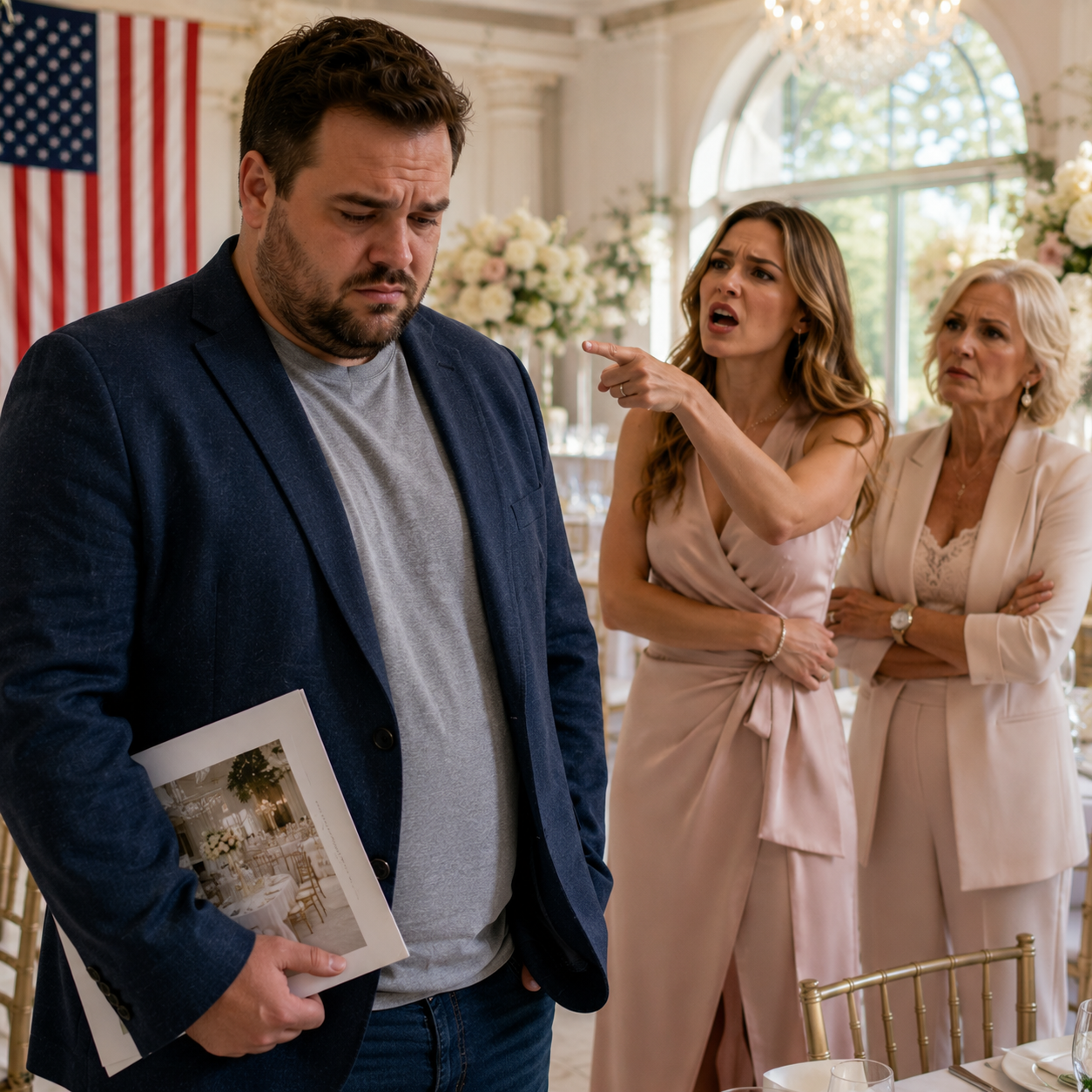
I found out I was banned from my sister's wedding exactly 4 weeks before the ceremony. And the reason she gave me was that I eat too much. And even though I've spent most of my life being the quiet, bigger sibling who let jokes slide to keep the peace, nothing prepared me for the level of humiliation I felt when she said that I wasn't welcome at an event I had fully paid for.
The truth is, I grew up as the easy target in my family. My sister was always the golden one. The one who got praised for everything. The one who learned how to weaponize attention and direct it like a spotlight. Sometimes on herself and sometimes on me when she needed contrast to look better. For as long as I can remember, family gatherings were moments where I braced myself for jokes about my size, about portions, about anything related to food.
And because arguing only made it worse, I learned to smile through everything and pretend nothing hurt. When my sister got engaged, she talked about her dream wedding like it was a royal coronation. And because she wanted it big and elegant, but couldn't afford it. She turned to me in the way people do when they know you've always been the one who gives more than they should.
She didn't ask directly at first. She hinted, talked about how tight money was, how important it was to have the wedding she imagined since childhood, how she wanted the family to be proud, and how she didn't want to settle. I knew what she wanted long before she said it. And because I had recently reached a stable point in my life financially, I offered to cover the main wedding expenses, thinking it would finally make me feel included and valued.
I paid for the venue, the catering, the cake, the decorations, the entertainment, the photographer, the videographer, everything except her dress. Every contract was signed under my name. Every deposit came from my account. Every meeting with vendors began with a handshake directed at me because I was the client. At first, it felt good to help, but the more involved I became, the clearer it became that my role was to pay and then disappear.
My sister and her mom shut down every suggestion I made. They talked over me, ignored me, and at times mocked my taste in front of the vendors. I remember a meeting with the decorator where I offered a neutral color palette, and they exchanged a look like I was a child interrupting adults. The decorator tried to be polite, but it was obvious she followed whatever my sister demanded.
And even though I was the one paying her, I still felt like I wasn't allowed to speak. Every meeting went that way. I became the wallet, not the brother. A few times, vendors asked me questions directly, and my sister would answer for me as if my opinion didn't matter, always adding some passive comment that made everyone laugh at my expense.
It was the same pattern I grew up with, just dressed up in wedding planning. But I kept telling myself this was temporary. That after the wedding, everything would calm down, that I was doing a good thing, that family was supposed to help each other. Then one afternoon, exactly 4 weeks before the wedding, my sister informed me calmly, casually, that she had decided I shouldn't come.
She said it wasn't personal, that it was for aesthetic reasons, that I take up too much space, and that she didn't want me drawing attention or making the photos look off. She said it like she was discussing table linens, not cutting her own brother out of an event he had fully funded. I didn't respond much. It was the kind of pain that goes beyond anger, the kind that sinks deep because it confirms everything you feared was true.
I sat in my apartment staring at the contract folder and finally saw things clearly. They didn't want me there, but they had no issue using my money. They didn't value me, but they valued what I provided. They didn't see me as part of the picture unless my absence made the picture look better.
For the first time, I allowed myself to feel the full weight of that realization instead of hiding behind excuses. And underneath the hurt, something else took shape, not rage, not desperation, something colder, something sharper, a clarity I had never felt before. I thought about how often my sister had embarrassed me, how often she had turned me into the punchline, how often she had treated me as lesser because she thought I would never fight back.
how many times I had let it happen. I thought about every meeting where she dismissed me. Every moment she acted like the wedding belonged solely to her. Every time she pretended I wasn't the one paying for the entire production. And somewhere between those thoughts, a new idea formed. Not out of spite, but out of a simple, undeniable truth. The wedding wasn't hers.
It was mine. Every vendor, every reservation, every legally binding detail, everything belonged to me. If they didn't want me at the wedding, then they didn't deserve the wedding they imagined. I didn't want to cancel everything that would make me the villain in the story. She would spin for the family.
She would cry, twist the truth, and turn herself into the victim. I didn't want that. I didn't want drama. I wanted consequences, real ones, the kind people learn from. The kind that leave a message carved deep enough that it never fades. I didn't know the details of my plan yet, but I knew one thing with absolute certainty. The wedding would go forward exactly as scheduled, just not the way she pictured it.
If she wanted to treat me like a joke, then she would learn what it felt like when the joke became the entire show. And for the first time in my life, I felt something I never felt around my family. Control, quiet, steady control. The kind that doesn't need to shout, the kind that waits, the kind that plants. And as I gathered the contracts into a neat stack, the beginnings of the circus took shape in my mind.
The days after my sister banned me from the wedding unfolded with a strange cold clarity, and instead of breaking down the way she probably expected, I found myself moving through each morning with a focused stillness, like a storm gathering strength far from land. I pulled out the contract folder, spread every document across my kitchen table, and read them, not as the brother who had volunteered to help, but as the sole client who had paid for everything.
Each contract confirmed the same truth. The wedding was legally under my name. I wasn't an accessory. I wasn't a side character. I was the foundation. If I wanted to change the theme, the schedule, the decor, or even the entertainment, the vendors were obligated to follow my instructions. My sister never bothered to check the fine print because she assumed I would always stay quiet and compliant.
But this time, I wasn't doing anything out of emotion. I wasn't lashing out. I was acting with the same systematic precision she used to manipulate and humiliate me. I spent the first week making no changes at all. I let the silence build. I responded to her and her mom with short, neutral messages whenever they sent updates about seating charts or dress fittings.
And each time I read their words, I felt less connected to them and more connected to the understanding that my part in this family had always been conditional. On the 12th day after the ban, I decided it was time to act. Not with anger, but with intention. I began by contacting each vendor one by one, identifying which services allowed for creative modifications under the existing payment package.
I learned the venue allowed full theme customization as long as it didn't require structural changes. I learned the decorator had an optional premium entertainment theme upgrade intended for corporate events and children's parties, but legally available for any booking. I learned the catering package included novelty stations that could be swapped in without additional charges.
Everything aligned too perfectly, as if the universe had spent years watching my sister make me the family joke and now placed every tool for poetic payback directly into my hands. The first real change I made was to the decorations. I submitted a full theme revision through the online vendor portal and approved a complete redesign using a bold red and yellow palette based on classic circus tents.
Giant striped drapes would hang from the entrance. The aisle would be lined with oversized carnival style arches. Balloon clusters shaped into animals would replace the delicate floral arrangements my sister had obsessed over for months. I approved an inflatable elephant to stand near the photo area. A towering figure that looked whimsical but completely real within the boundaries of the contract.
No one questioned me because I was the signatory. Days later, I reached out to the entertainment vendor and selected an option listed as family-friendly character host. Essentially, a professional clown who acted as an MC for events. This wasn't the creepy movie kind of clown. This was the kind who wore bright colors, did juggling tricks, handed out balloon animals, and guided guests through activities.
According to the vendor, he specialized in managing chaotic crowds, and could keep energy high throughout the event. I approved him as the primary MC for the reception, noting that he would be leading the grand entrance and assisting with timeline cues. Then I turned to the catering company. Our original menu was a multi-course plated dinner with elegant presentations, but the contract allowed me to switch to interactive food stations as long as the cost stayed equivalent.
So, I replaced the plated dinner with carnival style stands, cotton candy towers over 6 ft tall, popcorn machines with branded bags, pretzel bars, mini corn dog trays, sliders, nacho fountains, and novelty drink dispensers that lit up with rotating LED colors. There would still be full meals, but the entire layout was intentionally chaotic.
Oversized plates with tiny bites, tiny plates with oversized portions, everything designed to feel slightly disorienting to anyone expecting refinement. I added a face painting corner for kids, a caricature artist who created exaggerated portraits, and a stilt walker who would wander the crowd during cocktail hour. Each addition fell within the optional entertainment services section, and every vendor accepted the changes without hesitation.
The circus wasn't just a theme anymore. It was a system, a structure, a mirror held up to a family dynamic where I had always been the clown they laughed at. Now the circus belonged to me. Through all of this, my sister had no idea. She was busy posting filtered photos of her dress fittings, arranging pretend brunches with her bridal party, and acting like she was directing a royal event.
Her confidence made my silence even more satisfying. She didn't suspect anything because she never believed I was capable of pushing back. My brother was the only one who sensed something was happening. He kept checking on me, not out of suspicion, but concern. I didn't give him the details, just told him I was handling things and that everything would make sense soon.
The second week into the planning, I received confirmation from the venue coordinator that the circus themed decor had been approved and would be installed the day before the wedding. The coordinator's tone was neutral, not excited or confused. Because for her, this was just another event, another theme, another paying client exercising their rights.
That neutrality strengthened my resolve. I wasn't doing anything wrong. I was simply using what I rightfully controlled. The third week, the clown MC called to introduce himself. His voice was bright and enthusiastic, describing the performance style he typically used at large gatherings. I didn't need to provide many instructions.
His presence alone would shatter the illusion of elegance my sister tried to craft. The fourth week approached quickly and by then everything had been updated, confirmed, scheduled and locked in. Vendors had received the new theme packets. The venue had set aside storage areas for the new decor. The entertainer roster had been updated.
The catering department had ordered the materials for the novelty stations. The circus wedding was fully built, entirely legal, and unstoppable. My sister still posted daily countdown updates like nothing was changing. She had no idea her elegant white and gold dream wedding was gone. She had no idea that guests would walk into a circus tent aesthetic instead of a floral archway.
She had no idea that children would run around with painted faces while an inflatable elephant towered in the corner. She had no idea that a stilt walker would greet guests during cocktail hour. She had no idea that her grand entrance song had been replaced with an upbeat circus march the DJ legally listed as festive walking Q.
She had no idea that her wedding would become a public spectacle. Not because I sabotaged it, but because she removed the only person who had the power to stop it. I wasn't nervous. I wasn't scared. I wasn't second-guessing anything. The truth was simple. She didn't want me at the wedding, but she wanted everything I provided.
Now she could have one without the other and she would learn the cost of that decision. On the night before the wedding, I sat in my apartment feeling an unfamiliar sense of balance. Not pride, not joy, not excitement, just the deep understanding that this time I hadn't let myself get pushed aside. This time I had given the family exactly what they always expected from me, a show.
Except this time, they weren't going to laugh at me. They were going to face the circus they created. The morning of the wedding arrived with a calm that felt almost detached from the chaos I knew was about to unfold. And as I sat in my apartment drinking coffee, I felt none of the emotions people expect before a major confrontation.
No nerves, no guilt, no excitement, just a steady awareness that the day had finally come when the balance in my family would shift forever. I didn't plan on going to the venue. I had no reason to attend the spectacle I designed because the circus wasn't for me. It was for the people who had turned me into a lifetime punchline and believed I would simply keep enduring it.
So instead, I stayed home checking my phone only when it buzzed with updates from my brother, who didn't know the details of what I had done, but sensed enough to understand that something unusual was happening. His first message was short, describing how guests walking into the venue stopped in their tracks as the automatic doors opened and revealed the transformation I had orchestrated.
Massive red and yellow circus drapes framing the entrance like a carnival gate. Balloon sculptures shaped like animals towering above the check-in table. A stilt walker greeting people with slow exaggerated waves and bright lights bouncing off striped decor that covered every wall. My brother described the adults as visibly stunned, exchanging confused glances as they tried to understand if they were in the wrong building.
while children rushed past them with wide eyes, instantly drawn to the cotton candy towers and popcorn stands glowing under carnival bulbs. The decor alone shattered every expectation my sister had cultivated for months. But the real chaos began once the clown MC appeared, guiding guests through the room with exaggerated gestures, juggling props between introductions and directing people toward the fun stations.
My brother wrote that older relatives were speechless, whispering among themselves, trying to figure out when the theme had changed and why the bride hadn't mentioned anything about it. Some guests even laughed awkwardly, assuming my sister must have chosen this intentionally, which only deepened their confusion when her bridal party arrived, looking horrified and utterly unprepared for what they walked into.
My sister's entrance, originally planned to classical music, was replaced by a bright circus march that echoed through the speakers with a dramatic crescendo. And although I wasn't there to witness it, my brother's description painted the scene with perfect clarity. The bride standing frozen at the doorway, her dress clashing violently against the chaotic colors, her expression shifting from confusion to disbelief to outright rage as guests turned to look at her, unsure whether to clap, laugh, or pretend nothing was wrong. The groom
stood beside her, equally speechless, as the clown entertainer attempted to hype up the crowd, unaware that he was unintentionally worsening the situation with every joyful gesture. Then the realization began to spread through the room like a slowmoving wave. Guests whispered to each other, questioning how such an extreme theme shift could happen so suddenly.
My brother wrote that he overheard several relatives questioning whether the bride had approved any of this. And when no one could defend the choices, the attention naturally shifted to the one detail everyone remembered. I was the one who paid for everything. It didn't take long before people started asking why the person funding the event wasn't present.
And that was when the truth finally came out. Not through confrontation, but through simple deductive reasoning that even my sister couldn't silence. Relatives pieced together the timeline. The elegant wedding she claimed she planned had required no payments from her. She had bragged that everything was taken care of.
And when someone asked directly why I wasn't there, the bridal party's awkward silence exposed the truth more effectively than any argument could. Once guests understood that I had paid for the entire wedding and that I had been banned because the bride found me unpleasant for photos, everything flipped. Their shock turned from the decor to the behavior of the couple.
My brother wrote that several relatives confronted the bride privately, not yelling, but speaking firmly, saying things like, "It was disgraceful to exclude a sibling who had funded the entire day, that using someone's money while erasing them was cruel, that her actions embarrassed not just herself, but the entire family.
" The groom's family, who had believed the wedding was a reflection of class and elegance, were furious, realizing that the people they trusted had built the entire event on lies and entitlement. Meanwhile, the circus atmosphere only intensified the humiliation. The clown MC announced timeline cues with cheerful enthusiasm.
Oblivious to the disaster unfolding around him, the caricature artist created exaggerated portraits of guests who looked increasingly uncomfortable. Children kept running around with painted faces, sticky cotton candy hands, and balloon animals bouncing behind them. Adults tried to maintain polite composure, but couldn't hide their shock as they navigated through carnival stations instead of the refined dinner they had expected.
The inflatable elephant near the photo booth became a running joke among guests. A silent reminder that the entire wedding had been transformed into a spectacle the bride could no longer control. My brother wrote that at one point a relative loudly commented that the entire circus theme made more sense than the behavior of the bride.
And although no one laughed, the message cut through the room like a blade. And yet, despite their shock and discomfort, not a single guest left. My brother said the consensus was simple, leaving would disrespect me, the one who paid, the one who had been excluded unfairly, the one who had every right to reshape the wedding however I wanted.
They stayed because walking out would send the message that the bride and groom were the victims, and no one supported that narrative anymore. Throughout the reception, the bride tried to regain control, but it was impossible to do so in a room filled with circus props, carnival food stands, and entertainment designed for chaos.
Guests avoided her, not out of loyalty to me, but out of disappointment in her. By the time the night ended, the couple stood alone in the center of their own wedding, surrounded by decorations they never chose, judged by people they had hoped to impress, overshadowed by their own cruelty. When my brother finally visited me afterward and recounted the entire day, I felt no triumph, no smuggness, no celebration. What I felt was closure.
Pure, final, irreversible closure. The circus wasn't revenge for revenge's sake. It was the natural result of a lifetime spent being treated as less. As if my presence was optional, but my generosity was mandatory. The guests stayed for me. They supported me. They saw the truth. And my sister for the first time faced the consequences of her entitlement in front of everyone she wanted to impress.
I didn't ruin her wedding. I simply gave her the show she created. And when the night ended, I realized something simple and freeing. The circus wasn't my humiliation. It was my liberation. What do you think about this story? Let me know in the comments. Drop a like and don't forget to subscribe for more real life stories.


![[FULL STORY] She Chose Her Ex Over Me — So I Left, Moved Overseas, and Never Looked Back](https://social.rabedo.com/storage/thumbnails/1776618643_649d24e6-46a0-4d02-83eb-b1087ed5d7ad.png)

![[FULL STORY] My Girlfriend Wanted an Open Relationship — So I Chose Myself Instead](https://social.rabedo.com/storage/thumbnails/1776496858_667169453_1909842623302237_1626884283952544409_n.jpg)