

"I never thought I would be the kind of man who needed a prenup. That always sounded like something cold people did before a wedding, like they were already planning the divorce before they even said their vows. But as it turned out, that piece of paper was the only thing standing between my life’s work and a woman who wanted to burn it all down for a man she met six months ago."
Let’s get one thing straight from the beginning: my name is Adam. I am thirty-five years old, and I am a structural engineer who transitioned into running my own commercial construction and design firm. If my job has taught me anything, it’s that structures don’t collapse overnight. A bridge doesn't just snap into two pieces without warning. Before the catastrophic failure, there are always micro-fractures. There are tiny, invisible fissures in the concrete, hidden stress points that look perfectly fine from a distance until the weight of reality presses down on them.
My marriage to Olivia was a masterclass in hidden structural failure.
When Olivia and I got married five years ago, I was head over heels for her. I believed in us with the kind of stupid, blind confidence that makes a man sign anniversary cards like forever is a legal guarantee instead of a fragile hope. She was twenty-seven at the time, an aspiring interior designer with a magnetic personality and an eye for luxury that I found deeply attractive. I was a guy who spent my twenties living on cheap coffee, missed birthdays, late nights in an office with no heat, and payroll weeks where I literally paid my employees before I paid myself. My company wasn't just a source of revenue. It was my youth. It was every Saturday night I spent staring at blue prints while my friends were out at bars. It was my sweat, my risk, and my pride.
When we got engaged, my corporate attorney and longtime mentor, Martin Hale, sat me down in his smoke-stained office downtown. He didn't mince words.
"Adam, look at me," Martin said, sliding a thick manila folder across his mahogany desk. "I’m not saying Olivia doesn't love you. I’m saying that love is a chemical reaction, but marriage is a financial contract. I have seen too many good, hardworking men walk into a courtroom with an open heart and walk out with an empty bank account, a liquidated business, and a stranger deciding how much their own life's work is worth. Sign the prenup."
"Martin, it feels wrong," I muttered, looking at the draft. "It feels like I'm predicting we won't make it."
"No," Martin replied, his voice deadpan. "It’s like putting a seatbelt on. You don’t put it on because you plan to wrap your car around a telephone pole on the way home. You put it on because other drivers are reckless. Don’t confuse romance with stupidity."
When I brought the document home, Olivia barely even glanced at it. She was sitting at the kitchen island, eating takeout noodles from the carton while making a digital mood board for our future house. She skimmed the pages, gave me a dazzling smile, and signed it right there next to the toaster.
"This is just lawyer stuff to protect the firm before we got married, right?" she asked, laughing casually.
"Basically," I said, squeezing her hand. "It just keeps the business separate so my partners and stakeholders don't get spooked. It keeps things clean."
"Good," she murmured, kissing my cheek. "Because what’s yours is yours, and what’s mine is mine anyway. We are building our own future."
That wasn't a lie, exactly. It did keep things clean. It just didn't keep things painless.
What Olivia didn't pay attention to—the pages she flipped through with complete boredom—was a specific clause that Martin had practically forced into the contract. The infidelity clause. It was written in plain, brutal, unforgiving legal prose. It stated that if either spouse committed verified, court-admissible adultery, the cheating party would completely forfeit any claim to marital asset splits, lump-sum distributions, or spousal support. They would walk away with their personal belongings, a baseline pre-agreed moving allowance, and absolutely nothing else.
At the time, I felt a knot of guilt in my stomach just reading it. Olivia looked so innocent under the warm kitchen lights, complaining about fabric swatches and color palettes. I remember thinking, I will never, ever need this clause. Olivia is my rock.
For the first three years, our life was everything I had ever wanted. As my firm grew, taking on multi-million dollar commercial contracts, our lifestyle elevated. I wanted Olivia to have the absolute best. I took over the entirety of our financial burdens. I paid the heavy mortgage on our four-bedroom home, the leases on our vehicles, our international vacations, the corporate events, the high-end health insurance, and her personal credit cards.
Olivia’s interior design business was more of a hobby than a career. She had a few small residential clients here and there, but mostly she focused on "networking" and "building her luxury brand aura" on Instagram. Her income was sporadic and barely covered her own designer shoe habit. I didn't care. I loved being the provider. When she told me she needed a high-end office setup downtown to impress wealthy clients, I signed the commercial lease and paid for the Italian marble desks without blinking. I thought I was investing in my wife’s dreams.
Then, around our fourth anniversary, the structural shifts began.
It didn't start with a dramatic confession or lipstick on a collar. It started with a subtle change in atmospheric pressure. Olivia became fiercely protective of her phone. For three years, our devices had lain face-up on the coffee table, completely unlocked. Suddenly, her screen was always turned downward. She implemented a new, complex passcode. If I walked into the kitchen while she was typing, her thumb would instantly hit the lock button, her expression freezing into a practiced, casual smile.
"Who's texting so late?" I asked one evening as her phone buzzed at 10:30 PM.
"Oh, just a new client," she said smoothly, tossing the phone into her purse. "A very demanding residential project in the historic district. She likes to text when she gets inspiration. You know how these creative types are."
"Right," I murmured.
But my engineering brain doesn't ignore anomalies. Then came the wardrobe changes. Olivia started buying incredibly expensive, revealing cocktail dresses and delicate gold jewelry that did not show up on our shared credit card statements. When I questioned her about a stunning diamond tennis bracelet on her wrist, her eyes didn't even flicker.
"I did a trade-of-services with a local luxury boutique owner," she said, adjusting the clasp. "I designed her showroom storefront, and she compensated me in jewelry. It’s called industry bartering, Adam. It helps my portfolio."
The first real crack—the one that shattered my denial completely—happened on a rainy Thursday night.
Olivia walked through the front door at nearly 11:45 PM. She smelled strongly of a heavy, woody men’s cologne and a vintage wine I knew she didn't buy. She was wearing a black satin backless dress, her hair slightly damp despite the umbrella in her hand. I was sitting at the dark kitchen island, a single laptop screen illuminating my face.
"Hey," I said, my voice quiet in the empty house. "How was the consultation?"
She didn't even look startled. That was the most terrifying part—her complete, unbothered composure. "Ugh, exhausting," she sighed, slipping off her designer heels. "The client kept me at the bistro downtown for three hours arguing over mid-century modern layouts. My brain is fried."
"Which restaurant did you go to?" I asked casually.
"The Old Clover Tavern on 4th Street," she replied, walking toward the bathroom. "The ambiance was nice, but the service was incredibly slow."
I sat completely frozen in the dark. My fingers hovered over the keyboard.
The Old Clover Tavern on 4th Street had been completely gutted by a structural fire six months prior. My own firm had bid on the reconstruction contract. The building was currently boarded up with plywood, surrounded by chain-link fences and hazard tape.
I looked up at the empty hallway where her perfume still lingered in the air. My heart felt like it had been dropped into a bucket of ice water, but my mind—the cold, calculating part of me that manages multi-million dollar structural risks—instantly took the wheel. I didn't storm into the bathroom. I didn't scream. I didn't throw her clothes out the window.
I closed my laptop, took a deep breath, and realized that my marriage was no longer a sanctuary. It was a crime scene. And if I wanted to survive the collapse, I needed to stop acting like a heartbroken husband and start acting like a man with everything to lose.
The next morning, I made a phone call to a private investigator recommended by one of my corporate partners. But as I sat across from him in a quiet diner, listening to how he operated, I had no idea that the rabbit hole Olivia had dug was far deeper, and far more expensive, than a simple secret romance...


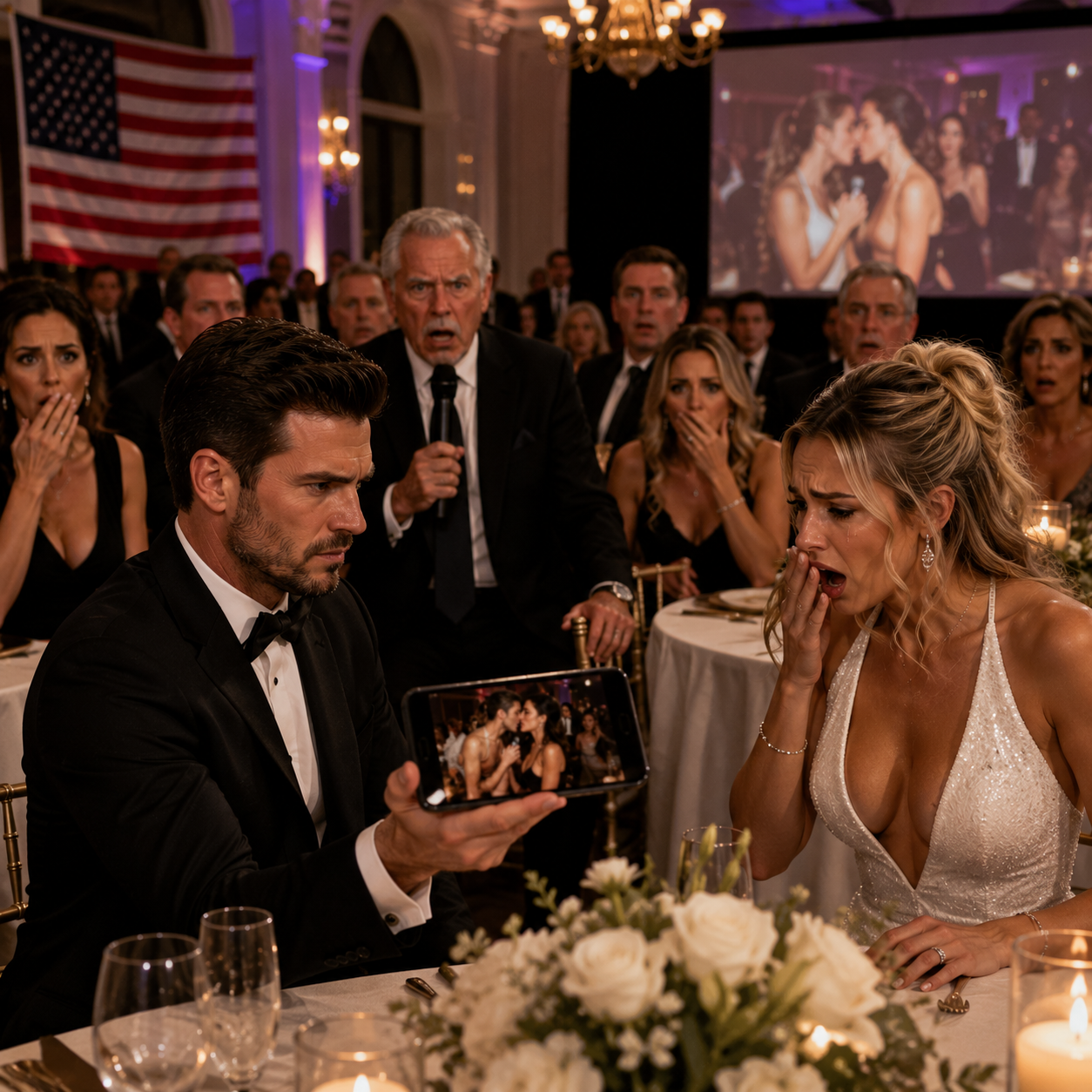

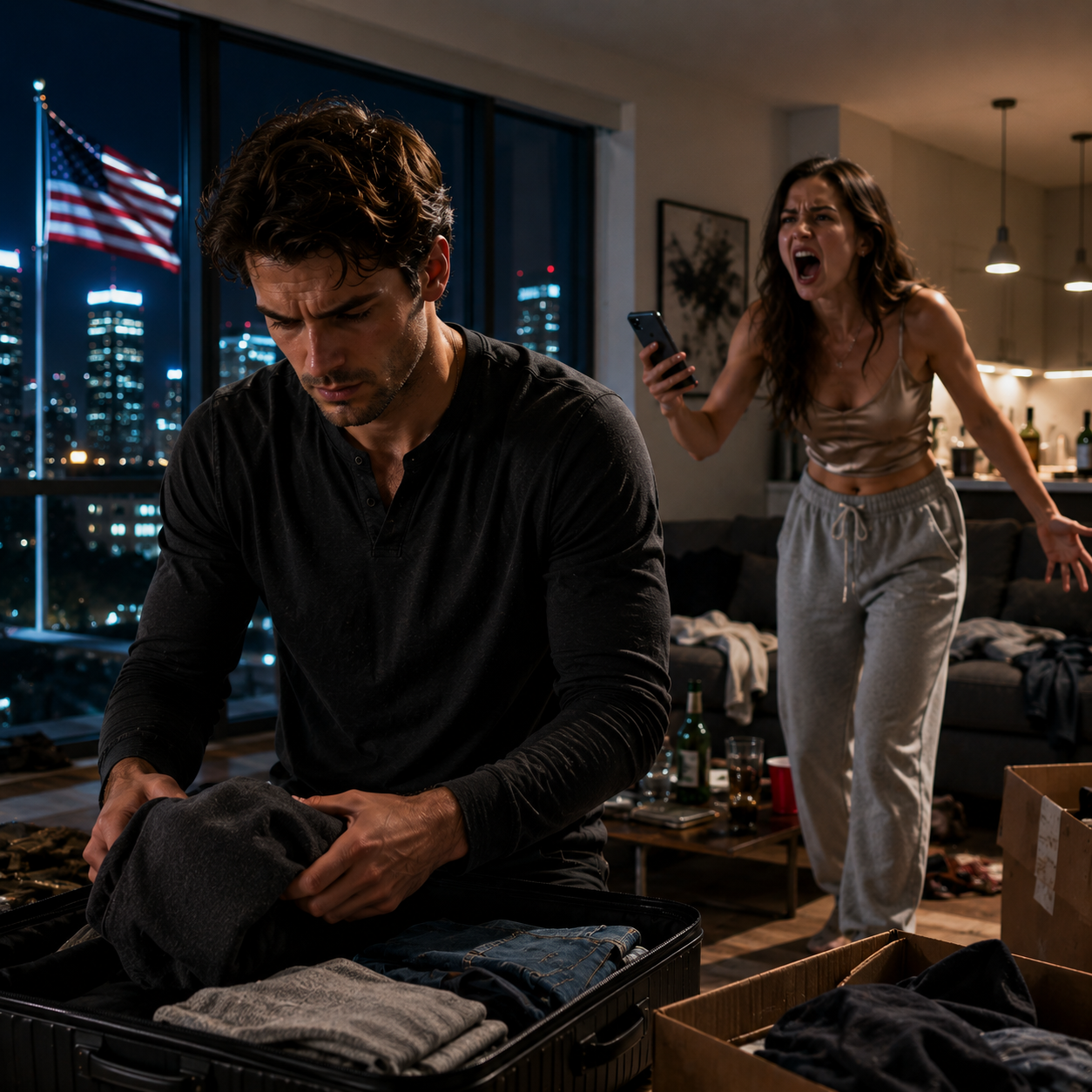
![[FULL STORY] She Told Me to Stop Asking Questions… So I Stopped Talking and Let the Truth Reveal Itself](https://social-media.rabedo.com/thumbnails/1776967979_308d735f-718c-40e9-88ea-02d75fef7b12.png)