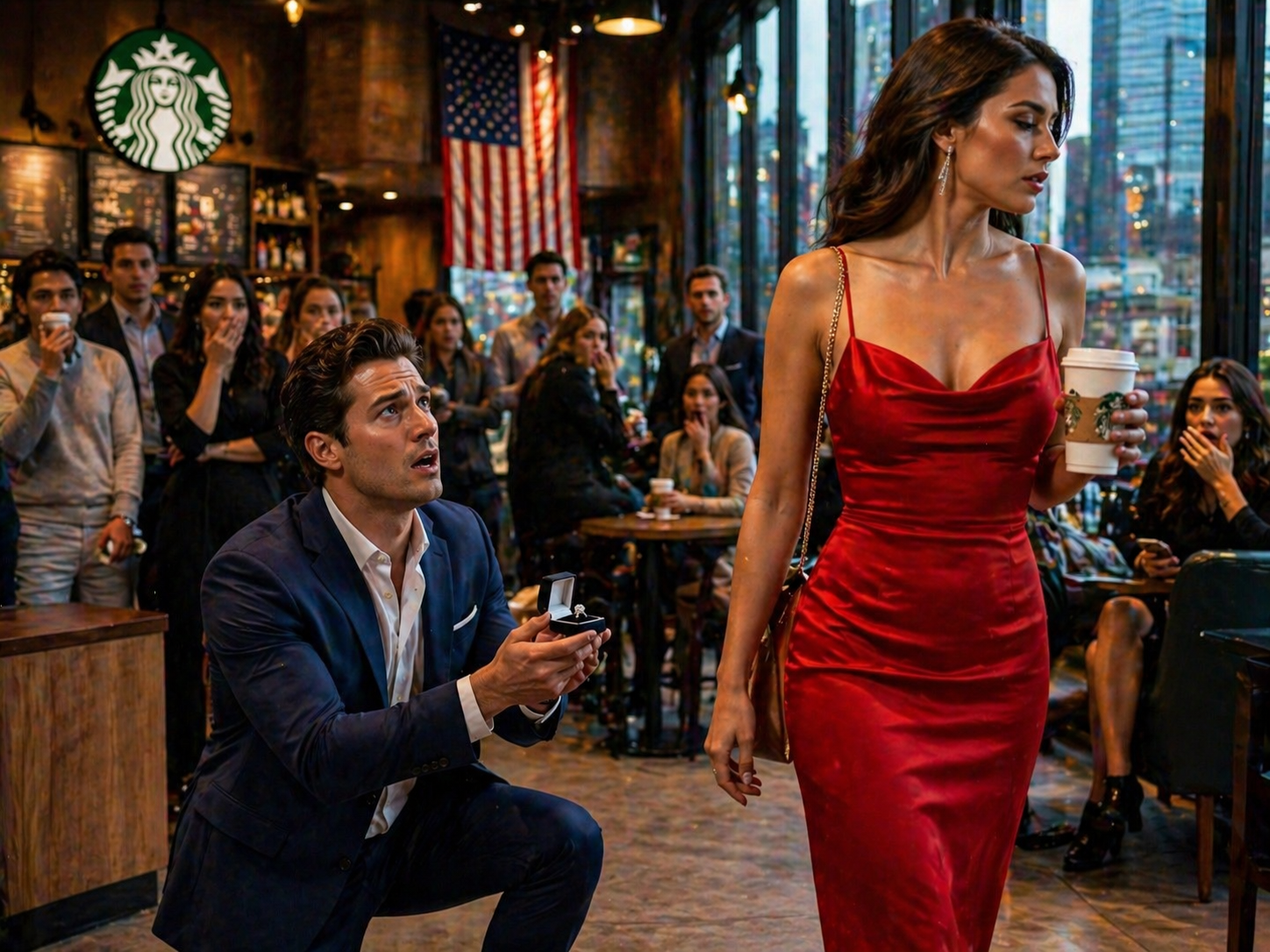

The moment Janice said, “You’re not invited. It would be weird,” I heard more than a party exclusion.
I heard my girlfriend quietly admit that another man’s world had become more important than making room for me in hers.
For months, I had tried not to be that boyfriend.
The insecure one. The jealous one. The man who could not handle his girlfriend having close male friends. So when Theo moved to Austin from Seattle, I told myself there was nothing strange about it.
Theo was Janice’s old college best friend. Charming, loud, ambitious in that effortless way people can be when no one has asked them to prove anything yet. He arrived in Austin talking about a podcast, a rebrand, a media empire, and “owning the local creative conversation” like all of it was already waiting for him, wrapped and ready.
Janice worked in marketing and social media, so naturally, she jumped in to help.
At first, it made sense.
Branding was her world. Launch planning was her field. Networking was part of the job. She knew how to make something look bigger than it was, how to turn half-formed ideas into pitch decks, captions, launch calendars, and buzzwords that impressed people who did not look too closely.
But then the work sessions became late nights.
The late nights became multiple evenings a week.
Strategy meetings. Industry mixers. Podcast planning. Private conversations. Voice notes she would listen to with her phone tilted away from me. Inside jokes that appeared and disappeared before I could understand them.
Theo’s name started showing up in her stories more than anyone else’s.
“Theo thinks this place is perfect for his launch.”
“Theo says Austin needs more honest media.”
“Theo wants me to help with the audience strategy.”
“Theo says I understand his vision better than anyone.”
Every time I felt uneasy, I swallowed it because I wanted to be mature. I wanted to trust her. I wanted to believe discomfort was not the same thing as disrespect.
Looking back, that was my first mistake.
Then Theo planned his big rebrand and podcast launch party.
He talked about it like it was going to be a cultural event. A major industry night. Creators, marketers, local media people, musicians, sponsors, photographers, the kind of crowd Theo loved describing as if every handshake might become a headline.
I assumed I would go with Janice.
She was my girlfriend. Theo was supposedly just her friend. It seemed obvious.
But a week before the event, she said it so casually it almost hurt more.
“I’m going to Theo’s launch party on Saturday. It’s all industry people. You’re not invited. It would be weird.”
For a second, I thought I had misheard.
“You’re saying I can’t come?”
She sighed as if I had already started making the conversation difficult.
“It’s not that you can’t. It’s just not really your scene. You won’t know anyone. You don’t like networking. You’ll be uncomfortable. Theo wants the vibe to be very specific.”
There it was.
The vibe.
People hide a lot of disrespect behind that word.
She said it like she was protecting me from boredom, but underneath the explanation was something sharper. She was not asking whether I wanted to come. She was telling me I did not belong.
Not beside her.
Not in that room.
Not in the life she was building around Theo.
So I said, “Have fun.”
Janice blinked.
Then relief passed over her face so quickly I almost missed it.
Almost.
That relief told me more than her words did. She had already rehearsed defending the decision. She had expected jealousy, anger, maybe a scene. What she had not expected was for me to simply nod and make it easy.
But easy is not the same as okay.
At the studio where I work, we had just finished building a huge rooftop space for music video shoots. It was a beautiful open-air setup with a skyline view, enough room for live sessions, and a sound system we were still testing before the official opening. My boss had told the team we could use it for an acoustic test that weekend if we wanted, just to see how the space handled live instruments and DJ equipment before paying clients came through.
I had been thinking about inviting a few people anyway. Nothing formal. Musicians, coworkers, DJs, maybe a few friends who could give feedback. A casual night. Drinks, music, skyline. Low stakes.
After Janice told me not to come to Theo’s party, I decided I was not going to sit at home alone while she dressed up for another man’s big night.
So I built my own crowd.
I sent out a casual invite to about forty people.
No big promotion. No dramatic social media post. No “competing event” language. Just a rooftop sound test that might turn into a hangout if people felt like showing up.
I did not tell anyone to keep it secret.
I did not tell anyone to leave Theo’s event.
I simply created a place where I was not waiting outside someone else’s door.
On the day of both events, Janice was getting ready in my bathroom mirror like she was walking into a future she did not want me to see. Black dress. Gold hoops. A perfume I had bought her months earlier because she once said it made her feel expensive.
About an hour before she left, she texted me even though we were in the same apartment.
“Theo says tonight is super private. Don’t make it weird.”
I stared at the message.
Because sometimes “don’t make it weird” really means “please don’t make me feel guilty.”
I set my phone down and went back to loading speakers.
The rooftop filled faster than I expected.
Austin’s creative scene is smaller than it looks from the outside, and word moves through it like electricity. One DJ brought his girlfriend, who posted a short sunset video with live acoustic music rolling under the skyline. The clip caught fire locally almost instantly. People started asking where it was, tagging friends, saying they were coming through.
What began as a sound test became the kind of night people pretend they planned all along.
By nine, the rooftop was glowing.
The skyline looked unreal. Warm air moved between the bodies gathered near the railing. Someone brought a saxophone. Someone else had a small camera rig and started shooting B-roll. A local singer stepped up for an acoustic set, and the whole space went quiet in that rare way a crowd does when something actually good is happening.
Then I started seeing familiar faces.
People from Janice’s circle.
One first.
Then another.
Then three more.
They came in smiling, taking photos, asking about the space, vibing with the musicians. I had not invited most of them. But I did not turn them away either.
I did not ask why they left Theo’s launch.
I already knew.
His party, according to the whispers floating in, was packed into a hot downtown bar where the audio kept cutting out, the podcast preview would not play right, and the so-called industry mixer had started feeling more like a failed rehearsal. Theo had charisma, but charisma does not fix bad logistics. A crowded room with poor sound is still a crowded room with poor sound, no matter how many times you call it exclusive.
Mine had wind.
Music.
Space.
A view.
And people were posting before they even found a drink.
At ten, Janice walked in.
She scanned the crowd and saw faces she recognized.
Then she came straight toward me with anger already written across her face.
“So this is why half the guest list left Theo’s party,” she snapped. “You hosted a competing event.”
I looked around the rooftop, then back at her.
“No. I hosted a sound test.”
“Don’t play dumb.”
“I’m not. The rooftop was available. People came because they wanted to.”
“You knew exactly what you were doing.”
“I knew I wasn’t invited to your night,” I said. “So I made my own.”
Her jaw tightened.
“That is so fake. This is petty. You’re jealous of him.”
Before I could respond, my phone rang.
Theo.
The timing was almost too perfect.
I answered and put it on speaker, not loudly, just enough that Janice could hear.
“Hey, man,” Theo said, his voice tight, stripped of the effortless confidence he performed for everyone else. “Could you shut it down? You’re pulling my crowd. Not cool.”
I looked at Janice while he spoke.
For once, she had no clean way to spin what was happening.
If his event was strong, people would have stayed.
If her choice was harmless, she would not look so panicked watching both worlds collide under the city lights.
I kept my voice calm.
“Theo, if your event is good, people stay. If it’s not, that’s on you.”
There was silence on the line.
Then he said, “You’re making this personal.”
“No,” I said. “You did that when you made my girlfriend tell me I wasn’t invited.”
Janice’s eyes flashed.
Theo muttered something under his breath and hung up.
Janice stood there shaking with anger.
“You embarrassed me,” she said.
“No. You’re embarrassed because people chose the room I was in.”
“That’s exactly the problem. You always have to make things about you.”
I almost laughed.
For months, I had made things about Theo. His schedule. His meetings. His creative emergency. His launch. His comfort. His vibe.
The one night I created something of my own, suddenly I was selfish.
Janice left twenty minutes later without saying goodbye.
The rooftop kept growing.
By morning, the video had gone locally viral. Nothing massive, not national news, but enough for people in Austin’s creative circles to see it, share it, and ask who had put the night together. My boss called me at noon, laughing.
“I thought you said it was a sound test.”
“It was.”
“Well, congratulations. We’ve had six booking inquiries since breakfast.”
That should have been the story.
A good night. A failed party. A little awkwardness. Maybe a fight with Janice, maybe an apology, maybe a boundary conversation long overdue.
But then the messages started coming in.
People who had been at Theo’s event told me it had been falling apart before anyone left. Too crowded. Bad sound. No real energy. People bored, checking their phones, whispering about going somewhere else.
Then one of Janice’s work friends sent me something I read three times before my stomach sank.
Theo had been telling people Janice deserved someone at her level.
Someone who matched her ambition.
Someone who understood her world.
Someone who was not me.
When I asked Janice about it, she did not ask who said it. She did not ask exactly what he said. She did not look surprised.
She defended him immediately.
“He was frustrated,” she said. “His launch was falling apart.”
“So he decided to insult me?”
“He didn’t insult you.”
“Someone at my level? Someone who understands my world? What exactly do you think that means?”
She crossed her arms.
“It means you don’t get this side of my life.”
“And Theo does?”
“Professionally, yes.”
That word again.
Professionally.
A curtain people pull over things they do not want examined.
The next ten days were cold.
Janice was distant but righteous, acting like I had committed some betrayal by refusing to be invisible. She accused me of undermining Theo. She said I had embarrassed her in front of people she needed professionally. She said I had made the launch night about my ego.
I listened.
Mostly.
Then I asked one question.
“Has Theo ever crossed a line with you?”
Her face changed.
Not dramatically, but enough.
“No.”
Too fast.
I nodded.
“Okay.”
She hated that. She wanted a fight. A fight would have let her call me insecure again.
Instead, I waited.
The truth came out because truth usually does when people get too comfortable with their own version.
Ten days after the rooftop, Janice came over looking exhausted. Her hair was up, makeup half done, face tight with the kind of frustration that comes from managing two stories at once.
She sat at my kitchen table and said, “Theo said something, but I didn’t tell you because I knew you’d overreact.”
I leaned back.
“What did he say?”
She looked away.
“He said you were holding me back.”
I stayed quiet.
She continued, voice smaller now.
“He said I was building something real, and you were just… stable.”
“Stable.”
“He didn’t mean it as an insult.”
I looked at her.
“Of course he did.”
She swallowed.
“He said I deserved a partner who could move with me. Someone exciting. Someone visible. Someone who wasn’t just watching from the sidelines.”
The room felt colder.
There it was.
The phrase she had been protecting for over a week.
Not because Theo had said it.
Because part of her had liked hearing it.
“Did you defend me?” I asked.
Her silence answered first.
Then she said, “I told him it was complicated.”
Complicated.
Another word people use when the truth makes them look bad.
I stood slowly.
Janice’s eyes filled with panic.
“Don’t do that.”
“Do what?”
“Go quiet.”
“I’m trying not to say something I’ll regret.”
“You’re acting like I cheated.”
“No,” I said. “I’m acting like my girlfriend let another man audition for my place in her life and then asked me not to attend the show.”
Her eyes flashed.
“That is not fair.”
“What part is unfair?”
“He’s my friend.”
“He is not your friend. He is a man who told you I was beneath you and then got angry when people chose my event over his.”
She stared at the table.
“I didn’t want to lose the opportunity.”
“And I didn’t want to lose my relationship. Looks like we both found out what mattered more.”
She started crying then, but the tears did not move me the way they used to. Not because I had stopped caring entirely, but because something had shifted. For months, I had been afraid of becoming the jealous boyfriend. I had bent myself into silence to avoid looking insecure.
Now I understood that boundaries are not insecurity.
Being excluded is not maturity.
And a partner who asks you to shrink so another man feels comfortable is not protecting your relationship.
She is protecting his access.
I broke up with her that night.
No screaming. No dramatic speech. I just said, “I think Theo’s world has the space you want, and mine clearly doesn’t. So go be in it.”
She tried to argue.
She said I was throwing away years over one party.
I told her it was not one party. It was every late night I swallowed, every private joke I ignored, every time she chose his comfort over my place beside her, and every second she let me believe I was immature for noticing.
Then I walked her to the door.
She stood there for a moment, crying quietly.
“You’re really choosing your pride over us?”
“No,” I said. “I’m choosing the version of me that does not have to beg to be included in my own relationship.”
She left.
The fallout was not immediate, but it was revealing.
Theo’s podcast launch never recovered. The failed event became a joke in the local scene, not because I spread anything, but because creatives talk. People remembered bad sound. Bad planning. His call asking me to shut down my rooftop. His comments about Janice. The whole thing made him look less like a visionary and more like a man selling confidence without infrastructure.
Meanwhile, the studio rooftop became an actual venue.
My boss put me in charge of creative programming for the space because apparently “accidental viral rooftop night” was better marketing than anything they had planned. We started hosting small live sessions, industry mixers, private showcases. The same world Janice once said I would not fit into started asking me for guest lists.
That part did feel like justice.
Quiet justice.
The kind that arrives wearing a calendar invite.
Janice tried to come back after Theo’s second episode flopped.
I know that sounds petty, but it is true. His first episode got curiosity listens because of the launch drama. The second barely made noise. Sponsors who had been “in conversation” vanished. His rebrand became a punchline before it became a business.
She texted me three weeks after the breakup.
“Can we talk?”
I waited a day before answering.
“About what?”
“Us.”
“There is no us.”
“That’s cold.”
“No. That’s clear.”
She showed up at one of the rooftop events a month later, dressed like she belonged there and looking around like she expected the crowd to part for her. It did not. People were polite, but the energy had changed. She was no longer the social bridge. She was the woman who had tried to keep me out of a room I ended up helping build.
I found her near the railing after the acoustic set.
“This is impressive,” she said.
“Thanks.”
“I didn’t know you could do this.”
That one almost made me laugh.
“You never asked what I could do. You were too busy explaining where I wouldn’t fit.”
She looked hurt.
“I made a mistake.”
“You made a choice.”
“I was excited about Theo’s project. I got caught up.”
“No, Janice. You got caught choosing a man who talked down about me because it made you feel elevated.”
Her face tightened because the truth had no soft edges.
She looked toward the stage, where the next musician was setting up.
“Theo isn’t who I thought he was.”
“I know.”
“I should have listened to you.”
“No,” I said. “You should have respected me before you needed proof.”
She nodded like she wanted to argue but could not find the right lie.
Then she said, “Do you hate me?”
“No.”
That surprised her.
“I don’t hate you. I just don’t trust your version of love.”
She left before the next set started.
Months passed.
The rooftop became a regular thing. Small but respected. Musicians loved it because the sound was good and the crowd listened. Creators loved it because the skyline made everything look expensive. My boss loved it because bookings turned into revenue. I loved it because it reminded me that being excluded from one room sometimes pushes you to build a better one.
Theo eventually moved back to Seattle.
The official story was that Austin “wasn’t aligned with his vision.” The unofficial story was that he ran out of money, burned too many contacts, and discovered that calling yourself a media founder does not make people listen.
Janice stayed in Austin.
I heard she changed jobs and started keeping a lower profile. No dramatic downfall. No public humiliation. Just the quiet consequence of realizing the person you treated as background had a life, value, and gravity without you.
The last message she sent me came six months after the breakup.
“I understand now why ‘you’re not invited’ hurt you so much. I’m sorry I made you feel like you didn’t belong in my life.”
I read it twice.
Then I replied, “Thank you. I hope you mean that for the next person.”
She did not answer.
That was fine.
Closure does not always need a conversation. Sometimes it is just understanding the story without needing the other person to agree.
Looking back, I do not think the worst part was being excluded from Theo’s party.
It was the relief on Janice’s face when I accepted it.
That tiny expression told me she had wanted a version of me that made her choices easier. A boyfriend mature enough to trust her, quiet enough not to question her, and invisible enough not to interfere when another man decided her ambition needed rescuing from me.
I will never be that man again.
If someone loves you, they make room for you.
Not everywhere. Not all the time. Everyone deserves independent spaces, work circles, friendships, private projects. But when a partner starts treating your presence like a threat to another person’s fantasy, pay attention.
Especially when they call it maturity.
Especially when they say, “Don’t make it weird.”
Because sometimes you are not making it weird.
You are just noticing that it already is.
Janice told me I did not fit the vibe.
So I found a rooftop, plugged in the speakers, and built my own.
That night, under the Austin skyline, I stopped waiting for an invitation to a life where I belonged.

![[FULL STORY] She Said the DNA Didn’t Matter Because I’d Be an Amazing Father — So I Disappeared](https://social-media.rabedo.com/thumbnails/1777889779_0d49f345-c07a-4b74-b5dc-085677683eb0.jpg)