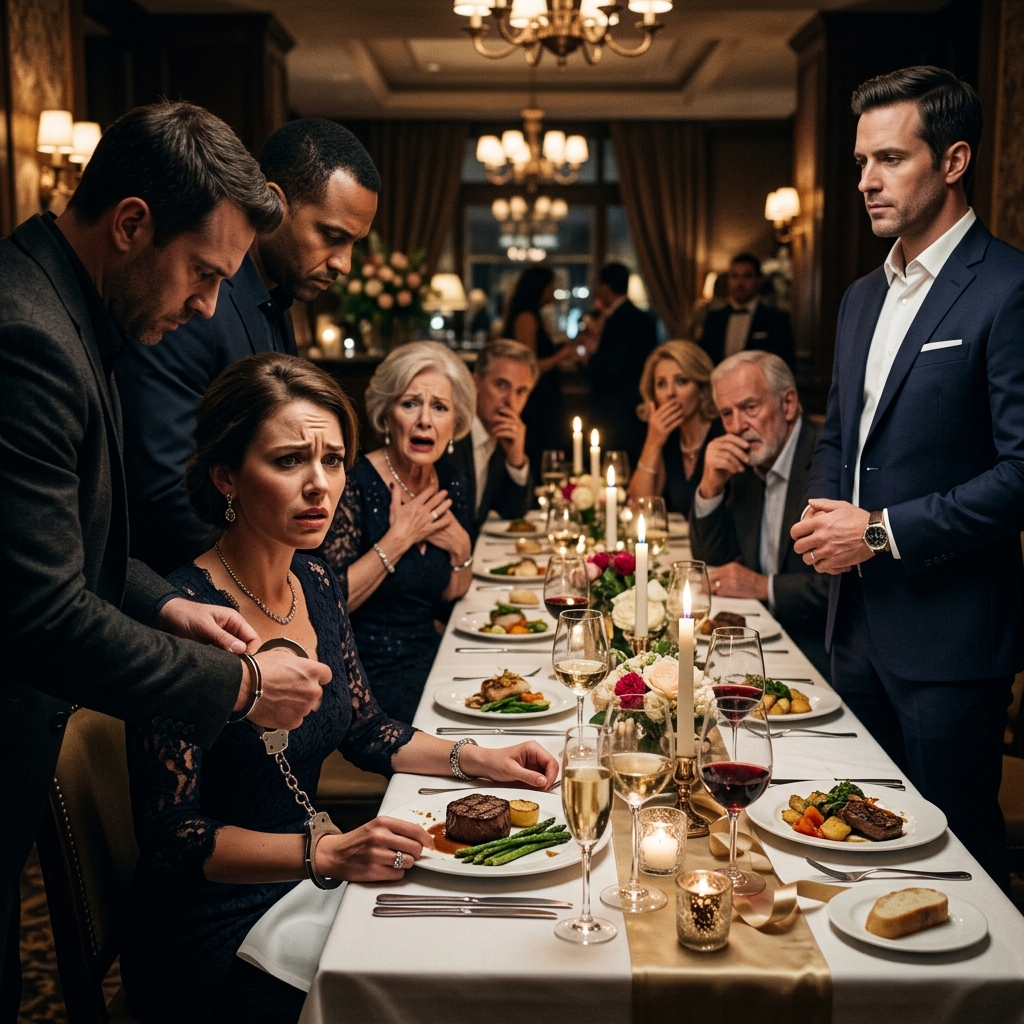

The game was Monopoly, which was ironic considering I was about to lose everything I thought I was building—and gain something far more valuable.
We were at my fiancée Jenna’s parents’ house for their weekly family game night. It was one of those “mandatory” family traditions they treated like proof of moral superiority. Every Friday, the Sterling family gathered in their large, tastefully decorated home, drank expensive wine, played board games, and performed closeness for anyone lucky enough to be invited into the inner circle.
I had been part of that circle for three years.
Or at least, I had been allowed to sit near it.
Jenna sat beside me, scrolling her phone under the table while pretending to care about the game. Her best friend Madison was there too, practically a family member at this point. Madison and Jenna spent most of the night giggling at things on their phones, whispering, and glancing around the room like everyone else existed for commentary.
Across from me sat Jenna’s father, Robert Sterling, a man who wore disappointment like a tailored suit.
Robert had never liked me. He tolerated me because I made good money, dressed appropriately when required, and did not embarrass the family in public. But he never missed a chance to remind me that I was not one of them. Not old money. Not legacy. Not pedigreed. I was, in his mind, a useful striver who had somehow wandered into his daughter’s life and overstayed his welcome.
That night, he landed on my Boardwalk.
With a hotel.
I told him he owed me two thousand dollars.
He sighed dramatically and peeled off the colorful bills with the seriousness of a man authorizing a hostile debt restructuring. Then he looked across the board at Jenna.
“Jenna, I just don’t get it,” he said loudly enough for the room to hear.
The air shifted.
I knew that tone.
Robert continued, “Look at this guy. He’s a decent earner, I’ll give him that. But he has no style. No pedigree. Why are you settling for him?”
It was not the first insult.
It was simply the most direct.
I felt that familiar tightening in my gut, the one I had trained myself to ignore. I looked at Jenna, expecting something. Not even a dramatic defense. Just a line. A boundary. A simple, Dad, stop.
Instead, a slow coy smile spread across her face.
She reached over and patted my hand like I was a child or a nervous dog.
“Because no one else would marry him,” she said sweetly. “Someone has to take care of him.”
Madison burst out laughing.
Jenna’s mother gave a little titter of amusement.
Robert smirked, satisfied, like his point had been proven by his daughter’s cruelty.
They all saw it as a joke. A funny little jab at the quiet, unassuming man they had grown accustomed to underestimating. They expected me to smile awkwardly, maybe look down, maybe absorb the humiliation like I always had.
I did not say a word.
I looked at the cards in my hand. I looked at the little plastic hotel on Boardwalk. And I felt no anger. No sadness. No shock.
Just clarity.
The kind of clarity you get when a complex equation finally solves itself.
For three years, I had been running a cost-benefit analysis on this relationship, and Jenna’s words were the final data point.
The investment had soured.
The risk now far outweighed the projected return.
I calmly placed my cards face down on the board.
“I think I’m done playing for tonight,” I said.
Then I stood, walked into the kitchen, and poured myself a glass of water.
Through the doorway, I heard them resume the game. My absence barely registered. Madison was already laughing again. Robert was complaining about taxes on his properties. Jenna did not follow me. She did not apologize. She did not even check whether I was upset.
They thought I was pouting.
They had no idea I was liquidating my assets.
Let me explain something.
I am not a simp.
I am a private equity investor.
My entire career is built on a single skill: identifying undervalued or mismanaged assets, acquiring influence or controlling interest, optimizing operations, and exiting at a profit. I analyze systems. I find weaknesses. I exploit inefficiencies. I execute long-term strategies with patience because emotional people make expensive mistakes.
Three years earlier, I had applied that same skill set to my personal life.
I met Jenna at a charity gala. She was beautiful, charming, polished, and socially fluent in a way people born into money often are. She came from a family with a legacy business, a regional manufacturing company called Sterling Industries. Her father, Robert, had inherited it from his father, and that company was the source of the family’s wealth, status, and exaggerated self-importance.
After a few dates, Jenna invited me to dinner at her parents’ house.
Robert spent the entire evening talking about Sterling Industries. He talked as if he were a titan of industry, a visionary carrying his father’s legacy into the future. But the more he spoke, the more I heard weakness. Sentimentality disguised as leadership. Legacy hires disguised as loyalty. Outdated practices defended as tradition.
So I did what I do.
I researched.
I spent a week analyzing Sterling Industries from the outside. Public filings. Supplier relationships. Market position. Customer reviews. Industry trends. Hiring patterns. Old interviews. Anything I could find.
The company was a diamond in the rough.
Solid product line. Loyal customer base. Strong brand recognition in its region. But it was being horribly mismanaged. Outdated technology. Inefficient supply chains. Bloated management. Quality control slipping. Cash flow tightening. Robert was coasting on reputation while the market moved around him.
With the right leadership, Sterling could be turned around and sold to a national competitor for a fortune.
So I made a five-year plan.
Step one: acquire the key relationship asset, Jenna.
Step two: integrate into the family structure.
Step three: gain Robert’s trust and eventually a board seat.
Step four: execute an operational overhaul.
Step five: facilitate a strategic acquisition, making myself and the family incredibly wealthy while securing my long-term position.
Jenna was the entry point.
The relationship was my cost of acquisition.
I know how that sounds. Cold. Transactional. Maybe it was. But understand this: I did care for Jenna in the beginning. Or at least I cared for the version she sold me. I was not pretending affection every second of every day. I proposed because I thought the arrangement could become mutually beneficial on more than one level. She got stability, status, and access to my resources. I got access to the business and eventually influence. We could have had a profitable marriage, maybe even a functional one.
But I also knew from the beginning that Jenna and her family were shallow. I tolerated it because tolerance is sometimes cheaper than conflict. I tolerated Robert’s condescension. I tolerated Jenna’s little comments about my suits, my background, my “serious energy.” I tolerated Madison’s snark and the way she treated me like a background character in Jenna’s life.
I paid for dinners. Designer gifts. Weekend trips. Engagement events. I played the role of the devoted fiancé who knew he was slightly out of his league.
It was all, in my mind, a business expense.
But her comment during that Monopoly game changed the entire equation.
It was not just a joke.
It was a public declaration that she did not respect me. She saw me not as a partner, but as a charity case. Someone lucky to be chosen. Someone she could belittle in front of her father and friends without consequence.
That meant I would never gain the influence I needed inside the family structure.
The core asset was flawed.
The deal was dead.
And when a deal goes bad, you do not simply walk away. You mitigate losses.
If necessary, you initiate a hostile takeover.
They saw me as a pawn in their game.
They were about to learn I owned the board.
The week after game night was a study in strategic silence.
I did not mention the insult. I did not demand an apology. I was perfectly pleasant, but distant. Professional. I created a buffer between Jenna and me that she interpreted as moodiness.
When she asked what was wrong, I told her I was preoccupied with a complex new deal at work.
That was true.
The deal was the complete dismantling of her family’s world.
Jenna, being Jenna, assumed my distance could be solved with shallow attention. I overheard her on the phone with Madison one afternoon saying, “He’s in one of his moods. I’ll probably have to cheer him up with a shopping trip or something.”
They thought I was a simple machine.
Insert affection. Receive obedience.
Their arrogance was their greatest vulnerability, and I intended to exploit it fully.
My first move was securing my personal position.
Jenna and I lived in a condo I owned outright. She had moved in two years earlier. One Saturday, while she was out with Madison, I created a complete photographic and itemized inventory of every possession in the condo. Mine. Hers. Jointly acquired. Receipts where available. Dates. Values.
Then I met with a lawyer who specialized in high-conflict separations and corporate litigation. He reviewed my documentation and the prenuptial agreement I had insisted on before the engagement became public.
Jenna had laughed when I asked for the prenup.
She signed anyway because Robert advised her that men like me were “always nervous around real money.”
That prenup was ironclad.
It protected all pre-existing assets, including my condo, my investments, and ownership interests in my portfolio companies. Since we were not married yet, legally speaking, the break would be clean.
Next, I turned to Sterling Industries.
For the past year, I had been discreetly gathering internal data. Robert, in his infinite arrogance, had often asked me to “look over” reports, not because he wanted advice, but because he wanted praise. He liked seeing me nod at his supposed genius. He liked feeling like the titan educating the younger man.
I saved everything.
Supplier lists. Client revenue breakdowns. Debt structure. Production schedules. Quality control reports. Delivery performance. Management compensation. Cash flow projections.
I knew Sterling’s weaknesses better than Robert did.
Their first major vulnerability was reliance on a single primary supplier for a critical raw material: Apex Materials.
Robert had a long-standing relationship with Apex’s owner, built on golf weekends, expensive lunches, and nostalgic loyalty. Not sound business.
My research showed Apex was under pressure from rising costs and quietly looking for more reliable, higher-margin partners. So I leveraged my network and arranged a meeting with Apex’s CEO.
I did not mention Sterling.
Instead, I presented a deal on behalf of another company in my portfolio. I offered Apex a long-term contract at a ten percent price increase over what Sterling was paying, guaranteed order volumes for three years, and more favorable payment terms.
It was an offer he could not refuse.
He signed.
Apex gave Sterling the standard sixty-day notice that their supply agreement would terminate.
Robert did not know it yet, but the heart of his company had just been removed.
Sterling’s second pillar was their largest client, a national retail chain accounting for nearly forty percent of annual revenue. I knew from Robert’s reports that Sterling was frequently late on deliveries and that product defects had been climbing for years. The client was unhappy, but inertia kept them in place. Switching manufacturers is expensive, annoying, and risky.
So I made switching easier.
I put together an anonymous but detailed dossier. Late delivery statistics. Quality control failures. Cash flow analysis showing Sterling’s vulnerability. I sent it by secure courier to the chain’s head of procurement.
I also included a list of three alternative manufacturers.
All three were companies in which I held small, silent stakes.
I was not merely sinking Sterling’s ship.
I was redirecting its lifeboats to my own ports.
While those pieces moved on the corporate chessboard, I handled my personal exit.
I found a new, larger condo and signed the lease. I scheduled movers for three weeks after game night, on a day when I knew Jenna and Madison were attending an all-day influencer brunch.
Then I addressed the wedding.
We were four months away. Deposits had been paid. Venue booked. Caterer selected. Florist harassed. Bridesmaids weaponized.
The largest expense was the venue: a historic hotel ballroom with a fifty-thousand-dollar non-refundable deposit paid from a joint wedding account.
I called the event coordinator.
I told her that due to unforeseen circumstances, the wedding would not be taking place.
She was sympathetic but reminded me the deposit was non-refundable.
“I understand completely,” I said. “But I don’t want to cancel the booking. I want to change the nature of the event.”
The contract was in my name.
The date remained the same.
The budget remained the same.
The Jenna and Alex wedding became the Vanguard Capital Annual Achievement Gala.
With the traps set, I waited.
Jenna remained blissfully unaware. She was more concerned with flower arrangements and arguing with Madison about bridesmaid dress colors. One evening, she came home with wedding magazines, dropped them on the coffee table, and sighed dramatically.
“It’s all so much work,” she said. “Sometimes I think you don’t appreciate the effort I’m putting into planning our future.”
I looked at her and nodded.
“I’m sure it’s very stressful.”
The beautiful, oblivious architect of her own destruction.
The first sign of trouble reached Robert about ten days after my meeting with Apex.
Jenna came home anxious, pacing through the living room with her phone in hand. Apparently, her father had called her in a rage. Apex had sent the official termination notice. Robert was losing his mind. He could not understand why his “old friend” would betray him. He blamed the economy. He blamed supply chain pressure. He blamed government policy. He blamed everything except his own complacency.
“Dad is so stressed,” Jenna said. “He says this could be a huge problem for the company. You work in finance. Can you believe this? After thirty years of loyalty?”
I made sympathetic noises and told her business was tough.
Inside, I felt the cold satisfaction of a plan unfolding cleanly.
Without Apex, Sterling’s production would grind to a halt in sixty days unless they secured a new supplier. They could do it, maybe, but not quickly and not at a competitive cost.
A week later, the second bomb dropped.
Their biggest client sent a letter placing the account under formal review due to persistent supply chain reliability issues and quality concerns. The letter cited specific data points I recognized from the dossier.
This time, the panic was real.
Robert called a family emergency meeting and insisted I attend. I think he genuinely believed my “big investor brain,” as Madison once mockingly called it, could magically fix decades of mismanagement.
The atmosphere at the Sterling house was grim. Robert looked ten years older. Jenna and her mother hovered around him, wringing their hands. Madison was absent for once, because apparently corporate collapse was less fun when it threatened brunch funding.
Robert laid out the situation, his voice shaking with anger and fear.
“It’s a coordinated attack,” he declared. “Someone is trying to destroy me.”
He looked at me, eyes pleading despite himself.
“Alex, you understand this world. What do I do?”
This was the moment I had been waiting for.
I put on my professional face, the one I use in boardrooms when emotion has left the building.
“Robert,” I said calmly, “from what you’ve shown me, Sterling is facing a catastrophic failure of its core operational pillars. You’ve lost your primary supplier, and you’re in danger of losing your primary client. Your cash flow is already negative. Frankly, the situation is critical.”
For the next hour, I walked him through his options.
All terrible.
He could find a new supplier, but it would cost a fortune and take months. He could try to appease the client, but he had no leverage. He needed a massive capital infusion to modernize equipment and fix logistics, but no bank would give him favorable terms in his current condition.
Then I placed the final trap.
“There is one other option,” I said.
Robert leaned forward.
“You could seek a private investor. Someone who could provide capital and expertise to stabilize operations. It would mean giving up a controlling interest, but it would be better than bankruptcy.”
Hope flickered in his eyes.
“Do you know someone?”
“I might,” I said. “Let me make some calls.”
Of course, the investor I had in mind was me.
Not directly.
Through a holding company I controlled.
My plan was never just to destroy them. It was to pick up the pieces for pennies on the dollar.
While Robert spiraled, my personal exit plan proceeded on schedule.
The Saturday of Jenna’s influencer brunch arrived. She and Madison left early, dressed in outfits that cost more than most people’s rent, chattering about mimosas and “networking” as if being photographed near pastries were a career.
The moment they were gone, my movers arrived.
The process was clinical.
In four hours, every single thing I owned was packed and loaded. Furniture. Electronics. Art. Kitchen items I had bought. Office equipment. Personal documents. Anything mine.
I left Jenna’s possessions untouched.
The absence of my things created a hollow, almost staged quality in the condo. Like a showroom after the expensive pieces have been removed.
On the kitchen island, I left my keys, a printed copy of the prenup, and a cashier’s check for half the remaining wedding fund.
I also left a one-page letter.
Jenna,
Our engagement is over. As you can see, I have moved out. Per our prenuptial agreement, our individual assets remain separate. The enclosed check represents your half of the wedding fund. All other deposits and bookings were made in my name and are now my sole property. Any further communication should be directed to my lawyer. His information is below.
Alex.
I took one last look around and left.
That evening, my phone lit up with furious messages.
Jenna had returned from brunch with Madison to find the condo half empty.
She called me a monster. A coward. A thief. She accused me of abandoning her. Madison sent her own series of unhinged messages threatening to expose me online and “ruin my reputation.”
I read them, took screenshots for my lawyer, and blocked them both.
The silence was golden.
The next day, Robert called.
His voice was a low growl.
“What is this I hear about you leaving my daughter?”
“The engagement is over.”
“You can’t do this. We have a wedding to plan, and I need your help with the business.”
That sentence summarized Robert perfectly.
His daughter’s fiancé had left her, and half his company was on fire, but his primary concern was utility.
“Robert,” I said, “the engagement is over. As for the business, my offer to find an investor still stands, but it will be a purely professional arrangement.”
He breathed heavily into the phone.
“The price for saving Sterling,” I continued, “will be a fifty-one percent ownership stake transferred to the investment group I represent. That is the only offer on the table. You have forty-eight hours to decide before it is withdrawn.”
I could practically hear him choking on rage.
But rage does not pay suppliers.
He had no choice.
Give up control or watch his father’s legacy collapse.
Checkmate was in sight.
Three months have passed since I put the plan into motion.
The aftermath was every bit as devastating as I designed it to be.
Robert accepted the offer. He signed over fifty-one percent of Sterling Industries to a holding company, never realizing he was handing the keys to his kingdom directly to me.
The day the deal closed, I walked into the Sterling Industries boardroom and introduced myself as the new majority owner.
Then I fired him.
I also removed his entire crony management team. Men who had been promoted because they played golf with Robert, drank with Robert, or knew his father. Sentimentality is expensive. I do not subsidize it.
The look on Robert’s face was worth more than money.
Shock first.
Then confusion.
Then the slow, dawning horror of a man realizing the person he had been mocking for years had just taken his company from under him.
I immediately began implementing the turnaround plan I had designed long before they knew they needed me.
We renegotiated a temporary supply deal with Apex, at a higher cost than before, but manageable in the short term. I met personally with the national retail client and showed them a comprehensive plan to fix quality control, modernize logistics, and stabilize delivery timelines. I offered a six-month discount as a show of good faith.
They kept the account.
Sterling survived.
Under my control.
In a year, I expect it to be twice as profitable. In two, I expect to sell it for nine figures.
The personal fallout was just as complete.
Without my financial support, Jenna’s world collapsed. She could not afford the rent on the old condo once I left, and eventually she moved back in with her parents. Robert, stripped of his title and humiliated inside the company that used to define him, had a complete breakdown. The big family house went on the market to cover debts he had ignored for too long.
Jenna’s social life imploded too.
Madison and the rest of the glittering brunch crowd were not interested in someone who could no longer afford the table. Their friendship had always been transactional. Once the transaction ended, so did the loyalty.
Madison tried to run a smear campaign against me online, but my lawyer sent her a cease and desist letter so aggressive she deleted half her posts within an hour and then quietly vanished from the conversation.
About a month after I left, the calls started.
First from Jenna’s mother, pleading with me to be reasonable, to talk to Jenna, to give Robert “some dignity” after everything.
Then Jenna herself began leaving long voicemails from different numbers.
She was sorry.
She made a terrible mistake.
She loved me.
It was just a joke.
She didn’t mean it.
She was under pressure.
Madison had encouraged it.
Her father had influenced her.
The usual script of a person who regrets the outcome more than the behavior.
Eventually, they convinced a family friend to reach out and ask whether I would agree to one final conversation.
I agreed.
Not because I wanted reconciliation.
Because I wanted closure on my terms.
We met at a neutral coffee shop. Jenna and Robert were there. Both looked diminished. Robert’s suit still fit, but he seemed smaller inside it. Jenna looked exhausted, stripped of the smug polish that had once made her so untouchable.
Robert spoke first.
He apologized. Stiffly at first, then with increasing desperation. He said he had misjudged me. He said he had been arrogant. He said he was wrong. Then he asked if there was any role for him at Sterling, even as a consultant. Something. Anything.
Then Jenna spoke.
She cried. She said she was lost without me. She said she loved me and wanted to start over. She said she would do anything. She said the Monopoly night had been a joke, a stupid joke, and that she had never meant to hurt me.
I let them finish.
Then I took a sip of coffee and looked at them both.
“You seem to be under a misapprehension,” I said. “You think this was about my feelings being hurt. You think this is something an apology can fix. It isn’t.”
Robert’s face tightened.
I turned to him.
“This was a business transaction. I saw a failing asset and planned to acquire it. Your disrespect simply proved you were an unreliable partner, so I switched from a friendly merger to a hostile takeover. You didn’t lose your company because I was angry. You lost it because you were a bad CEO.”
He went pale.
Then I turned to Jenna.
“And you were never truly my partner. You were my cost of acquisition. You were the price I was willing to pay for access to the real prize. But your comment at game night revealed a fundamental flaw in the asset. You had no value as a long-term partner. You were a bad investment, so I cut my losses.”
The color drained from her face.
They stared at me as if I were a stranger.
In a way, I was.
They had never actually seen me. They had only seen the role I was willing to play while it benefited me.
I stood and left a twenty-dollar bill on the table.
“I hope you both learn from this,” I said. “Always know the true value of your assets, and never underestimate your competition.”
Then I walked out.
I never looked back.
Last I heard, Robert and his wife moved into a rental. Jenna got a low-level office job and is learning, perhaps for the first time, what it feels like to be tolerated instead of admired. Sterling Industries is thriving under competent management, and I am preparing it for the exit Robert never had the discipline or vision to achieve.
People may think the lesson here is revenge.
It isn’t.
The lesson is valuation.
Never mistake politeness for weakness. Never mistake silence for stupidity. And never humiliate someone at the table when you do not know how many pieces on the board already belong to him.