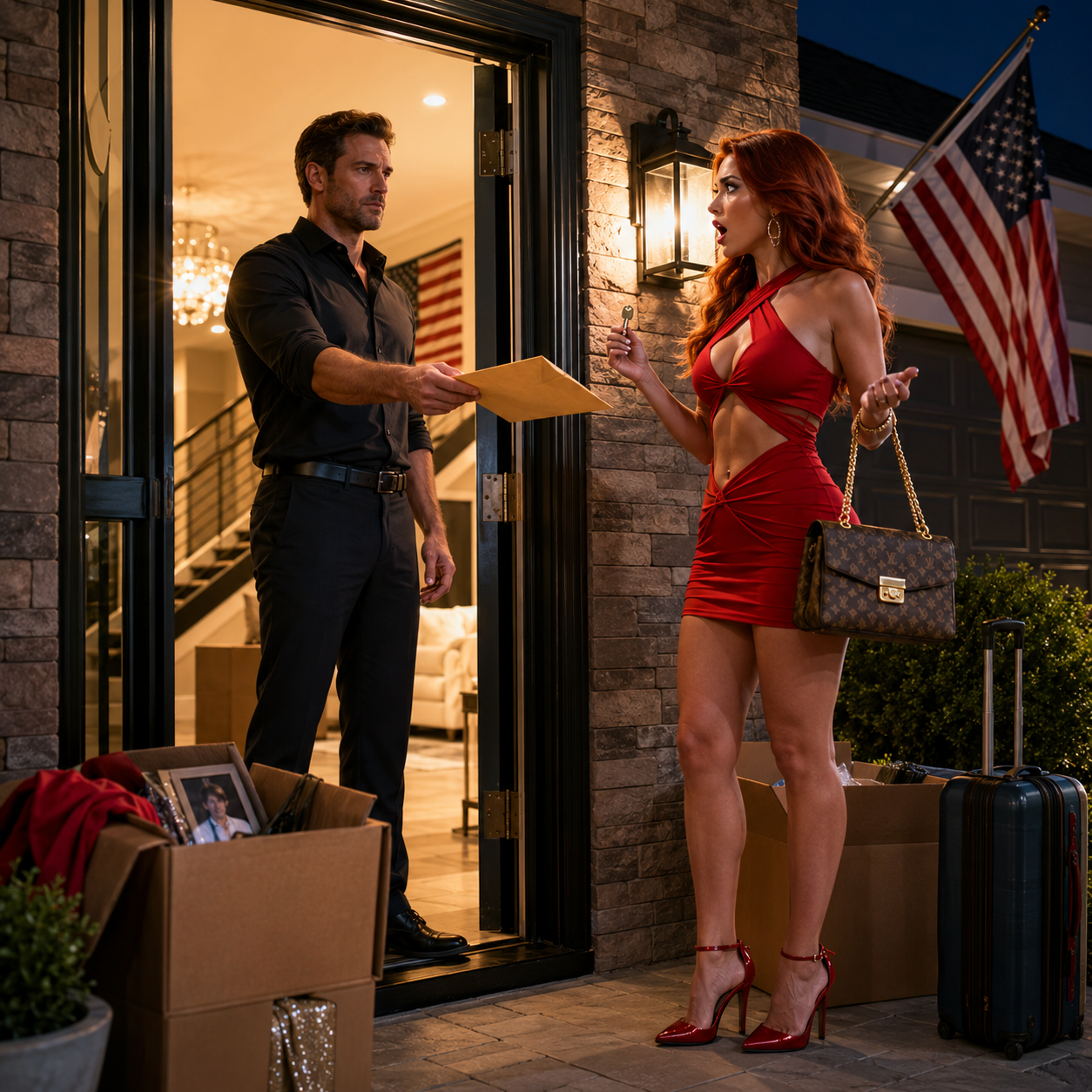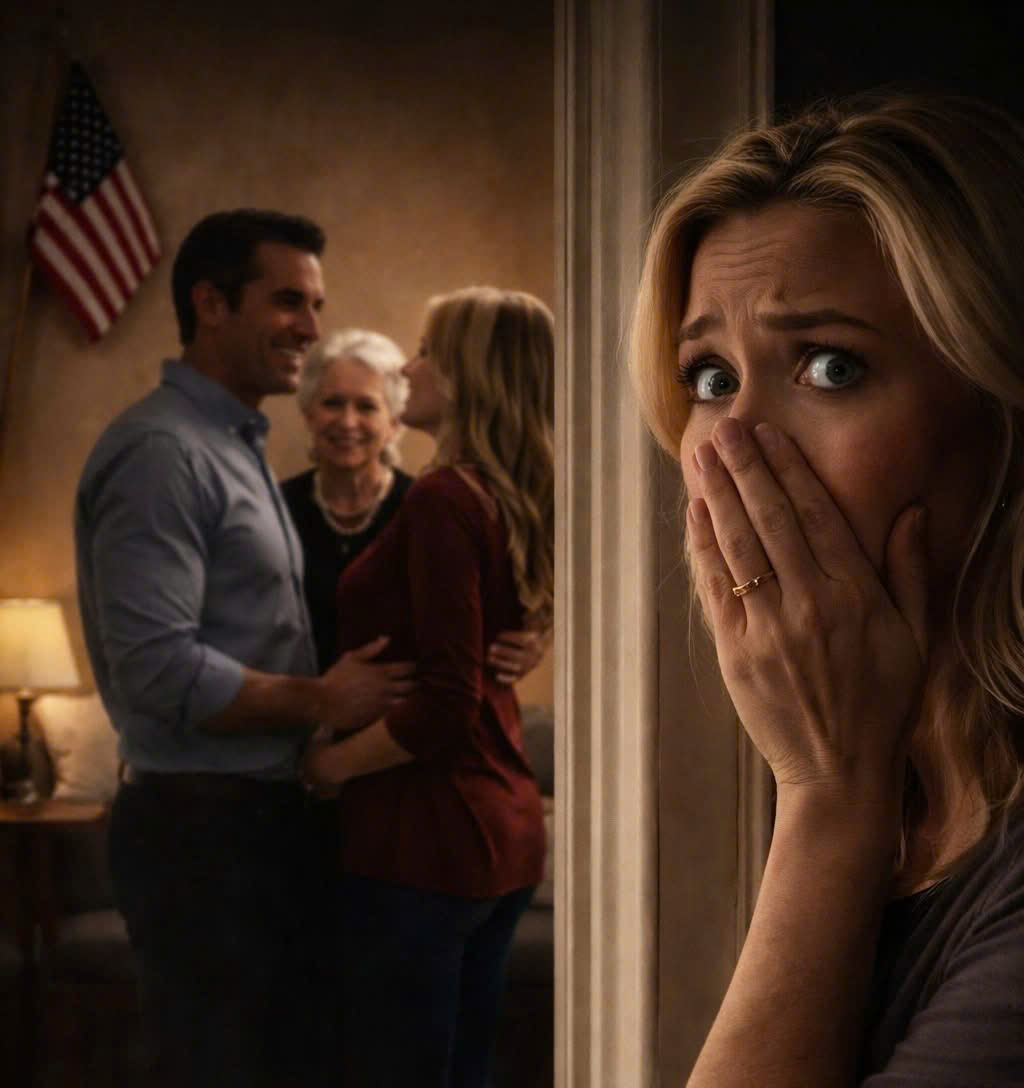
She said, “I need my ex at the wedding for closure. Please be mature.”
I smiled.
The next day, I sent his wife a plus-one invite.
At the rehearsal dinner, closure became chaos.
I’m a pretty straightforward guy. I own a company that does historic building restoration, which means most of my life revolves around old structures, hidden damage, and the difference between something that looks solid and something that actually is. I like brick, timber, stone, and honest measurements. I like foundations that hold. I like the simple truth of a plumb line.
Maybe that’s why the conversation my fiancée Emily started three weeks before our wedding felt like an earthquake under a house I thought was built to last a hundred years.
We were sitting at our dining table finalizing the guest list, a task that had already become more political than practical. Every added cousin meant another rearranged table. Every “must invite” from her mother meant another phone call to the venue. Emily was tapping her pen against the paper, which I had learned was her tell. It meant she was about to say something she had already rehearsed.
“Babe,” she started, voice a little too casual, “there’s one more person I’d like to add.”
I looked up from the seating chart.
“We’re already over by ten people. Who is it?”
She took a breath.
“Daniel.”
The room went still in that strange way rooms do when your body understands danger before your mind admits it.
Daniel was her ex-fiancé. The man she had been with for six years before me. The man she had almost married. The man whose ghost had haunted the edges of our entire four-year relationship.
I had heard his name in a thousand stories, always framed as some tragic, beautiful chapter of her past. Daniel had taken her to Paris. Daniel had taught her how to appreciate jazz. Daniel had helped her through her father’s surgery. Daniel had broken her heart, but not in a villainous way, apparently. More like a literary tragedy. Two souls who loved each other but wanted different things, or whatever phrase she used when she wanted pain to sound poetic.
I put my pen down.
“You want to invite your ex-fiancé to our wedding?”
“I need him there, Ethan.”
She said it with the soft authority of someone who expected compassion but had prepared a lecture in case she did not get it.
“It’s about closure. I need him to see me happy. To see me moving on. It’s the final step in closing that door forever. It’s for me, and for us.”
Then she tilted her head, softened her eyes, and delivered the line.
“Please, just be mature about this.”
Be mature.
Two of the most manipulative words in the English language when used that way. A verbal trap designed to make any objection sound childish before it even leaves your mouth. If I said no, I was insecure. If I hesitated, I was controlling. If I asked too many questions, I was the problem.
I looked at her earnest, pleading expression.
And I knew this was not a request.
It was a demand wrapped in therapy language.
It was not about closure either. Not really. It was about power. About narrative. About a final public demonstration that her past was still important enough to have a seat at the table of our future.
Maybe Daniel had been “just part of her story,” but she was still trying to write him into our vows.
I did not argue.
I did not yell.
An engineer does not get mad at a stress test. He watches the instruments and logs the data.
And the data I was logging told me a critical structural failure was imminent.
The wedding I had been planning, the future I had been building, the life I thought Emily and I were about to begin—it was all starting to look like a beautiful facade over rotten framing.
So I smiled.
A calm, warm, understanding smile. The kind I knew would disarm her completely.
“Of course,” I said. “I get it. If it’s important to you, then it’s important to me. Send him an invitation.”
The relief on her face was immediate. Almost comical.
She leaned across the table, kissed me, and told me I was the best, most secure, most understanding man in the world. She was already reaching for her phone, probably to text Daniel the good news.
She thought she had handled me.
Managed me.
Neutralized my insecurity with a few elegant phrases about healing.
She had no idea she had not just invited her ex-fiancé to our wedding.
She had handed me the detonator.
The next day, my operation began.
It was not rage. Not exactly. Rage is noisy, and noise makes people sloppy. What I started that morning felt more like a restoration project. Before you can repair an old building, you have to expose the rot. You pull up the floorboards. You test the beams. You find out what is load-bearing and what only looks pretty from the street.
My goal was simple.
Expose the rot.
Then bring the unstable structure down in a controlled demolition.
My first step was Daniel.
I knew the basics from Emily’s stories, but stories are not facts. I needed facts. I hired a private investigator, a discreet professional I had used before for due diligence on business partners. I gave him Daniel’s full name and last known city of residence.
“I need a complete workup,” I told him. “Current personal life. Financial situation. Public records. Anything relevant.”
He did not ask why.
Good investigators rarely do.
While he worked, I focused on the wedding.
I had access to our shared wedding planning website, the one with the guest list, vendor contracts, RSVP tracking, seating chart, meal selections, and every little detail Emily claimed made her “feel connected to the process.” I found Daniel’s name. Emily had already added him, of course, along with his address.
Then I did something that made me smile.
I clicked “Add plus one.”
Two days later, the investigator called.
His report was more interesting than I could have imagined.
Daniel was not the heartbroken, pining artist Emily had always painted him as. He was married. Had been for two years. His wife’s name was Sarah. She was a corporate lawyer, and from her social media presence, she appeared sharp, successful, and very proud of her husband and their life together.
There were photos of them everywhere.
Sarah and Daniel at a vineyard. Sarah and Daniel at a charity gala. Sarah and Daniel in front of their half-built house, wearing hard hats and grinning like people building something real. Anniversary posts. Vacation photos. A caption from Sarah that read, “Two years married to my favorite person.”
There was no mention of Emily.
No public trace of lingering heartbreak.
No tragic chapter still being revised.
Daniel, it seemed, had moved on just fine.
Emily was the one dragging the past behind her like a bridal train.
The report included one crucial detail: Sarah’s maiden name.
A quick search revealed that her father was a senior partner at one of the biggest law firms in the state. The same firm handling legal work for a massive downtown redevelopment project where my company was lead contractor.
Small world.
It was about to get smaller.
I returned to the wedding website. In the space for Daniel’s plus one, I typed one name.
Sarah.
I found her office address online and entered it as the mailing address for the invitation.
Then I clicked send.
A beautiful calligraphed invitation, paid for by me, was now on its way to Daniel’s unsuspecting wife, inviting her to her husband’s ex-fiancée’s wedding.
I imagined the envelope landing on her desk. The confusion. The questions. The quiet, simmering suspicion.
It was the first crack.
Next, I focused on our finances.
Like a fool, I had agreed to a joint account for wedding expenses, one into which I had deposited a substantial six-figure sum. Emily had contributed a small fraction, more symbolic than significant. Draining it would have been too obvious and potentially messy. But protecting my assets was not only possible—it was necessary.
I spent an afternoon with my lawyer, Ben, a man who had helped me navigate complex construction contracts and knew exactly how to read fine print for exits.
We went through every vendor contract.
Venue. Caterer. Florist. Photographer. Band. Rentals.
Most had postponement clauses. Some had force majeure language. Others offered credit for future events if cancellation happened within certain windows. Several vendors had professional relationships with my restoration firm, and a quiet conversation about a family emergency, paired with the promise of future business, did the rest.
One by one, I began to dismantle the wedding.
Not by canceling.
By postponing indefinitely.
The venue held my deposit as a credit. The caterer agreed to transfer the booking to a future event. The florist did the same. The band grumbled, then accepted. The photographer required a fee, which I paid gladly because clean exits are worth money.
I was turning our wedding into a ghost.
An event that still existed in Emily’s imagination but had no operational substance.
While I quietly gutted the structure, Emily remained blissfully absorbed in the drama of her own making.
“Daniel RSVP’d yes,” she told me a few days later, eyes shining.
“Good,” I said.
She was giddy. There is no other word for it. She talked about how meaningful it would be to have a healing conversation with him at the reception. How she wanted him to know she forgave him. How she wanted me to feel secure enough to witness her “closing a chapter with grace.”
She even had the audacity to ask, “Are you okay with this? Really?”
I smiled.
“I trust you completely.”
She looked moved.
I looked at the woman I almost married and wondered how much of our relationship had been built on performances she believed because I never interrupted the show.
The final piece was the rehearsal dinner.
It was scheduled for Friday night before the wedding in a private room at an upscale restaurant. Smaller guest list. Wedding party. Immediate family. A few honored guests.
Daniel, of course, was on the list.
So was his plus one.
I needed to make sure Sarah came.
Not just receive the invitation. Come.
So I took a calculated risk.
I reached out to a junior partner at her father’s law firm, a man I had a good working relationship with through the redevelopment project. We met for a drink.
I did not tell him everything. That would have sounded personal and messy, and corporate men fear messy more than unethical.
Instead, I framed it properly.
Risk.
Optics.
Exposure.
“I have a sensitive personal matter,” I told him. “A man named Daniel, husband of one of your firm’s rising stars, is on the guest list for my wedding. I have reason to believe his presence may not be entirely innocent. I’m concerned that if a scandal erupts, there could be professional blowback given the overlap between our companies and your firm.”
That was all I needed to say.
He understood the language of liability.
His expression changed from curious to alert.
“I’ll look into it,” he said carefully. “Discreetly.”
I knew he would go straight to Sarah’s father.
And I knew Sarah’s father would go straight to Sarah.
I had not just invited her to the party.
I had made her attendance a matter of professional and familial duty.
The stage was set.
The actors were in place.
All I had to do was wait for the curtain to rise.
The night of the rehearsal dinner was a masterclass in controlled chaos.
The private room was beautiful: dark wood, soft lighting, white tablecloths, low floral arrangements, and enough candlelight to flatter everyone who had spent too much money on formalwear. My family sat mostly on one side, Emily’s on the other. Her parents were in their element, holding court, basking in the glow of a wedding they believed would elevate their social standing.
Emily was practically vibrating.
She kept glancing at the door.
Waiting.
Daniel arrived first.
Alone.
He was exactly as I had pictured him from the stories: handsome in a bland, generic way, with the easy confidence of a man who had rarely been told no in a way that mattered. He wore a navy suit without a tie, just casual enough to suggest intimacy, polished enough to suggest importance.
Emily saw him and lit up.
There is no gentle way to describe it.
She crossed the room too quickly, hugged him too long, and pulled back with her hands still on his arms. I watched from near the bar, expression fixed in polite indifference.
It is one thing to suspect you are right.
It is another to see the proof walk through the door in a navy suit.
Emily brought him over.
“Ethan, this is Daniel,” she said brightly. “Daniel, this is my fiancé, Ethan.”
We shook hands.
His grip was firm. His eyes held a pitying condescension I recognized immediately. He was sizing me up, the man who had replaced him, and had already decided I was structurally inferior.
“Great to finally meet you, man,” he said. “Emily has told me so much about you.”
“Likewise,” I said. “I feel like I know you.”
His smile widened.
“It’s a brave new world, right? Fiancés and ex-fiancés all mature enough to be in the same room.”
“It is,” I said. “One big happy mature family.”
His smile faltered for a fraction of a second.
He was not used to being acknowledged so directly. Men like Daniel prefer to be the ghost in the house, not the guest whose name is on the seating chart.
Then the door opened again.
Sarah walked in.
She was stunning.
Tall, elegant, dressed in a sharp, impeccably tailored power suit that made every cocktail dress in the room look suddenly unserious. Her hair was smooth, her posture perfect, and her face wore the expression of a woman who had been given a reason to attend and had decided to enjoy every second of the investigation.
She scanned the room.
Her eyes found Daniel.
A slow, cold smile spread across her face.
Daniel’s blood ran cold. I could see it happen. The color drained from his face so completely that even Emily noticed.
“Sarah,” he stammered. “What are you doing here?”
“What do you mean, darling?” she said, voice dripping with ice. “I got an invitation. A plus one, to be exact. I wouldn’t miss it for the world.”
She walked over to him and kissed him on the lips.
Not affectionately.
Possessively.
Surgically.
Her eyes remained locked on Emily the entire time.
The room went silent.
Conversations died mid-word. Forks paused. Emily looked from Daniel to Sarah, then back again, her carefully constructed fantasy of a tearful romantic reunion imploding in real time.
Sarah turned to Emily and extended a hand.
“You must be Emily.”
Emily took it automatically.
“Sarah,” she said faintly.
“Daniel has told me so much about you.”
It was a lie, of course.
A beautiful, vicious lie.
“It’s so progressive of you to invite your ex to your wedding,” Sarah continued. “Most women wouldn’t have the confidence. Or the nerve.”
The dinner that followed was the most excruciating social event I have ever witnessed.
Sarah was a master of psychological warfare.
She did not yell. She did not accuse. She smiled. She complimented the flowers. She asked Emily’s mother where she bought her earrings. She laughed at my father’s dry jokes. And every few minutes, with the precision of a scalpel, she reminded the room that Daniel was her husband.
She told stories about their life together.
Their house under construction.
Their upcoming trip to Tuscany.
Their anniversary dinner.
Their plans to start a family once her next major case wrapped.
Every word drew a thick black line under one brutal fact.
Daniel was not available for closure.
He was not a tragic loose end in Emily’s emotional narrative.
He was married.
He belonged to a life that did not include her.
Emily crumbled by degrees. Her face went pale. Her hands shook. She could barely eat. Daniel looked like he wanted to crawl under the table and die. He kept shooting desperate, pleading glances at me, as if I could somehow rescue him from the consequences of accepting an invitation he should never have touched.
I gave him a small, tight smile and sipped my wine.
The final blow came during the toasts.
My best man gave a funny, heartfelt speech. Emily’s maid of honor gave a tearful ramble about love and timing that, under the circumstances, landed terribly.
Then Sarah stood.
Wine glass in hand.
“I’d like to propose a toast,” she said, voice ringing with false cheerful sincerity. “To the happy couple.”
The room froze.
“Emily,” she continued, “it takes a special kind of woman to maintain such a powerful connection to her past.”
Emily looked like she might be sick.
“And Ethan,” Sarah said, turning to me, her eyes glinting with a newfound alliance, “it takes a very, very special kind of man to be so wonderfully accommodating.”
She lifted her glass.
“May you both get exactly what you deserve.”
The toast landed like a stone dropped into still water.
After that, the dinner fell apart.
Emily, on the verge of a full meltdown, made a hasty excuse and practically ran out, her parents trailing behind her with faces caught between confusion and fury. Daniel and Sarah had a hissed, whispered argument near the doorway before she walked out first and he followed like a condemned man.
I was left sitting at the table with my family and a very composed Sarah.
Before she left, she walked over to me, leaned down, and spoke quietly enough that only I could hear.
“Thank you,” she said.
I looked up at her.
“You have no idea how long I suspected something was going on. That invitation was the proof I needed.”
“You’re welcome,” I said.
“I have a feeling you and I will have a lot to talk about in the coming weeks.”
She smiled then.
A real smile this time.
“I have a feeling you’re right.”
There was no wedding, of course.
The next morning, Emily and her parents arrived at my house demanding answers. I had Ben there with me, seated calmly in my living room with a folder on his lap. It was a short conversation because I had no interest in emotional theater.
I told Emily I knew her request to invite Daniel was a lie. A final attempt to either win him back, test whether he still wanted her, or keep him orbiting her emotional life forever.
I told her the wedding was canceled.
I told her the relationship was over.
Her mother launched into a tirade about money, humiliation, guests, family reputation, and “what people would say.” Ben waited until she finished, then calmly explained that most major vendors had been postponed and converted to credits, so financial losses were minimal. He also reminded her that any attempt to sue me would result in a very public discovery process.
That shut the room down quickly.
The breakup was messy but swift.
Emily, deprived of the wedding that was supposed to be the crowning achievement of her life, had a complete meltdown. Her parents were less concerned with her heartbreak than with their own social embarrassment. For the first time, Emily could not control the narrative because too many people had seen the truth unfold live over dinner.
Daniel and Sarah’s story had its own dramatic conclusion.
Sarah filed for divorce. With her father’s law firm behind her and enough proof to make denial pointless, Daniel had very little room to maneuver. He agreed to a settlement that was, by all accounts, financially devastating. He lost the house, the car, and a large portion of the assets tied to the life Sarah had helped build.
The last I heard, he was living in a small rented apartment and had fallen completely out of the high-powered social circle his wife had provided.
As for me, I executed the final phase of my plan.
The credits I had with the wedding venue, caterer, and florist were not going to waste. Two months after the canceled wedding, I hosted an event.
Not a party.
A fundraiser.
It supported a local charity focused on historic preservation, a cause I care deeply about. I invited every single person who had been on the original wedding guest list.
The event was a huge success.
We raised over one hundred thousand dollars.
And I made a point of publicly thanking my new business partner and co-chair for the evening.
Sarah.
She and I had, in fact, found a lot to talk about. Not romantically. Life is not always that neat, and revenge does not need to become a rom-com to be satisfying. What we discovered was a shared passion for strategy, integrity, and solving complex problems without tolerating nonsense.
After her divorce finalized, we started a consulting firm together, advising on legal and logistical challenges in construction and real estate development. Her legal mind and my industry experience made us a dangerous combination. Within a year, the firm became one of the most respected in the city.
We are partners.
Colleagues.
Friends.
Nothing more.
And honestly, that is more than enough.
Emily, from what I’ve heard, still lives with her parents. She is not dating anyone seriously. Her reputation as a manipulator and drama magnet made her radioactive in our old social circle. The people who once praised her emotional depth now avoid becoming material for her next “closure” exercise.
In the end, she got exactly what she claimed she wanted.
Closure.
The door to her past slammed shut.
So did the door to the future she almost had with me.
And she has no one to blame but herself.
My revenge was not really about one night of chaos. It was not about embarrassing Emily, or Daniel, or even proving that I was smarter than they thought.
It was about refusing to build my life on a compromised foundation.
In restoration, you learn that some buildings can be saved. You can shore up old beams, replace rotten joists, clean brick, repair plaster, and bring beauty back from neglect.
But some structures are too far gone.
Some foundations are cracked in ways that cannot be patched without lying to yourself.
When that happens, the bravest thing you can do is stop pretending.
You bring the structure down.
You clear the site.
And then, if you are patient, you build something stronger on the ruins.