

"My wife’s lover laughed when I caught them."
That is the exact phrase my mind keeps looping back to. Not the sight of her silk robe pooled on the carpet. Not the amber liquid in the crystal glasses. Not even the suffocating realization that my six-year marriage had just been executed in our own master bedroom while I was supposed to be three states away on a business trip. It was the laugh. It wasn't a startled chuckle. It wasn't the nervous, high-pitched giggle of a man caught off guard by a returning husband. It was low, relaxed, and incredibly smug. It was the laugh of a man who believed he was an apex predator inside someone else’s territory—a trust-fund parasite who thought that because he had walked into my house and taken what he wanted, he would walk out completely untouched.
I didn't say a single word. I didn't scream. I didn't drop the bottle of expensive wine I had bought at the airport to surprise her. I just stood in the doorway, registering the data, and let the system crash.
My name is Patrick. I am thirty-four years old, and by profession, I am a senior project manager for a major logistics firm. My entire life is built around predictability. I look at massive, chaotic supply chains, identify the variables, mitigate the risks, and establish clean, unyielding outcomes. I don't survive on emotion; I survive on strategy. When a system fails, you don't cry at the machinery. You don't beg the broken gears to start turning again. You isolate the corrupted component, you protect the remaining assets, and you safely shut down the project.
For six long years, my marriage to Emma was my most significant project. I don't say that to sound cold or detached. I loved her with everything I had. But to me, love wasn't just a fleeting feeling or a series of passionate text messages. Love was maintenance. It was showing up. It was making sure the mortgage was paid early, that her car was always serviced before winter, that her career ambitions were fully funded, and that we built a stable, beautiful future together. I thought the inputs were perfect. I thought if you poured respect, hard work, and loyalty into a relationship, the output would be a lifelong partnership.
I was wrong. The data was corrupted from the inside out.
The whole structure detonated three days ago. I had been in Chicago for a high-stakes contract negotiation. We closed the deal forty-eight hours ahead of schedule—a massive professional win that left me feeling lighter than I had in months. Instead of staying at the hotel, I booked an earlier flight home. I wanted to surprise Emma. I bought a bottle of her favorite vintage wine at the duty-free shop, imagining how the night would play out. We would order from that expensive Italian place downtown, open the wine, sit on the deck, and just talk. Lately, she had been distant, cold, and quick to find fault in everything I did. I blamed myself. I thought I had been working too hard. I wanted tonight to be the reset.
When I unlocked the front door at 4:30 PM, the house didn't have that quiet, empty afternoon feel. There was music playing faintly upstairs—some low, atmospheric jazz.
And then, I heard a man laugh.
I stood frozen in the entryway, my rolling suitcase still gripped in my left hand, the cold glass of the wine bottle pressing into my right palm. My brain, trying desperately to protect itself, rejected the initial audio data. A neighbor? I thought. A friend dropped by? A movie on the television? Then I heard Emma laugh. It was a soft, breathy sound, a tone of unburdened happiness that she hadn't directed at me in over a year.
The project manager in me went completely numb, stepping aside to let the survival mechanism take the wheel. I didn't drop my bags. I didn't make a sound. I set the wine bottle down on the console table with a soft, metallic click, and I walked up the stairs. Every step felt like I was moving through deep water. The hallway carpet seemed to absorb the sound of my shoes, leading me straight toward the master bedroom.
The door was wide open.
Emma was sitting on the edge of our mattress, wearing the emerald silk robe I had bought her for our last anniversary. Her hair was messy, her cheeks flushed. Sitting right next to her, leaning back against my pillows with his shirt completely off, was a man I had never seen before in my life. He was holding a glass of my best eighteen-year-old single-malt Scotch—the bottle I kept hidden in the back of the cabinet for special occasions.
They didn't see me immediately. He leaned in, murmuring something low against her ear, and she smiled, tilting her head back.
Then, his eyes drifted toward the doorway.
He didn't flinch. He didn't pull the sheets up over his chest. He just looked at me, a slow, mocking smirk stretching across his face. He nudged Emma with his elbow, pointing at me with his whiskey glass like I was a room-service waiter who had delivered the wrong order.
Emma turned her head. The moment her eyes met mine, the color drained from her face so fast I thought she might faint.
"Patrick," she whispered, her voice cracking. "You’re... you’re home early."
I didn't answer her. I didn't look at her face. My eyes scanned the room, cataloging the evidence. The silk robe. The rumpled bed. My whiskey in his hand. The absolute lack of shame on the stranger's face. The stranger let out a soft, amused chuckle, shaking his head as if the situation were a mild comedy.
"Well, this is awkward," the man said, his voice dripping with an aristocratic, unearned confidence. He didn't even bother to sit up.
I didn't yell. I didn't demand his name. I didn't throw a punch. In a situation like this, violence or screaming is exactly what they expect. It gives them the leverage to call you unstable. It turns you into the monster.
I simply turned around, walked down the stairs, passed my suitcase in the hall, and walked straight out the front door.
"Patrick! Wait! Stop!" Emma’s voice screamed from the top of the stairs. I heard her bare feet slapping against the hardwood floor, her robe fluttering behind her as she rushed down. "Patrick, it’s not what it looks like! Just let me explain!"
I didn't stop. I closed the heavy front door behind me, got into my SUV, started the engine, and drove away. As I pulled out of the driveway, I glanced in the rearview mirror. Emma was standing on the porch, her hands clutched over her silk robe, shouting into the empty street. But her voice was just white noise now. Corrupted data from a project that had just been permanently canceled.
I drove for forty-five minutes without a destination, my hands locked onto the steering wheel at ten and two. My breathing was perfectly regular. My heart rate was steady. The emotional shock hadn't penetrated the armor yet, and I knew I had to use this temporary window of absolute, icy clarity to set my parameters.
I pulled into the parking lot of a quiet, mid-tier hotel on the outskirts of the city. I checked in under my own name, paid with my personal debit card, and walked into a room that smelled faintly of lemon bleach and commercial carpet. I set my laptop on the desk, opened it, and stared at the glowing screen.
The grief hadn't arrived, but the strategy had.
Emma’s family, the Hawthornes, are old money in our city. They value one thing above all else: public reputation. Her parents, Gregory and Rachel, are the grand architects of their social circle. They don't solve crisis situations; they bury them under expensive wool rugs and call the room immaculate. They are the types who don't ask “What is the truth?” They ask “Who else knows about this?” I knew exactly how this would go if I stayed silent. Emma would call them. She would cry, distort the timeline, and paint me as an emotionally abusive, cold, controlling husband who had driven her into a "momentary lapse of judgment." By tomorrow morning, I would be the villain in the Hawthorne family narrative, and their expensive corporate lawyers would be preparing to strip me of my assets before I could even process the betrayal.
I had to strike first. I had to secure the narrative with undeniable, empirical evidence.
Months ago, after a series of neighborhood break-ins, I had installed a high-end, discreet smart-security system throughout the house. Cameras monitored the exterior, the entryway, and the main living room. They didn't view private spaces like bedrooms, but the living room camera had high-fidelity audio mapping that synced automatically to my personal cloud server.
I logged into the security portal from the hotel room. I didn't need to watch hours of footage. I just pulled the timestamped files from that afternoon.
I found the file from 3:00 PM. Emma and the man were sitting on our living room sofa. He was draped over the cushions with an entitled comfort that made my stomach turn.
"So, when does Captain Spreadsheet get back?" the man asked, swirling his glass.
Emma laughed—a sharp, dismissive sound. "Not until Friday night. He’s stuck in Chicago closing some boring shipping contract. Don't worry about him. He’s a good provider, but he has the personality of a brick wall."
The words hit me like a physical blow, but I kept my face blank. I watched as the man reached up, his fingers playing with the silver necklace around her throat. It was the custom-made piece I had commissioned for our fifth anniversary, engraved with the exact geographical coordinates of the bridge where I had proposed to her.
"What do these numbers mean?" he asked carelessly.
Emma shrugged, pulling his hand closer. "Oh, just some numbers from a trip. It doesn't matter."
It doesn't matter.
I saved the clip. Then I jumped forward to 4:45 PM—the exact minute I had walked out of the house. The footage captured the front door slamming shut. A few seconds later, the lover walked down the stairs into the living room frame. He was completely shirtless, holding my glass of whiskey, looking toward the door. He shook his head, looked directly toward the entryway, and let out that same smug, dismissive laugh I had heard upstairs.
He thought it was a joke. He thought I was a coward who had run away because I was terrified of him.
I froze the frame on his face. Clear. High-definition. Smiling.
I sat back in my chair, the blue light of the laptop reflecting in my eyes as the sun began to set outside the hotel window. I created a new folder on my desktop. I didn't name it after her. I didn't name it 'Affair.'
I labeled it: Project Dissolution.
I dropped the video files into the folder. They were the first entries. And as I stared at the smug smile of the man who had ruined my life, a cold, calculated plan began to form in my mind. They thought they were playing a game of emotions and family influence. They didn't realize they had just stepped onto a board governed entirely by logic, and I was about to move the first piece...
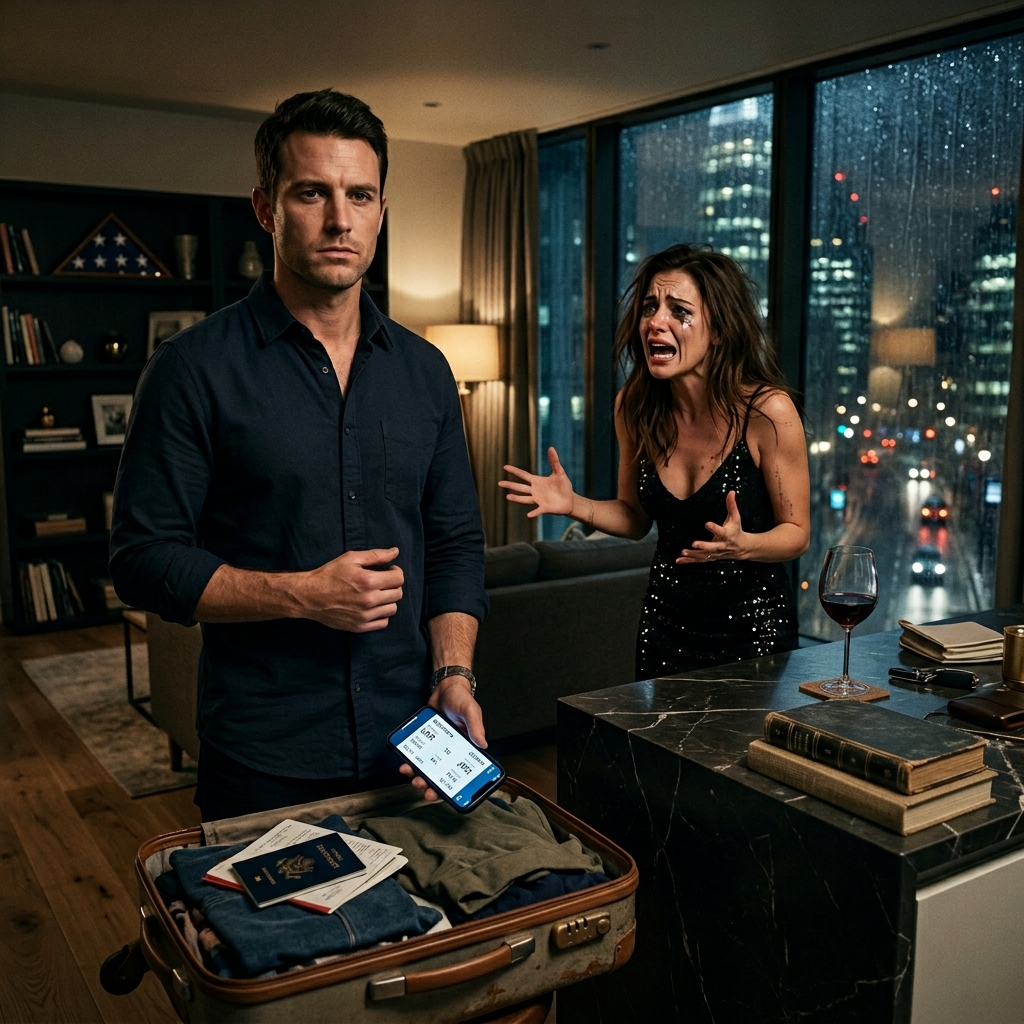
![[FULL STORY] She said, “I only see you as a friend.” I replied, “Friends don’t cover each other’s bills.”](https://social-media.rabedo.com/thumbnails/1776756933_13.png)
![[FULL STORY] My Wife Threw Me Out Saying I’d Never Be A Real, Successful Man. Five Years Later She Applied For...](https://social-media.rabedo.com/thumbnails/1777185792_R11.png)

![[FULL STORY] My Fiancée Confessed,"I Still In Love With My Ex. You're Just My Backup, When I Confronted Her About](https://social-media.rabedo.com/thumbnails/1776673081_3.png)