
At my birthday dinner, my girlfriend looked me in the eyes, laughed, and said, “You’re not exactly Instagram material, so don’t expect any photos tonight.”
Everyone laughed except me.
That is the part I keep coming back to. Not the insult itself, not even the humiliation of hearing it in a crowded restaurant on my thirty-fifth birthday, but the laughter that followed. Ashley laughed. Maya laughed. Jenna laughed too, with that brittle little sound she had developed over the last couple of years, the one that made cruelty sound like confidence. Around us, the restaurant hummed with soft music, clinking glasses, and people photographing dishes they would forget the taste of by morning.
I sat there with a whiskey in my hand and felt something inside me go still.
Not numb. Not broken. Just still.
The strange thing about clarity is that it does not always arrive with shouting. Sometimes it comes quietly, almost politely, and sits down beside you at dinner. It waits until the person you love says something unforgivable, and then it removes every excuse you had been using to survive.
I had been with Jenna for four years. To understand what happened that night, you need to understand the woman I thought I was dating versus the woman she became.
When we met, she was incredible. Sharp, funny, driven, and warm in a way that made you feel like you were the only person in the room. She could turn a boring Tuesday into an adventure. She remembered tiny details about people. She once drove across town in the rain because I mentioned I was having a terrible day and she wanted to bring me soup from my favorite place. Back then, she was not obsessed with being seen. She was interested in being present.
I was the stable one, the quiet one. I have a good job that I am proud of, one that allowed us to have a beautiful apartment downtown, travel occasionally, and live without constant financial pressure. I am not flashy. I do not enjoy posting my life online. I do not need strangers to approve of my dinner before I can enjoy it. Jenna used to say she loved that about me. She said I made her feel safe, grounded, protected from the exhausting performance of the world.
She was the social one, the one with the vibrant circle of friends and the effortless charisma. In the beginning, it worked. I grounded her, and she brought me out of my shell. We balanced each other.
At least, I thought we did.
Over the last two years, something shifted.
Her two best friends, Ashley and Maya, became a constant presence in our lives. They were the kind of women who lived through a phone screen. Every brunch was a shoot. Every walk in the park needed a caption. Every new candle, throw blanket, cocktail, and coffee had to be curated, filtered, and posted as proof that life was happening beautifully enough to be envied.
At first, I found it harmless. Annoying, sure, but harmless. I even took photos for them sometimes, standing awkwardly near walls while they adjusted sleeves, hair, angles, and lighting. But slowly, the world of performance started to replace the world Jenna and I had built together.
The woman who once loved quiet nights in with a movie started talking about “our brand” as a couple. The woman who used to praise my work started making little comments about how it was stable but not exactly glamorous. The woman who used to cook pasta barefoot in my kitchen began insisting that every meal needed an aesthetic, every weekend needed documentation, and every choice needed to fit the image she and her friends were building.
They had a small online boutique together called Modern Nest. It sold overpriced home decor, the kind of beige, woven, minimalist pieces that looked expensive because they were photographed beside linen curtains and coffee table books nobody read. I supported it. I helped with packaging logistics when they were overwhelmed. I let inventory take over our spare room more than once. I introduced Jenna to a few contacts who knew people in hospitality. I listened to her pitch decks. I celebrated small wins. I covered more of our household expenses so she could reinvest in the business.
I was not a sucker. At least, that is what I told myself.
I was a partner.
I believed in supporting the person you love. I believed that if I held steady long enough, the old Jenna would come back once the pressure eased. I saw glimpses of her sometimes. Late at night, when her phone was charging in another room, she would soften. She would rest her head on my chest and talk about how tired she was of keeping up. In those moments, I could still see the woman who brought me soup in the rain.
So I stayed.
I paid the majority of the rent on our apartment. I handled most of the bills. Not because Jenna could not contribute, but because my income was more stable and it gave her room to chase what she called her passions. That was the arrangement we made, and for a long time I was happy to do it.
That was my mistake.
I did not realize she had stopped seeing my support as partnership and started seeing it as a service.
Which brings us to my thirty-fifth birthday.
Jenna planned the dinner herself. She chose a trendy, expensive restaurant downtown called Aperture. It was the kind of place with mood lighting so dim you had to use your phone to read the menu, and every plate looked less like food than an audition for a magazine spread. The tables were marble. The cocktails smoked. The waiters spoke in calm, reverent tones about ingredients that sounded like they had been raised by monks.
The guest list was small: me, Jenna, Ashley, and Maya.
Looking back, that should have told me everything. My own birthday dinner, and somehow it was built around her comfort zone, her friends, her aesthetic, her world.
From the moment we sat down, I felt less like the guest of honor and more like an accessory she was embarrassed to carry. The three of them were a whirlwind of activity. Selfies before coats came off. Photos of the menus. Photos of the candles. Photos of cocktails held near cheekbones. They adjusted their hair in the reflection of butter knives and angled their glasses toward the light as if the bartender had mixed them for the algorithm.
I sat there nursing a whiskey.
The first real jab came when the appetizers arrived. Ashley slid a plate of oysters into what she deemed the perfect lighting and snapped a dozen photos.
“Jenna, you have to post these,” she said. “The aesthetic is everything tonight.”
Jenna glanced at me, then back at her friends.
“Oh, we’re not posting anything with him in it tonight,” she said.
There was a pause just long enough for me to register the warning in it.
Then she looked directly at me and smiled.
“Let’s be honest. You’re not exactly Instagram material, so don’t expect any photos tonight.”
Ashley and Maya burst into laughter.
High-pitched. Immediate. Cruel.
It was not teasing. Teasing requires affection. This was judgment wrapped in a joke and served publicly because she trusted I would swallow it quietly.
In their world of curated perfection, I was the flaw. The practical man. The boring boyfriend. The one who paid for the beautiful apartment but did not photograph well inside it. The one who made her life possible but did not fit the image.
I stared at her across the candlelit table.
For a second, the hurt was sharp enough to make my throat tighten. Then something sharper cut through it.
Clarity.
The fog of hope I had been living in for two years vanished so completely it was almost peaceful. I saw Jenna, Ashley, and Maya exactly as they were. Not glamorous. Not ambitious. Not misunderstood. Just shallow people standing on a floor someone else had paid for while laughing that he was not decorative enough.
I did not argue.
I did not raise my voice.
I gave a small, tight smile and took a sip of my whiskey.
The old me would have been wounded and spent the rest of the night trying to earn back warmth from someone who had just humiliated me. The new me, born in that exact moment, started making a plan.
The rest of dinner blurred into their chatter. They talked about influencers I had never heard of, trips they were planning, and how Modern Nest was about to land a huge new client that would change everything. Beaumont Hotel Group, they said, was launching a new line of luxury residences and wanted a local boutique to handle welcome kits and staging decor. Ashley said it would “put them on the map.” Maya said they would finally be seen as “serious tastemakers.” Jenna said nothing to me about it, even though I had spent years making introductions, paying bills, and absorbing the practical consequences of her dreams.
They spoke as if I was not at the table.
I listened.
I nodded occasionally.
My mind worked like a machine, assembling pieces, calculating trajectories, measuring the distance between what she thought I was and what I actually had become while she was busy looking at herself through a filter.
Jenna must have mistaken my silence for submission. As the main courses were cleared, she patted my hand with a sickeningly sweet smile.
“Don’t be so sensitive, babe,” she said. “You know I’m just teasing. We’ll get a photo of you with your cake.”
“Of course,” I said evenly. “I wouldn’t miss it.”
The waiter approached. “Will we be having dessert this evening?”
Before I could speak, Jenna cut in.
“Oh, that’s all been taken care of,” she said. “We have a special cake being delivered.”
She winked at Ashley and Maya, who giggled in anticipation.
They thought they controlled the evening’s narrative. I was the awkward boyfriend at the table, not photogenic enough for the main feed but useful enough to fund the lifestyle. They would probably post the cake, maybe crop me out, maybe include my hand near a fork if it helped the composition.
We waited.
Ten minutes later, I saw movement near the restaurant entrance.
The manager was personally escorting someone through the dining room. Jenna, Ashley, and Maya all sat up straighter, phones ready, expecting some pastry chef with a fancy box.
But it was not a pastry chef.
It was Isabella Rossi.
To understand the significance, you have to understand who Isabella is in our city. She is a legend. She started with a single tiny Italian restaurant two decades ago and turned it into a culinary empire. She owns some of the most respected restaurants in the state. She is powerful, elegant, deeply respected, and famously uninterested in people who waste her time. She is known for not suffering fools, which makes her terrifying to social climbers and beloved by serious people.
In Ashley and Maya’s world, Isabella Rossi was not merely a restaurateur.
She was status incarnate.
She walked toward our table carrying a simple, elegant cake. She was not dressed like a delivery person. She wore a sharp tailored suit and moved through the room like she owned it, which, in a way, she did. Her reputation owned every restaurant in the city.
Jenna’s jaw went slack.
Ashley and Maya looked like they had seen a ghost. Their hands hovered near their phones, but they were frozen, unsure whether filming would be bold or career-ending.
Isabella arrived at our table and placed the cake directly in front of me.
She ignored the three women completely.
Then she smiled at me with genuine warmth and said, “Happy birthday, partner. Sorry I’m late. The final permits for the new venue came through. We’re officially green-lit.”
She placed a hand on my shoulder.
“I couldn’t let my investor celebrate his thirty-fifth without the best tiramisu in the city.”
The entire table went silent.
Not quiet.
Silent.
The kind of silence that sucks the oxygen out of a room.
Jenna’s face moved from smug to confused to horrified in the span of about ten seconds. Ashley and Maya looked back and forth between me, Jenna, and Isabella, their brains visibly short-circuiting. The boring man who was not Instagram material had just been publicly greeted as a partner by the most photographed and respected restaurateur in the state.
I looked at Jenna. The fake smile was gone from my face.
I picked up my fork, cut into the cake, and said calmly, “Jenna, you remember my silent partner Isabella, don’t you? I’m sure I’ve mentioned her.”
I had not, of course.
For the past year, I had been quietly investing in Isabella’s new flagship restaurant, a project that was already the talk of serious hospitality circles. I was not just some silent money man either. I was a strategic partner handling logistics, property coordination, supply chain planning, and buildout strategy. It was my biggest venture outside my regular work, and I had kept it completely separate from Jenna.
Not because I was hiding success from a partner.
Because some quiet instinct in me had known she would not love the work. She would love the access.
Jenna just stared at me.
The woman who had declared me unsuitable for Instagram was now sitting across from a connection she would have begged to photograph with. The irony was so thick you could taste it, and it was sweeter than any cake.
Isabella, a true professional, did not linger. She wished me happy birthday one more time, gave me a knowing look that said we would talk later, and walked away, leaving a crater in the middle of our table.
Jenna finally found her voice.
“Partner?” she whispered. “Investor? What is she talking about?”
“Isabella and I have been working on her new restaurant for the last year,” I said, taking another bite of tiramisu. It was, as promised, the best I had ever tasted. “I handled the site acquisition and buildout logistics. It’s a business venture I’ve been very excited about.”
Ashley and Maya stared at me like I had grown a second head. The disdain they usually wore around me was gone, replaced by something frantic and ugly that looked almost like respect. Suddenly, I was no longer the unglamorous boyfriend. I was a door they had not known existed.
The rest of the dinner was excruciating for them and strangely peaceful for me.
Jenna tried to recover. She asked questions in a voice too bright to be natural. Ashley made a joke about how I was “full of surprises.” Maya said Isabella looked amazing in person, as if that was somehow the correct response to learning they had mocked a man with direct access to the very world they were desperate to enter.
I paid the bill because it was my birthday dinner and because I wanted that chapter closed cleanly.
The car ride home was a masterclass in awkward silence.
Jenna tried several times to start a conversation.
“I just don’t understand why you wouldn’t tell me about something so huge,” she said, her voice unnaturally high. “We’re supposed to be a team.”
I kept my eyes on the road.
“You seemed pretty busy focusing on our brand,” I replied. “I didn’t want to bother you with details.”
She flinched.
When we walked into our apartment, the facade collapsed.
“What was that, Mark?” she demanded.
I took off my coat slowly. “What was what?”
“You brought Isabella Rossi to my dinner to humiliate me.”
“It was my birthday dinner, Jenna.”
“You know what I mean.”
“I didn’t bring her,” I said. “She came as a friend and business partner. The fact that you were humiliated by that says more about you than it does about me.”
She stared at me, mouth opening and closing, but no answer came.
For once, she had no script.
I walked into the spare room, closed the door, and slept on the pullout couch.
The next morning, I was awake before she was. I made coffee, got dressed, and moved with a calm precision that felt almost unfamiliar. Before I left, I placed a single freshly printed document on the kitchen counter where she would be sure to see it.
A sixty-day notice to vacate.
The apartment was mine. I had signed the lease long before Jenna moved in. She was never officially added to it. Legally, she was a tenant, and I was the leaseholder. I had checked everything before acting. It was cold, yes. It was brutal, maybe. But her comment at dinner had shown me that, in her mind, our relationship had already become transactional.
I was simply ending the business arrangement.
My phone started blowing up around 9 a.m.
“What is this?”
“You can’t be serious.”
“You’re kicking me out?”
“After everything?”
I did not reply.
Instead, I called a company that specialized in high-end home staging and liquidation. I explained the situation carefully. I had an apartment full of furniture, decor, and shared household items I wanted professionally inventoried, packed, and removed where appropriate. Her personal belongings were to be separated, boxed, documented, and placed in a secure climate-controlled storage unit. Anything clearly mine stayed. Anything purchased for the general aesthetic could go into storage or be assessed for sale later.
They told me it was a rush job.
I told them price was no object.
While Jenna was at work trying to process the notice, a team of professionals arrived at the apartment. They worked with quiet, ruthless efficiency. Every throw pillow. Every scented candle. Every beige chair. Every woven basket. Every staged little object Jenna and her friends had arranged over months to make our home look like a lifestyle page was wrapped, boxed, and removed.
They cleared her closets into wardrobe boxes. They packed her shoes, her bags, her skincare, her stacks of coffee table books, and the inventory from Modern Nest that had been living rent-free in my spare room. They took photos of everything. They labeled everything. They created an inventory list so no one could accuse me of destroying her property.
By the time they were finished, the apartment was empty, echoing, and sterile.
A blank canvas.
Then the staging company came in.
They brought sleek modern furniture, bold art, warmer lighting, and a level of taste that did not need six filters to prove itself. By 4 p.m., the apartment no longer looked like the life Jenna had curated. It looked expensive, calm, and unmistakably mine. A successful investor’s downtown apartment. Masculine without being cold. Elegant without begging for attention.
At 4:30 p.m., I sent Jenna one text.
“Your belongings have been packed and placed in a secure climate-controlled storage unit. Here is the address and key code. You have thirty days of prepaid access.”
Then I called a real estate agent, a contact I had met through the restaurant deal, and told her I had a prime downtown apartment, newly staged, that I wanted to list for lease at a premium price. She was thrilled and promised to move quickly.
But the true genius of the plan had nothing to do with furniture.
It was Modern Nest.
The huge client Ashley and Maya had been so excited about at dinner was Beaumont Hotel Group. They were launching a new line of luxury residences and considering Modern Nest for welcome kits and staging decor. It was a massive reputation-making contract, the kind of opportunity small boutiques build entire futures around.
What Jenna, Ashley, and Maya did not know was that I had a connection to Beaumont.
The head of their new development, Arthur Vance, was a casual acquaintance. We had met through a mutual contact in construction. Arthur was old school. Practical. Serious. The kind of man who valued integrity, discretion, and professionalism over follower counts. He had no patience for influencer theatrics or messy personal drama bleeding into business.
So I sent Arthur a simple email.
“Arthur,
Hope you’re well. Quick informal heads-up: I heard you may be considering a boutique called Modern Nest for the new residences. My soon-to-be ex-girlfriend is a co-owner. I can’t speak to their business practices directly, but I can tell you that their personal conduct and judgment are, in my opinion, severely lacking.
Just thought you should know.
All the best,
Mark.”
It was subtle. No accusations. No lies. Just a seed of doubt from a credible source. I knew Arthur well enough to know he would not act blindly. He would do his own digging, and when he did, he would find exactly what I already knew: a shallow, unprofessional online presence built more around the founders’ faces than the products they sold.
I got home to my newly staged apartment around 6 p.m.
It felt peaceful.
I poured myself a whiskey and sat on a leather couch I had never seen before, looking around at a room that felt less like revenge and more like oxygen.
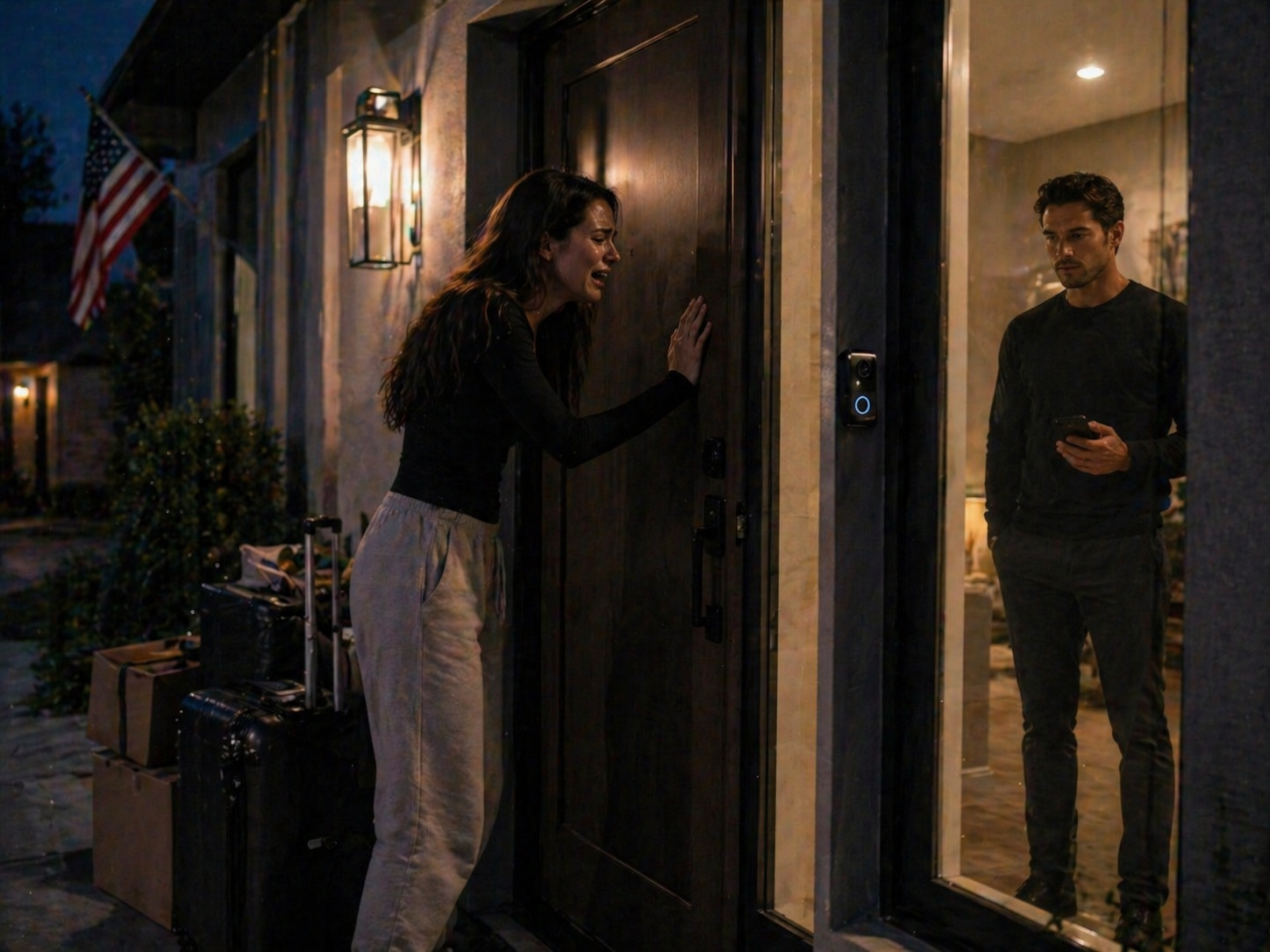
An hour later, my video doorbell chimed.
It was Jenna.
Her face on the screen was a mask of fury and disbelief.
I let her buzz for a full minute before answering.
“Mark,” she shouted through the speaker, “what happened? Where’s all our stuff? The key you gave me is for a storage unit. I thought it was a joke.”
“It’s not a joke, Jenna,” I said calmly. “I’m redecorating. Your things are safe. You have thirty days to collect them.”
“You can’t do this. This is my home.”
“Read the lease,” I said. “And the notice I left this morning.”
Then I disconnected the call and turned off notifications.
Phase one was complete.
The foundation of the life she thought she had was gone.
The next two days were a storm of digital rage.
Blocked from my phone, Jenna resorted to email and messaging apps I rarely used. Her messages were a predictable cocktail of fury, disbelief, guilt, and threats. She called me cruel. She called me a monster. She threatened to call the police, which I knew was empty because I had documented everything. She threatened to sue me, which was also a bluff, or at least a weak opening move.
I did not respond to a single message.
Silence became my most powerful weapon.
Ashley and Maya tried a different tactic. They launched a smear campaign on social media. Vague tearful posts appeared about betrayal from those you trust most. Stories about how “some men can’t handle a strong, successful woman.” Quotes about financial control, emotional abuse, and rebuilding after toxic love. They did not use my name at first, but the implication was obvious to anyone who knew us.
Their followers lapped it up. Comments appeared about how Jenna deserved better, how she was glowing even through pain, how women should never dim themselves for insecure men.
It was annoying, but not frightening.
Because my lawyer had already told me what to do.
Let them talk until they crossed a line.
The real blowback came on the third day.
I received an email from Jenna that was different from the others. Cold. Formal. Clearly written or edited by someone with legal knowledge. It demanded that I cease all contact, return her “half” of the apartment’s contents, and provide financial support for the lifestyle she had become accustomed to. It ended with a line that made me almost laugh.
“My lawyer will be in contact to discuss the division of our shared assets, including your recent business ventures.”
She was coming after the restaurant deal.
She thought that because we had been in a long-term relationship, she was entitled to a piece of my success. Not because she had invested. Not because she had worked on it. Not because she had even known it existed until Isabella brought me cake. She wanted it because she had grown used to believing proximity to me meant ownership of anything I built.
This was the move I had been waiting for.
I forwarded the email to my own lawyer, a sharp, no-nonsense woman named Elaine who had helped me structure the investment with Isabella.
Her reply came quickly.
“Let her try. The investment was made from a private trust you established five years ago using funds you held prior to the relationship. She has no claim. This is intimidation. Do not respond.”
So I didn’t.
Meanwhile, the seed I planted with Arthur Vance had begun to sprout.
He called that afternoon.
“Mark,” he said, his voice a low grumble. “Arthur Vance here. I got your email.”
“I appreciate you calling.”
“I looked into that little boutique.”
He paused.
“You were being diplomatic.”
I said nothing.
“Their online presence is a circus,” Arthur continued. “Unprofessional. Self-absorbed. Not the kind of people we want associated with the Beaumont brand. We’re terminating preliminary discussions.”
“I’m sorry to hear it didn’t work out,” I said, keeping my voice neutral.
“Don’t be. You saved me a headache. We owe you one. Let me know if you need anything on the new restaurant project.”
The news hit their camp like a bomb.
Around 5 p.m., I got a voicemail from a number I did not recognize. It was Ashley. Her voice was a hysterical shriek.
“Mark, you have to call them back. You have to fix this. The Beaumont contract is gone. They just sent us an email ending the deal. This was everything for us. You did this. I know you did.”
I saved the voicemail.
It was beautiful evidence, not because I planned to use it cruelly, but because it directly contradicted the “unsuccessful controlling boyfriend” narrative they had been pushing. Suddenly, Ashley was admitting I had enough professional credibility to influence major business decisions. Strange how quickly a man becomes powerful when you need him to undo the consequences of disrespecting him.
That evening, the social media smear campaign escalated.
Maya posted a long story about a “friend” being financially abused by her controlling ex, a man allegedly trying to ruin her career because he was jealous of her success. The comments turned vicious. People who did not know me called me names with the confidence of people who had consumed exactly one side of a story and mistaken it for justice.
It was unpleasant.
It was also useful.
They had crossed into specific defamatory territory. My lawyer advised me to keep screenshots of everything, including timestamps, comments, shares, and any identifying references. I did.
The final piece of that phase fell into place the next morning.
The real estate agent called. She had already hosted three showings at the apartment. One of them, a wealthy executive who had just relocated to the city, made an offer on the spot. He wanted to lease it for two years, fully furnished with the new staging, at a price twenty percent higher than I had asked. He was willing to pay the first six months upfront.
I accepted immediately.
The apartment was officially off the market.
With the lease signed, I finally broke my silence with Jenna.
I sent one consolidated email.
“Jenna,
Attached, you will find a copy of the new lease agreement for the apartment. As you can see, it is no longer available.
Your thirty-day window to retrieve your belongings from the storage unit remains in effect.
You will also find a letter from my attorney. It addresses the baseless claims to my personal assets, all of which are legally protected from any claim you might make. The letter also serves as a formal cease and desist notice regarding the ongoing defamatory social media campaign being waged by you and your associates. We have documented every post, story, and comment. If this harassment does not stop immediately, we will pursue legal action for defamation and seek damages.
Finally, I have attached a detailed invoice. It covers the professional packing and storage of your items, as well as the full cost of the birthday dinner at Aperture, which was charged to my credit card. Payment is expected within fifteen days.
This will be my final communication with you. Any further correspondence must go through my lawyer.
Mark.”
I hit send and felt a weight lift off my shoulders.
There was no insult in it. No rant. No begging her to understand. Just facts, contracts, documentation, and consequences.
They had tried to fight a war of emotion and public opinion.
I fought a war of logistics and legal fact.
And I was winning.
The aftermath of that email was exactly what you would expect: a complete meltdown, but this time inside a vacuum.
Jenna had no way to reach me directly. Her friends’ social media accounts went quiet within twenty-four hours. The vague angry posts vanished. The tearful stories disappeared. The cease and desist had done what online arguments never could. It introduced real-world consequences to people who were used to treating reputation like content.
About a week later, I heard through a mutual acquaintance that Jenna had a screaming match with Ashley and Maya. She blamed them for everything. She said they filled her head with nonsense about status and appearances. She said they pushed her to see me as inadequate. She said they encouraged the social media campaign that turned a private breakup into a legal problem.
Maybe that was true.
But only partly.
Ashley and Maya did not create the contempt. They watered it.
Their little trio, once inseparable, fractured under the first sign of pressure. Their friendship, as it turned out, was as superficial as their feeds. It survived brunches, filters, and shared captions. It could not survive lost money.
Jenna’s legal threats went nowhere. Her lawyer, after receiving the detailed breakdown of my finances and the structure of my investments from Elaine, must have advised her that she had no case. I never heard from him again. The entitlement she felt to my success crashed against the hard wall of legal reality.
The invoice became a point of contention.
She refused to pay it, of course.
So after fifteen days, Elaine filed a small claims case. The amount was not life-changing. It was the principle. Jenna had treated me like a wallet when things were comfortable, then like a villain when the wallet closed. If she wanted to turn everything into a transaction, I was willing to itemize.
She was served at the apartment where she was temporarily crashing with Ashley.
I am told the humiliation was profound.
Faced with an actual court date and documentation she could not spin into a caption, she paid the full amount.
The biggest consequence for Jenna was not the invoice, though. It was the sudden disappearance of the life she had taken for granted. She had no apartment. The Beaumont contract was gone. Her friendship with Ashley and Maya was collapsing. The stable foundation she had mistaken for background scenery had been removed, and for the first time, she had to see how much of her curated world had been built on my quiet labor.
The story began circulating in our city’s business and social circles.
Not the version Jenna and her friends tried to tell, but the real one. People talk. Especially people in restaurants, real estate, hospitality, and design. Isabella Rossi did not gossip, but when asked, she would simply say, “Mark is a brilliant and loyal partner. It’s a shame his ex-girlfriend couldn’t see it.”
That was all it took.
An endorsement from Isabella carried more weight than a hundred crying stories posted by women who had been caught confusing aesthetics with character. Jenna’s victim narrative fell apart because the people she wanted to impress trusted Isabella’s judgment more than her performance.
Modern Nest struggled badly after losing the Beaumont opportunity. Without that contract, they were just another small online store selling neutral-toned decor to people who wanted their homes to look like rental listings. Ashley and Maya reportedly blamed Jenna for costing them their big shot. Jenna blamed them for encouraging her worst instincts. Everybody blamed everybody, which is what happens when friendships are built on mutual vanity instead of loyalty.
About two months after my birthday, I was having dinner at one of Isabella’s other restaurants. The new flagship was still weeks from opening, and I had stopped by to review some final logistics before eating alone at the bar.
A woman approached me as I was finishing my drink.
She was one of Jenna’s peripheral friends, someone I had met maybe five or six times at parties. Not part of the Ashley-Maya inner circle, but close enough to have heard things.
“Mark?” she said hesitantly.
I turned. “Hi.”
“I just wanted to say…” She looked uncomfortable, then decided to continue. “I heard what happened. And I’m not surprised. The way Jenna and Ashley and Maya talked about you when you weren’t around was awful. You did the right thing.”
That, more than anything, felt like validation.
Not because I needed everyone to take my side, but because it confirmed what I had slowly begun to understand: the birthday comment was not a one-off. It was not a bad joke or a moment of insecurity. It was the public version of a private disrespect that had been happening long before I heard it.
The new restaurant with Isabella opened six weeks later to rave reviews.
It became the hottest reservation in town almost overnight. The food was incredible, the space was beautiful, and the operational side ran smoothly because that was what I had been building while Jenna was busy deciding I was not photogenic enough to appear beside her oysters. My investment began paying off sooner than expected. The apartment remained leased at a premium. My logistics company continued growing. I reconnected with friends I had neglected while trying to keep Jenna happy, and I started going to the gym again, not for appearance, but because I liked feeling strong in my own body.
I also learned to enjoy quiet again.
Not the tense quiet of swallowing insults. Real quiet. Peaceful quiet. Coffee in the morning without someone filming the mug. Dinner without moving plates toward better light. A home without beige objects arranged to impress strangers. A life that did not need to prove itself to be valuable.
People ask if I regret how coldly I handled it.
Sometimes, yes.
I am not going to pretend every choice came from pure enlightenment. There was anger in me. There was hurt. There was a desire to make Jenna feel, even briefly, the humiliation she had handed me so casually. I am human, and I will not dress revenge up as therapy.
But I do not regret leaving.
I do not regret protecting my assets.
I do not regret documenting everything.
I do not regret removing myself from a life where my role was to pay for the backdrop while being cropped out of the picture.
A partnership has to be built on mutual respect. The moment one person starts seeing the other as an accessory, a stepping stone, or worse, as something not worthy of being seen, the foundation is already cracked. Maybe it can be repaired if both people notice in time. But Jenna did not notice. She laughed.
That was the difference.
She wanted a life that looked good in photos.
She ended up with nothing worth capturing.
I stopped worrying about what my life looked like to others and started building one that felt good to me.
And that is a victory no filter can replicate.