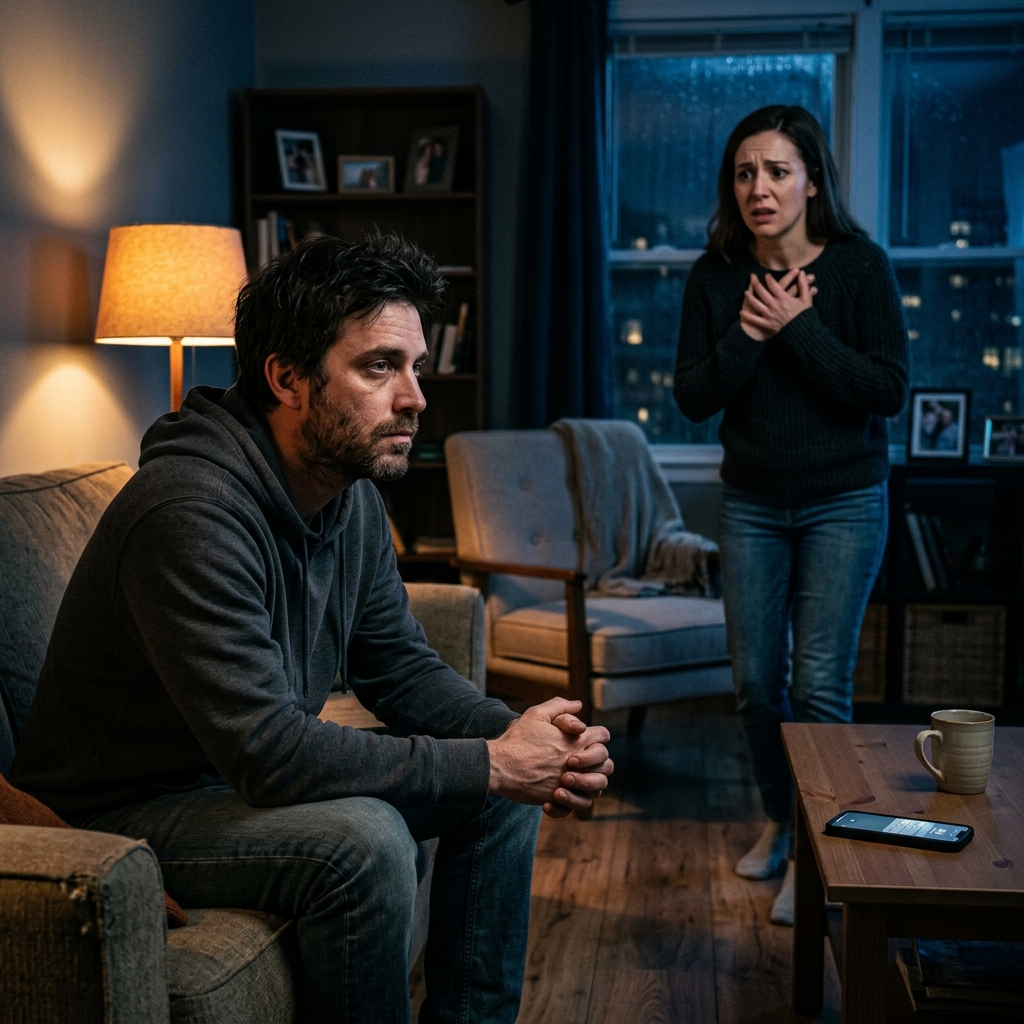
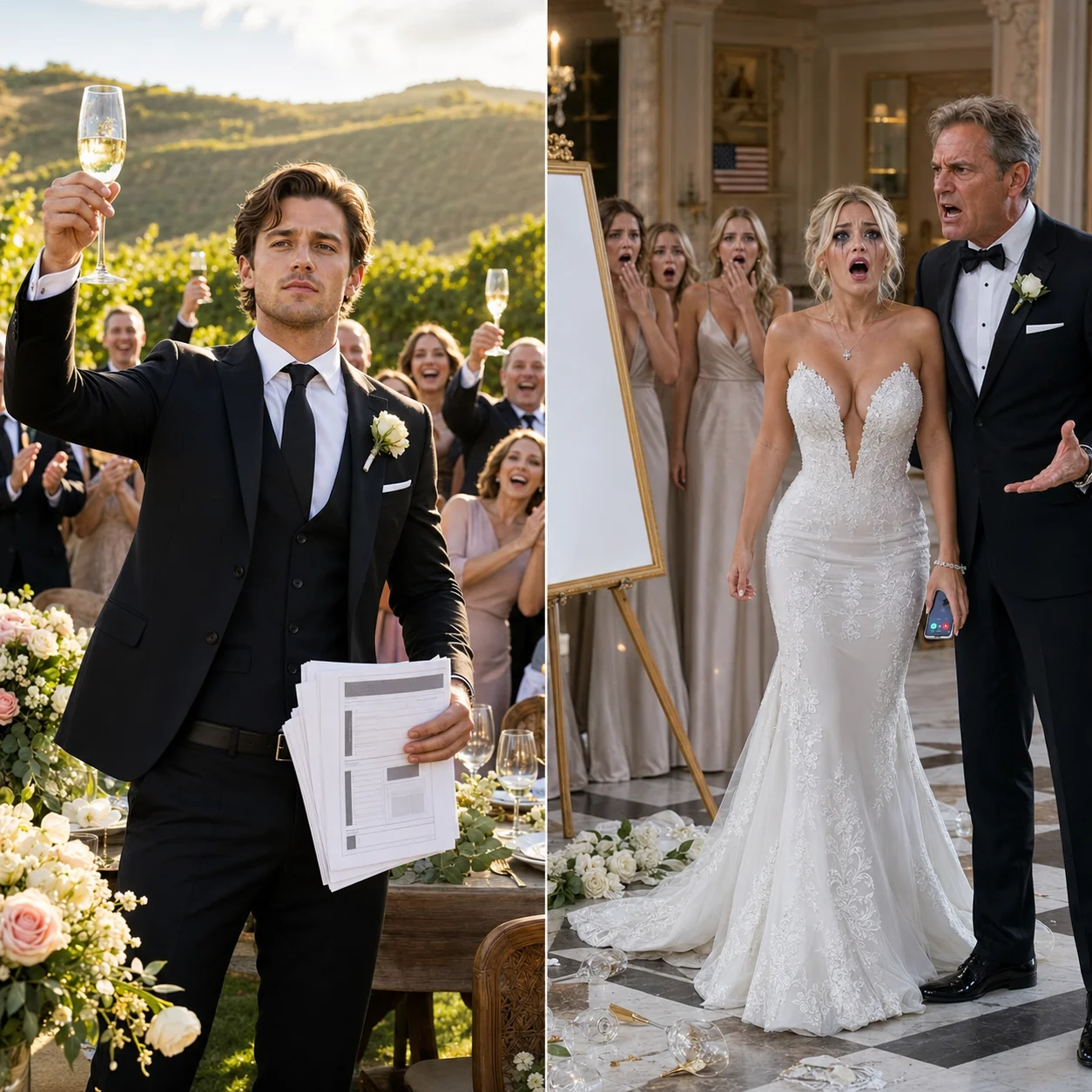
When I proposed to Megan on a crisp autumn evening overlooking the city skyline, I genuinely believed I was the luckiest man alive.
We had been together for three solid years. They were good years—or at least, that was the narrative I had spun for myself in the quiet corners of my mind. I am a private person by nature, a man who prefers the steady certainty of facts, numbers, and logistics over the unpredictable theater of social validation. I own and operate a mid-sized logistics and supply-chain management company that I built from absolute scratch. It isn't a glamorous line of work. There are no red carpets, no flashing lights, and no social media praise for optimizing freight lanes or negotiating warehouse leases. But it is demanding, highly practical, and entirely mine. I spent my late twenties and early thirties turning grueling sixteen-hour days, calculated financial risks, and sleepless nights into a stable, thriving enterprise. The company became successful enough that I could live comfortably, quietly support my aging parents when their medical bills stacked up, and eventually invest in a future where I could give the woman I loved anything her heart desired.
Megan was the complete polar opposite of me in almost every measurable way. She was vibrant, highly social, effortlessly magnetic, and possessed a rare ability to command the attention of any room she stepped into. She loved being noticed, but in the early stages of our relationship, I didn't view that trait as a character flaw. I viewed it as a brilliant, infectious confidence. Where I was quiet and analytical, she was sparkling and spontaneous. Where I was cautious and measured, she was bold and uninhibited. I told myself that we balanced each other perfectly. She brought the light into the dark, functional spaces of my life, and in return, I provided the unshakable foundation that kept her grounded.
For a long time, that beautiful story worked.
Then, we started planning the wedding.
The shift in her demeanor happened so gradually that I almost missed the warning signs entirely. At first, I simply thought Megan was experiencing the standard, high-octane excitement of a bride-to-be. She had dreamed about her wedding day since she was a little girl, a sentiment she repeated to me like a mantra, and because I loved her deeply, I wanted nothing more than to hand her a day that made her completely happy. She began creating massive digital mood boards, booking endless consultations, and spending hours upon hours on heated phone calls with wedding planners, floral designers, luxury stylists, and boutique lifestyle vendors whose job titles sounded entirely invented. I smiled through the endless discussions about color palettes, fabric textures, and customized lighting packages because I loved seeing her smile, and because I assumed this temporary madness would dissipate the moment the wedding rings were safely on our fingers.
But as the weeks bled into months, the planning stopped feeling like a celebration of a lifelong commitment.
We weren't planning a marriage anymore. We were building an elite social media image.
The wedding was no longer a beautiful milestone marking our love; it had transformed into a high-budget theatrical production, and Megan was the undisputed star, director, and executive producer. Her family, particularly her arrogant father, Richard, and her deeply superficial maid of honor, Olivia, quickly stepped into their roles as her eager supporting cast. They came from old money—the kind of generational wealth that inevitably teaches people to mistake sheer expense for genuine taste, and unearned comfort for absolute superiority. Richard and Olivia had never had to look at the bottom line of a financial statement in their entire lives. While they were perfectly polite to my face on a surface level, I always carried the distinct, underlying impression that they considered me a highly useful tool rather than a respected equal.
They tolerated my presence because I made Megan happy. More importantly, they tolerated me because I was entirely capable of funding the absurdly lavish lifestyle Megan suddenly insisted was her birthright.
I paid the staggering initial deposits on our primary venue—a ridiculously grand, sprawling historical property known as the Asheford Estate. I signed the checks for the artisan caterer, the high-end ten-piece live band, the celebrity florist, the fine-art photographer, the architectural lighting team, the luxury guest transportation, and a dozen other extravagant details that somehow transformed from "optional luxuries" to "absolute essentials" the moment Megan and Olivia repeated the words enough times. The budget didn't just grow; it ballooned exponentially. Every single week presented a new mandatory upgrade, a new must-have imported linen, a new emotionally charged conversation about how this was supposed to be the most magical, flawless day of Megan’s entire existence.
Whenever I attempted to step in and suggest a more reasonable, grounded option to keep the costs within the realm of sanity, Megan would instantly pout her lip, cross her arms, and look at me with tears pooling in her eyes.
"But Liam, this is my one special day," she would whisper defensively, her voice trembling with a practiced vulnerability. "Don’t you want our wedding to be perfect? Don't you want me to be happy?"
Her father, Richard, would sit back in his leather armchair during these family dinners, a smug, paternal smile playing on his lips. He would lean back, look down his nose at me like he was imparting timeless wisdom to an ignorant child, and say, "Let the girl have what she wants, son. It’s important to keep her happy. A man in your position should be glad to provide it."
Son.
He always pronounced the word like a compliment, but it never felt like one. It felt like a subtle, calculated boundary line. My role in this grand family dynamic was not to actively participate. My role was not to have a voice, an opinion, or a preference. My role was simple: write the checks, stay out of the way, and remain quietly grateful that I was being allowed into their orbit.
I kept telling myself that I was just being overly sensitive. I told myself that weddings are inherently stressful environments, that families get intensely emotional, and that high-profile brides simply care deeply about the finer details. I convinced myself that I was being too practical, too fiercely guarded, too used to solving corporate logistics problems by aggressively cutting out financial waste. I kept praying that once the final curtain fell on the wedding day, Megan would gracefully come back down to earth, the noise would fade, and we would return to being the simple, loving couple we used to be.
Then, the engagement party happened.
It was a lavish, over-the-top affair hosted in the grand ballroom of a boutique downtown hotel, filled almost exclusively with Megan’s extended family, high-society friends, and professional connections. Her side of the crowded room literally glittered with expensive Swiss watches, perfectly tailored designer suits, silk dresses, and people who all seemed to share an insular history from private schools, country clubs, and elite charity boards. My guest list was starkly small by comparison: my parents, my younger brother, and a handful of my closest, lifelong friends. We stood together near the perimeter of the room, looking out at the sea of wealth, while Megan moved effortlessly through the crowd like a politician on a campaign trail, laughing loudly and showing off her massive diamond ring like she was accepting a prestigious award for a solo achievement.
As the evening progressed, Richard stepped up to the microphone, raising his crystal glass for a formal toast. The entire ballroom fell into an expectant hush, because people like Richard are entirely accustomed to rooms obeying their silent commands.
"To my beautiful, brilliant daughter," Richard said, his voice booming with immense pride as he beamed down at Megan. "And to Liam, a man who is very, very lucky to have her."
The room erupted into polite, synchronized cheers and applause. I forced a polite smile onto my face because that was exactly what I was expected to do. I stood there, a prop in a tuxedo, playing my part.
Then Olivia, Megan’s maid of honor, stepped up beside her with a loud, champagne-fueled laugh, chiming into the microphone. "He sure is lucky! Megan, darling, are you getting nervous for the big day? It's right around the corner!"
Megan took a slow, deliberate sip of her champagne, turned her head, and looked directly over at me from across the room. There was a playful, performative expression plastered on her face, but underneath the surface of her bright eyes, I saw something entirely different. Something cold. Something incredibly sharp. It was a look I had noticed a few times during the wedding planning process, a look I had repeatedly excused as stress, exhaustion, or harmless humor at my own expense.
"Nervous?" Megan said clearly into the microphone, her voice carrying flawlessly to every corner of the silent ballroom. "Please. He’ll be lucky if I even show up to the wedding."
The room instantly exploded.
Her friends laughed hysterically. Her family clapped. Richard let out a booming, deep laugh, slapped his knee, and shook his head. Olivia threw her head back, gasping for air as if Megan had just delivered the most brilliant piece of comedic gold ever spoken in human history. The sound of their collective amusement filled the grand ballroom, bright, sharp, and incredibly cruel, bouncing off the high ceilings while I stood there with a glass of champagne frozen in my hand, feeling something deep inside my chest fracture with absolute, pristine clarity.
It wasn’t a joke. Not really.
A real joke is inclusive; it brings people together. This was an exercise in public power. It was a calculated declaration of where I truly stood in her hierarchy. I was the disposable variable. I was the incredibly grateful commoner. I was the man who should spend every waking moment feeling exceptionally lucky that she had agreed to wear my ring, lucky that she might someday condescend to take my last name, and lucky that she would even bother walking down a long aisle toward me.
I slowly looked away from Megan and turned my gaze toward my family.
My mother’s face had completely fallen, a look of profound, maternal hurt washing over her features. My father stared silently into his drink, his jaw clenched so tightly that a muscle was leaping in his cheek. My brother looked absolutely livid, his fists balled at his sides, ready to step forward and say something that could never be taken back. In that single, sickening second, I realized with absolute clarity that Megan hadn't just publicly humiliated me. She had humiliated the people who loved me most by forcing them to stand there and watch a room full of strangers laugh at my subordinate place beneath her.
For one fleeting moment, a wave of hot, blinding anger threatened to break through my exterior.
Then, everything inside me went perfectly, beautifully still.
The emotional hurt was present, but it didn't break me. Instead, it hardened instantly into something much colder, cleaner, and entirely operational. In that quiet moment of inner silence, I saw the entire relationship from a massive, objective distance. The endless wedding planning. The ballooning checks. Richard’s smug financial advice. Olivia’s condescending little side comments. Megan’s tactical pouting every single time I requested a voice in my own future. I saw the unvarnished truth: everyone in that room treated me as if my money carried immense value, but my human dignity was entirely negotiable.
This wasn't a partnership built on mutual respect. It was a high-society performance. And I was nothing more than a generic prop holding up the set.
So, I did the only thing a logical man could do without giving them the satisfaction of watching me break or cause a scene. I smiled.
I raised my glass high into the air, locked eyes directly with my beautiful fiancée across the crowded ballroom, and said, "To the bride. May she get exactly what she deserves."
The room cheered enthusiastically once more, completely, blissfully oblivious to the double meaning hanging in the air. They thought I was simply playing along with the banter. They thought I was the safe, dependable, compliant fiancé who would swallow any insult to keep the peace.
They had absolutely no idea that I had just made a solemn, unbreakable promise to myself. She would indeed get exactly what she deserved. The grand, opulent wedding she had been meticulously planning for a year was now a phantom. A completely new operational plan was already forming in my mind, one where her own words would become her literal reality. But as I took a sip of my drink, watching her return to the adoring crowd, I knew that the next two months would require a level of cold deception I had never practiced before, and the first true test of that deception would begin the very next morning...
![[FULL STORY] Girlfriend Humiliates Me in Public and Says I’ll Never Be Good Enough — So I Walk Away Quietly](https://social-media.rabedo.com/thumbnails/1776418083_670621233_1912322753054224_8968518003055153581_n.jpg)
![[FULL STORY] She Said She Wasn’t Ready for Marriage—So I Stopped Waiting and Found Someone Who Was](https://social-media.rabedo.com/thumbnails/1776922303_452b547e-59ee-4a67-859c-b9c6e7bc30cf.png)
![[FULL STORY] My Wife Texted From Her Parents’ House: “I’m Not Coming Back Until You Buy Me A New SUV.” I Replied](https://social-media.rabedo.com/thumbnails/1776395773_19440ff6-35a2-4967-a797-70a19c356310.png)