I didn’t know any Elliot.
Under different circumstances, I might have asked. But my father was dead in a building ten minutes away, and I could not make myself care about a name on a screen.
The service began at eleven.
People came. More than I expected. Dad had been a mechanic for most of his life before his knees forced him into early retirement. He was not rich. He did not dress sharply or network or collect impressive acquaintances. But he had fixed cars for people who couldn’t pay full price. He had shoveled snow from elderly neighbors’ driveways. He had coached Little League for ten years after I stopped playing because he said kids still needed someone to yell “good swing” even when they missed.
The room filled with people who owed him nothing and remembered everything.
My cousin Mark spoke first. Then Dad’s neighbor, Mrs. Albright, who cried through a story about Dad replacing her broken mailbox after teenagers smashed it. Then me.
I stood at the podium with my hands gripping the sides hard enough to hurt.
“My father was not a man who gave long speeches,” I began. “So he would probably tell me to keep this short and stop making everyone uncomfortable.”
A small ripple of laughter moved through the room. It almost broke me.
I talked about his garage, his oranges, his terrible singing voice, the way he could diagnose an engine problem by listening for three seconds and diagnose a character problem almost as fast. I said he taught me that love was not loud most of the time. It was showing up. It was keeping your word. It was checking tire pressure before a road trip because you cared whether someone got home safe.
When I looked up, I saw people crying.
I saw my father’s old friends nodding.
I saw Vanessa looking down at her phone.
Not checking the time. Not glancing once.
Typing.
Her thumbs moved quickly under the folded funeral program.
For one sharp second, grief gave way to humiliation.
Then she looked up and realized I had seen her. She immediately lowered the phone, arranged her face into concern, and dabbed under one eye with a tissue that was completely dry.
I finished the speech somehow.
After the burial, everyone returned to the funeral home for a brief reception before heading to Dad’s house. I felt like I was moving underwater. People hugged me. They told me he was proud of me. They handed me cards. I nodded and thanked them and forgot what I had just said two seconds later.
Vanessa stayed close at first, her hand looped around my arm whenever someone important-looking approached. She was good at appearing supportive in front of an audience. She knew when to lower her voice, when to touch my back, when to say, “Robert was such a wonderful man,” even though she had never once called him Robert while he was alive. To her, he had always been “your dad,” usually with a tone.
Around one-thirty, I noticed she was gone.
I assumed she was in the restroom. Ten minutes passed. Then fifteen.
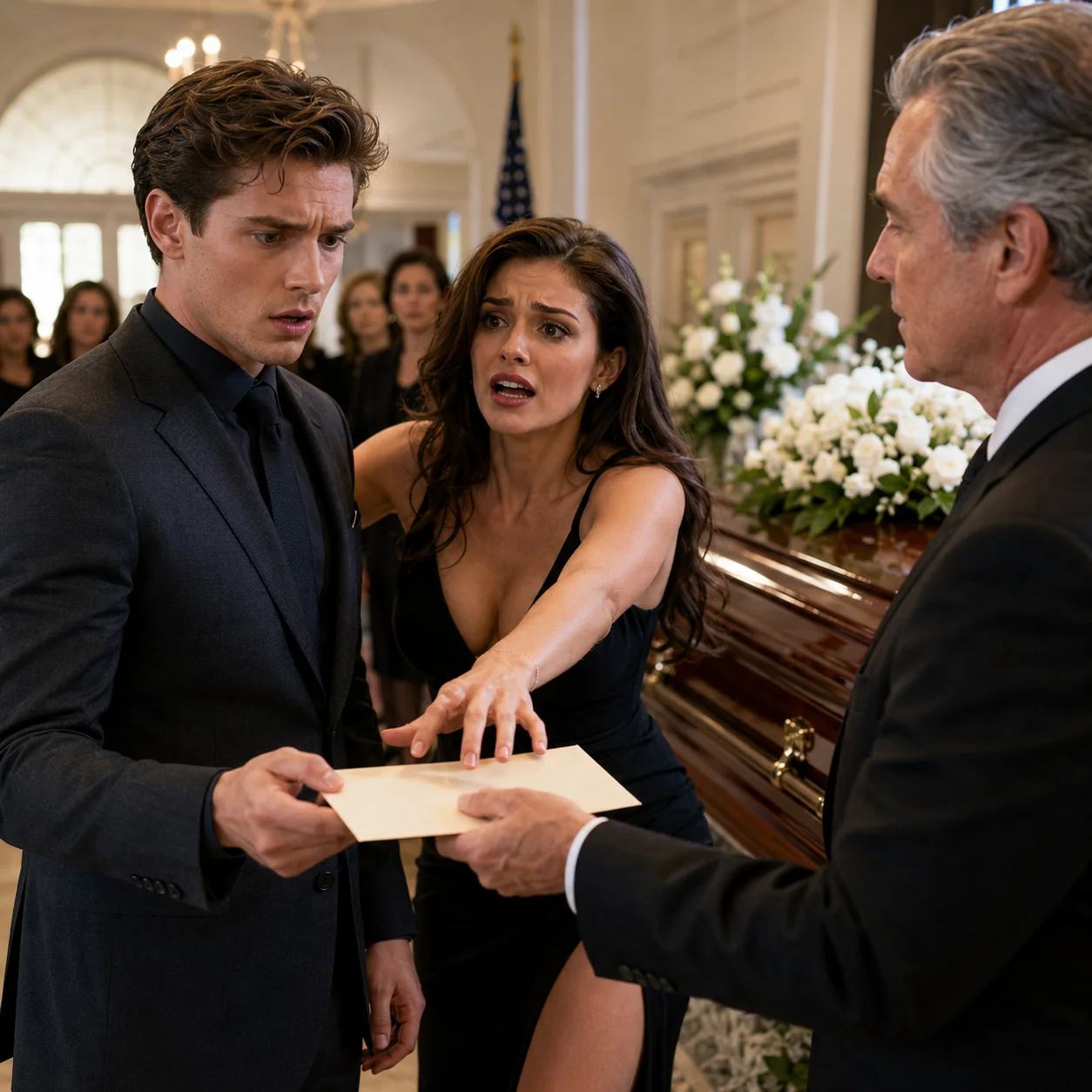
My father’s friend Pete was telling me about a fishing trip from 1998 when I saw Vanessa near the hallway leading to the funeral director’s office. She wasn’t alone.
She was speaking to Mr. Callahan, the funeral director.
He was a tall, thin man in his sixties with silver hair and the calmest voice I had ever heard. He had handled everything with quiet respect. Dad had prearranged most of his funeral years earlier, something I only discovered after he died. “Don’t let anyone upsell you while you’re sad,” he had written in a folder I found in his desk. “I already picked the sensible box.”
That was my father’s term for his casket.
The sensible box.
From across the room, I couldn’t hear what Vanessa was saying, but I saw her body language. Rigid shoulders. Tight smile. One hand extended like she was asking for something.
Mr. Callahan shook his head.
Vanessa’s smile disappeared.
I began walking toward them.
Before I reached the hallway, Vanessa turned and saw me. Her face changed instantly, smoothing into sympathy.
“There you are,” she said, too brightly.
“Everything okay?”
“Yes. I was just asking Mr. Callahan about some paperwork.”
“What paperwork?”
She touched my sleeve. “Nothing urgent. Funeral documents. You don’t need to worry about it today.”
Mr. Callahan looked at me, then at her. He said nothing, but something in his expression shifted.
Vanessa gave him a look I couldn’t read.
Then she steered me back toward the reception area.
For the next hour, I was too drained to question it. We went to Dad’s house. People brought food. The rooms filled with voices. Someone put coffee on. Kids ran briefly through the backyard until their parents hushed them. I stood in the kitchen beside Dad’s old refrigerator, staring at the magnet shaped like a trout that had held his grocery list for fifteen years.
Vanessa moved through the house like she was inspecting it.
I noticed it gradually.
She opened the hall closet, then closed it when she saw me watching. She walked into the den and stayed there for several minutes. She asked me where Dad kept “important things.” I told her I didn’t know. She asked whether he had a safe. I said maybe. She asked whether I knew the code.
“My father just died,” I said quietly.
Her eyes flashed with irritation. Then she touched my cheek in front of my aunt Linda and softened her voice.
“I’m sorry. I’m just trying to make sure nothing gets lost.”
At four-thirty, after the last guests left, the house became unbearably quiet.
Vanessa stood in the living room with her heels in one hand and looked around.
“This place is worth more than I thought,” she said.
I was carrying empty cups to a trash bag. I stopped.
“What?”
“I mean, the neighborhood has changed. These older homes have character. Developers love that.” She walked to the front window. “You could sell quickly if you wanted.”
“My father hasn’t been buried for six hours.”
She exhaled. “Daniel, you can grieve and be practical at the same time.”
“I don’t want to talk about selling his house.”
“Fine.”
But her tone said it wasn’t fine.
That night, I went home alone. Vanessa said she had a migraine. She kissed me at my apartment door and told me to call if I “spiraled.” It was a strange word to use for mourning.
I didn’t call.
I sat on my couch in the dark until after midnight, still wearing Dad’s tie. Then my phone buzzed.
It was a number I didn’t recognize.
Mr. Hale, this is Thomas Callahan from Rosemont Funeral Home. I apologize for contacting you so late. There is a matter regarding your father’s personal instructions. Please call me when you’re able.
My stomach tightened.
I called immediately.
Mr. Callahan answered on the second ring.
“Mr. Hale,” he said, “again, I’m sorry for the hour.”
“Is something wrong?”
There was a pause.
“I wouldn’t say wrong. But I think it would be best if you came by tomorrow morning. Your father left something in our care. I attempted to give it to you today, but there was… confusion.”
Confusion.
I sat upright.
“What kind of confusion?”
Another pause, longer this time.
“Your girlfriend asked about it.”
The apartment seemed to go still.
“Vanessa?”
“Yes.”
“What did she ask?”
“She asked whether your father had left an envelope for you. When I confirmed there was one, she said she would take it on your behalf.”
I couldn’t speak.
Mr. Callahan continued carefully. “That would not have been appropriate. Your father’s instructions were explicit. The envelope was to be given to you directly and privately after the service.”
My hand tightened around the phone.
“Did she know what was inside?”
“I don’t know. But she seemed very eager to retrieve it before I spoke with you.”
I closed my eyes.
The hallway. Her extended hand. His refusal.
“What did my father leave?”
“I think you should see it yourself.”
I barely slept.
The next morning, I drove to Rosemont Funeral Home at eight-forty with a headache behind my eyes and a cold feeling in my chest.
Mr. Callahan met me in his office. Without the crowd and flowers and funeral music, the building felt different. Smaller. Too quiet. He offered coffee. I declined.
He opened a locked drawer in his desk and removed a cream-colored envelope.
My name was written across the front in my father’s handwriting.
Daniel.
Just Daniel.
I stared at it longer than necessary.
“My father gave you this?”
“Three months ago,” Mr. Callahan said. “He came in to update some arrangements. He said if anything happened to him, I should hand this to you after the funeral, not before.”
“Why not before?”
“He said you would have too much noise around you before.”
That sounded exactly like Dad.
I took the envelope.
My hands shook.
Inside were three things.
A handwritten letter.
A smaller sealed envelope.
And a folded document clipped to several printed pages.
I opened the letter first.
Danny,
If you’re reading this, I’m gone, and you’re probably angry that I found a way to annoy you from the grave. Good. Means you’re still my son.
I need you to listen carefully, because this is the kind of thing you’ll want to explain away.
Vanessa came to see me on March 12. You were at work. She thought I would be easy to pressure because I’m old, and because she thinks grief and politeness are weaknesses. She asked me to “encourage” you to propose before summer. She said you were hesitant because of “financial fear” and that she needed security before investing more years in you.
I told her marriage was not a grant application.
She did not appreciate that.
Then she told me something I do not think she meant to tell me. She said once we were “all aligned,” my house could become part of your future plans. She mentioned selling it, using the proceeds for a larger home, and helping her launch her own agency. She talked about my house like I was already dead and you were already managed.
Son, I hired someone to look into a few things because I did not like the smell of it. I know that sounds dramatic. Maybe it is. But I have worked on enough engines to know when a small noise becomes a blown transmission.
Read everything attached before you confront her.
Do not let her cry you out of facts.
Do not let loneliness negotiate for you.
And open the small envelope last.
I love you. I am proud of you. I am sorry this is landing on you now, but I suspect now is when you’ll finally see clearly.
Dad
By the time I finished, the paper was trembling in my hands.
I wanted to reject it. Not because I thought Dad was lying, but because believing him meant accepting that the woman who had slept beside me, planned birthdays with me, kissed me in grocery aisles, and talked about our future had also discussed my father’s death like a financial opportunity.
I unfolded the document.
It was a report.
Not a dramatic spy report. No cinematic photos through windows. Just clean, boring, devastating facts.
Vanessa had been in significant debt for over a year. Two personal loans. Three maxed-out credit cards. A business line of credit tied to a consulting firm that barely existed beyond a website and branding deck. She had received payments from me totaling over $38,000 in the past eighteen months if you counted rent, travel deposits, car assistance, “temporary” credit card coverage, and business expenses.
I knew some of that.
I had not let myself total it.
Then came the part I didn’t know.
Elliot Granger.
Thirty-nine. Real estate investment broker. Divorced. Connected to a development group that had purchased and flipped several older homes in Dad’s neighborhood.
There were printed screenshots of messages. Not illegal hacks. Dad’s investigator had apparently received them from someone named Dana, a former friend of Vanessa’s who felt guilty after hearing Vanessa talk too openly at a wine bar.
The messages were not long, but they were enough.
Vanessa: Daniel is attached to the house because of his dad. Once Robert is gone, it’ll be easier.
Elliot: Is the father sick?
Vanessa: Heart condition. Stubborn. Could be six months, could be five years. I can’t wait forever.
Elliot: You need Daniel committed before probate gets messy.
Vanessa: Working on it. If he proposes, I can push the “our future” angle.
Elliot: And if he doesn’t?
Vanessa: Then I need access another way.
I stopped reading.
The room blurred.
Mr. Callahan silently placed a box of tissues near me, then stepped out without a word.
I don’t know how long I sat there.
When I forced myself to continue, the next page was worse.
Vanessa had contacted a loan consultant about “anticipated marital assets.” She had asked whether a future spouse could leverage inherited property equity if the property was transferred, sold, or co-owned after marriage. She had emailed herself a list titled “Post Funeral Steps.”
The title alone made me feel sick.
Under it were bullets.
Comfort Daniel but keep him moving.
Find will/trust documents.
Determine house value.
Encourage quick sale before he gets sentimental.
Frame as fresh start.
Use grief counselor angle if resistant.
Avoid Linda interfering.
Linda was my aunt.
My father’s sister.
She had known me since I was born and still called me “kiddo.” Vanessa had identified her as an obstacle.
I covered my mouth with my hand.
Then I opened the smaller sealed envelope.
Inside was a cashier’s check for $15,000 and a note.
For the lawyer you may need, the locks you may change, the time you may need to breathe, or the oranges you may forget to buy.
Don’t use this to be noble. Use it to be free.
Dad
That was when I finally cried.
Not the quiet tears I had allowed at the funeral. Not the controlled grief people find acceptable. I folded over in a funeral director’s office with my dead father’s letter in my lap and sobbed like a child because even at the end, when his own heart was failing, he had been trying to protect me.
When I came out, Mr. Callahan was waiting near the hallway.
“I’m sorry,” he said.
“Did my father tell you what was in it?”
“No. Only that it was important.”
“Did Vanessa say anything else yesterday?”
He hesitated. “She became upset when I refused to release it. She said you were not in an emotional state to handle surprises.”
I almost laughed.
“She wasn’t wrong,” I said. “Just not for the reason she meant.”
I drove straight to my father’s house.
Not my apartment.
His house.
I sat in the driveway for twenty minutes before going in. The rooms still smelled faintly of coffee and lilies from the reception. In the living room, someone had left a sympathy card on the mantel. I picked it up.
Vanessa’s handwriting.
Daniel, your father’s love lives on through the future we build together.
I stared at that sentence until it became grotesque.
Then I began searching.
Dad was organized in a way that used to drive me insane. Every manual, warranty, tax return, insurance policy, and receipt had a place. In his desk drawer, I found the folder labeled “WHEN I KICK IT,” because of course that was what he had named it.
Inside were copies of his will, house deed, bank information, funeral receipts, passwords sealed in another envelope, and a letter from his attorney, Margaret Voss.
The will was simple.
Everything went to me.
The house was to be transferred solely to me. No sale requirement. No shared ownership. No strange complications.
There was also a handwritten note paper-clipped to the deed.
Do not put anyone else on this unless you would hand them the keys while you sleep.
I sat back in his chair and laughed once, brokenly.
Then my phone rang.
Vanessa.
I watched her name glow on the screen.
I didn’t answer.
She called again.
Then texted.
Are you okay? You disappeared emotionally last night and I’m worried.
Another message.
Call me when you can. We need to discuss next steps.
There it was again.
Next steps.
I typed: I went to Rosemont this morning.
Three dots appeared immediately.
Then disappeared.
Then appeared again.
What do you mean?
I waited.
I met with Mr. Callahan, I wrote.
This time, she called.
I let it ring until it stopped.
Then I texted: I have the envelope.
For almost a full minute, nothing.
Then: Daniel, please don’t read anything while you’re in this state.
I looked around my father’s den. His old reading glasses sat beside the lamp. His mug from the auto shop, chipped near the handle, was still on the coaster.
I typed: Too late.
Her reply came fast.
Your father hated me. I don’t know what he wrote, but he was trying to poison you against me.
I felt something inside me settle.
Not calm exactly.
Something colder.
My father had warned me.
Do not let her cry you out of facts.
I did not reply.
Instead, I called Margaret Voss, my father’s attorney.
Her assistant put me through when I gave my name. Margaret’s voice was sharp, older, efficient.
“Daniel. I’m sorry about Robert. He was a good man and a difficult client.”
That almost made me smile.
“He left me your letter,” I said.
“Then you know enough to be careful.”
My fingers tightened around the phone. “How much did he tell you?”
“Enough that I advised him to keep his estate documents updated and to avoid discussing details with anyone except you.”
“Did Vanessa contact you?”
Margaret paused.
“Yes.”
The floor seemed to tilt.
“When?”
“Two weeks ago.”
“My father was alive two weeks ago.”
“Yes.”
“What did she want?”
“She claimed she was helping you prepare for eventual responsibilities because your father was declining.”
“My father wasn’t declining.”
“No,” Margaret said. “He was not.”
“What did she ask?”
“She wanted to know whether Robert had a trust, whether you would have immediate authority if he became incapacitated, and whether a long-term partner could assist with estate administration after death.”
I closed my eyes.
“Did you tell my father?”
“Yes. He was not surprised.”
Of course he wasn’t.
Margaret continued, “Daniel, listen carefully. Do not sign anything she gives you. Do not add her to any account. Do not allow her access to your father’s house, documents, or mail. If she has keys, change the locks. If she has used your cards, review every statement. If she pressures you, document it.”
“She has a key to my apartment.”
“Change that too.”
I spent the rest of the day doing things grief should not require.
I called a locksmith.
I froze the shared credit card where she was an authorized user.
I changed passwords.
I forwarded Dad’s mail to a post office box.
I photographed every document.
I put the original envelope, report, letter, check, and will in a bank safe deposit box.
Every step felt surreal. Part of me expected Vanessa to walk in and explain everything in a way that made me feel foolish for doubting her. That was the dangerous part of loving someone manipulative. Your heart keeps preparing a rescue boat for the person who drilled the hole.
At six-fifteen, Vanessa came to my apartment.
I saw her through the peephole.
She wore the face she used when she wanted forgiveness. Soft eyes. Loose hair. No lipstick. A cardigan instead of her usual polished blazer. She looked smaller on purpose.
“Daniel,” she called through the door. “Please. We need to talk.”
I opened it but left the chain on.
Her eyes dropped to the chain, and for one second the softness cracked.
“You’re locking me out?”
“I’m talking to you from here.”
“That’s insane.”
“Is it?”
She inhaled slowly, then lowered her voice. “Your father just died. You’re not thinking clearly.”
“Funny. You keep saying that.”
“Because it’s true.” She touched the doorframe. “I loved him because he was part of you.”
I almost admired the attempt.
“You called his funeral bad timing.”
Her face flushed. “I was overwhelmed.”
“You asked the funeral director for the envelope.”
“I was trying to protect you.”
“From what?”
“From exactly this!” Her voice rose. “Look at you. You’re acting paranoid. Whatever your father put in there, he knew it would hurt us.”
“He put screenshots in there.”
She froze.
Not confusion.
Recognition.
That was the moment I knew there would be no real denial. Only strategy.
“What screenshots?” she asked quietly.
“Don’t.”
Her eyes filled with tears so quickly it looked rehearsed. “Daniel, you have to understand. Elliot was helping me think through options.”
“Options for what?”
“Our future.”
“My father’s death?”
“No.” She shook her head hard. “No, don’t twist it like that.”
“I’m not twisting anything.”
“You are. Your father never respected me. He thought I was some gold digger because I cared about building something bigger than coupon clipping and oil changes.”
I felt the words like a slap, not because they hurt me, but because they insulted a dead man through a chained door.
“My father fixed cars for people who couldn’t afford to get to work,” I said. “You build mood boards for companies selling $400 candles.”
Her face changed again.
There she was.
The real Vanessa. Not crying. Not soft. Furious.
“I sacrificed two years waiting for you to become serious,” she snapped. “Do you know how embarrassing it is to be with a man your age who still acts like commitment is a tax audit?”
“You mean marriage.”
“I mean a life. A real one. Not your tiny apartment, your safe little job, your emotionally stunted loyalty to a house full of old furniture.”
“My father’s house.”
“Exactly.” She pointed through the gap. “You worship grief. You worship the past. I was trying to help you move forward.”
“With Elliot?”
Her mouth closed.
I waited.
“Elliot knows real estate,” she said finally.
“And you know timing.”
Her eyes narrowed.
I said, “We’re done.”
The words came out quietly.
She stared at me as if I had spoken in another language.
“No, we’re not.”
“Yes, we are.”
“Daniel, don’t do this.”
“I already did.”
“You can’t throw away two years because your dead father left you a paranoid little folder.”
I closed the door.
She hit it once with her palm.
“Daniel!”
I locked the deadbolt.
For ten minutes, she cried in the hallway. Then she got angry. Then she cried again. Then she said, loud enough for my neighbor to hear, “You’re going to regret letting him ruin us.”
But my father hadn’t ruined us.
He had only turned on the lights.
The next two weeks were ugly in ways I had not expected.
Vanessa did not simply disappear. People like Vanessa rarely exit when there is still a stage available.
First, she sent long messages explaining that grief had made me cruel.
Then she sent voice notes crying so hard I could barely understand her, saying she had only wanted security because she loved me and was scared.
Then she accused my father of emotional incest, which was so grotesque I deleted the message after saving a copy for my lawyer.
Then she switched to practical.
We should meet. You owe me closure.
I still have things at your place.
We need to discuss shared expenses.
Do not make legal decisions while unstable.
Then came the social version.
Mutual friends began texting.
Hey man, Vanessa says things got really intense after your dad’s funeral. Are you okay?
Bro, grief can mess with your head. Don’t blow up your relationship over old family stuff.
Vanessa is devastated. She says your dad left some letter and now you think she’s evil?
I answered only the people I trusted.
I didn’t send the screenshots to everyone. I didn’t post anything. I didn’t want a public trial. I just said, “There were financial and personal betrayals I can document. I’m ending the relationship. Please don’t mediate.”
Most respected that.
A few didn’t.
One of Vanessa’s closest friends, Marissa, sent me a message that said, You’re punishing a woman for wanting a future. That’s why men like you die alone in inherited houses.
I forwarded it to Margaret and blocked her.
Meanwhile, I learned how deep the practical damage went.
Vanessa had one of my credit cards saved in multiple accounts. Boutique memberships. Travel sites. A recurring subscription for a luxury coworking space she told me had been comped. Several charges I didn’t recognize appeared in the days right before and after Dad’s funeral.
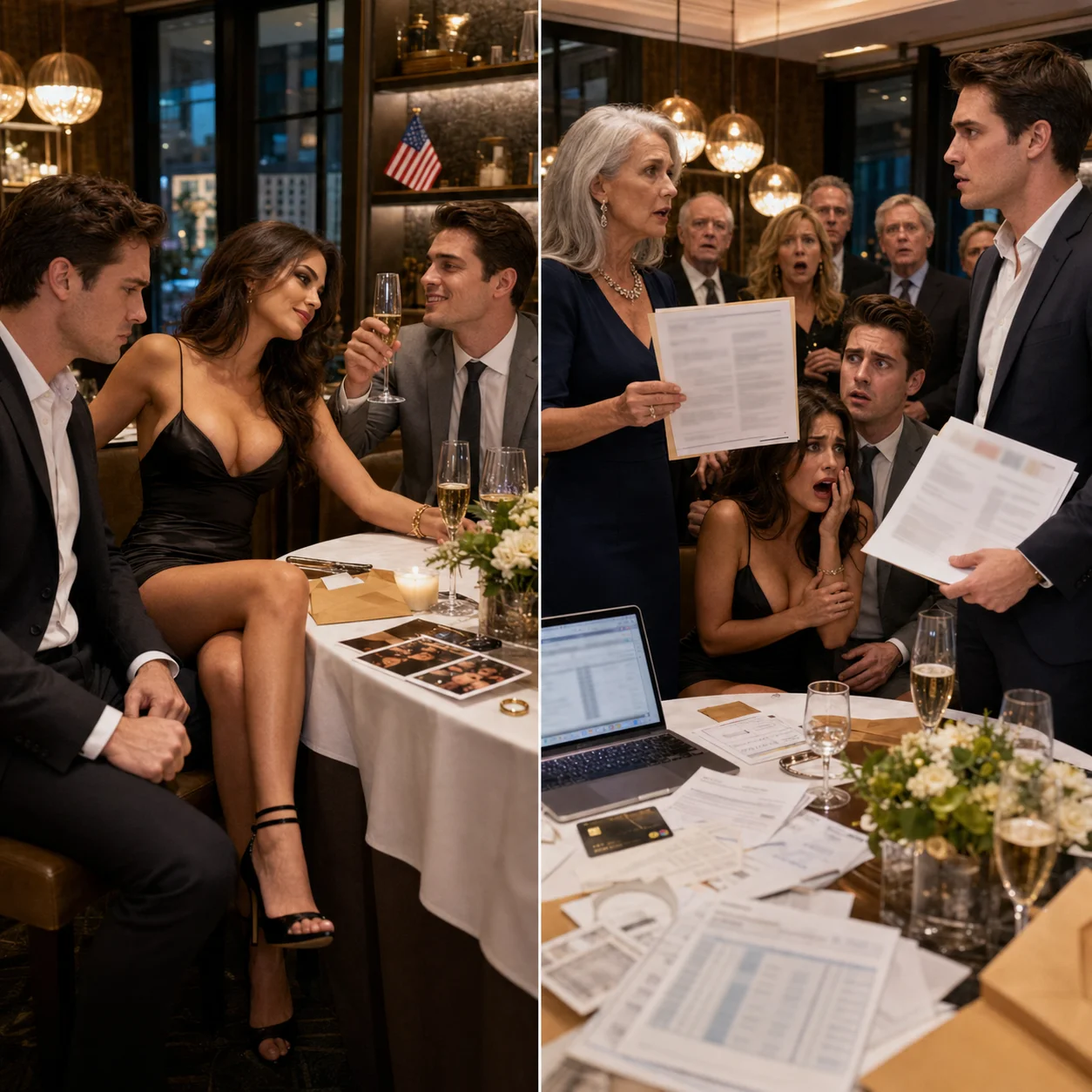
One was for a dinner at a downtown restaurant the night before the service.
The amount was $486.
I checked the time.
8:42 p.m.
She had told me she was home with a migraine.
I remembered the name from her phone.
Elliot.
It took one call to the restaurant and one polite lie about needing a receipt for my records to confirm the reservation had been under Elliot Granger.
I didn’t yell.
I didn’t throw anything.
I sat at my kitchen table with the receipt in front of me and felt the last sentimental thread snap.
Three days after that, Margaret sent a cease-and-desist letter.
No direct contact. No harassment. No attempting to access my apartment, my father’s property, accounts, documents, or estate information. Any belongings of hers could be retrieved through a scheduled third party.
Vanessa’s response was immediate.
She showed up at my father’s house.
I was there with Aunt Linda, sorting through Dad’s garage. Linda was seventy-one, five feet tall, and capable of making grown men apologize with one look. She had brought labels, trash bags, and the emotional firmness of a woman who had already buried both parents and now her brother.
We heard a car pull up.
I looked through the garage window and saw Vanessa stepping out in sunglasses, carrying a white box.
“What is she doing here?” Linda asked.
“Performing,” I said.
Vanessa walked up the driveway like she had rehearsed it. The white box turned out to be filled with framed photos of us, a sweater of mine, and a few gifts I had given her. She stopped near the garage door and took off her sunglasses.
“Daniel,” she said softly. Then she looked at Linda. “I’m sorry for your loss.”
Linda stared at her. “Are you?”
Vanessa blinked.
I almost smiled.
“I came to return some things,” Vanessa said. “And to say goodbye properly.”
“You need to leave,” I said.
Her eyes shone. “Can we please not do this in front of your aunt?”
“My aunt knows.”
The softness vanished.
“Of course she does,” Vanessa said. “I’m sure everyone in this family has been waiting to blame me.”
Linda stepped forward.
“Sweetheart,” she said, in a tone that made the word dangerous, “we didn’t need to wait.”
Vanessa’s face tightened. “I loved Daniel.”
Linda nodded. “Maybe. But you loved what came with him louder.”
Vanessa looked at me. “Are you really going to let her talk to me like that?”
“Yes.”
That one word changed something. I think until then, Vanessa still believed she could pull me back into the old rhythm. Push, soften, guilt, flatter, accuse, cry, repeat. But I had stopped dancing.
She set the box down hard.
“You’re making a mistake.”
“No,” I said. “The mistake was letting you convince me my discomfort was immaturity.”
Her nostrils flared. “You think you’re so noble because your father left you a house? You didn’t earn any of this.”
Linda made a sharp sound.
I raised one hand to stop her.
“You’re right,” I said. “I didn’t earn his death. I didn’t earn the house. I inherited both. And I’m going to treat both with more respect than you ever did.”
For the first time, Vanessa had nothing ready.
Then she said the sentence that finally made my grief clean.
“Your father was selfish for keeping you tied to him.”
I walked to the side of the garage, picked up the white box, and carried it to her car.
“Get off this property.”
She laughed once, bitterly. “This isn’t over.”
“It is here.”
She drove away fast enough to make Linda mutter, “Trash always hates the curb.”
I looked at her.
“What?” she said. “Your father would have laughed.”
He would have.
A month passed.
Then two.
Grief did not leave. It changed shape.
Some mornings, I still reached for my phone to call Dad when something strange happened with my car. Some Sundays, I bought oranges and then stood in the produce aisle feeling ridiculous and wrecked. His house became both comfort and burden. Every drawer held a memory. Every repair felt like a conversation.
But without Vanessa, something else happened.
The noise stopped.
My credit card balance stopped climbing.
My weekends stopped orbiting reservations I couldn’t afford and events where I felt like an accessory.
I began spending Saturdays at Dad’s house, not to prepare it for sale, but to understand it. I fixed the loose railing on the porch. Repainted the guest room. Found a box of my childhood drawings in the attic, including one of Dad with enormous arms labeled “MY DAD CAN FIX ANYTHING.” I sat on the attic floor and cried again, but this time it felt different. Less like being ambushed. More like being visited.
Margaret handled probate. Everything was straightforward because Dad had made it so.
Then, three months after the funeral, Elliot Granger called me.
I almost didn’t answer, but the number had called twice that week, and curiosity got the better of me.
“Daniel Hale?” he said.
“Yes.”
“This is Elliot Granger. I know you probably don’t want to hear from me.”
“You’re right.”
“Just give me thirty seconds.”
I stayed silent.
He cleared his throat. “Vanessa told me you were planning to sell your father’s house and wanted preliminary offers. She also told me you two were engaged privately.”
I almost laughed. “We were not.”
“I figured that out.”
“When?”
“When she asked whether I could advance her commission on a sale you hadn’t approved.”
I closed my eyes.
“Why are you calling me?”
“Because she used my name in ways I’m not comfortable with. And because she pitched your father’s property to two developers as ‘emotionally complicated but available soon.’ If anyone contacts you, I want you to know I did not authorize it.”
There was something strained in his voice. Not innocence exactly. Damage control.
“You were messaging her about my father dying,” I said.
Silence.
Then: “She told me your father was terminal.”
“He had a heart condition. He was living independently.”
“I didn’t know that.”
“Did you care?”
He exhaled. “Not enough. That’s on me.”
It wasn’t an apology that fixed anything. But it was more honesty than Vanessa had given me.
“Send everything you have to my attorney,” I said.
He agreed.
Margaret received a folder the next day.
It contained emails, message threads, and a draft proposal Vanessa had apparently created without authority, presenting my father’s house as a “heritage property with high emotional leverage but likely liquidation potential within six months.”
High emotional leverage.
That phrase became a kind of dark joke between me and Linda.
Whenever something broke at the house, she’d say, “Careful, kiddo. That porch step has high emotional leverage.”
Vanessa did not find it funny.
I know because a week later, she sent one final email.
The subject line was: You destroyed my reputation.
The body was long, furious, and revealing.
She accused me of weaponizing private misunderstandings. She said Elliot had withdrawn from a project because of me. She said Marissa was no longer speaking to her because “everyone acts like ambition is a crime when a woman has it.” She said I had let my father’s bitterness turn me into a coward.
Then, near the end, she wrote:
I hope that house keeps you warm at night, because it cost you a woman who was trying to build you into someone better.
I read that line several times.
Then I replied with only one sentence.
No, Vanessa. It cost me the woman who was trying to build herself out of my grief.
I blocked her email after that.
Six months after Dad’s funeral, I moved into his house.
Not because I couldn’t let go.
Because I finally understood the difference between keeping the past alive and letting it hold you steady while you build forward.
I kept some things exactly as they were. His workbench in the garage. The trout magnet on the refrigerator. The orange tree he had planted in the backyard that had never produced a decent orange but kept trying anyway.
Other things changed.
I turned the den into my office. Replaced the old carpet. Donated most of his clothes, except for the navy tie and his denim jacket. I invited Aunt Linda over every Sunday. Sometimes Mark came too. Sometimes Pete from the auto shop. Sometimes Mrs. Albright brought pie and pretended she hadn’t come over just to check whether I was eating.
One Sunday, nearly a year after Dad died, I found a small envelope tucked inside the drawer of his workbench.
For a moment, my heart stopped.
Not another secret, I thought.
But when I opened it, there was only a photograph.
Me at eight years old, standing beside Dad in the driveway, both of us covered in soap from washing his truck. On the back, he had written:
Best day. He laughed for real again.
I didn’t remember that day clearly. But he had.
That was the thing about my father. He had kept proof of love in places no one else would think to look.
A few weeks later, I hosted a small cookout at the house. Nothing fancy. Burgers, folding chairs, too many paper plates, kids chasing each other through the yard. At one point, I caught myself standing near the porch, watching people move through the rooms Dad had left behind.
The house did not feel haunted.
It felt entrusted.
Aunt Linda came up beside me and handed me an orange.
“From the tree?” I asked.
“Don’t be ridiculous. That tree produces crimes. I bought it.”
I laughed.
She looked toward the kitchen, where Mark was arguing with Pete about baseball.
“Your dad would like this,” she said.
“Yeah?”
“He always wanted this house full. Not sold to some idiot who would paint everything gray and call it luxury.”
I peeled the orange slowly.
For the first time in a long time, thinking of him didn’t only hurt.
Linda nudged me. “You okay, kiddo?”
I looked at the porch Dad had rebuilt twice, the driveway where he taught me to change a tire, the garage where he had given me advice I was too proud to hear, and the rooms Vanessa had once viewed as numbers waiting to be converted.
“I’m getting there,” I said.
And I was.
Here is the part people ask about when they hear this story: Did Vanessa ever come back?
Yes.
Not in the dramatic way she probably imagined.
About eighteen months after the funeral, I ran into her at a coffee shop across town. I was there after a client meeting. She was sitting near the window with a laptop open, wearing a blazer I recognized because I had paid for it during one of her “temporary cash flow” months.
She saw me first.
For a second, her face did what it always used to do. Calculated. Measured. Selected the correct expression.
Then she smiled softly.
“Daniel.”
I nodded. “Vanessa.”
She stood. “You look good.”
“Thanks.”
“I heard you moved into the house.”
“I did.”
Something flickered behind her eyes.
“That’s good,” she said. “I’m glad you kept it.”
No, she wasn’t.
But maybe by then even she knew which lies were too late to sell.
There was an awkward silence.
Then she said, “I was angry back then.”
“I know.”
“I said things I shouldn’t have.”
“Yes.”
She waited for me to make it easier.
I didn’t.
Finally, her smile faded.
“Do you ever think about how different things could have been?”
I looked at her then. Really looked.
Once, that question would have split me open. I would have imagined an alternate life where she had loved me cleanly, where Dad had been wrong, where the envelope never existed, where grief didn’t come with evidence.
But standing there, I realized something simple.
I did think about how different things could have been.
I just no longer wished for it.
“Sometimes,” I said. “Then I remember different doesn’t always mean better.”
Her eyes hardened slightly.
There she was again.
But this time, seeing it didn’t hurt.
It only confirmed.
I wished her well because Dad had raised me not to spit on wreckage, even when someone drove herself into the wall. Then I left with my coffee and walked out into a bright afternoon, feeling lighter than I had expected.
That night, I stopped at the grocery store.
I bought oranges.
At home, I placed two on the kitchen counter, right where Dad used to leave them for me.
Then I opened the drawer where I kept his letter. Not the evidence, not the report, not the ugly parts. Just the letter.
I read the last lines again.
Do not let loneliness negotiate for you.
I love you. I am proud of you.
For a long time after he died, I thought the envelope had been my father’s final warning.
Now I think it was his final gift.
Not because it exposed Vanessa.
Because it gave me permission to trust what I already felt.
Love should not make you smaller.
Grief should not make you useful.
And anyone who calls your father’s funeral “bad timing” is not mourning with you.
They are waiting for the will to be read.

![[FULL STORY] My girlfriend had secretly rented the house next door with the help of her friends, and I had no](https://social-media.rabedo.com/thumbnails/1776937905_30.png)