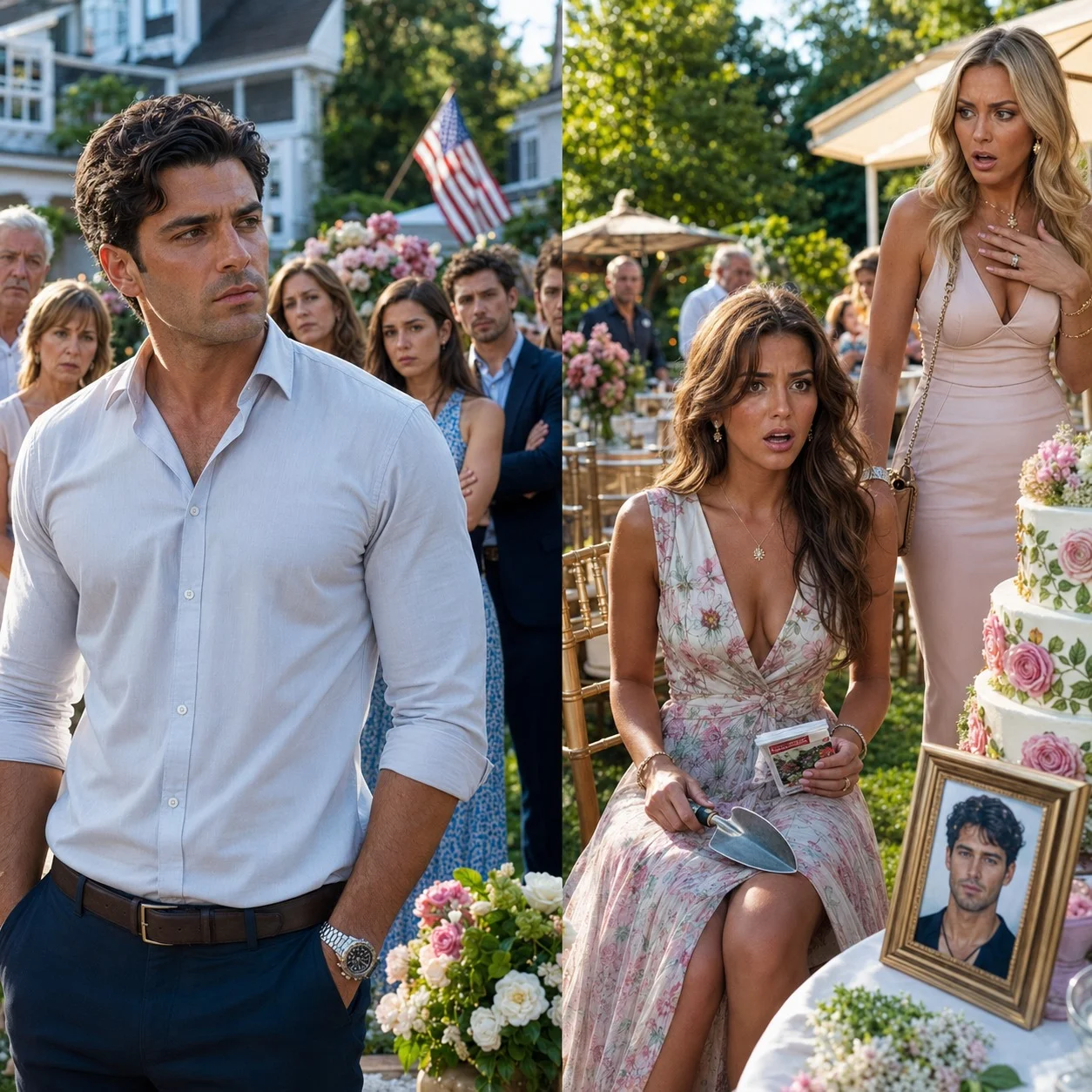
The worst part was not that Stephanie said it.
It was that she whispered it in my parents’ backyard, surrounded by the family that had welcomed her like blood, while I was laughing with my nephews just a few feet away.
My family had always been my foundation. Loud, close-knit, Italian-American, the kind of family where loyalty was not something people performed for photos, but something that showed up in hospital rooms, Sunday dinners, business struggles, funerals, birthdays, and every small disaster in between. My sister Maria was not just my sister. She was my best friend. My parents were my heroes. So when I brought Stephanie into that world after two years together, it was not casual. It was the deepest kind of trust I knew how to give.
For a long time, I thought Stephanie understood that.
We lived together in the house I owned, a place I had worked brutal hours to afford through my construction business. The arrangement had always seemed fair to me. I covered the mortgage and the heavy bills. Stephanie helped with utilities and groceries from her job at a high-end art gallery. I saw it as building something stable, something real. A home now, maybe a family later.
But Stephanie came from a colder world. Her family had money, status, and a way of making every conversation feel like an interview. They never really approved of me. To them, I was a contractor with calloused hands, useful maybe, respectable in a practical way, but not the kind of man they imagined for their daughter. I had always believed Stephanie was different from them, that beneath the expensive manners and polished upbringing, she had chosen love over status.
Then came Maria’s thirtieth birthday.
It was exactly the kind of party my family did best. My parents’ backyard was packed with aunts, uncles, cousins, kids running through the grass, too much food, too much noise, everyone laughing over each other. My father had fired up the grill before noon even though the party did not start until four. My mother had made enough lasagna to feed a minor league baseball team. Maria, who claimed she wanted “nothing dramatic,” wore a gold dress, cried twice before dessert, and still somehow managed to boss everyone around from the patio like a birthday general.
Stephanie played her part perfectly. She charmed my aunts, laughed at my father’s terrible jokes, helped my mother clear plates, and looked so natural beside me that for one brief evening, I felt stupidly grateful. Maybe this was it. Maybe she really belonged. Maybe all the cold dinners with her parents, all the little comments about my work boots by their front door, all the times Stephanie corrected my grammar in front of her friends and called it “teasing” — maybe none of that mattered because she had chosen me.
That is the stupid thing about love. Sometimes it makes you generous with people who are not generous with you.
Later that night, I was outside with my nephews. They were seven and five, wild as raccoons, demanding that I toss them into the air until my arms gave out. I remember the string lights glowing above the grass, the smell of grilled peppers and basil, my father laughing with my uncle near the fence. Stephanie was by the patio with Chloe, her best friend, a woman who carried the same velvet-covered condescension as Stephanie’s parents. Chloe always looked at my family’s gatherings like she had accidentally wandered into a documentary about loud people.
Stephanie and Chloe thought they were alone in their little bubble of superiority.
They were not.
Maria had stepped just inside the sliding glass door to grab a bottle of wine from the kitchen. The door was open a crack. She heard Chloe make some snide comment about me looking “domesticated,” because apparently a man playing with his nephews was hilarious if you had never seen love without a trust fund attached.
Then Stephanie laughed.
Not warmly. Not playfully. Coldly, like the sight of me with children was something beneath her.
And then she whispered the sentence that ended everything.
“Please. I’d never want him as the father of my kids. My ex has better genes. Honestly, I’d rather let my ex plant the seed and make him water the garden.”
Maria froze with the wine bottle in her hand.
A few feet away, Stephanie and Chloe shared a smug little laugh, completely unaware that the family they were mocking had just heard enough. In one sentence, Stephanie had reduced me from partner to provider, from future husband to useful fool. I was not the man she imagined building children with. I was the man she imagined making responsible for someone else’s legacy. A gardener. A caretaker. A wallet with a heartbeat.
Maria found me minutes later.
Her face was pale, but her eyes were burning. She pulled me away from the noise of the party and into my father’s study, where the house suddenly felt too quiet. Then she told me everything. Every word. Plant the seed. Water the garden. Better genes.
As I listened, I expected pain to hit first. Instead, something inside me hardened. The love did not shatter dramatically. It drained out of me with terrifying calm, leaving behind a single absolute certainty.
This woman was not my future.
She was a threat wearing my girlfriend’s smile.
I walked back into the party and saw Stephanie laughing across the yard, beautiful and comfortable, pretending to belong among people she privately despised. So I smiled too. Calm. Pleasant. Completely unreadable. I crossed the grass, put an arm around her, kissed her cheek, and asked if she was having fun.
“The best,” she said, beaming up at me.
She had no idea she was standing in the middle of the last night my family would ever treat her like one of their own.
Maria watched from across the yard, worry and fury mixing on her face. I caught her eye and gave her a slow, deliberate nod. She understood instantly. This was not just my humiliation. Stephanie had insulted my blood, my home, my family, my future. And in my family, loyalty did not sit quietly after something like that.
The next morning, I went to my parents’ house before Stephanie even woke up.
At the kitchen table sat my mother, my father, and Maria. No yelling. No dramatic speeches. Just quiet rage and coffee going cold in front of us. My mother looked like she was mourning the woman she thought Stephanie was. My father sat with both hands folded, the way he did when he was trying very hard not to break something.
I told them the story again. Maria repeated the exact words, because she wanted no one to soften them later. Better genes. Plant the seed. Water the garden.
My mother closed her eyes.
My father clenched his fists and asked only one question.
“What do you need from us?”
That was my family. Not loud revenge. Not chaos. Precision.
Stephanie had mocked my bloodline, my future, and my place as a man in my own home. So the answer came naturally. We would not expose her in a random fight. We would not give her the satisfaction of tears in the kitchen or a screaming match where she could twist my anger into abuse. We would let her walk proudly into the exact garden she joked about and realize too late that the soil had already been salted.
We would throw her a party.
Not a confrontation. Not a messy ambush. A beautiful, elegant, fake early birthday party. A “welcome to the family” celebration. A garden party with flowers, catered food, warm hugs, compliments, and every ounce of affection Stephanie believed she had earned. The theme would be our future.
And Stephanie, hungry for validation from the very people she looked down on, would walk straight into it smiling.
Before anyone thinks I simply wanted to humiliate her, let me be clear. I met my lawyer first.
The house was mine. The mortgage was in my name. The down payment had come from six years of working in weather that made my hands crack and bleed. Stephanie had never been on the deed, never been on the loan, and never paid for any repairs beyond once buying throw pillows and calling it “our design vision.” But she lived there, and even betrayal does not give you the right to throw someone onto the street illegally.
So I did it properly.
My lawyer drafted a formal notice ending her permission to live in the house and giving her time to move out. He also advised me to document everything, stop paying for any of her personal expenses, separate shared subscriptions, and avoid any private confrontation that could become a he-said-she-said disaster. I opened a new bank account for my business income, changed passwords to accounts that were mine, and quietly collected receipts proving what I owned before Stephanie ever moved in.
The eviction notice was folded neatly in my jacket pocket by the time the party arrived.
For two weeks, Stephanie floated around my house like royalty preparing for coronation. Maria told her the family wanted to surprise her early because everyone was busy the weekend of her actual birthday. My mother called and said she wanted to celebrate “the woman who might one day officially join our family.” Stephanie nearly melted into the phone.
After the call, she walked into the living room glowing.
“Your mom is so sweet,” she said. “Honestly, I think she’s finally seeing me.”
I looked up from my laptop. “She sees you clearly.”
Stephanie smiled, not hearing the blade under the sentence.
She spent those two weeks shopping for the perfect dress, booking a hair appointment, and posting vague little captions about being welcomed into a loving family. Chloe fed the fantasy, of course. She came over twice, sat at our kitchen island drinking wine I had paid for, and helped Stephanie decide whether the event felt “proposal-adjacent.”
That was another thing.
Stephanie had been dropping hints about engagement for months. Not because she wanted me, I now understood, but because she wanted the stability I represented. She liked the house, the business, the family dinners, the way my parents would become free childcare someday. She liked the warmth of my world as long as she could privately consider herself superior to everyone inside it.
The night before the party, she stood in our bedroom holding two dresses against herself.
“Which one says future daughter-in-law?” she asked.
I looked at her reflection in the mirror.
For one second, grief moved through me. Not because I wanted her back, but because I missed the version of her I had invented. The woman who loved my nephews. The woman who hugged my mother because she meant it. The woman I thought might one day stand beside me at my parents’ kitchen counter with a baby on her hip and sauce simmering on the stove.
That woman had never existed.
“The blue one,” I said.
She smiled. “You think?”
“Yeah,” I said. “It’s perfect.”
That Saturday, she walked into my parents’ backyard looking like a queen.
The party was beautiful. Maria had outdone herself. White flowers lined the patio. There were linen-covered tables, sparkling lemonade in glass dispensers, trays of bruschetta and grilled shrimp, soft music playing under the noise of family. My mother wore her pearls. My father wore the navy shirt he saved for church and weddings. Every aunt hugged Stephanie. Every cousin complimented her dress. Even my nephews handed her a card they had drawn with a crooked birthday cake and too many candles.
Stephanie absorbed it all like sunlight.
Chloe stood beside her in a cream jumpsuit, smiling with that polished little smirk she wore whenever she felt she had entered a room that existed to admire her. She kept squeezing Stephanie’s arm and whispering things that made Stephanie glow brighter.
For two hours, my family praised her, hugged her, toasted her, and watched her ego rise higher with every compliment. She thought she had conquered the room. She thought these people, loud and loving and beneath her in all the ways she had been trained to measure value, had finally recognized her as something elevated.
Then Maria tapped her glass.
“It’s time for gifts,” she said sweetly.
Stephanie sat in the chair we had placed at the center of the patio, laughing, glowing, completely unaware that the first beautifully wrapped box in my mother’s hands contained the beginning of the end.
My mother handed it to her with a smile so gentle it almost fooled me.
“For your future,” she said.
Stephanie pressed a hand to her chest. “You guys, this is too much.”
“Open it,” Maria said.
Stephanie untied the ribbon carefully, the way people do when they want everyone watching to notice how elegant they are. Inside the box was a small terracotta pot, a packet of heirloom tomato seeds, and a pair of green gardening gloves.
Stephanie blinked, confused, but kept smiling. “Oh. This is cute.”
My mother tilted her head. “We thought it matched what you wanted.”
“What I wanted?”
Maria stepped closer, still holding her champagne flute. “A garden.”
Chloe’s smile twitched.
Stephanie laughed lightly. “I’m sorry?”
My mother’s voice stayed soft. “You know. The kind where someone else plants the seed and my son waters it.”
The backyard went silent.
Stephanie’s face changed so quickly it would have been satisfying if it had not also been tragic. The smile froze, then slipped, then vanished completely. Chloe went stiff beside her.
“What?” Stephanie whispered.
Maria set her glass down on the table. “Do you want me to say the whole sentence, or do you remember it?”
Stephanie looked at me.
I said nothing.
My father stood near the grill with his arms crossed, watching her like she had become a stranger in his house. My aunts, who had kissed her cheeks an hour earlier, now stared with the cold attention of women who had raised sons and buried illusions before.
Stephanie tried to laugh. “I don’t know what this is, but it feels really inappropriate.”
“Inappropriate?” Maria repeated. “You whispered in our parents’ backyard that you would rather let your ex ‘plant the seed’ and have my brother ‘water the garden.’ You said your ex had better genes. You said this while my brother was playing with our nephews ten feet away.”
A few cousins gasped. Someone muttered, “Madonna.”
Chloe stepped forward. “That was obviously a joke.”
My mother looked at her. “Then why are you shaking?”
Chloe closed her mouth.
Stephanie stood up, the terracotta pot in her hands. “This is insane. You’re all attacking me over something Maria claims she heard?”
Maria’s expression did not change. “I heard it.”
“You misunderstood.”
“I did not.”
“You’ve never liked me.”
Maria gave a short laugh, but there was no humor in it. “I tried to love you because he loved you. There’s a difference.”
Stephanie turned to me again. Her eyes were bright now, not with guilt, but with panic. “Say something.”
So I did.
“I talked to a lawyer.”
The words landed harder than any shout could have.
Stephanie’s mouth opened slightly.
I reached into my jacket and pulled out the envelope. Not dramatically. Not with a speech. Just the way a man handles paperwork when the emotional part is already dead.
“This is formal notice terminating your permission to live in my house. You have the legal time required to move your belongings. I will not touch your property. I will not lock you out. I will not make this messy. But we are done.”
For a moment, Stephanie looked like she could not understand the language.
Then she laughed once, sharply. “You’re kicking me out?”
“I’m ending the relationship and reclaiming my home.”
“Our home.”
“My home,” I said. “Legally, financially, and now emotionally.”
Her face flushed red. “You cannot do this to me in front of everyone.”
I looked around the backyard. “You were comfortable disrespecting me in front of my family. This is the part where my family gets to know why you won’t be coming to Sunday dinner anymore.”
Chloe grabbed Stephanie’s arm. “Steph, don’t let them bully you.”
My father took one step forward. He did not raise his voice. That made it worse.
“No one is bullying her. She is standing in the consequences of her own mouth.”
Stephanie’s eyes filled with tears. I knew those tears. I had seen them at dinners with her parents when she wanted sympathy after making a cutting remark. I had seen them after she spent too much money and needed me to feel guilty for asking questions. I had seen them whenever accountability came too close.
Once, they worked on me.
Not anymore.
“I was venting,” she said. “People say stupid things when they’re venting.”
“Venting about what?” I asked. “Me loving my nephews? My family welcoming you? The house I pay for? The future you kept hinting you wanted?”
Her lips trembled. “I felt pressure.”
There it was. The word people use when they do not want to say gratitude.
“Pressure,” I repeated.
“Yes,” she said, gathering speed now that she had found a door. “Your family is intense. Everything is marriage and babies and tradition and togetherness. I felt swallowed. I felt like everyone had already decided who I was supposed to become.”
My mother’s face tightened, but she stayed silent.
I nodded slowly. “So your solution was to imagine having children with your ex and letting me raise them?”
Stephanie swallowed.
Chloe jumped in. “That is not what she meant.”
Maria looked at Chloe. “You laughed.”
Chloe’s face hardened. “Because it was private.”
My sister smiled coldly. “Private cruelty is still cruelty.”
Stephanie put the box down on the table with shaking hands. “I loved you.”
“No,” I said. “You loved what I gave you.”
“That’s not fair.”
“Fair would have been telling me you didn’t see a future with me before moving into my house. Fair would have been leaving before you started talking about using me as a backup plan for another man’s child.”
She flinched then. Finally. Not enough to mean remorse, but enough to show she understood how ugly the sentence sounded outside the little private world where Chloe laughed at it.
My youngest nephew tugged at Maria’s dress and whispered, “Why is everyone mad?”
Maria crouched beside him immediately, her face softening. “Grown-up stuff, baby. Go inside with Aunt Gina.”
That little interruption steadied me. It reminded me why I was doing this carefully. Not for spectacle. Not for revenge alone. For boundaries. For the right of my family to remain a safe place, not a stage where someone could smile for photos while insulting us under her breath.
Stephanie saw the child leave and seemed to realize the audience was not on her side. Her tone shifted.
“Can we talk alone?”
“No.”
Her eyes narrowed. “So that’s it? Two years and you won’t even talk to me privately?”
“I gave you two years of private trust. You used it to practice public disrespect.”
“You’re being cruel.”
“No,” I said. “Cruel would be letting you keep living in a house you secretly saw as a safety net while you fantasized about a different bloodline.”
My father’s jaw tightened at that.
Stephanie began crying harder. “You’re twisting it.”
“Am I?”
She looked around again, but no one stepped in to rescue her. Not my mother. Not Maria. Not my father. Not the aunts she had charmed. Not the cousins who had complimented her dress. The warmth she had mistaken for weakness was gone.
And without it, she looked small.
Chloe finally pulled her purse over her shoulder. “Come on. We’re leaving.”
Stephanie snatched the envelope from my hand, then shoved it back at my chest as if it burned. “You’ll regret this.”
I looked at her carefully. I wanted to say something sharp. I wanted to mention the ex. I wanted to tell her that one day she would understand what she had thrown away. But the strangest thing happened.
I felt tired.
Not weak. Just done.
“No,” I said quietly. “I already regret letting it get this far.”
She stared at me for one final second, waiting for me to soften.
I did not.
Then she turned and walked out of my parents’ backyard with Chloe behind her, heels clicking against the stone path like punctuation marks at the end of a bad chapter.
Nobody clapped. Nobody cheered. Nobody made a toast. That is not how real endings feel. They are not clean enough for applause.
My mother picked up the terracotta pot Stephanie had left behind and held it against her chest. For a moment, she looked close to tears.
“I really did love her,” she said.
“I know,” I told her.
“That is what makes me angry.”
“I know.”
Maria came to stand beside me. “Are you okay?”
I looked at the gate Stephanie had just walked through.
“No,” I said honestly. “But I’m clear.”
That night, I did not go home immediately. I stayed at my parents’ house until the sky turned dark and the guests left quietly, hugging me harder than usual. My mother packed food I did not want. My father walked me to my truck and stood there with one hand on the door.
“You don’t have to be strong tonight,” he said.
I almost laughed. My father was an old-school man in many ways, the kind who believed you fixed things with your hands and grieved privately. But he had never confused silence with strength.
“I know.”
“Good,” he said. “Because tomorrow, be smart. Tonight, just be my son.”
That broke me more than Stephanie’s words had.
I went home around ten. Stephanie was there.
Of course she was.
She was sitting on the living room couch, still in the blue dress, mascara streaked beneath her eyes. The house was dim except for the lamp near the window. For a moment, I remembered the first night she slept there, how she had walked room to room barefoot, touching the walls, saying it felt solid. I had been proud then. Proud to give her shelter. Proud to share what I had built.
Now she looked at that same room like it had betrayed her.
“We need to talk,” she said.
I put my keys on the counter. “We can talk with lawyers.”
She stood. “Don’t do that. Don’t turn into this cold person.”
I looked at her. “This cold person is the one you created when you taught the warm one he was being used.”
Her face twisted. “I said something stupid. That’s all.”
“No, Stephanie. You revealed something true.”
“It was one sentence.”
“One sentence can tell you everything.”
She crossed the room toward me, softer now. “I was scared. I’m almost thirty. Everyone expects me to know what I want. My parents think I settled. Your family thinks we’re heading toward marriage. Chloe keeps telling me I’ll lose myself if I become someone’s wife in a neighborhood like this. I felt trapped between worlds.”
I listened because part of me still loved the person I thought she had been. Even then, after everything, I wanted some explanation that would make the ugliness less complete.
Stephanie saw me listening and stepped closer.
“And my ex,” she continued, voice trembling, “that was just old insecurity. He comes from my world. My parents loved him. Sometimes I wonder if my life would have been easier if I had stayed with someone like that. But easier doesn’t mean better.”
“You said better genes.”
She closed her eyes.
“You said you would let him plant the seed.”
“I know.”
“And you said I could water the garden.”
Her tears spilled again. “I know.”
The apology should have come next.
It did not.
Instead, she said, “But you have to understand why I felt that way.”
That was when the last small surviving piece of hope died.
Because remorse says, I hurt you. Pride says, understand why I had to.
I stepped back. “You should stay with Chloe tonight.”
Her expression hardened. “You can’t make me leave before the notice period.”
“I know. I’m asking. Not forcing.”
She crossed her arms. “And if I say no?”
“Then I’ll stay somewhere else tonight and document that I did.”
Her eyes flashed. “God, you really did talk to a lawyer.”
“Yes.”
“You’re treating me like an enemy.”
I picked up my keys again. “No. I’m treating you like someone I should have protected myself from sooner.”
She slept in the guest room that night. I stayed at my office on the old leather couch I kept there for late bids and emergency project deadlines. It smelled like sawdust and coffee. It was uncomfortable. It was also the first place in two years where I did not have to wonder whether the woman sleeping down the hall secretly thought I was beneath her.
The next month was ugly in the quiet way breakups become ugly when property is involved.
Stephanie tried softness first. She left handwritten notes on the kitchen island. She sent texts saying she missed the old us. She cooked dinner twice, something she had rarely done when we were together, and looked wounded when I did not sit down to eat it. She called my mother, who did not answer. She sent Maria a long message about misunderstandings and emotional complexity. Maria replied with only one sentence: “Do not contact me unless it concerns moving logistics.”
Then Stephanie tried anger.
She accused me of financial control, ignoring the fact that she had lived in a house I paid for while spending her own money on clothes, weekends with Chloe, and expensive Pilates classes. She told mutual acquaintances I had ambushed her at a family party because I could not handle “a private joke.” She hinted online that my family had always been possessive and traditional in a suffocating way.
That lasted until one of my cousins, who had apparently inherited every petty gene in our family tree, commented, “Was the private joke the part where you said your ex had better genes or the part where you wanted our cousin to raise his kid?”
Stephanie deleted the post.
I told my cousin not to engage again.
Then I liked the comment before it disappeared.
I am not a saint.
The strangest part was that Stephanie’s own world did not embrace her the way she expected. Chloe let her stay for one week before complaining about space. Stephanie’s parents offered money for an apartment but not a room in their house. Her mother sent movers, not comfort. Her father called me once, not to apologize, but to ask whether we could “settle this discreetly” because Stephanie’s distress was affecting the family’s reputation.
I told him his daughter had thirty days, a formal notice, and my lawyer’s number.
He sighed like I had failed an etiquette test.
“You people are very dramatic,” he said.
That was the first time I laughed after the breakup.
“You people?” I repeated.
He went quiet.
I hung up.
During those thirty days, I learned how much of myself I had edited to make Stephanie comfortable. I had lowered my voice at restaurants with her parents. I had changed shirts before visiting her friends because she said some of mine were “too contractor.” I had stopped inviting her to certain family events because she always seemed exhausted afterward, though now I understood she had been exhausted by the effort of pretending we were not embarrassing.
I had mistaken her tolerance for love.
There is a difference.
On the twenty-ninth day, Stephanie moved out.
She did not say goodbye in person. I came home from a job site and found the house half-empty in the places where she had existed. The closet smelled like her perfume. The bathroom counter was bare. The framed abstract print she bought from her gallery was gone from the hallway, leaving a pale rectangle on the wall where sunlight had faded the paint around it.
On the kitchen island sat her key.
Beside it was one final note.
I hope one day you realize nobody will love you like I did.
I stood there reading it, then folded it once and threw it away.
Because she was wrong.
She had not loved me like no one else could.
She had loved me like someone loved a house with good bones in a neighborhood she felt superior to. She had loved the way my family fed her, the way my mother remembered her favorite dessert, the way my father checked her tires before winter, the way Maria bought her birthday gifts months in advance because that was what sisters did. She had loved access. She had loved warmth. She had loved safety.
But she had not loved me.
The day after she left, I changed the locks legally. My father came over with a toolbox even though I could have done it myself. Maria brought coffee. My mother brought curtains because she said the house needed a different color now.
We spent the day cleaning.
Not angrily. Not dramatically. Just thoroughly. My father patched the wall where the artwork had hung. Maria boxed the wine glasses Stephanie had insisted were “too nice for family parties” and drove them to a donation center. My mother opened every window even though it was cold.
At one point, my oldest nephew ran through the house and asked, “Is Stephanie not coming anymore?”
The adults went silent.
I knelt in front of him. “No, buddy. She’s not.”
“Was she mean?”
I thought about lying. Then I thought about the kind of boys I wanted my nephews to become.
“She forgot how to be kind,” I said. “And when people keep forgetting that, sometimes they can’t stay close.”
He nodded with the seriousness only children can bring to simple truths. “Okay. Can we have pizza?”
So we had pizza.
Life did not become perfect after Stephanie left. That is another lie people tell about cutting someone off. The absence is healthy, but it is still an absence. For weeks, I reached for my phone when something funny happened at work before remembering she was not my person anymore. I woke up at night angry about things I had not processed. I replayed the backyard sentence until it lost shape and became only a wound.
But slowly, the house became mine again.
Sunday dinners stopped feeling like everyone was trying not to mention her. My mother laughed louder. Maria stopped watching me like I might collapse. My father and I rebuilt the back deck in October, and while we worked, he told me stories about his early marriage to my mother, about the years they were broke, about how love was not tested by romance but by respect.
“You can fight,” he said, measuring a board. “You can disagree. You can be bored sometimes. You can be scared. But contempt? Once someone has contempt for you, it’s poison.”
I held the board steady. “You think she had contempt for me?”
He looked at me, not unkindly. “I think she liked standing in your light while telling herself she was above the lamp.”
That sentence stayed with me.
A few months later, Stephanie called.
I almost did not answer, but by then the legal dust had settled. She was fully moved out. There was no shared property left. Curiosity won.
Her voice was smaller than I remembered.
“Hi.”
“Stephanie.”
“I know I probably shouldn’t call.”
“You probably shouldn’t.”
A pause.
“I saw your mom at the bakery yesterday.”
My chest tightened. “Okay.”
“She didn’t say anything cruel.”
“That sounds like her.”
“She just looked at me like she was disappointed.”
I said nothing.
Stephanie inhaled shakily. “That was worse.”
I looked out the window at the backyard. My mother’s new curtains moved gently in the air from the heating vent. The house was quiet, but not empty.
“What do you want?” I asked.
“I miss everyone.”
The honesty of it surprised me.
Not I miss you.
Everyone.
My family. The warmth. The noise. The Sunday dinners. The thing she had mocked because she had never understood its value until she no longer had access to it.
“I believe you,” I said.
She started crying. “I made one horrible mistake.”
“No,” I said. “You said one horrible sentence. The mistake was thinking that sentence came from nowhere.”
She was quiet for a long time.
“My ex is engaged,” she whispered, almost laughing at herself. “To someone my parents hate.”
The irony was so clean it almost felt written.
“I’m not sure what you want me to say to that.”
“I don’t know. Maybe nothing.” She sniffed. “I think I wanted to know if you ever missed me.”
There are questions that deserve cruelty. There are questions that deserve silence. This one deserved the truth.
“I miss who I thought you were.”
Her breath caught.
“But I don’t miss who you turned out to be.”
She cried then, quietly. I did not comfort her. That was no longer my job.
Before hanging up, she said, “Your family was the best thing that ever happened to me.”
I believed that too.
“That’s why you should have respected them,” I said.
I ended the call and blocked her number.
Not because I hated her. Hate still keeps a chair open at the table. I blocked her because peace requires locks too.
The next spring, Maria turned thirty-one.
This time, her birthday was smaller. Just family, close friends, too much food as always, my nephews running through the same backyard where everything had changed. The sliding glass door was open. My mother was in the kitchen yelling for someone to bring more basil. My father was at the grill pretending not to burn sausage. Maria stood beside me on the patio, holding a glass of wine.
“You okay?” she asked.
I looked across the yard.
For a second, I could almost see Stephanie there again, laughing with Chloe, beautiful under the string lights, wearing love like a costume. The memory did not hurt the way it used to. It felt more like touching an old bruise and realizing the color had faded.
“Yeah,” I said. “I am.”
Maria smiled. “Good.”
One of my nephews ran up and shoved a packet of seeds into my hand. “Nonna says we’re planting tomatoes.”
Maria burst out laughing.
I looked down at the packet, then at my sister.
“Seriously?”
She held up both hands. “I did not plan that.”
My mother shouted from the garden bed, “What? Tomatoes are tomatoes. Are we afraid of vegetables now?”
For the first time, the whole thing became funny.
Not what Stephanie said. Not what she meant. But the idea that she had turned a garden into an insult when, in my family, a garden had always meant something else entirely. Work. Patience. Roots. Care. The willingness to show up long after the exciting part was over.
My nephew tugged my sleeve. “Are you helping or not?”
I knelt beside him in the dirt, pressed one seed into the soil, and covered it gently.
“Yeah,” I said. “I’m helping.”
Maria sat beside me, shoulder touching mine.
“You know,” she said softly, “the right woman won’t make fun of this.”
“What?”
She looked around at the noisy backyard, the kids, the food, the chaos, our father yelling about charcoal, our mother arguing with an aunt about basil.
“All of it.”
I nodded.
“I know.”
And I did.
Stephanie had thought my family was something to endure on the way to my house, my money, my stability. She thought my love made me simple. She thought my loyalty made me easy to use. She thought she could stand in my parents’ backyard, whisper contempt into the air, and still return to my home that night like nothing had changed.
She learned differently.
The party we threw her was not really revenge. Not in the way people imagine revenge. There was no screaming, no destroyed property, no desperate chase into the street. Just a garden, a gift, the truth repeated clearly, and a legal envelope that closed the door she had mistaken for permanently open.
The real revenge was what came after.
My house became peaceful. My business grew. My family remained exactly what they had always been: loud, loyal, imperfect, and priceless. Stephanie went back to a world where love was conditional and every conversation sounded like a résumé review. Maybe she found what she wanted there. Maybe she did not. That stopped being my concern the day she left her key on my kitchen island.
What I know is this.
A woman once stood in my family’s backyard and joked that she would rather let another man plant the seed while I watered the garden.
She meant it as an insult.
But she was right about one thing.
I do know how to care for what grows.
That is why I stopped wasting water on something rotten and saved it for the roots that had never betrayed me.


![[FULL STORY] My girlfriend’s best friend shocked me with a phone call at the exact moment when I had finished all](https://social-media.rabedo.com/thumbnails/1776929710_27.png)