“My university friend bought a house in Marbella,” Lucía said.
“That’s nice.”
“She invited us.”
I looked up.
“For a weekend?”
“For a week.”
I knew from her tone where this was going.
“We can’t afford that right now.”
“I know,” she said, stabbing at her food. “I already told her no.”
“I’m sorry.”
She laughed softly, but there was no humor in it.
“You’re always sorry, Javier.”
That cut deeper than I wanted to admit.
“I’m doing everything I can.”
“I know. That’s the problem.”
The arguments grew from there.
At first, they were about money. Then about the apartment. Then about my work hours. Then about who I was. She hated budgeting. She hated saying no. She hated that love had not turned poverty into poetry.
“This isn’t the life I imagined,” she said one night.
“You knew who I was when you married me.”
Her face went cold.
“Maybe that was the mistake.”
The next day, I came home early from work with flowers.
I had rehearsed an apology on the bus. Not because I thought everything was my fault, but because I loved her more than my pride. I wanted to tell her that I knew she was tired, that I knew our life was hard, that I was going to finish my studies, that things would get better.
The apartment was silent.
Too silent.
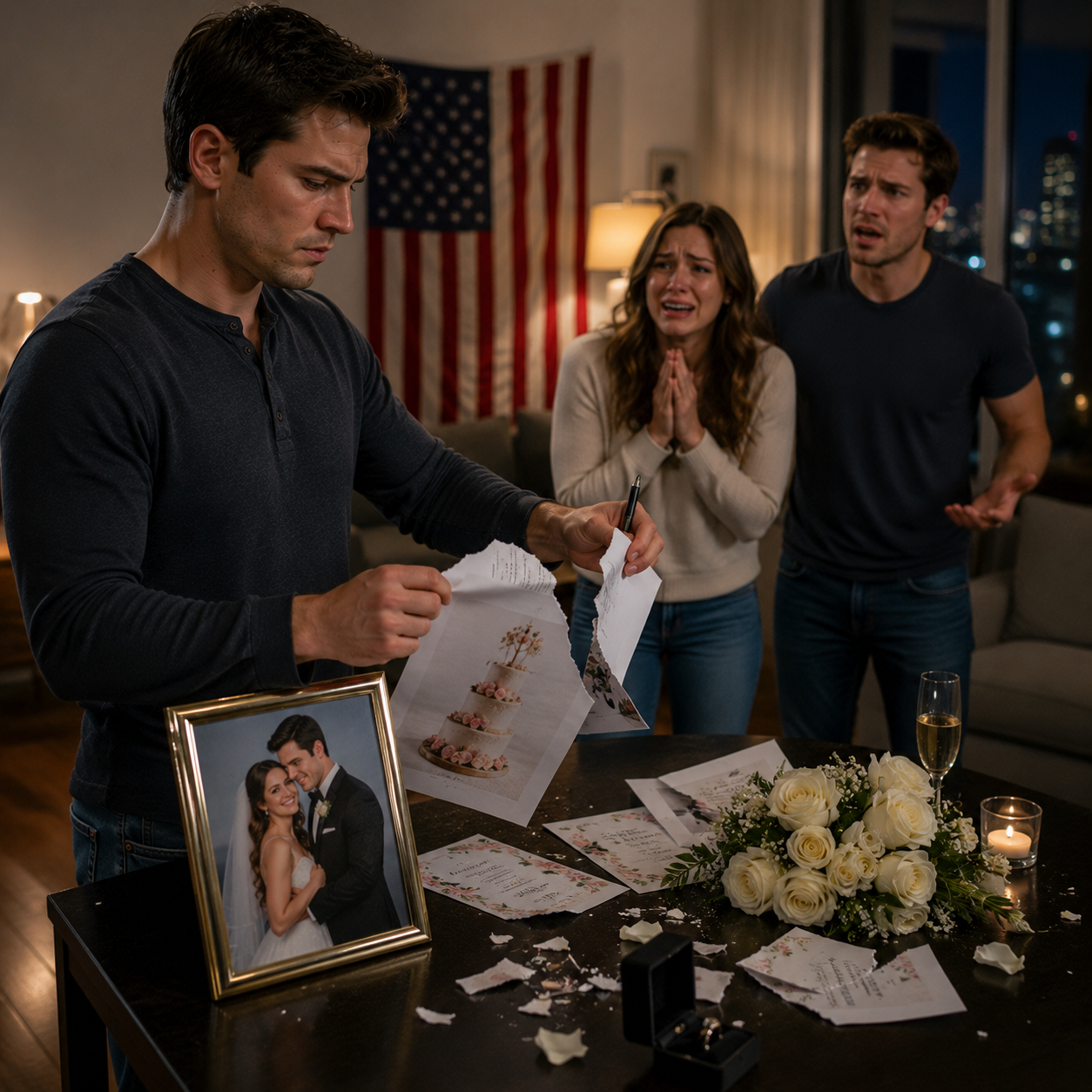
Her clothes were gone. Her suitcase was gone. The drawer where she kept her jewelry was empty.
Alma was not in her crib.
I found the note on the mattress.
“I want a divorce. I’m sorry, but our marriage was a mistake. I left Alma with Mrs. Martínez on the fifth floor. Keep her.”
Keep her.
Not take care of her.
Not please love her.
Keep her.
I do not remember walking to Mrs. Martínez’s apartment. I only remember the old woman opening the door with tears in her eyes, Alma crying in her arms.
“She said she had an emergency,” Mrs. Martínez whispered. “I thought you knew.”
I called Lucía a hundred times.
No answer.
I went to her parents’ mansion that same night, holding Alma against my chest while rain soaked through my jacket. The security guard at the gate would not let me in.
“I need to speak to Lucía,” I begged.
“I’m sorry, sir. You are not welcome here.”
“Tell her I’m outside.”
“I can’t do that.”
“Please. She’s my wife.”
He looked genuinely sorry.
“You need to leave.”
Two days later, divorce papers arrived.
Her father’s lawyers moved with brutal efficiency. Everything was clean, sharp, official. Lucía had signed documents giving up custody. I did not understand half of what I was reading, and I had no money for the kind of lawyer who could fight people like the Salvatierra family.
I became a single father overnight.
Six months after she left, I called her parents’ house one last time.
I do not know why. Maybe because grief is stupid. Maybe because I wanted to hate her with certainty. Maybe because a part of me still believed Lucía would wake up one day and come home.
Isabel answered.
When she heard my voice, she did not sound surprised.
“She’s dead,” she said.
My hand went numb around the phone.
“What?”
“Lucía had a car accident. She died. Do not call here again.”
I could not breathe.
“When? Where is she buried? I need—”
“You need nothing,” Isabel said. “You meant nothing to her.”
Then she hung up.
I collapsed on the kitchen floor.
I cried so hard Alma woke up in her crib and began crying too. I crawled to her because I could not stand. I held her against me while we both sobbed, and I remember thinking that this was what my life had become: a man crying over a woman who had abandoned him while holding the child she left behind.
They never allowed me to see a body.
They never gave me a grave.
I never saw a death certificate.
At the time, I told myself powerful families handle things quietly. I told myself grief did not come with receipts. I told myself if I pushed, they would only humiliate me again.
So I buried Lucía without a coffin.
And I raised Alma.
I worked until my body felt made of stone. I finished my studies at night after putting Alma to bed. Sometimes I read architectural theory with one hand and held a bottle with the other. Sometimes I fell asleep at the table and woke to Alma touching my cheek.
“Papi tired?” she would ask.
“Just a little.”
I learned how to braid hair badly, then better. I learned which fever was dangerous and which was not. I learned that children ask questions when you are least prepared for them. I learned that love is not only romance and promises. Sometimes love is paying electricity before buying new shoes. Sometimes love is holding a sick child upright at three in the morning so she can breathe.
Slowly, life changed.
People noticed my designs. A contractor I worked for gave me a chance. Then another. Within three years, I had my own small firm. Not rich. Not famous. But stable. Honest. Mine.
Alma grew into a bright, stubborn, happy girl.
And the pain of Lucía became something quieter.
Not gone.
Never gone.
Just folded into the background of my days.
Then Marcos’s wedding invitation arrived.
The venue was a private estate outside Madrid, on the road toward the mountains. It had stone walls, old trees, lavender beds, and views toward the Sierra de Guadarrama. Everything smelled like fresh grass and old money.
Black cars rolled up the gravel drive. Women stepped out wearing hats that looked like sculptures. Men in expensive suits shook hands with each other as if each greeting were a business agreement.
I wore the only good suit I owned.
Alma wore a pale blue dress and white shoes that pinched her toes, but she refused to take them off.
“Princesses suffer at weddings,” she told me solemnly.
That made me sadder than it should have.
Marcos was waiting near the entrance.
The sight of him unsettled me immediately.
He was thinner than the last time I had seen him. His eyes were shadowed. His suit fit perfectly, but he looked like a man walking toward a sentence, not a marriage.
“Thank you for coming,” he said.
I hugged him.
He barely hugged me back.
“What is this?” I whispered.
He looked down at Alma.
“Hello, little one.”
“Hi, Uncle Marcos,” she said. “Where’s the bride?”
His face lost color.
“Inside.”
“Is she pretty?”
He closed his eyes.
“Yes,” he said. “Very.”
I was about to demand an explanation when a woman appeared behind him.
For a moment, time bent.
Isabel Salvatierra stood under the entrance arch wearing pearls and a cream dress, her white-blond hair pinned back, her expression sharp enough to draw blood.
Lucía’s mother.
The woman who had told me my wife was dead.
She stared at me as if I had walked mud across her floor.
“What are you doing here?”
My hand tightened around Alma’s.
“I was invited.”
Her eyes moved to my daughter.
For one second, something flickered across her face.
Recognition.
Fear.
Then it vanished.
“Leave,” she said.
Alma moved closer to my leg.
“Papi, who is she?”
“No one important,” I said.
Isabel’s mouth tightened.
“You have no place here.”
Marcos stepped between us.
“I invited him.”
“You had no right.”
“At this point,” Marcos said quietly, “I don’t have much fear left.”
She looked at him with a hatred so intense it made my stomach tighten.
That was when I knew.
This was not a wedding.
Not really.
Guests began moving toward white chairs arranged before a flowered arch. A string quartet played softly. An officiant stood with a leather folder. The entire garden looked perfect in the way expensive things often do—beautiful enough to hide rot.
Marcos guided me to the front row, beside the aisle.
“Stay here,” he whispered.
“Tell me what is happening.”
He looked at me then, and his eyes were wet.
“I’m sorry I didn’t know sooner.”
Before I could respond, the music changed.
Everyone stood.
Alma rose on her toes to see.
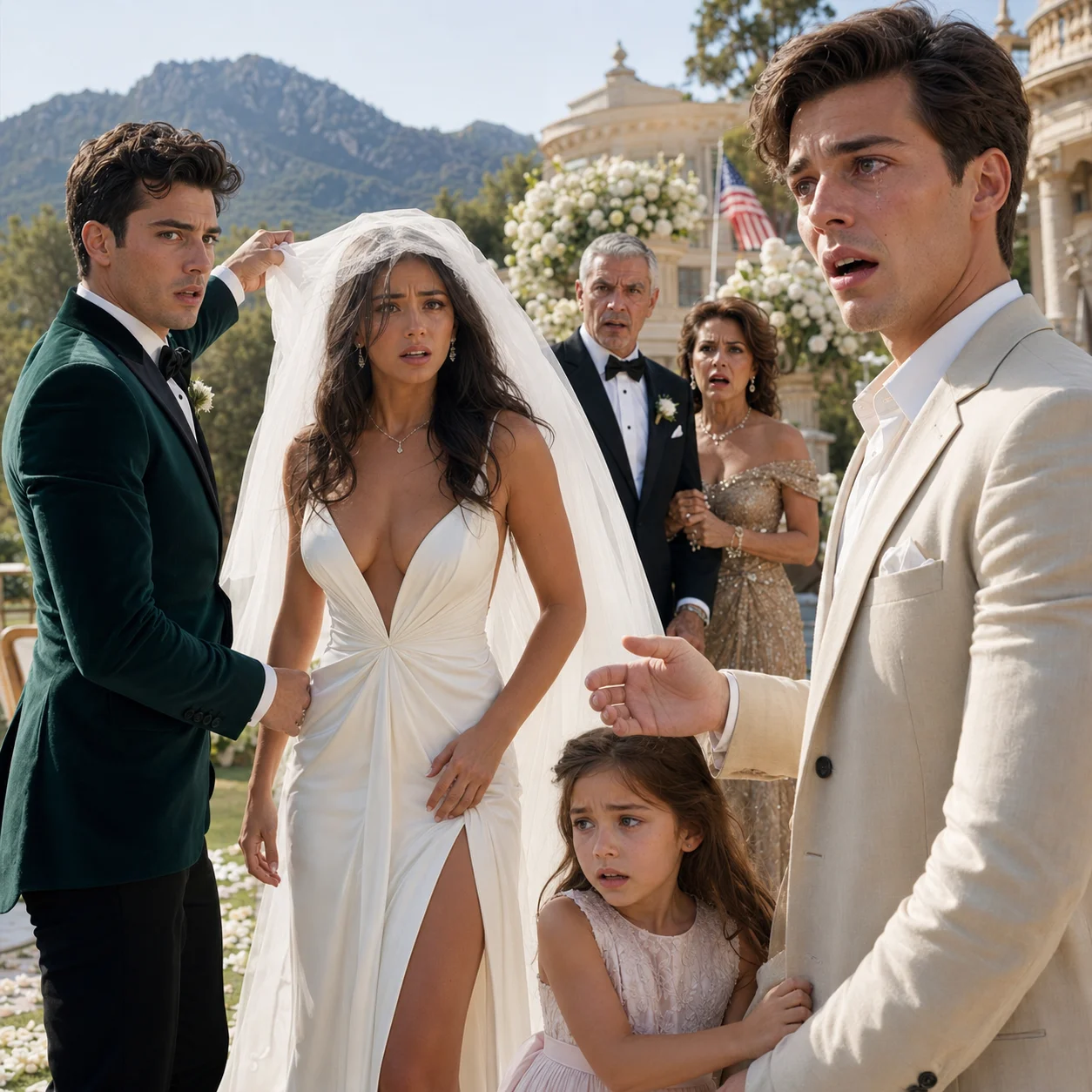
The bride appeared at the far end of the garden.
She wore a simple long-sleeved gown, elegant but not extravagant. Her face was covered by a veil. She walked beside Enrique Salvatierra, Lucía’s father, the man who had once decided I was not good enough to sit at his table.
My chest tightened.
At first, I did not understand why.
The way she walked.
The tilt of her head.
The shape of her shoulders beneath the veil.
Some things are remembered by the body before the mind dares to speak them.
The bride came closer.
One step.
Another.
The wind lifted the edge of her veil.
Alma squeezed my hand.
“Papi,” she whispered, “why are you crying?”
I touched my face.
I was crying.
The bride reached Marcos.
He did not look at her like a groom.
He looked at her like a man begging forgiveness.
The officiant began speaking, but the words dissolved before they reached me. I saw Enrique sit beside Isabel. I saw two private security guards near the arch. I saw Marcos lift his hands to the bride’s veil.
Then he pulled it back.
And my world collapsed.
Lucía.
My Lucía.
Thinner. Paler. Older in the eyes.
But alive.
Alive.
Alma tilted her head.
“Papi,” she whispered, confused, “that lady looks like Mommy.”
Lucía looked straight at me.
Not at Marcos.
Not at her parents.
At me.
And in that moment, every lie I had been forced to live inside tore open at once.
The grief.
The phone call.
The grave I never saw.
The five birthdays Alma celebrated without a mother.
The nights I slept with one hand on the empty side of the bed.
All of it came out of me in one broken word.
“Lucía.”
She brought a trembling hand to her mouth.
“Javier…”
The garden froze.
Isabel stood.
“Continue,” she ordered.
The officiant blinked.
“Señora, I—”
“Continue!”
Marcos stepped back.
“No.”
Enrique stood too.
“Marcos,” he said sharply, “remember the agreement.”
I moved toward the altar.
Two security guards shifted, but Marcos raised his hand.
“Let him pass.”
Alma came with me, half-hidden behind my leg.
Lucía saw her.
The sound that came out of her was not graceful. It was raw, wounded, animal.
“Alma.”
My daughter hid fully behind me.
“Papi,” she whispered, “why does she know my name?”
I could barely breathe.
I looked at Lucía.
“Are you alive?”
It was a stupid question. She was standing in front of me.
But my mind needed the answer.
Lucía tried to step forward.
Isabel snapped, “Not one step.”
Lucía stopped instantly.
And that was when I saw it.
Not guilt.
Fear.
Real fear.
“Javier,” Marcos said, “listen to her.”
I turned on him.
“You knew?”
His face crumpled.
“For two months.”
Two months.
The words hit me like a fist.
“You knew for two months?”
“I found her by accident at a private clinic,” he said. “She was with her mother. They called her Elena Álvarez.”
“Elena,” I repeated, looking at the invitation.
Lucía’s lips trembled.
“They told me you didn’t want to see me.”
The sentence went through me like glass.
“What accident?” I asked.
“The car,” she whispered. “The night I left. I fought with my parents. I wanted to come back to you. To Alma. But I crashed on the M-30. I woke up weeks later.”
Isabel stepped forward.
“You woke confused. We cared for you.”
Lucía turned on her.
“You locked me away.”
The guests began murmuring.
Enrique’s jaw tightened.
“Be very careful.”
Lucía was shaking, but her voice strengthened.
“They told me Javier had signed the divorce because he hated me. They told me Alma was better without a mother who had abandoned her. They showed me papers. Messages. Letters. All fake.”
I felt dizzy.
“They told me you were dead.”
Lucía stared at me.
“No.”
“Your mother told me.”
Lucía looked at Isabel.
Not with surprise.
With the devastated recognition of someone watching the last missing piece fall into place.
“You told me he never came to the hospital,” Lucía whispered.
Isabel did not deny it.
“I did what was necessary.”
Alma began to cry silently.
I knelt beside her.
“Cariño…”
“Is she Mommy?”
I did not know how to answer.
Lucía lowered herself slowly to her knees a few feet away. She did not rush forward. She did not demand anything. She made herself small in front of the child she had lost.
“Yes, my love,” she said through tears. “I’m your mommy.”
Alma looked at me as if asking permission to believe.
That broke me more than anything.
“I thought you were in a star,” Alma whispered.
Lucía covered her mouth.
“I thought you were far away from me too.”
Alma did not run into her arms.
It was too much. Too many years. Too many lies. Too much pain for a child to understand in one breath.
But she took one step.
Lucía did not touch her.
She waited.
In that silence, Marcos reached beneath the altar stand and pulled out a folder.
“I did not come here to get married,” he said.
The murmurs became louder.
Isabel’s face went pale.
“Marcos.”
“I came to bring witnesses.”
The officiant closed his folder slowly.
“I believe this is beyond my role.”
“Good,” Marcos said. “Then listen as a citizen.”
He opened the folder.
“Two months ago, I found Lucía at a private clinic. She was not free to leave alone. Her mother controlled her phone, medical appointments, documents, and identity. When I mentioned Javier and Alma, she became distressed. Security removed me. Later, with help from a nurse, she contacted me.”
Lucía nodded.
“I didn’t remember everything at first. There were holes. But I remembered Alma’s laugh. I remembered Javier’s hands covered in cement. I remembered our little kitchen. They told me those memories were delusions.”
I looked at Isabel.
“You declared her dead?”
“There was never a death certificate,” Marcos said.
The words landed like stones.
Never.
No certificate.
No grave.
No funeral.
Only a phone call.
A closed gate.
A rich woman’s voice.
“I checked the Civil Registry,” Marcos continued. “There is no death record for Lucía Salvatierra in Madrid. What exists are private documents, altered medical records, and an identity used to keep her unreachable.”
Enrique’s face flushed dark red.
“This is defamation.”
“There are medical reports,” Marcos said. “Messages. Recordings. Witnesses.”
Isabel moved toward Lucía.
I stepped in front of her.
“Don’t touch her.”
Isabel looked at me with the same contempt she had shown years earlier.
“You are still a laborer in a suit.”
“And you are still a mother who buried her daughter alive.”
The garden went silent.
Then, from the back of the estate, two police officers entered with a woman in a dark suit.
Marcos exhaled as if he had been holding his breath for two months.
“My lawyer,” he said.
Enrique tried to leave.
Rich men do not usually run. They delegate escape.
But Enrique took two quick steps before an officer stopped him.
After that, the wedding fell apart.
Guests stood. Chairs scraped. Glasses tipped over. The string quartet packed their instruments with the desperate efficiency of people who had seen enough. Someone’s aunt started praying under her breath. Alma covered her ears, and I lifted her into my arms.
Lucía looked at us, desperate to come closer but afraid to ask.
“May I?” she whispered.
Not to me.
To Alma.
My daughter studied her.
“Are you really my mommy?”
“Yes.”
“Why didn’t you come to my birthdays?”
Lucía broke.
“Because they made me believe you didn’t want me there. Because I was wrong before I left. Because I was a coward. Because people I trusted took my life from me, and it took me too long to find my way back.”
Alma thought about that.
Then she reached out and touched Lucía’s cheek.
“You have my face,” she said.
Lucía laughed through tears.
“No, sweetheart. You have mine.”
They did not hug that day.
Not yet.
But Alma’s hand stayed on Lucía’s cheek for three seconds.
And for three seconds, the world began again.
There was no wedding.
There were statements given first in a private room at the estate, then later at the police station. There were documents, questions, lawyers, medical records, and old wounds opened under fluorescent lights.
Lucía told her story in pieces.
The guilt she had felt before leaving. The pressure from her parents. The accident after a fight with them. The weeks she could not fully remember. The private doctors paid by her family. The new identity. The lies about me refusing to see her. The fake letters. The manipulated messages. The photos of Alma hidden from her.
I told mine.
The note in the crib. The divorce papers. The custody documents. The security guard. The phone call from Isabel saying Lucía had died. The years of raising Alma alone.
Marcos’s lawyer explained that parental responsibilities could not be erased as casually as a rich family wished. She said the paperwork around custody and divorce would be reviewed. She said there were enough inconsistencies to challenge everything.
I listened and felt rage rise so hot I could taste metal.
Rage at them.
Rage at myself.
Rage at being poor when I needed protection.
Rage at accepting a death without proof because powerful people know how to sound official even when they are lying.
That night, Lucía stayed in a hotel under the protection of Marcos and his lawyer.
I took Alma home.
We did not sleep.
She sat on my bed with her stuffed rabbit in her arms.
“Is Mommy good?” she asked.
I stayed quiet.
I did not want to lie.
But I also did not want to crush a hope that had just been born.
“Mommy did things that hurt us,” I said carefully. “And very bad things were done to her too. We are going to go slowly.”
“Are you mad at her?”
“Yes.”
“Do you love her?”
I looked toward the window. Madrid was dark beyond the glass, headlights moving like tired stars.
“A part of me never stopped.”
“And another part?”
“Another part is very angry.”
Alma hugged her rabbit tighter.
“Me too.”
The next afternoon, Lucía came to the apartment.
She did not enter until Alma said she could.
She stood in the doorway with a small bag in one hand and her wedding dress folded inside a black garment cover over her arm. She looked like a woman who had escaped from someone else’s life and did not know where to place her feet in her own.
Her eyes moved through the apartment.
The kitchen table.
The drawings on the fridge.
The worn sofa.
The shelf where I kept family photos.
“It still smells like burned coffee,” she whispered.
“I still make it badly.”
A tiny smile appeared and vanished.
Then she saw the photograph.
I had kept only one.
Lucía holding newborn Alma in the hospital, exhausted and beautiful, before everything changed.
She pressed a hand to her chest.
“I thought you erased me.”
“I tried,” I said. “Many times.”
“And?”
“I couldn’t.”
Alma came out of her bedroom holding the rabbit.
“You can sit,” she told Lucía. “But not there. That’s Papi’s place.”
Lucía obeyed.
That was how we began.
Not with forgiveness.
With rules.
For weeks, everything was awkward.
Supervised visits. A child psychologist. Lawyers. Court requests. Medical examinations. Registry documents. Statements against Lucía’s parents. The press tried to get involved once whispers spread about the Salvatierra scandal, but Marcos helped keep reporters away from Alma.
I still did not know if I forgave him.
One evening, I confronted him outside his office.
“You could have told me earlier.”
“If I told you without proof, you would have stormed her parents’ house,” he said. “And they would have hidden her somewhere else.”
“You let me see her in a wedding dress beside you.”
His face tightened.
“I know.”
“That was cruel.”
“Yes.”
“Do you love her?”
He shook his head slowly.
“Not the way you think. I wanted to help her. And maybe I wanted to repair my own guilt.”
“Guilt for what?”
“For dragging you to that party where you met her.”
I looked away.
“Don’t make yourself that important.”
He gave a sad laugh.
“I deserve that.”
Forgiveness is not a door. It is a hallway.
Sometimes you walk it for years.
Lucía did not ask to come back to my bed.
That mattered.
She did not ask to resume being my wife as if five years could be erased by tears and paperwork. She asked to know Alma. She asked to prove herself. She asked for the chance to apologize without demanding that I accept it.
One afternoon in Retiro Park, while Alma played near the pond, Lucía sat beside me on a bench and told me the truth about leaving.
Not the accident. Not her parents. Her part.
“I was ashamed,” she said. “I chose you, and then I resented the life that came with that choice. I loved you, but I did not know how to be poor without feeling punished. That was mine. No one forced me to write that note.”
I stared ahead.
“Alma cried for you.”
Lucía closed her eyes.
“I know.”
“No,” I said. “You don’t.”
She accepted that like a blow.
“You’re right. I don’t.”
That helped more than any excuse would have.
Because I needed one part of the story to have the right name.
She had been a victim.
But before that, she had abandoned us.
Both could be true.
Months passed.
Alma adjusted in small, unpredictable ways. Some days she wanted Lucía to braid her hair. Other days she refused to speak to her. Sometimes she asked questions that made all three of us go silent.
“Did you forget my birthday?”
“No,” Lucía would say. “Never.”
“Did you know what I looked like?”
“Only in my dreams.”
“Did Grandma Isabel lie because she hated Papi?”
Lucía’s face would harden.
“She lied because she wanted control.”
“Is that the same thing?”
“Sometimes.”
The first time Alma called her Mom, it happened without ceremony.
We were in Plaza Mayor. Alma had dropped chocolate ice cream on her dress, and Lucía knelt to clean it with a napkin. Alma was frustrated and sticky and close to tears.
“Mom,” she complained, “tell Papi not to laugh.”
I was not laughing.
I was crying.
Lucía froze.
Alma looked between us.
“What?”
Lucía reached for her slowly, giving her time to pull away.
Alma did not pull away.
This time, when Lucía hugged her, Alma hugged back.
We did not recover the five years.
No one recovers time like that.
Lucía did not see Alma’s first tooth fall out. She did not walk her into school on her first day. She did not hold her through the fever at three years old. She did not hear the night Alma asked if stars could go out.
And I did not recover the woman who had left a note in a crib.
The woman who came back was different.
So was I.
Legally, everything became complicated.
Our divorce was challenged because of irregularities. Lucía’s death had never existed, which made some parts of the paperwork absurd and others horrifying. The custody surrender was reviewed. Her parents’ lawyers fought hard, because that is what money does when cornered.
But this time, I had money too.
Not Salvatierra money.
Not old money.
But enough to hire people who answered my calls.
Enough to demand documents.
Enough to stop being dismissed at gates.
There was an investigation into forged documents, coercion, unlawful confinement, and medical manipulation. Enrique and Isabel did not lose everything. People like them rarely do. But they lost the thing they valued most: control.
Isabel disappeared from charity magazines. Enrique sold one of his properties in La Moraleja to pay legal fees. Their friends stopped inviting them to public events, not because those friends had morals, but because scandal is contagious.
Lucía testified against them.
She trembled the entire time.
But she testified.
When she came out of the courthouse that day, pale and exhausted, she looked at me and said, “Today I really left my parents’ house.”
I hugged her.
Not as her husband.
Not yet.
As a witness.
As someone who knew the cost of crossing a door that had been locked from the inside for years.
Two years later, we live near Madrid Río in an apartment full of light and plants Lucía tries very hard not to kill.
Alma is eight now. She keeps two toothbrushes in the bathroom because she says one belongs to “before” and one belongs to “now.” I do not correct her.
Lucía works in a small gallery where no one uses her last name like a key. I still design houses. Sometimes, when I stand in an empty lot with drawings under my arm, I think about the small apartment where everything began and how badly I wanted to build a better life for a woman who did not know how to wait for one.
Marcos comes to dinner some Sundays.
Alma forgave him before I did.
I still pour him less wine than he wants.
Lucía and I did not become a fairy tale.
I think that is why we survived.
Fairy tales end at the reunion. Real life begins there, in the mess after the miracle, when the questions come back, when anger sits beside love at breakfast, when the person you missed is also the person who hurt you.
Some nights, I wake and see Lucía sleeping beside me. We share a bed again now, but it took time. A year of therapy. A year of careful conversations. A year of learning that touching someone you lost can feel like comfort and panic at once.
Sometimes I look at her and feel the old rage.
Five years.
The phone call.
My daughter waving at stars.
Lucía wakes sometimes, as if she can feel the weight of my thoughts.
“I’m sorry,” she whispers.
She does not say it to end the conversation.
She says it because she lives with ghosts too.
I take her hand.
“I know.”
And sometimes, when I am honest, I say, “I’m sorry too.”
Not because I believed she was dead.
Because I accepted a closed door as truth.
Because I let people with money convince me that grief did not deserve evidence.
Because I did not demand a body, a certificate, a grave, a final answer.
Because poverty had trained me to lower my eyes when powerful people spoke.
I will never do that again.
Five years after losing my wife, I took our daughter to my best friend’s wedding.
When he lifted the bride’s veil, I saw Lucía.
Alive.
Broken.
Mine and not mine.
The mother of my child.
The woman who abandoned us.
The victim of her parents.
The love I had buried without a body.
Alma asked me, “Papi, why are you crying?”
I could not explain it then.
Now I could.
I was crying because the dead had returned, but the grief had still been real.
I was crying because joy can hurt when it arrives late.
I was crying because holding someone alive does not erase the nights you mourned them.
I was crying because everything stolen from us was standing in front of me in a white dress.
And because truth, when it finally comes, does not always give back the years.
Sometimes it gives you something smaller.
Harder.
More necessary.
It gives you the right to live the years that remain without lies.
![[FULL STORY] He Said I Would Never Leave Him—So I Quietly Became Someone Who Could](https://social-media.rabedo.com/thumbnails/1777456977_f20c22b8-e9f4-430b-ad41-263e53b77fd7.png)
![[FULL STORY] Her Family Laughed When She Called Off the Wedding in Front of Me. I Laughed Too—Because Every Deposit Was in My Name and Still Refundable.](https://social-media.rabedo.com/thumbnails/1777017828_M7.png)
![[FULL STORY] She Chose Her Ex Over Me — So I Left, Moved Overseas, and Never Looked Back](https://social-media.rabedo.com/thumbnails/1776618643_649d24e6-46a0-4d02-83eb-b1087ed5d7ad.png)