My name is Savannah, and I was thirty years old when I finally understood that being loved in private and denied in public is not romance.
It is a cage with pretty lighting.
For years, I told myself Mason was complicated. I told myself grief had made him careful, ambition had made him distracted, and fear had made him slow. I built entire explanations around the empty spaces he left me standing in. I called his hesitation tenderness. I called his silence patience. I called his refusal to choose me something noble because it hurt less than admitting the truth.
Mason did love me.
That was the cruelest part.
He loved me enough to reach for me in the dark, but not enough to hold my hand in daylight. He loved me enough to need me, but not enough to name me. He loved me enough to build a life around my labor, my loyalty, and my presence, but not enough to let the world know I belonged there.
And after five years of waiting for Mason to choose me, I finally chose myself.
We met when I was twenty-two in Charlotte, North Carolina, during a summer art fair downtown. I was selling hand-painted signs from a folding table I had borrowed from my aunt, sweating through my blouse and pretending I was not terrified that nobody would buy anything. Mason was selling coffee from a tiny cart with a broken umbrella and a smile that made people forgive the five-minute wait.
Near closing time, he came to my table and picked up one of my signs.
Home is a feeling.
He held it up, studied it like the words had found him personally, and said, “That’s exactly what I’m trying to build.”
At the time, he had nothing but the coffee cart. No café. No staff. No business plan that could survive a bank meeting. Just caffeine, stubbornness, and a dream he carried like it was already real.
I should have known then.
Mason made dreams sound like promises.
We became friends first. Real friends. He brought me coffee when I worked late at the print shop. I helped him design his first logo. He drove me home after my car died outside a grocery store at eleven at night. I sat with him in the hospital when his mother, Nora, had her first surgery, holding a paper cup of terrible vending machine tea while Mason stared at the floor like fear had turned him to stone.
People started assuming we were together before either of us said it out loud.
His mother called me sweetheart. His sister, Brooke, told me I was the only person who could make Mason listen. My best friend, Aubrey, said, “Savannah, that man looks at you like you invented oxygen.”
I laughed every time.
But inside, I believed it because Mason did look at me that way when no one else was around.
That was the part that kept me trapped.
In private, Mason was soft in ways that made leaving him feel impossible. He remembered that I hated lilies because they smelled like funerals. He kept a blanket at his apartment because I was always cold. When I had migraines, he turned off every light and sat on the floor beside the couch, speaking in a whisper so gentle it almost hurt. Once, after Nora’s second surgery, he fell asleep with his head in my lap while I ran my fingers through his hair.
Half asleep, he mumbled, “Don’t leave me, Sav.”
I whispered, “I won’t.”
That was the closest we ever came to a vow.
But in public, Mason became someone else.
If someone teased him about me, he laughed it off. “Savannah? She’s my emergency contact, not my girlfriend.”
Or, “Sav is basically family.”
Or the one that cut deepest because it sounded affectionate enough to disguise the wound: “We’re too close for that.”
Too close.
As if love were something cheapened by being named.
I told myself he was scared. I told myself he had watched his mother’s illness shake his family and had become afraid of losing people. I told myself labels did not matter if the feeling was real. That was how I lost years. Not all at once, but in little quiet payments. One unspoken hope at a time.
When I was twenty-five, Mason opened Hollow Pine Coffee.
The shop was small at first, squeezed between a record store and a tailor who opened whenever he felt like it. The floors creaked. The bathroom sink leaked for three months. The espresso machine made a sound like it was preparing for war. Mason loved every inch of it.
So did I.
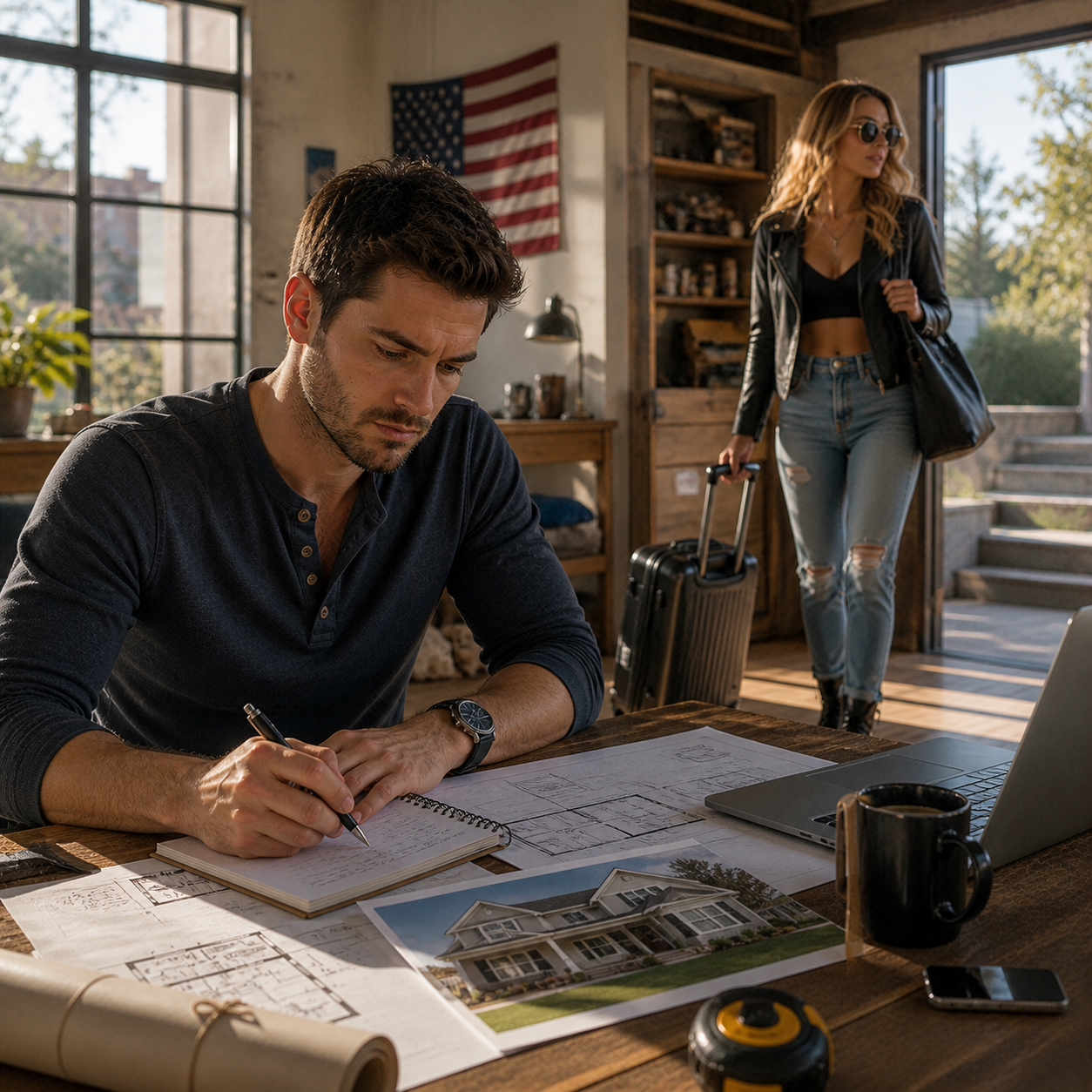
I designed the logo for free because he said he would pay me once the business stabilized. I painted the mural on the back wall, a forest of dark pines fading into gold light. I created the menu boards, loyalty cards, website, packaging stickers, seasonal posters, and employee shirts. When the printer jammed before opening week, I stayed until two in the morning fixing labels by hand. When vendors ghosted him, I made calls. When staff quit, I covered shifts. When he panicked, I steadied him.
At night, when the café was empty and the chairs were stacked on tables, Mason would stand beside me under the warm lights and say, “I couldn’t do this without you.”
I would smile.
That sentence fed me for a long time.
But it did not feed my bank account. It did not give me health insurance. It did not give me security. And it definitely did not give me a visible place in his life.
By twenty-eight, I was tired.
Not loudly tired. Quietly tired. The kind of tired where you stop asking questions because you already know the answers will hurt. The kind where you let people call you patient because admitting you are starving feels humiliating.
Then came the anniversary party.
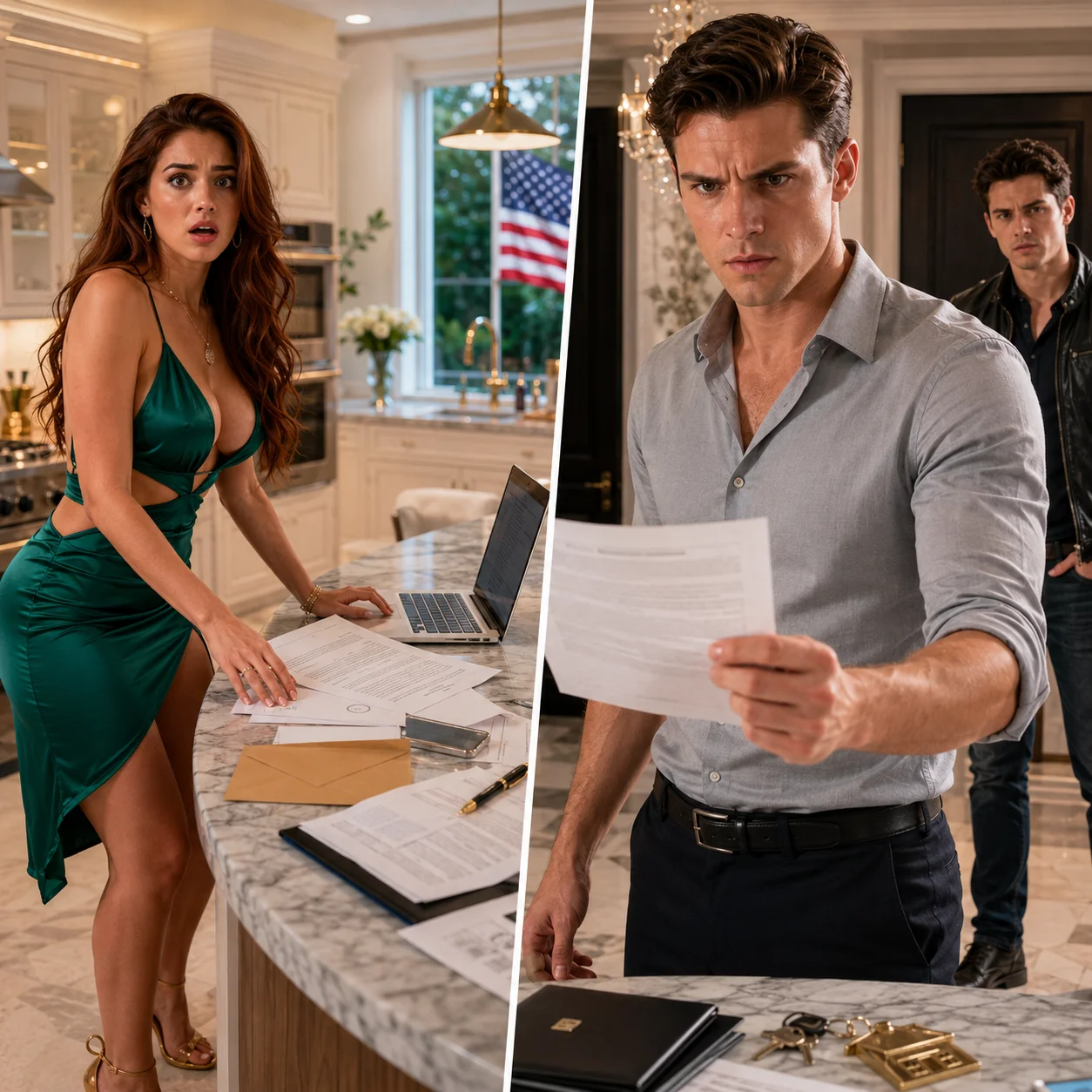
Hollow Pine had survived three years, which was a genuine achievement. Mason threw a celebration for staff, vendors, regular customers, and a few local business people. I wore a green dress because Mason had once said green made my eyes look brighter. It embarrassed me how much I still wanted him to notice.
That night, everyone praised him.
His courage. His vision. His work ethic. His taste.
I stood near the dessert table smiling like I had not painted half the walls, built the brand from scratch, and eaten instant noodles during the months I was too broke to buy dinner because I was donating labor to a man who called me “basically family.”
Then Travis, one of Mason’s new investors, looked between us and grinned.
“So is Savannah the secret woman behind all this?”
Mason froze for half a second.
Then he laughed.
Not nervously. Not gently. A real laugh.
“Savannah? No. She’s just Sav. She helps with design stuff. I don’t mix business with feelings.”
Just Sav.
Design stuff.
I felt something inside me go very still.
Travis chuckled. “Smart man. Romance complicates everything.”
Mason lifted his glass. “Exactly.”
I looked at him, waiting for him to glance at me with apology in his eyes. Waiting for some private signal that he knew he had hurt me. He did not. He turned away and kept talking.
I stood there in the green dress he liked, holding a plastic cup of lemonade, and saw my entire life from the outside.
The late nights. The unpaid work. The hospital rooms. The almost-confessions. The way he held my hand in the dark and dropped it when anyone entered. The way I had mistaken being needed for being chosen.
I placed the cup on the table, walked to the coat rack, took my jacket, and left.
Mason called seventeen minutes later.
I know because I watched my phone light up while I sat in my car behind the café trying to breathe.
I did not answer.
He texted, “Where did you go?”
Then, “Don’t be dramatic tonight.”
That did it.
Not the laugh. Not the denial. Not even “just Sav.”
Don’t be dramatic.
I typed back one sentence.
“You’re right. I’m done performing.”
Then I drove home.
That night, I took the spare key to Mason’s apartment off my keychain. I gathered every folder related to Hollow Pine: logo files, website passwords, vendor contacts, invoices I had never sent because love had convinced me money would make me seem selfish.
By sunrise, I had created one clean document.
Unpaid branding work: $4,800.
Website build and maintenance: $2,200.
Menu redesigns, packaging, mural labor: $3,600.
Total: $10,600.
I stared at that number for a long time.
Then I reduced it to $5,000.
Even my anger had been trained to discount itself.
I emailed him the invoice, the passwords, and a note.
“Mason, I am no longer available for unpaid work, emotional support, emergency problem-solving, or private affection that becomes public embarrassment. Please pay the attached invoice within 30 days. I wish Hollow Pine well. Savannah.”
He called immediately.
Then again.
Then he sent a voice message.
“Sav, what is this? You know that wasn’t what I meant. Travis is old-school. I was trying to keep things professional. Call me.”
I did not call.
By noon, Brooke texted me.
“What happened? Mason is losing it.”
“Ask him what he said at the party,” I replied.
She did.
Twenty minutes later, she wrote back, “Oh my God.”
That was all.
Three days later, Mason came to my apartment holding sunflowers.
I saw him through the peephole. That almost made me open the door. Almost. Sunflowers were my favorite, and of course he remembered. Mason always remembered the details that made it harder to forget the larger truth.
He knocked softly. “Sav, please. Five minutes.”
I opened the door with the chain still on.
His eyes dropped to the chain. Pain crossed his face.
Good.
He needed to learn what a boundary looked like.
He lifted the flowers. “I’m sorry.”
“For what?”
He blinked. “For what I said.”
“What did you say?”
He rubbed his jaw. “Savannah.”
“No. Say it.”
He looked away.
I waited.
Finally, he said, “I made it sound like you were just helping with design. And I acted like there was nothing between us.”
“There isn’t.”
His eyes snapped back to mine. “You don’t mean that.”
“I do now.”
He leaned closer. The chain tightened.
“You’re my best friend,” he whispered.
I smiled, but it felt empty. “That was the smallest thing I was to you.”
His face crumpled. “I was scared.”
“No,” I said. “You were comfortable.”
He had no answer.
The sunflowers stayed in his hand.
I closed the door.
After that, the messages started. Not just from Mason. Friends told me he was complicated but loved me “in his own way.” Old customers said the café felt different without me. One of Nora’s church friends said Mason had been through enough and I should show grace.
At first, I blocked none of them.
I answered with one sentence.
“Love that hides you is not love you can live in.”
Most stopped.
Mason did not.
He emailed. He texted. He sent coffee to my office. He left a note on my windshield that said, “I don’t know how to do this without you.”
For years, that sentence would have pulled me back.
Now, it only made me tired.
Because even his apology still centered him. His need. His fear. His business. His regret. Not once did he say, “I hurt you because I was selfish.”
So I went quiet.
Real quiet.
I stopped going to Hollow Pine. I stopped answering his family. I stopped driving past his street.
Then I did something that shocked everyone, including me.
I accepted a job in Denver.
It was a design director role at a small outdoor lifestyle company. Better pay, health insurance, my own team, and a relocation bonus of $6,000. When I told Aubrey, she screamed so loudly I had to move the phone away from my ear.
“When do you leave?” she asked.
“Three weeks.”
“Does Mason know?”
“No.”
“Good.”
Of course, he found out. Brooke told him, by accident or on purpose. I never asked.
He showed up at my going-away dinner uninvited.
Aubrey saw him first and muttered, “Absolutely not.”
I stood before she could attack him with a breadstick.
Mason looked wrecked. Unshaven. Red-eyed. Wearing the black jacket I had bought him for Christmas two years earlier.
“Can we talk outside?” he asked.
I followed him because I wanted witnesses to see I was calm.
Outside, the cold air hit my face.
“Denver,” he said.
“Yes.”
“You were just going to leave?”
I looked at him. “Mason, you left me standing beside you for six years and called it friendship.”
He flinched. “I didn’t know how to love you.”
“No,” I said. “You knew. You just didn’t know how to lose the benefits of pretending not to.”
His mouth opened, then closed.
“If you go,” he said, “this changes everything.”
I nodded. “That’s the point.”
Denver was not magical at first.
It was lonely, expensive, and too bright in the mornings. My apartment had thin walls, and during my first week there, I cried on the kitchen floor because I could not find the box with my mugs. But it was mine. That mattered.
My work was hard in the best way. People paid me for my ideas. They credited me in meetings. My boss, Kelsey, introduced me to clients by saying, “Savannah built this entire campaign.”
Built.
Not helped.
Built.
I started sleeping better. I cut my hair. I bought a blue couch. I went hiking with coworkers and learned that my lungs hated altitude, but my heart loved open space.
Six months after I moved, I met Owen.
Not dramatically. No sparks. No slow-motion moment. He was the photographer on a product shoot outside Boulder. Quiet, funny, patient. He noticed when I stepped away from the group because I was overwhelmed and asked if I wanted water, not attention.
That was new.
We became friends slowly. Then dinner. Then Sunday farmers markets. Then a relationship where nobody had to guess.
The first time someone asked if we were together, Owen smiled and said, “Yeah. I’m lucky.”
Just like that.
In public.
Without fear. Without a joke. Without making me smaller.
I went home and cried in the shower, not because it was dramatic, but because it was easy.
A year after Denver, Owen proposed.
A small cabin. Snow outside. Pasta he almost burned. A ring that fit because Aubrey helped him. I said yes before he finished the sentence.
Two weeks later, I mailed wedding invitations.
I hesitated over Mason’s, not because I wanted him there, but because not sending one felt like hiding the ending. So I sent it to Brooke’s address, knowing she would decide what to do.
She gave it to him.
The fallout came faster than I expected.
First came a call from Brooke. Her voice was shaking.
“Savannah, there’s something you need to know.”
I sat on my blue couch. “What?”
“I found a box in Mom’s closet. She asked me to clean some things out after her move.”
Nora had moved into a smaller place that spring.
Brooke continued, “There was a letter from Mom and a ring receipt.”
My body went cold.
“What ring?”
Brooke inhaled.
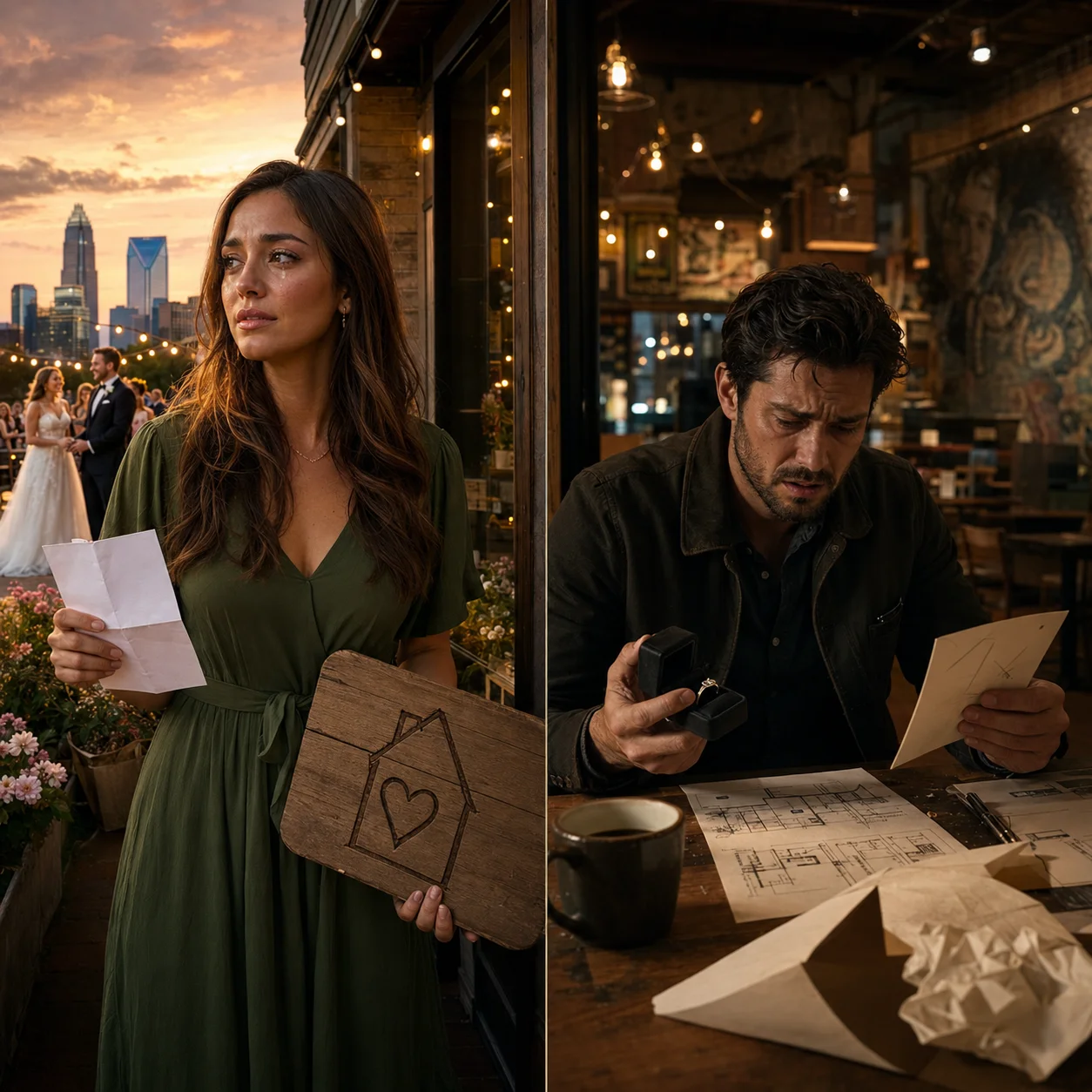
“Mason bought an engagement ring for you three years ago.”
I said nothing.
My hand tightened around the phone.
“She wrote him a letter after her surgery,” Brooke said. “She told him not to waste your life. She told him if he loved you, he needed to be brave, and if he couldn’t be brave, he needed to let you go.”
The room blurred.
Three years ago.
Before the anniversary party. Before “just Sav.” Before Denver. Before I learned how to breathe without him.
Brooke cried softly. “He hid it from all of us.”
I looked at my engagement ring from Owen, steady and warm on my hand.
“Why are you telling me?”
“Because he saw your invitation and broke down. He told Mom everything. She made me call. She said you deserved the truth, even if it was late.”
Late.
Such a small word for a graveyard of years.
That night, Mason called from an unknown number.
I answered because some endings deserve a witness.
He said my name like a prayer. “Savannah.”
I closed my eyes. “Do not make this harder than it has to be.”
His breath shook. “I bought the ring.”
“I know.”
“I was going to ask you after Mom recovered. Then the café got unstable. Then I got scared.”
I opened my eyes.
“No. You got selfish.”
Silence.
“You let me love you while you decided whether I was worth the risk.”
He cried then.
I had imagined Mason’s tears for years. Once, I thought they would feel like justice. They did not. They felt like weather after the house was already rebuilt.
“I loved you,” he whispered.
“I know.”
That answer surprised him. Maybe he expected me to say he did not. But I knew Mason had loved me. That was the tragedy.
He loved me and still denied me.
He loved me and still used me.
He loved me and still let me walk around starving beside a table he refused to set.
“Don’t marry him,” he said.
There it was.
The old Mason. The one who waited until my life had movement before demanding I freeze again.
“No.”
“Sav, please.”
“No,” I repeated. “You don’t get to confuse regret with destiny.”
“I can fix this.”
“You can’t even name what you broke.”
He sobbed quietly.
I let the silence stretch. Then I said, “I hope you become honest one day, but you will not practice on me anymore.”
I hung up.
The wedding was in September in a small garden outside Denver. No grand ballroom, no performance. Just string lights, wildflowers, mountains in the distance, and people who loved me loudly.
Aubrey flew in three days early and cried over every centerpiece like she was personally sending me to college. Brooke came too. I did not expect her to, but I was glad.
She hugged me before the ceremony and whispered, “Mom wanted to come, but it would have been too much. She sent this.”
She handed me a small envelope.
Inside was a note from Nora.
“Savannah, I loved you like a daughter before my son was wise enough to love you properly. I am sorry he was not brave. I am sorry I watched you wait and called it patience when maybe I should have called it pain. Be happy. Be fully loved. Be seen.”
I cried before my makeup was finished.
Then I walked down the aisle to Owen.
He cried when he saw me. Not subtly. Openly.
Aubrey whispered loudly, “Green flag.”
Everyone laughed.
When Owen said his vows, he did not promise a perfect life. He promised presence.
“I will not make you beg for clarity,” he said. “I will not hide you from the world. I will choose you in rooms you are standing in and rooms you are not.”
That was when I almost broke.
Because real love did not feel like chasing.
It felt like being named.
Mason did not come.
A week after the wedding, a package arrived at our apartment. No return name, but I knew. Inside was the old sign he bought from me at the art fair.
Home is a feeling.
Under it was an envelope with a cashier’s check for $10,600.
The full amount.
There was also a note.
“You built more than I admitted. I am sorry I made you feel like an accessory to a life you helped create. I won’t contact you again. Be happy, Sav.”
I sat with the note for a long time.
Owen found me on the floor.
“You okay?”
I nodded. “I think this is the first apology that didn’t ask me for anything.”
He sat beside me. “What do you want to do with the check?”
I smiled. “Deposit it.”
He laughed. “Good answer.”
We used part of it to start a scholarship for young women in design who were doing unpaid creative work because someone convinced them exposure was payment. Aubrey named it the Full Credit Fund because she has never been subtle.
Two years later, I heard Mason sold Hollow Pine. Brooke told me he moved to Asheville and started therapy.
I was glad, not in a way that pulled me back. More in the way you feel glad when a storm moves away from your town and finally becomes rain somewhere else.
I do not hate him.
That surprises people. But hate is still a kind of holding, and I put Mason down a long time ago.
What I feel now is clarity.
He did love me in his limited, fearful, selfish way. But love that is not brave enough to honor you can still waste your life. Love that only exists in private can still humiliate you in public. Love that waits until you leave to speak is not romance.
It is regret wearing perfume.
I spent six years trying to become easy enough for Mason to choose. Then I walked away and discovered I was never hard to love. I had simply been asking the wrong person to be honest.
Now my life is quiet in the best way.
Owen and I have a small house with too many plants, one stubborn rescue dog named Milo, and the old sign hanging in the hallway.
Home is a feeling.
Sometimes I look at it and think of that twenty-two-year-old girl at the art fair, the one who believed a man buying her sign meant he understood her heart. I want to tell her something.
You are not a waiting room.
You are not unpaid labor.
You are not a secret.
And if someone pretends not to love you because they are scared, proud, confused, or comfortable, let them pretend.
But do not build your life around their performance.
Walk away while you still recognize yourself, because the right love will not need to lose you forever before admitting you mattered.
It will choose you while you are still there.
![[FULL STORY] She Called Her Best Friend And Said, “If He Asks Tonight, Tell Him I’m Staying At Your Place—I’m](https://social-media.rabedo.com/thumbnails/1776756667_12.png)
![[FULL STORY] My girlfriend chose a steak dinner over my emergency room call, so I had the police serve her the bill.](https://social-media.rabedo.com/thumbnails/1777307554_M3.png)