
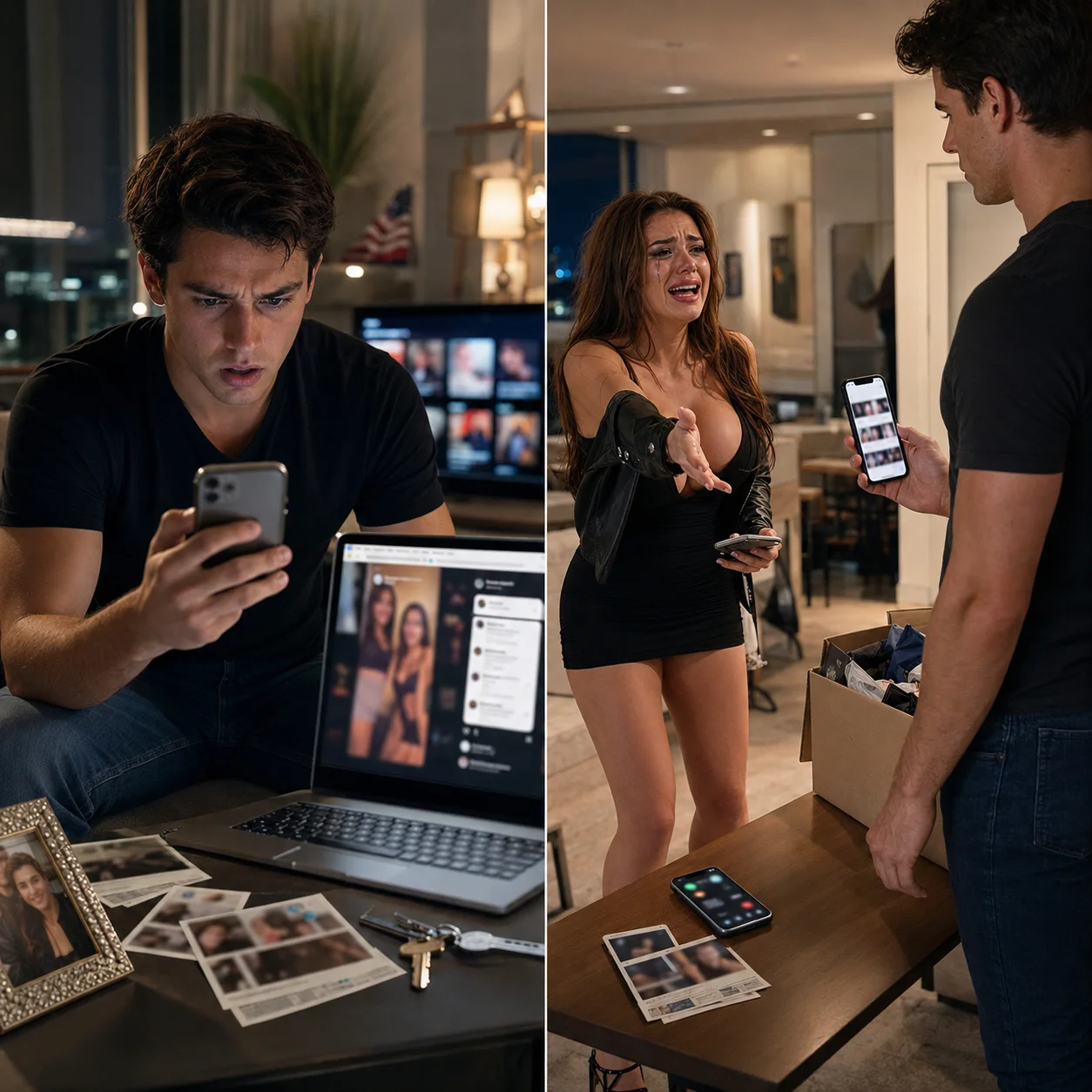
I found out my girlfriend had been mocking me to her private little audience because she used the same password for Netflix, email, and Instagram. That sounds almost stupid when I say it out loud, like the kind of ridiculous detail you would reject in a movie because it feels too convenient. But that was Megan. She would roll her eyes whenever I told her not to reuse passwords, then tell me I was being dramatic because “normal people don’t have time to remember fifteen different logins.” I work in IT, so this argument had become a running joke between us. I never imagined that one of those jokes would be the thread that pulled our entire relationship apart.
I was twenty-nine, Megan was twenty-seven, and we had been dating for a year and a half. We met through mutual friends at a backyard barbecue where she laughed at one of my awkward jokes loudly enough to make me feel like the funniest man alive. She was warm in that effortless way some people are, the kind of person who could walk into a room and make everyone believe she had come specifically to see them. She remembered small things. She brought coffee when I worked late. She sent me pictures of dogs she passed on the street because she knew I wanted one someday. For most of our relationship, I thought we were solid. Not perfect, maybe, but steady in a way that made me trust the future.
We had even started talking about moving in together when her lease ended in a few months. Nothing was signed yet, but we had looked at listings, argued playfully about neighborhoods, and made half-serious jokes about who would get the bigger closet. I remember one Sunday morning, she sat cross-legged on my couch scrolling through apartments on her phone while wearing one of my old hoodies. She looked up and said, “I think we’d be good at living together.” I believed her. That was the thing that kept replaying in my head later. Not the insults. Not even the screenshots. That sentence. I think we’d be good at living together.
Last Friday night, Megan was out with her work friends celebrating someone’s birthday. I stayed home because I had an early gym session the next day and, honestly, I was tired. I ordered Thai food, changed into sweatpants, and decided to watch this show Megan had mentioned a few times. I could not find it in my own Netflix recommendations, so I figured maybe she had added it to her watch list. We had used each other’s streaming accounts before. It was not unusual. There was no part of me that sat down that night intending to investigate her.
I tried logging into her Netflix account with the password I remembered, but it did not work. I figured she must have changed it recently. Without thinking much of it, I tried her usual password, the one she used for practically everything. The same one I had told her a hundred times was a terrible idea.
It worked.
While I was searching through her watch list, I noticed she had been watching a reality dating show she always claimed to hate when I put it on. That made me laugh a little, but it did not matter. People pretend to dislike dumb shows all the time. I found the series I wanted, watched a couple episodes, and forgot about it.
When I finished, I went to log out but accidentally clicked into her profile settings. That was when I noticed Netflix was still connected to her email session on the browser. There was an Instagram notification sitting there near the top of her inbox. Something about “your post is getting engagement.”
At first, I did not think much of it. Megan barely posted on Instagram. Her last regular post had been from three months earlier when we went hiking. She had posted a picture of us standing at the overlook, my arm around her shoulders, both of us smiling like people in a travel ad. The caption said, “My favorite kind of weekend.”
That memory is what made the notification feel strange.
This is the part where I made a decision I am not proud of. I will not pretend otherwise. I clicked. Then I tried logging into her Instagram with the same password.
It worked too.
What opened was not her regular account. Not the account our friends followed. Not the one with hiking pictures, brunch photos, birthday posts, and smiling couple selfies. It was a second account, private, with only fourteen followers. The username was “realMeganThoughts,” and the bio read, “Where I can be honest without walking on eggshells.”
I remember staring at that sentence for a long time.
Walking on eggshells.
Megan had never once told me she felt that way. I had never raised my voice at her. I had never checked her phone. I had never tried to control who she saw or where she went. If anything, I thought I had been too easygoing sometimes, too careful, too afraid to make problems bigger than they were. But there it was, written like a warning label over a door I was not supposed to open.
Then I started scrolling.
The first post that hit me was from a week earlier.
“Another thrilling Friday night watching documentaries with R. Is this really what the rest of my life is going to look like? Someone please shoot me.”
R. That was me. Ryan. The man sitting alone on his couch in the apartment she had once said felt safe.
I kept scrolling, and every post made my stomach drop further. Dozens of them, going back about six months. She called me boring. Predictable. Financially stable but spiritually bankrupt. One post said, “Sometimes I think R is just training wheels until the real husband shows up.” Another said, “He’s the kind of guy your mom tells you to marry when she wants you to die slowly in a clean house.”
There were posts about our sex life in humiliating detail. There were jokes about how I dressed. How I talked. How I planned ahead. How I liked routines. She mocked the fact that I cared about saving money. She made fun of my job, saying being in IT had “turned his soul into a help desk ticket.” She posted about running into her ex and feeling “more alive in five minutes than in months with R.”
I felt physically sick.
These were not one-off complaints after a fight. We all say things when we are angry. We all vent sometimes. I could have understood a private message to a friend saying I had annoyed her or that she felt bored or that we needed to work on something. What I found was different. It was consistent. It was calculated. It was entertainment. She had built an entire hidden version of our relationship where I was not a partner but a joke.
And the comments made it worse.
Her friends were laughing. Encouraging her. Asking for updates like our relationship was a reality show they were watching from a VIP room. I recognized several usernames. Two of her closest friends, women who hugged me at parties and told me I was “so good for Megan.” Her sister, whom I had helped move apartments the month before, carrying boxes up three flights of stairs while she joked that I was “basically family now.” A coworker who had invited both of us to her wedding next spring.
Fourteen people had access to the version of Megan that laughed at me.
I was the only one dating the version that loved me.
I logged out at first and just sat there in the blue light of the TV. The room felt suddenly unfamiliar. My Thai food container was still on the coffee table. A half-finished glass of water sat beside it. Netflix had moved on to some autoplay preview, people laughing in a scene I could not hear because my pulse was too loud.
At first, I thought about calling her. Then I thought about waiting for her to come home from the birthday party and asking her to explain. Maybe I wanted to see panic on her face. Maybe I wanted one of those moments where the liar realizes the room has changed. But the longer I sat there, the more the sadness hardened into something else.
This was not a misunderstanding. It was not a bad day. It was not a private diary. A diary does not have followers. A diary does not invite your sister, your friends, and your coworker to laugh in the comments. A diary does not turn your boyfriend’s trust into content.
So I logged back in and started taking screenshots.
Lots of them.
I screenshotted every degrading post. Every mocking comment. Every private detail she had shared about me that should have stayed between us. I captured usernames, dates, captions, replies. I worked mechanically, almost like I was documenting an incident at work. Evidence first. Feelings later.
By the time I finished, it was nearly two in the morning. Megan still had not come back to my place, which was probably lucky for both of us. I barely slept. Every time I closed my eyes, I saw another caption.
Training wheels.
Spiritually bankrupt.
Until the real husband shows up.
Saturday morning, I made a decision that changed everything.
I created a single Instagram post on my own account. A carousel of the most damning screenshots from Megan’s private account. No caption. No explanation. No dramatic speech. Just the raw evidence of who she was in private versus who she pretended to be with me.
Then I posted it, turned off my phone, and went to the gym for two hours.
People will judge me for that. Some already have. They will say I should have taken the high road. That I should have confronted her privately, broken up, and walked away. Maybe that would have been the mature thing. Maybe a better man would have done it. But in that moment, after realizing I had been turned into a punchline for half a year, I did not want to protect the woman who had made humiliation a hobby. I wanted everyone who had laughed in the dark to see the lights come on.
When I turned my phone back on, it was chaos.
Notifications stacked on top of notifications. Missed calls. DMs. Texts. Comments. My roommate, Chris, was the one who told me Megan’s mom had seen it first.
Sandra, Megan’s mother, was extremely active on social media. She liked every photo, commented on every update, and apparently had post notifications turned on for both Megan and me. Within minutes of my post going live, she commented publicly.
“Meghan Christine Davis. Call me immediately. Your father and I are beyond disgusted.”
She used Megan’s full name. That alone told me how bad it was.
After Sandra commented, the post spread through our little social circle like someone had thrown gasoline on a candle. People who knew us started screenshotting, sharing, texting each other. I was not famous. Megan was not famous. But in the small ecosystem of mutual friends, coworkers, siblings, and parents, it was nuclear.
Megan’s first texts were pure anger.
“How dare you invade my privacy like this?”
“Take this down now.”
“What is wrong with you?”
Then came the damage control.
“That account was just for venting.”
“It wasn’t real.”
“Everyone needs an outlet.”
Then the threats.
“My dad is calling his lawyer.”
“This is defamation.”
“This is invasion of privacy.”
Then bargaining.
“Please, Ryan, my boss follows you. I could lose my job over this.”
“Please take it down and we can talk.”
Finally, pleading.
“I’m so sorry.”
“I never meant any of it.”
“Please give me a chance to explain.”
“I love you.”
That last one made me feel hollow more than angry. She loved me when she needed me to take the post down. She loved me after her boss might have seen it. She loved me when her parents were disgusted. But apparently, love had not stopped her from spending six months turning my personality, my body, my habits, and my trust into private entertainment.
I did not respond.
I let it unfold.
By Sunday afternoon, the fallout was worse than I expected. Megan’s sister called me. I almost did not answer, expecting screaming, but she was crying before I even said hello.
“Ryan, I’m sorry,” she said. “I should never have followed that account. I should never have commented. I don’t know why I treated it like it was harmless.”
I did not know what to say to that. A month earlier, I had carried her mattress up a narrow stairwell while she laughed and called me a lifesaver. Now I knew she had been liking jokes about me being a placeholder boyfriend.
“You could have told me,” I said.
“I know.”
That was all there really was.
Two mutual friends texted to say they had no idea Megan was like this. One said they had always thought Megan was “a little sarcastic” but not cruel. Another admitted they had seen one post months earlier and felt uncomfortable but assumed it was none of their business. That phrase came up a lot over the next few days. None of my business. As if watching someone get mocked behind their back is morally neutral when you do not personally swing the knife.
Megan’s roommate, Kate, came by my apartment Sunday evening with a cardboard box of my things from their place. A hoodie. A phone charger. A book I had left on Megan’s nightstand. A coffee mug she had once bought me because it said “Have You Tried Turning It Off And On Again?” on the side.
Kate looked uncomfortable as she handed it over.
“She’s a mess,” she said. “I’m not defending her. I just wanted you to know she got called into an emergency meeting with HR this morning. They’re putting her on leave while they assess the situation. Something about company image.”
I nodded and took the box.
Kate hesitated. “For what it’s worth, I refused to follow that account when she invited me. I told her it was messed up to talk about your boyfriend that way. That’s why things were weird between us for a while.”
I remembered Megan complaining weeks earlier that Kate had been “judgmental lately.” At the time, I had told Megan maybe Kate was just stressed.
I almost laughed.
“Thanks for telling me,” I said.
Kate looked like she wanted to say more, but there was nothing more that would help. She left, and I set the box on my kitchen table. That mug sat on top, bright and stupid and cheerful. I put it in the back of a cabinet because throwing it away felt dramatic and keeping it out felt pathetic.
Monday morning, Megan showed up at my apartment around seven.
I saw her through the peephole before she knocked. Her eyes were swollen. Her hair was pulled back messily, and she wore the gray sweatshirt she used to steal from me on cold nights. For a second, the sight of her hit some old reflex in me. Concern. Habit. The impulse to open the door and ask what happened, as if I did not already know.
When I opened it, she looked smaller than I remembered.
“Can we please talk?” she asked.
I stepped aside and let her in. Not because I owed her a conversation, but because some part of me needed to hear what explanation she believed could survive contact with reality. I sat across from her at my kitchen table. I did not offer coffee. I did not start.
She looked around the apartment like she was trying to locate the version of us that used to exist there.
“I lost everything in two days,” she finally said. “My parents are furious. Dad’s threatening to stop paying my student loans. Half my friends won’t speak to me. I’m on administrative leave at work, and I lost you.”
I waited.
She looked up, eyes shining. “Why did you have to post it publicly? Why couldn’t you just talk to me?”
I stared at her for a second, genuinely amazed.
“Kind of like how you talked to me about your issues instead of posting them for your friends’ entertainment?”
She flinched. “That’s different.”
“How?”
“I never meant for you to see that. It was private.”
“And that makes it better? That you only trashed me behind my back?”
She opened her mouth, then closed it.
After a long silence, I said, “You know what’s ironic? If you had come to me with any of those concerns, feeling bored, wanting more excitement, feeling stuck, whatever, I would have listened. I would have tried. Maybe we would have broken up anyway, but at least it would have been honest. Instead, you smiled to my face while telling everyone else I was basically a temporary placeholder.”
“It wasn’t everyone,” she whispered. “Just a few close friends.”
“Fourteen people,” I corrected. “Including your boss’s daughter. Not exactly a private diary.”
She started crying again. “I know it looks bad.”
“It does not look bad, Megan. It is bad.”
“I was venting.”
“You were performing.”
That landed harder than I expected. Her face crumpled, but this time I did not rush to soften it.
“I felt trapped,” she said. “Not because of you exactly. Just because everything was starting to feel serious. Moving in. Talking about the future. Everyone kept saying you were perfect for me, and I panicked.”
“So you created a secret account to make me look pathetic?”
“I didn’t think of it like that.”
“Then how did you think of it?”
She wiped her face with her sleeve. “Like a place to say the ugly thoughts I wasn’t proud of.”
“With an audience.”
She looked down.
That was the point she could not get around. Maybe there had been real insecurity under it. Maybe she was afraid of commitment. Maybe she was bored. Maybe she liked attention. Maybe mocking me made her feel powerful in front of women she wanted to impress. But she had not written those things into a notebook and hidden it under her bed. She had invited people to laugh.
“Please take the post down,” she said. “I’ve learned my lesson. You’ve ruined enough of my life.”
There it was.
Not “I ruined this.” Not “I hurt you.” Not “I betrayed your trust for months.”
You’ve ruined enough of my life.
I leaned back in my chair and felt the last small piece of hope inside me go quiet.
“I didn’t ruin anything,” I said. “I showed people what you wrote. You did the rest yourself.”
She cried harder then, but I did not move toward her. That might sound cruel, but by then I understood something important. Megan’s tears were real, but they were not all for me. Some were for her parents’ disappointment. Some were for her promotion. Some were for her reputation. Some were for the fact that she had lost control of the story.
I had been grieving a person.
She was grieving an image.
Eventually, she left without any resolution. She paused at the door like she expected me to say something softer, something that would give her hope. I did not. When the door closed, I stood there for a while, listening to her footsteps fade down the hallway.
Later that day, I took the post down.
Not for her. Not because she asked. I took it down because the point had been made, and I did not want the screenshots to become the center of my life too. I had exposed the truth. Keeping it up forever would have turned my pain into the same kind of spectacle I hated in her.
But taking it down did not undo what happened.
The damage had already moved through every room of her life.
Over the next two weeks, the fallout settled into something quieter but heavier. Megan moved back to her parents’ house temporarily. According to mutual friends, her father did not completely cut off her student loan help, but he did make her sit down with him and go through her finances like she was a teenager who had crashed a car. Her mother, Sandra, deleted her public comment after a few days, but not before everyone had seen it. That comment became almost as famous as the screenshots themselves in our small circle.
At work, Megan returned after administrative leave, but she was passed over for a promotion she had been expecting. Officially, nobody said it was because of the account. Unofficially, everyone knew. One of the posts had mocked a client dinner. Another had made a joke about a coworker’s engagement while comparing it to “watching someone happily board the same prison bus I’m avoiding.” It turned out I was not the only person she had been using for content.
That part surprised me less than it should have.
Most of our social circle quietly distanced themselves from both of us. Some people probably thought I went too far. Some were uncomfortable because they had laughed along. Some just did not want to be near the mess. I learned quickly that when a relationship explodes in public, even innocent people duck because they are afraid the shrapnel will reveal what they knew.
Megan’s mom sent me a message one evening that I still think about.
“Ryan, I am disappointed in many things about how this ended, including the public nature of it. But I understand why you were hurt. What Megan did was cruel, immature, and dishonest. Her father and I are trying to help her become a better person, not simply a more embarrassed one. I am sorry for the pain she caused you.”
It was the first message from anyone on Megan’s side that did not ask me to fix, remove, soften, or reconsider anything. I replied only, “Thank you. I appreciate that.”
I did not hear from Megan directly for almost three weeks after that.
Then, one Saturday afternoon, she texted.
“Can I drop off the last of your things? No conversation unless you want one.”
I almost ignored it. But I still had a few books and a jacket at her parents’ house, and part of me wanted this last practical thread cut cleanly. So I said yes.
She came by around four. She looked different. Not dramatically, not in the movie-scene way where someone becomes unrecognizable after heartbreak. Just less polished. Less sure of how her face should arrange itself. She handed me a bag and stood awkwardly in the hallway.
“I won’t stay,” she said. “I just wanted to say something without crying all over your kitchen again.”
I held the bag against my side and waited.
“I started therapy,” she said. “My mom basically made it a condition of living at home without everyone killing each other.”
Despite myself, I almost smiled. Sandra did seem like a woman who could weaponize maternal disappointment effectively.
Megan noticed, then looked down. “The therapist asked me why I needed people to think I was cooler than my own life. That was the phrase. Cooler than my own life. I hated her for saying it because it was true.”
I did not answer.
She continued, quieter now. “I was embarrassed that I wanted stability. Isn’t that pathetic? I wanted someone kind and steady, and then when I had it, I acted like it made me small. My friends would complain about dating terrible guys, and instead of being grateful, I made you into something boring so I could feel like I was still interesting.”
That was probably the closest thing to honesty I had ever heard from her.
“And the private account?” I asked.
She swallowed. “Attention. Validation. Cowardice. I could say it started as venting, but it became a performance. You were right about that.”
Hearing her admit it did not fix anything, but it loosened something in my chest I had not realized was still clenched.
“I loved you,” I said.
Her eyes filled immediately. “I know.”
“No, I need you to understand what I mean. I loved you enough that if you had told me you were unhappy, I would have taken it seriously. I would have changed what I could. I would have let you leave if that was what you needed. But you didn’t give me the dignity of truth. You let me plan a future with someone who was laughing at me behind a locked door.”
She nodded, crying silently now.
“I know,” she whispered. “And I’m sorry. Not because I got exposed. I mean, I was sorry for that first. I was humiliated and scared and angry. But now I’m sorry because I keep replaying your face when you asked me if privacy made it better, and I realized I had been treating you like a prop in my identity crisis. You didn’t deserve that.”
There was a time when those words would have broken me wide open. I would have reached for her. I would have said we could start again. I would have mistaken accountability for transformation because I wanted so badly to believe pain could reset people.
But the person standing in my hallway was not the Megan I thought I knew. She was the person who had hidden behind that Megan. Maybe she was beginning to face herself. Maybe she would become better. I hoped she would. But hope was not a reason to hand someone the knife again.
“I’m glad you’re getting help,” I said. “I really am.”
She wiped her face. “But we’re done.”
“Yes.”
She nodded like she had expected it but still needed to hear it. “Okay.”
Before she left, she looked back once. “For what it’s worth, you were never training wheels. You were the real thing. I just wasn’t mature enough to know what that meant.”
I wanted that sentence to feel good. Maybe part of it did. But mostly it felt late.
“Take care of yourself, Megan,” I said.
“You too, Ryan.”
Then she left.
That was the last time I saw her in person.
Months have passed now, and my life is quieter in a way I did not expect. At first, quiet felt like humiliation. Every time I sat alone watching a documentary, I heard her post in my head. Another thrilling Friday night with R. I started questioning harmless things about myself. Was I boring? Was my stability actually just emotional laziness? Did I confuse being reliable with being lovable? Betrayal does that. It does not only make you doubt the other person. It makes you doubt the parts of yourself they chose to mock.
Slowly, though, I began to separate who I was from how Megan had used me.
I still like documentaries. I still like saving money. I still like planning ahead. I still think a calm Friday night can be beautiful when you are sharing it with someone who actually wants to be there. I started going out more, not to prove I was exciting, but because I realized I had narrowed my life around a relationship where I was secretly being judged. I reconnected with friends who had nothing to do with that circle. I adopted better boundaries. I changed my passwords too, which felt ironic enough to make me laugh.
One night, my roommate Chris invited me to a small dinner with some coworkers and friends. I almost said no. Then I went. Nobody there knew Megan, nobody cared about the screenshots, and nobody looked at me like I was either a victim or a villain. We ate tacos in someone’s backyard under string lights, and for the first time in a long time, I laughed without checking myself.
Later, a woman named Claire asked me what I did for work. When I told her IT, she grinned and said, “So you’re the person everyone lies to when they say they already restarted their computer.”
I laughed. Not because it was the funniest joke, but because it was normal. Clean. No hidden audience. No private cruelty behind a smile.
I am not turning this into some instant love story. I did not ride into the sunset with Claire. We exchanged numbers eventually, but I took my time. I am still taking my time. After Megan, I learned that chemistry means very little if respect is missing. I learned that being wanted publicly does not matter if you are mocked privately. I learned that someone can hold your hand in a photo and still be building a version of you for other people to laugh at.
As for Megan, I hear small updates occasionally, though I do not ask for them. She stayed at her parents’ house for a while, kept her job, and slowly rebuilt parts of her social life. Some friends never came back. Some did. Her sister sent me one more apology months later, not asking for forgiveness, just saying she had learned something ugly about herself too. I respected that.
The post I made is gone, but people remember. That is the thing about reputation. You can delete the evidence, but you cannot unsay what everyone has already seen. Megan will have to live with the fact that her “honest” account revealed more about her character than mine.
Do I regret posting it publicly?
That question still follows me.
Some days, I think I should have handled it differently. Not because Megan deserved protection, but because public exposure is a fire, and fire does not only burn the person who lit the match. It burned through friendships, workplaces, family dinners, and parts of my own peace. There were moments afterward when I felt less like someone who had reclaimed dignity and more like someone who had handed his pain to an audience.
But do I regret exposing the truth?
No.
Because the worst part was never the insults. It was not being called boring, insecure, or training wheels. It was realizing that the person I was planning a future with had been performing love while outsourcing contempt to fourteen people who knew the joke before I did.
The Megan I loved was not real. Or maybe she was real sometimes, which is worse. Maybe people are capable of being tender in one room and cruel in another. Maybe she did love parts of me and resent the parts that required her to grow up. Maybe she wanted the safety I gave her but hated needing it. Whatever the truth is, it is no longer mine to solve.
A few weeks ago, I finally threw out the Netflix profile we had shared. It sounds small, almost ridiculous, but it felt like closing a door. No more recommended shows based on her taste. No more half-watched series she claimed to hate. No more little digital evidence of a life that had already ended.
That night, I made dinner, put on a documentary, and sat on my couch alone.
For a moment, I thought about that post she had written. Another thrilling Friday night watching documentaries with R. Is this really what the rest of my life is going to look like?
I looked around my quiet apartment. The lamp was warm. The food was good. My phone was face down. Nobody was pretending to love me while laughing somewhere else.
And for the first time, the answer did not hurt.
If this is what the rest of my life looks like for a while, I thought, then maybe that is not failure.
Maybe peace only looks boring to people addicted to performance.
Megan wanted an outlet where she could be “honest without walking on eggshells.” In the end, her honesty did what lies usually do when they finally lose their hiding place. It exposed everything.
Not just me.
Her.
And once I saw the truth, I stopped being training wheels for someone waiting on a “real husband.”
I became what I should have been all along.
A man who could walk away from someone else’s private cruelty and still believe his own life was worth choosing.

![[FULL STORY] My Girlfriend Said I'm Taking A Girls' Trip To Miami This Weekend You're Not](https://social-media.rabedo.com/thumbnails/1777869192_14-.jpg)
![[FULL STORY] My Fiancée Canceled Our Engagement Party Because It Wasn't 'Instagrammable' Enough, So I Turned It Into A Massive Celebration Of My Freedom.](https://social-media.rabedo.com/thumbnails/1776998588_R10.png)

![[FULL STORY] My Fiancé Demanded I Beg Her Father For Forgiveness To Save Our Engagement, So I Handed Him A 150-Page Dossier Of Her Infidelity Instead.](https://social-media.rabedo.com/thumbnails/1777016892_M6.png)