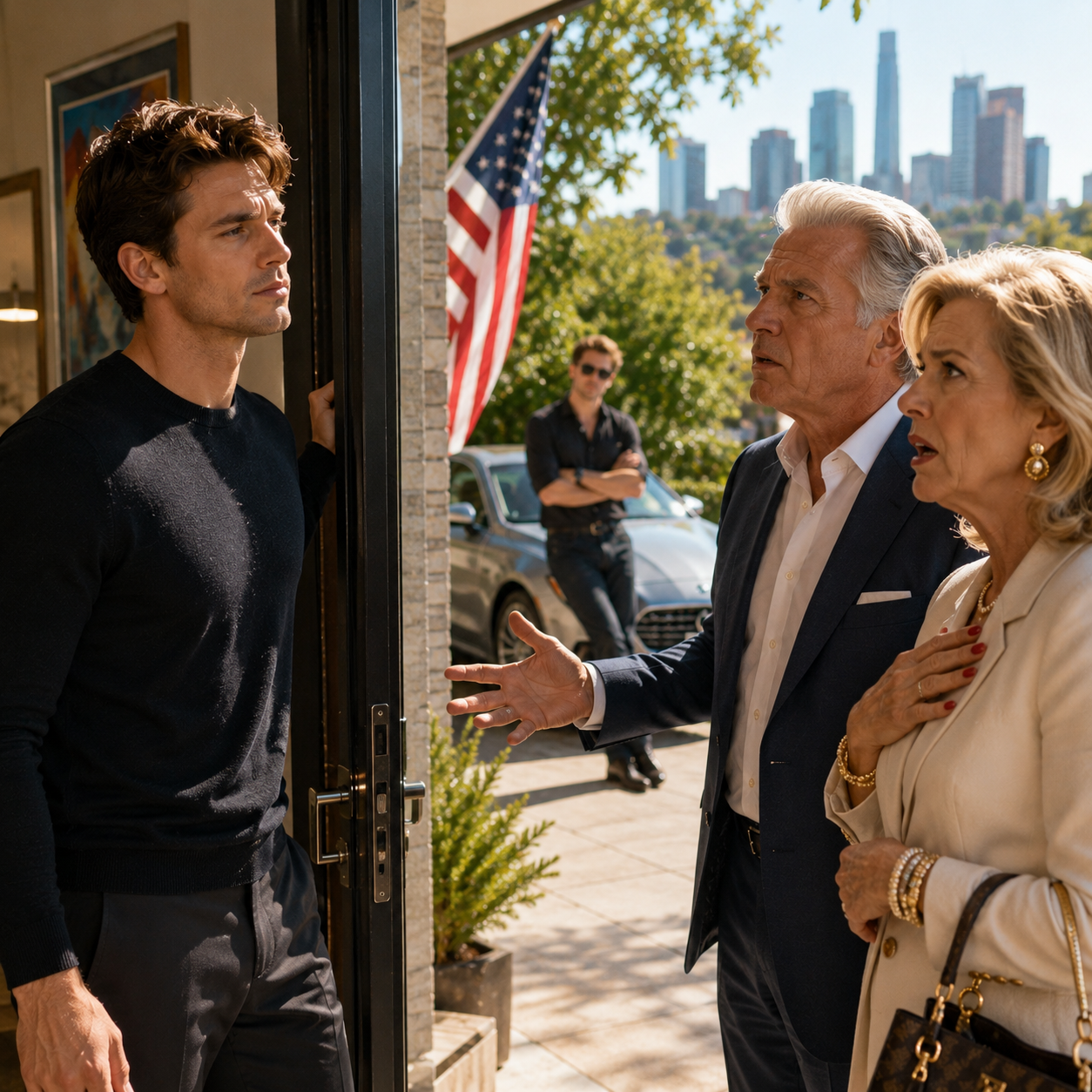

He set down the sandpaper and looked at me. “Daniel, let me ask you something. Are you marrying a woman who respects you when it costs her nothing, or a woman who respects you when people are watching?”
I didn’t answer.
He nodded, as if my silence had confirmed what he already knew.
“I can wear a new suit,” he said. “I can get a haircut. I can smile in photos. I have no pride about looking simple. Life beat that out of me early. But I won’t let someone teach my son that loving me is embarrassing.”
Those words stayed with me all week.
I went home and tried to talk to Lauren again. She was in our apartment surrounded by seating charts, invitation revisions, and fabric swatches. The wedding had become less like a celebration and more like a production she was directing for an invisible audience.
“We need to talk about my father,” I said.
She didn’t look up. “I already told the coordinator to hold the private entrance open for him and your aunt.”
“You did what?”
“It’s easier this way.”
“I told you he’s coming through the front door.”
Lauren finally lifted her eyes. “Daniel, do you understand how many important people will be at this wedding?”
I stared at her. “Important people?”
“My father’s partners. My mother’s donors. Some of my clients. The Bellamy owner may even stop by because Dad knows someone on the board.”
“And my father isn’t important?”
“That is not what I said.”
“It is exactly what you said. You just used different words.”
She stood, gathering papers against her chest as if I had threatened them. “You’re making this about class when I’m trying to protect everyone from discomfort.”
“No, Lauren. You’re trying to protect your image from my father.”
Her face hardened. “Fine. Do you want honesty? Your father is not comfortable in places like the Bellamy Grand. He wanders around asking staff where things are. He talks to servers like they’re old friends. He wears work boots to restaurants. He makes people uncomfortable because he doesn’t know when to blend in.”
“He makes people uncomfortable because he treats everyone like a person?”
“Don’t twist this.”
“I’m not twisting anything.”
She stepped closer. “This wedding matters to my family. It matters to my career. People judge details. I am not spending nearly two hundred thousand dollars so your father can walk into the lobby looking like he just came off a repair call.”
I felt something inside me go very still.
“Say that again,” I said.
She hesitated.
“No,” I said. “Say it again exactly like that.”
She looked away. “I’m tired.”
“You’re cruel.”
Her eyes snapped back to mine. “And you’re naive. You think love fixes perception. It doesn’t. People like my parents spend their whole lives building circles. One wrong impression and doors close.”
I almost laughed. Not because it was funny, but because the arrogance was so complete it felt unreal.
“My father spent his life opening doors,” I said. “Usually for people who couldn’t afford to fix them.”
Lauren rolled her eyes. “That’s sweet. It’s also not the same thing.”
That night, I slept on the couch.
The next morning, she apologized without apologizing. She said she was stressed. She said weddings bring out the worst in people. She said I was too sensitive about my father because of my mother’s death. She touched my arm and told me she loved me.
I wanted to believe her.
That was my weakness. I kept mistaking temporary softness for actual remorse.
The final planning meeting happened five days before the wedding.
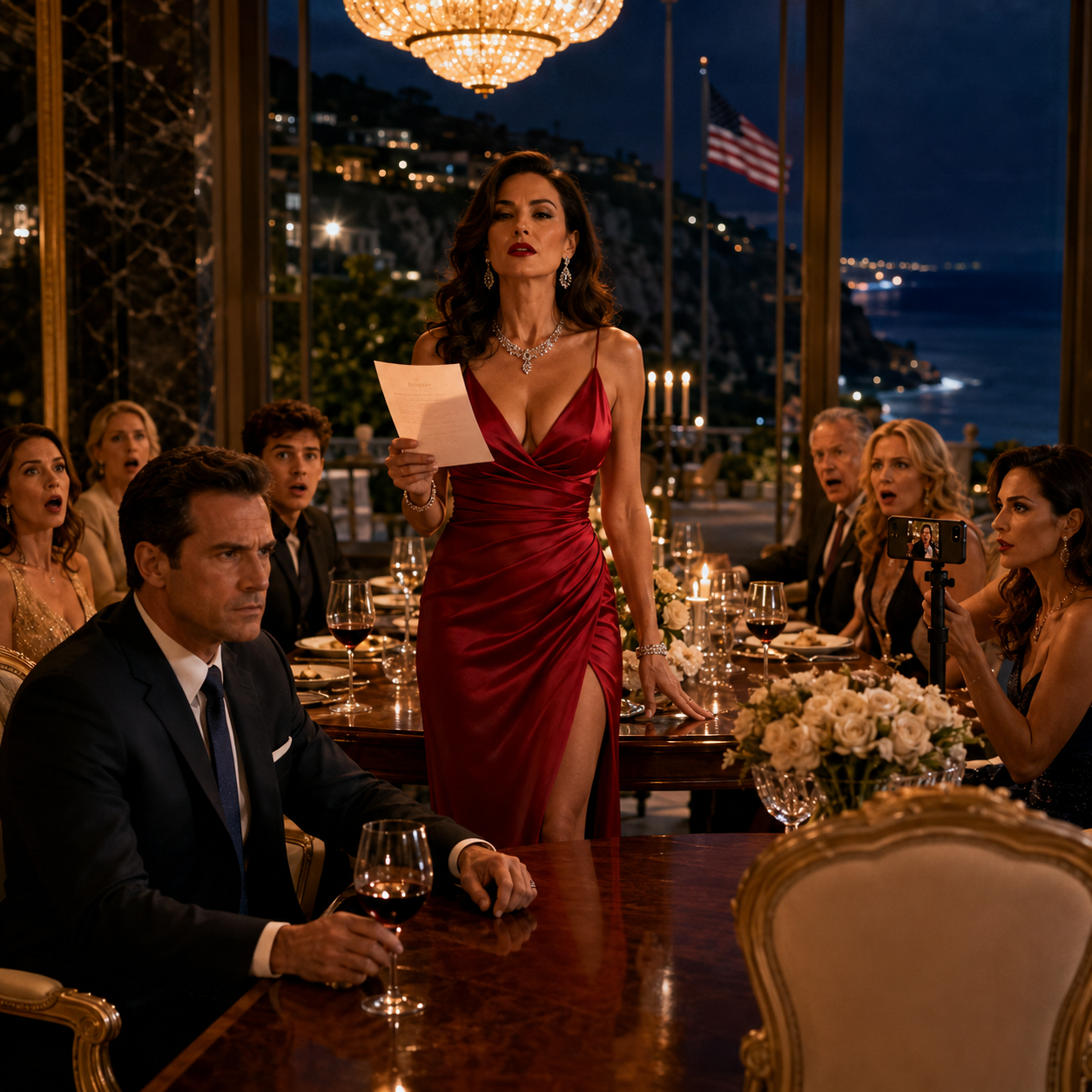
The Bellamy Grand was the kind of hotel that made people lower their voices without being asked. It had revolving brass doors, a grand staircase, and a lobby filled with fresh flowers that were replaced twice a day. The ballroom had been booked under the Caldwell family’s name, with Charles Caldwell loudly reminding everyone that his connections had secured it on short notice.
Lauren looked radiant that afternoon. She wore a pale blue dress and had her hair pinned back, calm and elegant, the perfect bride in command. Her parents arrived with a cousin, two bridesmaids, the wedding coordinator, and a photographer doing “behind-the-scenes content” for Lauren’s professional page.
I had invited my father because the coordinator needed to confirm family arrival times.
He arrived ten minutes early.
He wore a navy suit I had never seen before, probably bought off the rack and altered by Mrs. Alvarez down the street. His shoes were polished. His hair was trimmed. But over his arm, because Chicago weather was unpredictable, he carried the old brown jacket.
When he walked into the lobby, I saw Lauren’s smile freeze.
My father saw me and lifted his hand. “Hey, Danny.”
I walked over and hugged him.
He smelled faintly of soap, sawdust, and winter air.
“You look great,” I said.
He tugged at the suit collar. “Feels like I’m being strangled by respectability.”
I laughed for the first time all day.
Then Lauren approached.
“Robert,” she said, too bright. “You’re early.”
Dad smiled politely. “Traffic was kind.”
Her eyes flicked to the jacket over his arm.
Before I could say anything, Patricia appeared beside her daughter. She looked my father up and down with a smile so thin it barely qualified as one.
“Mr. Hayes,” she said. “How nice.”
“Mrs. Caldwell.”
Charles joined us, checking his watch. “Shall we get started? We’re on a tight schedule.”
The coordinator began explaining the wedding-day flow. Guests would enter through the lobby. Cocktail hour would be in the east terrace. Family photos would happen near the grand staircase. The bride’s family would arrive thirty minutes before ceremony time.
Then Lauren said, “And the groom’s father will enter through the service corridor on Wabash.”
The coordinator blinked.
My father said nothing.
I turned to Lauren slowly. “We already discussed this.”
She kept her smile fixed because the photographer was nearby. “Yes, and this is the final plan.”
“No, it isn’t.”
The lobby grew quieter. Not fully silent, but quieter in the way expensive places become when conflict enters wearing plain clothes.
Lauren’s bridesmaid, Meredith, looked down at her phone. Patricia inhaled sharply. Charles’s jaw tightened.
Dad touched my sleeve. “Daniel.”
I knew that tone. It meant don’t make a scene for me.
But I was done letting people confuse restraint with permission.
“My father will walk through the front entrance,” I said.
Lauren’s eyes flashed. “Daniel, please don’t do this here.”
“You did this here.”
Patricia stepped in. “This is exactly the kind of emotional outburst we were trying to avoid.”
I looked at her. “The emotional outburst is me saying my father can use the same door as everyone else?”
Charles exhaled through his nose. “Robert, perhaps you can help us keep things smooth. This is not personal.”
My father finally spoke. His voice was calm. “When someone tells a man to use the side door because the front one is too good for him, it’s personal.”
Lauren’s cheeks colored. “That is not what I meant.”
Dad looked at her, not angry, not bitter, just disappointed. “It’s exactly what you meant. You just didn’t expect to say it in front of me.”
That was when Lauren made her biggest mistake.
She laughed.
It was small, breathless, nervous, but cruel enough to cut.
“Robert, with all due respect, this is a five-star hotel. The side entrance is used for private arrivals all the time. Celebrities use it.”
My father nodded. “Then I’m sure they won’t mind me using the front.”
Patricia’s voice sharpened. “Mr. Hayes, you are making this unnecessarily difficult.”
“No, ma’am,” he said. “Your daughter did that.”
Charles stepped closer, lowering his voice in a way that was meant to intimidate without being obvious. “Daniel, handle your father.”
I felt my hands curl at my sides.
But before I could answer, someone behind us said, “I’d be careful with that tone, Mr. Caldwell.”
The voice was deep, older, controlled.
Everyone turned.
A man in a dark charcoal suit had stepped out from the direction of the private elevators. He looked to be in his early sixties, tall, silver-haired, with the kind of presence that made the hotel staff straighten without being told. Beside him stood the general manager, suddenly pale.
I recognized him from the framed photograph near the concierge desk.
Arthur Bellamy.
Owner of the Bellamy Grand Hotel.
Charles Caldwell’s face transformed instantly. The irritation vanished. In its place came a polished smile I had seen him use on judges, donors, and anyone wealthier than him.
“Arthur,” Charles said warmly. “I didn’t realize you were on-site today.”
Arthur Bellamy did not look at Charles.
He looked past him.
At my father.
For one suspended second, his expression changed from authority to disbelief.
Then he walked forward quickly.
“Robert?” he said.
My father’s face softened in surprise. “Arthur Bellamy.”
The hotel owner crossed the marble floor and took my father’s hand in both of his.
“My God,” Arthur said, his voice thickening. “How many years has it been?”
Dad smiled. “Too many.”
Arthur shook his hand hard, then pulled him into an embrace.
Not a polite rich-man greeting. Not a networking handshake. An embrace.
The lobby went completely silent.
Lauren stared as if the marble floor had opened beneath her.
Arthur stepped back, still holding my father’s shoulder. “I heard Daniel Hayes was the groom, but I didn’t connect it. Robert Hayes. Of course. I should have known.”
Charles looked confused. “You two know each other?”
Arthur finally turned toward him, and the warmth disappeared from his face.
“Know each other?” he said. “This man saved my life.”
No one moved.
The photographer lowered her camera.
My father sighed softly. “Arthur, you don’t have to—”
“Yes,” Arthur said. “I do.”
He looked around the lobby, at Lauren, Patricia, Charles, the coordinator, the bridesmaids, me.
“Thirty-one years ago,” Arthur said, “before this hotel was renovated, before it became the Bellamy Grand, there was a boiler explosion in the old service wing. I was twenty-nine, arrogant, and convinced I could inspect a problem myself because I didn’t want to wait for a proper crew. I got trapped behind a warped steel door while smoke filled the corridor.”
My father looked down, uncomfortable with attention.
Arthur continued. “Everyone was evacuating. Robert Hayes was a maintenance supervisor for the contractor on-site. He went back in after me. He broke through a service panel, dragged me out, and carried me halfway down a stairwell before the fire department reached us.”
He tapped his chest.
“I spent two weeks in the hospital. Robert spent three days there and checked himself out because he said he had a young son at home and couldn’t miss work.”
My throat tightened.
I knew my father had been injured in a building accident when I was small. I knew he had a scar down his left shoulder. He had always said it was “from being careless near hot metal.” He never told me the rest.
Arthur turned back to my father. “You never took the money my family tried to give you.”
Dad shrugged. “You had medical bills too.”
Arthur laughed once, but his eyes were wet. “My family owned half the city, Robert.”
“You looked scared,” Dad said simply. “Scared people don’t need invoices.”
The silence that followed was unbearable in the best possible way.
Arthur’s gaze moved to Lauren.
“And now I walk into my lobby,” he said slowly, “and hear this man being told he should enter my hotel through a side door?”
Lauren opened her mouth. Closed it. Opened it again.
“Mr. Bellamy,” she said, voice shaking slightly, “there has been a misunderstanding. I was only trying to arrange a private family entrance—”
“No,” Arthur said. “You were trying to hide him.”
Patricia stiffened. “That is a very unfair characterization.”
Arthur looked at her. “Madam, I have owned hotels for forty years. I know the difference between privacy and shame.”
Charles tried to recover. “Arthur, surely we can discuss this privately.”
“We could,” Arthur said. “But you didn’t humiliate him privately.”
I looked at my father. He stood quietly, still dignified, but I could see the pain he was trying not to show. Not because Arthur had spoken. Because now everyone knew what Lauren had done.
And everyone knew she had done it on purpose.
Lauren turned to me, eyes bright with panic. “Daniel, please say something.”
I looked at her for a long moment.
All the little comments came back. The jacket. The shoes. The photos. The restaurants. The word “mismatched.” The way she had taken my father’s humility and mistaken it for lack of worth.
“What do you want me to say?” I asked.
“That this got out of hand.”
“It got honest.”
Her face crumpled just enough that part of me still wanted to protect her. That was the most dangerous part of loving someone who hurts you. Your instinct to comfort them survives longer than your trust.
Arthur turned to my father. “Robert, you and your son will use the front entrance. In fact, if Daniel still chooses to hold his wedding here, I would be honored to personally escort you both through it.”
Charles laughed awkwardly. “Of course, of course. That’s very generous.”
Arthur’s eyes cut to him. “I wasn’t speaking to you.”
The general manager looked like he wished he could disappear into the floral arrangement.
Lauren whispered, “Daniel.”
I did not answer.
Arthur stepped closer to me. “You’re Robert’s son?”
“Yes, sir.”
He studied my face. “Your father wrote me one letter after the accident. Do you know what it said?”
I shook my head.
“He asked if I could help get an elevator repaired in a building on South Morgan because an elderly woman there couldn’t manage the stairs. That was the only thing he ever requested from me. Not money. Not work. Not favors. A working elevator for someone else.”
Dad shifted uncomfortably. “Arthur.”
“No,” Arthur said softly. “Let your son hear it.”
I looked at my father, and for the first time in years, I saw not just the man who raised me, but the man other people had been lucky enough to encounter.
A man who had done good quietly.
A man who never announced his sacrifices because he believed help only counted if it didn’t become a performance.
And I was standing beside a woman who thought he belonged near the loading dock.
Something inside me finally broke cleanly.
I turned to Lauren.
“I need to ask you one question,” I said.
She nodded quickly, relieved I was speaking to her. “Anything.”
“If Arthur hadn’t come out here, would you still have made my father use the side door?”
Her lips parted.
The lobby waited.
“Daniel,” she whispered, “that’s not fair.”
“It’s the only fair question.”
She looked at her mother. Then her father. Then the coordinator. Then Arthur Bellamy. Finally, she looked back at me.
Her silence answered.
I nodded once.
Then I slipped the engagement ring receipt envelope from my inside jacket pocket. I had brought it because the coordinator needed final insurance documentation for the wedding jewelry photographs. Strange how life prepares props for scenes you never wanted to perform.
“I can’t marry you,” I said.
Lauren went white. “Don’t do this.”
“I should have done it when you first said it.”
“This is one mistake.”
“No,” I said quietly. “A mistake is forgetting a name card. A mistake is choosing the wrong flowers. This was a belief.”
Her eyes filled with tears. “I was stressed. My parents have expectations. You know how much pressure I’m under.”
“And under pressure, you tried to put my father through a service entrance.”
Patricia stepped forward. “Daniel, stop. You are embarrassing everyone.”
I looked at her. “No, Mrs. Caldwell. I think everyone is finally embarrassed for the right reason.”
Charles’s face darkened. “You need to think carefully. Deposits are nonrefundable. Guests are flying in. This could damage both families.”
“My family is standing right here,” I said.
My father’s hand landed gently on my shoulder.
Lauren began crying then, but even her tears felt strategic at first, like she was searching for the version of herself that would make me hesitate. “You’re throwing away three years over one argument.”
I shook my head. “I’m ending three years because today showed me what the next thirty would look like.”
Arthur said nothing. But he stood near my father like a wall.
The coordinator quietly closed her tablet.
Meredith, Lauren’s bridesmaid, whispered, “Oh my God.”
Patricia snapped, “Be quiet.”
Lauren wiped her cheeks. “So that’s it? You’re just leaving me?”
“No,” I said. “You left me the moment you decided my father was something to hide.”
I turned to my father. “Can we go?”
He looked at me for a long second. “Are you sure?”
That was my father. Even then, after being insulted in a hotel lobby, he was worried I might be acting from anger instead of truth.
“I’m sure,” I said.
Arthur stepped aside, then looked toward the front doors.
“Robert,” he said, “will you allow me?”
Dad gave him a tired smile. “Arthur, don’t make a ceremony out of this.”
Arthur’s answer was gentle. “Some doors deserve ceremony.”
Then the owner of the Bellamy Grand Hotel walked beside my father across the marble lobby, past the chandeliers, past the floral displays, past the stunned Caldwell family, and personally opened the front door for him.
My father paused before stepping outside.
Not because he needed permission.
Because he had never needed it.
He looked back at me and said, “Come on, son.”
And I followed him out.
The days after that were chaos.
Lauren called thirty-seven times the first night. Then came the texts. At first they were desperate.
Please pick up.
We need to talk.
I love you.
You’re making a decision while emotional.
Then they became defensive.
You know I didn’t mean it that way.
You let that hotel owner humiliate me.
My parents are devastated.
Then angry.
You ruined my life over your father’s pride.
Do you know what people are saying?
Finally, when I didn’t respond, the messages became practical.
We need to discuss the deposits.
The florist won’t refund.
My dress is custom.
Dad says your half is still your responsibility.
That last one almost made me laugh.
My half.
The wedding had been Lauren’s production from the beginning. I had wanted a small ceremony near Lake Michigan with family, a good dinner, and maybe a jazz trio because my mother loved jazz. Lauren wanted the Bellamy Grand, imported flowers, a twelve-piece string ensemble, a seven-tier cake, and a guest list full of people I had never met.
Her parents had insisted on “handling most of it,” while still asking me to cover specific items to prove investment. I had paid for the photographer, the rehearsal dinner, part of the catering deposit, and the insurance rider. It was not a small amount, but it was an amount I could survive losing.
What I couldn’t survive was marrying someone who believed my father needed to be hidden from her world.
Two days after the hotel incident, Charles Caldwell came to my office.
My assistant buzzed me. “Daniel, there’s a Charles Caldwell here. He says it’s urgent.”
I almost told her to send him away. But I knew Charles. Men like him preferred private pressure because it gave them room to rewrite the story later. I wanted witnesses nearby and glass walls around us.
“Send him in,” I said.
He entered in a navy suit, carrying a leather folder and the expression of a man prepared to be reasonable with an unreasonable child.
“Daniel.”
“Charles.”
He sat without being invited.
“I’m going to speak plainly,” he said.
“That seems new for your family.”
His jaw tightened. “You made your point. Lauren is devastated. Patricia hasn’t slept. This story is already spreading through our social circle in a way that could become very damaging.”
“Damaging to whom?”
“To everyone.”
“No. To Lauren.”
He leaned forward. “You think you’ve won some moral victory. But marriage requires compromise.”
“Humiliating my father is not compromise.”
“Your father was not harmed.”
I stared at him.
Charles raised a hand. “Emotionally, perhaps. But Robert is a grown man. I suspect he has endured worse. The real question is whether you are prepared to let one uncomfortable moment destroy a future.”
“It wasn’t one moment. It was the clearest moment.”
He opened the folder and slid a document across my desk. “This is a proposed statement. You and Lauren can release it jointly. It says the wedding is postponed due to private family matters. No blame. No accusations. Then, after things calm down, you two can decide whether counseling is appropriate.”
I glanced at the paper but didn’t touch it.
“You already wrote the lie for me?”
“I wrote the solution.”
“The solution would have been your daughter apologizing to my father without an audience.”
“She will.”
“Has she?”
Charles didn’t answer.
I leaned back. “Of course not.”
His polite mask slipped. “You are making a very serious mistake.”
“No,” I said. “I almost made one.”
He stood. “If you continue down this road, we will recover what we can from vendors and expect you to honor your financial obligations.”
“I’ll have my attorney review anything legitimate.”
His eyes narrowed. “Attorney?”
“I’m a lawyer, Charles. Did you forget?”
For the first time since I had known him, he looked genuinely annoyed that I was not as easy to corner as he expected.
“This behavior is beneath you,” he said.
“No. It’s beneath the version of me who wanted your approval.”
He left without shaking my hand.
That evening, I drove to my father’s house.
He was in the kitchen making grilled cheese sandwiches and tomato soup from a can, the same meal he used to make when I was a kid and we were stretching money between paychecks.
“You eat?” he asked.
“Not really.”
“Sit.”
We ate at the small table under the yellow light. For a while, neither of us mentioned Lauren.
Finally, I said, “Why didn’t you tell me about Arthur Bellamy?”
Dad dipped his sandwich into the soup. “Because it wasn’t your burden.”
“How is saving a hotel owner’s life my burden?”
He shrugged. “People treat stories like currency. I never wanted you thinking kindness was something you saved up to spend later.”
I looked down at my bowl.
“He offered you money?”
“More than I knew what to do with.”
“And you said no.”
“I took three months of covered medical bills because your mother threatened to leave me if I didn’t.”
Despite everything, I smiled.
Dad did too.
Then his smile faded. “Daniel, I need you to hear something. Don’t leave Lauren because of me.”
“I’m not.”
“Good. Because I can handle insult. I’ve had men with softer hands and louder watches talk down to me my whole life. It doesn’t break anything important.”
“She hurt you.”
“A little,” he admitted. “But that’s not why you walk away. You walk away because she gave you a preview of how she ranks people. Today it was me. Tomorrow it could be a waitress, a janitor, your child, or you when you stop making her look good.”
That sentence chilled me because I knew he was right.
“She cried,” I said.
“I’m sure.”
“I still love her.”
“I know.”
“That makes it harder.”
Dad nodded. “Love doesn’t always leave when respect does. That’s why people stay too long.”
We sat quietly.
Then he reached across the table and squeezed my wrist.
“You did the right thing,” he said. “Not because you defended me. Because you defended the kind of man you want to be.”
The story should have ended there.
It didn’t.
Three days later, a video appeared online.
I didn’t see it until my college friend Mark sent me the link with the message: Is this Lauren?
It was a thirty-four-second clip from the hotel lobby. The angle was from somewhere near the seating area, probably filmed by a guest or vendor. It didn’t capture everything, but it captured enough.
Lauren saying, “This is a five-star hotel.”
Arthur Bellamy saying, “You were trying to hide him.”
Then Arthur telling the lobby my father saved his life.
By midnight, the video had spread through local social media circles. By morning, someone had posted it with a caption: Bride tries to force groom’s father through service entrance, hotel owner recognizes him as the man who saved his life.
That was all it took.
People love a clean moral reversal. They love a villain in silk, a humble father, a luxury hotel, and a door that becomes a symbol without anyone needing to explain it.
Lauren’s professional page was flooded with comments. Her clients began asking questions. One charity removed her from an upcoming event committee. Patricia’s donor friends called it “unfortunate.” Charles’s partners stopped joking about the wedding and started asking whether the family planned to make a public apology.
Lauren called me again.
This time, I answered.
Not because I wanted to reconcile. Because some endings need a final conversation.
Her voice was hoarse. “Did you post it?”
“No.”
“Did your father?”
“No.”
“Did Bellamy?”
“I doubt Arthur Bellamy needs internet attention.”
She was quiet. I heard her breathing.
“My life is falling apart,” she said.
“I’m sorry.”
“Are you?”
“Yes. I never wanted this to become public.”
“But you’re not stopping it.”
“How would I stop it?”
“You could make a statement. You could say it was taken out of context.”
“It wasn’t.”
She started crying softly. “Daniel, please. I made a mistake.”
“You made a choice.”
“I was scared.”
“Of what?”
“Of being judged.”
I closed my eyes.
There it was. The honest answer.
She wasn’t scared my father would be uncomfortable. She wasn’t scared the day would be chaotic. She wasn’t scared of logistics.
She was scared that people she admired would see where I came from.
And instead of questioning those people, she tried to move my father out of sight.
“Lauren,” I said, “do you understand why that hurts?”
“I do now.”
“No. You understand consequences now. I’m asking if you understand the hurt.”
She didn’t answer right away.
Then she said, “I didn’t think he would care that much.”
That was the moment I knew she still didn’t fully get it.
Because she thought the damage depended on whether my father was sensitive enough to feel it, not whether she had been wrong to do it.
“He cared,” I said. “He just had enough dignity not to perform his pain for you.”
She cried harder. “I don’t know how to fix this.”
“You can apologize to him.”
“Will that make you come back?”
“No.”
“Then what’s the point?”
I felt whatever thread still connected us finally snap.
“The point is becoming a better person even when there’s no prize.”
She went silent.
“I’ll send someone for my things,” she whispered.
“Okay.”
“And the ring?”
“It was my mother’s stone reset into a new band. I need it returned.”
She made a small sound. “I didn’t know that.”
“You never asked.”
The ring arrived two days later in a padded envelope, sent by courier, no note.
My aunt cried when I told her the wedding was off. My cousins offered to help cancel vendors. Mark brought beer and sat on my couch without forcing me to talk. My father came over one Saturday and helped me box Lauren’s remaining things. He handled her crystal champagne flutes like they were worth more care than she had shown him.
At one point, he found the wedding program draft.
The first page said:
THE CALDWELL-HAYES WEDDING
A Celebration of Legacy, Love, and Family
Dad looked at it for a long time.
Then he placed it gently in the trash.
A week after the canceled wedding date, Arthur Bellamy invited my father and me to dinner at the hotel.
I didn’t want to go at first. The lobby still felt haunted by humiliation. But Dad said avoiding a front door was just another way of letting Lauren decide who belonged there.
So we went.
Not through the side entrance.
Through the revolving brass doors.
Arthur met us in the lobby himself. He wore no performance smile, no public grandeur, just genuine warmth. He took us to a private dining room overlooking the river. Not because he was hiding us, he said with a wink, but because the chef had made too much osso buco and needed honest men to judge it.
Over dinner, Arthur told stories about the old hotel before renovation. My father corrected half of them. They laughed like men who had survived something together and didn’t need to dress it up.
Near dessert, Arthur set down his coffee cup and looked at me.
“I want to offer something,” he said.
My father immediately groaned. “Arthur.”
“Not money,” Arthur said.
Dad narrowed his eyes. “That sounds like something rich people say before offering money.”
Arthur laughed. “Fair.”
Then he became serious.
“The Bellamy Foundation funds trade scholarships,” he said. “Construction management, electrical, plumbing, facilities engineering. We’ve done it quietly for years, but the program has lacked the right identity. I would like to name the new scholarship after Robert.”
My father froze.
“No,” Dad said.
Arthur smiled as if he had expected that. “You haven’t heard the details.”
“I heard my name. That’s enough.”
“It would support students from working-class families who want to enter skilled trades or building operations. Full tuition, tools, licensing exams, mentorship. Not charity. Respect.”
Dad looked away.
Arthur leaned forward. “Robert, half this city stands because men like you know how to keep buildings alive. People walk through grand lobbies and never think about boilers, wires, pipes, elevators, emergency systems. They admire chandeliers and forget the hands that make sure the lights stay on.”
My father’s jaw tightened.
Arthur’s voice softened. “Let me honor those hands.”
For a long time, Dad said nothing.
Then he looked at me. “What do you think?”
I swallowed past the lump in my throat. “I think Mom would have told you to stop being stubborn and say yes.”
Dad huffed a laugh, but his eyes shone.
“Your mother would’ve said it louder,” he murmured.
He turned back to Arthur. “No statue. No big gala. No speeches about heroism.”
Arthur smiled. “A modest plaque.”
“A small plaque.”
“Medium.”
“Arthur.”
“Small,” Arthur agreed.
The Robert Hayes Skilled Trades Scholarship launched three months later.
Arthur ignored the no-gala rule a little. There was a small luncheon, which my father claimed was “already pushing it.” The first recipients were six students from Chicago neighborhoods like the one I grew up in. One young woman wanted to become an elevator technician because her grandmother had been trapped in a building with broken lifts for years. A young man wanted to study HVAC because his father had died working unsafe jobs without certification.
My father shook each student’s hand. He asked their names twice so he would remember them. He told them tools were not just tools; they were promises. If you knew how to fix something, someone somewhere would sleep easier because of you.
I stood in the back of the room and watched people listen to him with the respect he had never demanded but always deserved.
After the luncheon, a reporter from a local paper asked him how it felt to have a scholarship named after him.
Dad looked deeply uncomfortable.
Then he said, “I hope it helps somebody get through the front door a little easier.”
The article ran the next day.
It did not mention Lauren.
I was grateful for that.
But life has a way of circling back.
Six months later, I saw her again.
It happened at a charity event for housing restoration projects. I attended as part of my firm’s pro bono initiative. The event was not at the Bellamy Grand, but at a renovated warehouse with exposed brick, warm lights, and long wooden tables. It was the kind of event Lauren would have once controlled from the center of the room.
This time, she stood near the registration table in a simple black dress, hair pulled back, no entourage around her.
For a second, I considered leaving.
Then she saw me.
She didn’t rush over. She didn’t cry. She simply walked toward me with careful steps, like someone approaching a house where they once broke a window.
“Daniel,” she said.
“Lauren.”
She looked different. Not physically, exactly. Quieter. Less polished at the edges.
“I didn’t know you’d be here,” she said.
“I didn’t know you would either.”
An awkward silence sat between us.
Then she said, “I wrote to your father.”
“I know.”
Dad had received a handwritten letter from her two months earlier. He didn’t show it to me at first. He read it twice, folded it, placed it in his kitchen drawer, and said, “She’s learning how to say the right thing. Maybe one day she’ll learn how to mean it before life forces her to.”
Later, he let me read it.
It was not perfect. But it was the first time Lauren had apologized without asking for anything in return.
“I’m glad you did,” I said.
Her eyes lowered. “He wrote back.”
That surprised me. “He did?”
She nodded. “Three sentences.”
“What did he say?”
Her mouth trembled slightly. “He said he accepted my apology. He said shame is a heavy thing to carry and an ugly thing to hand to someone else. Then he said he hoped I would spend my life putting fewer people near side doors.”
That sounded exactly like him.
“I deserved that,” she said.
I didn’t disagree.
She looked around the room. “I lost a lot after that video.”
“I heard.”
“My job. Some clients. People I thought were friends.” She let out a short breath. “For a while, I thought losing those things was the punishment. Then I realized the punishment was seeing myself clearly.”
I studied her face, cautious.
She was not asking me to comfort her. That mattered.
“I’m working for a nonprofit now,” she said. “Event logistics. Smaller budget. Better people.”
“That’s good.”
“It is.” She paused. “I’m not telling you because I expect anything.”
“Okay.”
“I just wanted to say it to your face. I was cruel. Not stressed. Not misunderstood. Cruel. I looked at your father and saw what I was taught to look down on. Then I tried to make you participate in it.”
The honesty hit me harder than her tears ever had.
“I loved you,” she said. “But I loved being admired more. I’m sorry.”
For a moment, I saw the woman I had hoped she could become. Maybe she would become that woman someday. Maybe not. But she was no longer my future.
“I hope you keep doing better,” I said.
She nodded, accepting the boundary. “I hope so too.”
Then she stepped aside and let me pass.
No drama. No final speech. No desperate hand on my sleeve.
Just an ending that felt adult in a way our engagement never had.
A year after the canceled wedding, my father and I attended the second Robert Hayes Scholarship luncheon at the Bellamy Grand.
This time, Dad wore a gray suit and, yes, the old brown jacket over it because it was cold and because he was still himself. Arthur greeted him in the lobby with a hug. Hotel staff smiled at him by name. One of the bellmen asked him about a boiler issue in his apartment building, and Dad spent ten minutes drawing a diagram on the back of the luncheon program.
I watched from near the staircase, laughing to myself.
A young scholarship recipient named Elena approached me. She was nineteen, nervous, holding a folder against her chest.
“Are you Mr. Hayes’s son?” she asked.
“I am.”
She looked toward my father. “He told me my hands don’t have to be soft to deserve respect.”
My throat tightened.
“That sounds like him.”
“My mom cried when we got the scholarship letter,” Elena said. “She cleans offices at night. She kept saying, ‘Somebody saw us.’”
I looked across the lobby at my father.
He was still wearing the jacket Lauren had once wanted hidden. The jacket was frayed at the cuffs. The leather at the elbows had darkened with years of use. It did not match the marble. It did not match the chandeliers. It did not match the polished shoes and tailored suits moving around him.
And yet somehow, the room looked better with him in it.
Arthur tapped a spoon against a glass and called everyone into the luncheon room.
As guests began moving, my father walked toward me.
“You ready?” he asked.
“For what?”
He nodded toward the ballroom doors. “Front entrance.”
I smiled. “Always.”
He chuckled.
Then he stopped and looked at me with the quiet seriousness I knew so well.
“You okay?” he asked.
I knew what he meant. Not about the event. Not about the scholarship. About everything that had led us here.
Lauren. The wedding. The humiliation. The choice.
I looked around the Bellamy Grand lobby, the place where my life had cracked open in public and somehow healed into something stronger.
“I’m okay,” I said.
Dad studied me, then nodded.
“Good.”
We walked into the ballroom together.
Not behind anyone.
Not hidden.
Not through a side door.
And when Arthur Bellamy introduced my father to the room, people stood.
My father hated standing ovations. He shifted awkwardly, muttered under his breath, and looked like he wanted to crawl under the nearest table. But I saw his eyes shine.
I stood too.
Not because everyone else did.
Because for years, my father had stood for me quietly, without applause, without recognition, without ever asking whether I was worth the sacrifice.
That day, the world stood for him.
And I finally understood something that changed me forever.
The wrong people will always try to measure your family by their polish, their money, their clothes, their usefulness, their ability to impress strangers in expensive rooms. They will call it standards. They will call it image. They will call it protecting the moment.
But love has a way of revealing what status tries to hide.
A side door can expose a heart faster than any argument.
And sometimes the person they are most ashamed to be seen with is the only person in the room who truly deserves to be honored.
![[FULL STORY] My Fianceé Secretly Invited My Abusive Parents To Our Wedding As A "Surprise Gift" So I Left Her At The Altar.](https://social-media.rabedo.com/thumbnails/1777187079_R14.png)
![[FULL STORY] She Called Me “Just a Phase” — Then Learned I Was the Foundation Holding Her Life Together](https://social-media.rabedo.com/thumbnails/1777446090_ChatGPT Image 09_28_57 29 thg 4, 2026.png)