
I am writing this from a beach in Bora Bora. No joke. Blue water, white sand, one of those ridiculous fruity drinks with an umbrella in it sitting beside my laptop like I am starring in a travel ad for emotionally exhausted men. If you had told me a month ago that I would be watching the sunset from an overwater bungalow instead of arguing about wedding seating charts in a gray rented apartment, I probably would have laughed in your face.
But here I am.
My name is Peter. I am thirty-five. Until three weeks ago, I was engaged to Victoria, thirty-three, the woman I had been with for seven years. Five of those years, we were engaged. Five years of “almost.” Five years of deposits, dress fittings, venue tours, guest lists, family questions, and me slowly turning into the kind of man who said, “It’s fine,” even when absolutely nothing was fine.
Our fourth attempt at a wedding was supposed to happen in two weeks.
My suit was pressed. Her dress was ready. Invitations had been sent. Flights were booked. My mother had already cried twice from happiness. My father, who is not exactly a sentimental man, had quietly taken my hand one afternoon and said, “I’m proud of you, son.” My best mate Nathan had booked time off work and threatened to give a speech so embarrassing I’d have to change my name.
Everything was in motion.
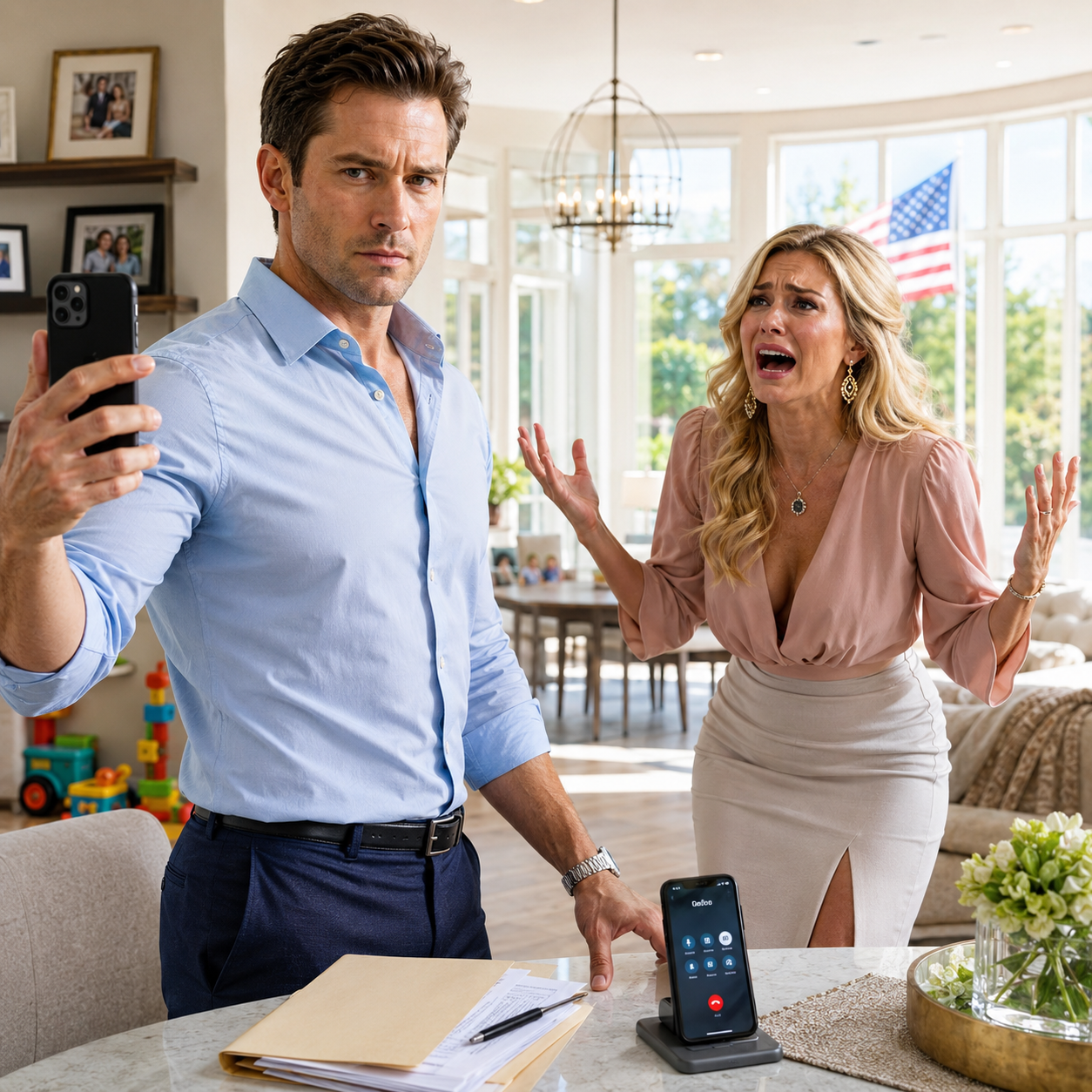
Then Victoria took me out for Italian food and dropped the bomb over carbonara.
“Peter, sweetie,” she said, twisting her napkin in her lap, “about the wedding…”
I remember the way she said it. Softly. Carefully. Like she was approaching a frightened animal. My fork stopped halfway to my mouth.
“What about it?”
She looked down. “I just… I need a bit more time.”
Inside, something ancient and volcanic woke up. Outside, I stayed still.
“More time,” I repeated.
“I know it’s awful of me,” she rushed on, “but it’s forever, Peter. Marriage is forever. I need to be absolutely, one hundred percent sure. My head needs to be clear.”
The waiter passed our table carrying a bottle of wine. Somewhere behind me, another couple laughed. Victoria kept looking at me with those wide, apologetic eyes she had learned to use whenever she wanted to soften the damage before I named it.
But this was not damage anymore.
This was a pattern.
Wedding cancellation number one happened three years earlier. Her reason was work stress. She said her schedule was too insane, that she could not possibly enjoy the wedding when she felt so overwhelmed. At the time, she was teaching part-time yoga and doing two social media brand collaborations a month. Still, I believed her. I swallowed the disappointment, absorbed the embarrassment, called the venue, apologized to my family, and told everyone we were postponing because “things had been hectic.”
Wedding cancellation number two came the following year. Her sister Kelly had gone through a breakup, and Victoria said she could not celebrate love while Kelly was hurting. Kelly, for the record, was the maid of honor and was actively urging us to go ahead. But again, I accepted it. I told myself Victoria was sensitive. Loyal. Family-oriented. I told myself patience was love.
Wedding cancellation number three happened last year after Victoria had spent months micromanaging every detail of a large wedding she insisted she wanted. The flowers had to be blush, not dusty rose. The cake had to be modern but not cold. The first dance song had to feel “cinematic but not try-hard.” Then, after all of that, she turned around and said, “Are we sure about a big wedding? Maybe we should elope instead.”
Each time, I was angry. Each time, I was humiliated. Each time, I told myself this was just one of those complicated seasons couples survive before marriage. I thought loving someone meant giving them room to be afraid.
What I did not understand then was that love does not require you to become a waiting room.
So there I sat at that Italian restaurant, fourteen days before wedding number four, listening to Victoria ask for “a bit more time” like she was requesting a later dinner reservation instead of detonating our lives again.
She reached across the table. “Please say something.”
I took a long, deliberate sip of water.
Then something inside me clicked into place. Not snapped. Snapping sounds dramatic and messy. This was quieter. Cleaner. Like a lock finally opening after years of the wrong key.
I looked at her and said, “Okay, Victoria. Take all the time you need.”
Relief flooded her face so quickly it almost disgusted me.
“Oh, Peter,” she breathed. “Thank you. You’re so understanding. I knew you would be. It’s not that I don’t want to marry you. I just—”
“I get it,” I said. “You need time. It’s a big step. You should be sure.”
I even managed a small smile.
That seemed to reassure her. She spent the rest of dinner chattering about how this extra time would let her “work on herself” and “reconnect with clarity.” I nodded in all the right places. I ate my carbonara. I paid the bill. I drove us home. I kissed her cheek when we got inside like I had not already stepped out of the relationship in my mind.
She went to bed relieved.
I stayed awake.
By dawn, I had packed one large suitcase with essentials: clothes, passport, laptop, medication, chargers, documents. Then I packed a smaller bag with irreplaceable sentimental things. My grandfather’s watch. A photo album. A few notebooks. The kind of things you do not trust to movers or people who think your patience is an unlimited resource.
Victoria slept through all of it.
Before I left, I wrote a note and placed it on her pillow.
“Victoria, you wanted more time. You’ve got it. All of it. I’ve decided I need time too. Time to move on. The wedding is off for good. So are we. I’ll sort my other stuff later. Peter.”
Then I took my keys and walked out of our rented apartment.
The lease was in my name and ended in two months, thankfully. That detail mattered more than I can explain. When you are finally escaping a seven-year emotional maze, practical details become lifelines.
My first stop was the bank. I moved a hefty chunk of my savings into an offshore account I had created ages ago during one of those “maybe I should have a backup plan” moments I had been too ashamed to examine closely. Then I went to a travel agent and booked a one-way business-class ticket to Bora Bora leaving that evening. Was it impulsive? Absolutely. Was it financially sensible? Debatable. Was it the first decision in years that felt entirely mine? Yes.
Then I called my phone provider, arranged a new SIM, and got a new international number.
After that, I called Nathan.
He picked up on the second ring. “Mate? You all right?”
“You busy?”
“Never for you. What is it? Did she pull the pin again?”
“Yep,” I said. “And I’m out for real.”
There was silence on the line.
Then Nathan said, very softly, “About damn time.”
I laughed once, but it came out rough.
“I need a massive favor.”
“Anything.”
I laid out the plan. My Audi A4 was mine, clear title, no financing, no shared ownership. I asked Nathan to sell it, take a commission, and send the rest to my new account. I packed the documents, signed a power of attorney, handed him the keys, and watched him look at me like he was equal parts proud and furious on my behalf.
“She’s going to lose her mind,” he said.
“She wanted more time.”
Nathan’s mouth twitched. “Looks like you’re giving her plenty.”
My last stop was my parents’ house.
Telling them was harder than leaving the apartment. My mother cried, but not in the way I expected. She cried with grief, yes, but also relief. She hugged me so hard I could barely breathe.
“Oh, darling,” she whispered. “I’m sorry it took so long. But thank God you’re free.”
My father stood in the doorway to the kitchen, quiet for a long moment. Then he walked over and shook my hand like I had survived something he had been watching helplessly for years.
“Go live your life, son,” he said. “You’ve earned it.”
That almost broke me.
Before boarding, I blocked Victoria. Phone, social media, email. Then I blocked Kelly, Victoria’s parents, her closest friends, and anyone else I knew would be drafted into the emotional search party. If she wanted to find me, she would have to work for it.
I was not planning on being found.
I landed in Bora Bora after a blur of airports, bad sleep, and the strange numbness that comes from making a life-altering decision before your emotions have had time to catch up. The resort was stupidly beautiful. The kind of beautiful that feels offensive when your life has just collapsed. Turquoise water. Wooden walkways over the lagoon. Fish visible beneath the bungalow floor. Staff smiling like they had never heard the phrase “postponed wedding.”
The first week, I slept.
I drank cocktails. I stared at the ocean. I ate food I barely tasted. I woke up some mornings with panic in my chest, reaching for a phone that no longer carried Victoria’s access to me. The anger and hurt were still there, but they started receding around the edges, replaced by peace and one nagging question.
Why did I not do this sooner?
Yesterday, Nathan called with the first real update.
Victoria woke up, found the note, and apparently did not understand it at first. According to Nathan, she assumed I had gone for a sulk. A dramatic little walkout. She told Kelly I was “being theatrical” and would be back once I calmed down.
Then she tried calling me.
Blocked.
Texting.
Blocked.
Email.
Blocked.
Socials.
Gone.
That was when panic mode engaged.
She called mutual friends. She called my parents, who politely told her I was safe and not available. She called Nathan repeatedly, cycling between tears and rage so fast he said it sounded like she was arguing with herself.
“How could he do this to me?”
“He can’t just leave.”
“We have a wedding to replan.”
The entitlement was breathtaking. Not “I hurt him.” Not “I canceled our wedding for the fourth time.” Not “Maybe this was the consequence of years of pushing him past the point of return.”
No.
“We have a wedding to replan.”
At one point, she told Nathan, “But I just needed more time. Not this. He’s supposed to wait for me.”
Nathan, bless him, said, “Looks like he gave you all the time in the world, Victoria. Then he took his own.”
I wish I could have heard her reaction.
He also told me the Audi sold fast. Good price. The money landed in my new account, minus his well-earned commission. I told him to take more. He refused and called me a dramatic idiot.
So here I sit, sipping an overpriced drink, watching the water shift from blue to gold and wondering when it will finally sink in for Victoria that “more time” now means no more me.
And honestly?
It feels pretty damn good.
Two months later, I was still in Bora Bora, though not in the same stunned, hollow way. I had a tan. I had started eating properly. I had even picked up remote freelance consulting again, basically my old job with a ten-second commute from bed to balcony. The time difference was brutal, but I learned quickly that conference calls are much easier when the view behind your laptop looks like a screensaver.
The Victoria fallout, predictably, escalated.
Nathan became my unwilling intelligence officer, mostly because Victoria and her crew started harassing anyone connected to me. According to him, her narrative quickly became that I was unstable, impulsive, and cruel. I had thrown away seven years because she made “one simple request.” She was the patient fiancée. I was the man who abandoned his responsibilities.
My only responsibility by then was to my rapidly recovering sanity.
Kelly took up the role of chief attack poodle. She spammed Nathan. She messaged distant relatives she dug up on Facebook. She sent paragraphs to people I had not seen in ten years. The theme was always the same: Peter has had a breakdown. Victoria is frantic. He abandoned her. He needs help.
Nathan started replying with one line.
“Victoria canceled the wedding for the fourth time. Peter accepted.”
Then he stopped replying altogether.
Next came the apartment drama.
The lease ended the following month. Before leaving, I had already notified the landlord, Mr. Walter, that I was moving out and that Victoria would need to make her own arrangements if she intended to stay. I paid my half of the final month because I wanted every obligation cleanly handled. Victoria, apparently, did nothing. She did not pay. Did not pack. Did not contact Mr. Walter. She simply stayed there as if my absence were temporary and my bank account would eventually reappear to solve the practical bits.
Mr. Walter was not known for patience.
When he finally got Nathan’s number from the emergency contact file, Nathan laid it out clearly. The relationship was over. I had paid my share. Victoria had been informed. I was not returning.
That triggered another wave of frantic calls to Nathan.
“Mr. Walter is evicting me.”
“Peter has to pay.”
“This is his fault for leaving.”
She even tried telling Mr. Walter I was on a temporary work assignment and would handle everything when I got back. Mr. Walter, bless his cynical heart, did not buy it, especially after Nathan confirmed that my “work assignment” was less temporary employment and more permanent life upgrade.
An eviction notice was served.
Victoria eventually had to scramble and move in with Kelly.
Nathan described the arrangement as “a domestic horror show,” which I found deeply unsurprising. Kelly loved enabling Victoria’s drama when it happened from a safe distance. Having Victoria actually in her house, using her shower, eating her food, and narrating her suffering from the couch apparently produced a different emotional climate.
Then came the wedding gifts.
We had asked for cash toward a future house deposit. A tidy sum had accumulated, mostly from my side of the family and older friends who still believed in envelopes and handwritten notes. The account was solely in my name because even when I was being a doormat, I had not been completely brainless.
Victoria, through Kelly, demanded her share.
Kelly sent Nathan an itemized list of Victoria’s guests and the amounts they had given, demanding those sums be sent directly to Victoria. Not returned to the gift-givers. Not held while things were sorted. Sent to Victoria for “her trouble,” presumably.
My reply, relayed through Nathan, was simple.
“All wedding gifts will be returned to the original givers with a note explaining the permanent cancellation. Provide addresses for Victoria’s guests. I’ll handle it.”
Apparently, this was considered an act of war.
Kelly wrote Nathan: “That’s not fair. Victoria needs that money. Peter is being vindictive. He’s stolen her future. Now he’s stealing her money.”
Stolen her future.
She flushed her own future down the toilet four times. I just stopped standing there with a plunger and a hopeful expression.
I spent a tedious week doing online banking and writing polite notes. “Due to the wedding cancellation, Peter is returning your generous gift. He wishes you well.” Every penny went back. My family and friends were understanding. Some were openly relieved. A few wrote back with messages that made me sit quietly for a while.
“We always worried you were carrying too much.”
“We love you. Come home when you’re ready.”
“Proud of you for choosing yourself.”
I do not know how Victoria’s guests took it, but I imagine she and Kelly had some awkward explaining to do when the expected windfall failed to materialize.
Then there were the small things. The stupid things that reveal character better than the big speeches.
Victoria had borrowed my Bose headphones, a good leather jacket, and a few expensive photography books. When Nathan arranged for movers I hired remotely to clear my remaining furniture from the old apartment, those items were missing. Victoria, through Kelly because apparently facing movers was too much, claimed they were gifts.
They were not.
I let it slide. The items were not worth the fight. But the principle stuck with me. She genuinely believed she was the wronged party. After years of cancellations, after letting me absorb embarrassment and lost deposits and family disappointment, after asking me to wait again with the wedding two weeks away, she still believed I owed her. Money. Patience. Storage. Forgiveness. A lifetime supply of more time while she decided if I was good enough.
Nathan said she started telling people I had run off to Bora Bora with another woman.
That was hilarious.
The only other woman in my life at that point was the resort employee who brought coffee in the morning and did not ask me to postpone any ceremonies.
Still, beneath the jokes, the sadness remained. Not because I wanted Victoria back. I did not. But because seven years is not a jacket you shrug off without feeling the cold. I would be sitting on the balcony sometimes, watching the water, and suddenly remember some tiny detail from the early years. Victoria laughing on a train. Victoria dancing barefoot in our first kitchen. Victoria falling asleep during a movie with her cheek pressed against my shoulder.
I had loved her. That was the inconvenient truth. Walking away did not erase that. It only proved love had finally stopped being enough to keep me in a place where I was disappearing.
By the end of the second month, the initial calm had settled into something stronger. A weary acceptance. Some people are black holes of entitlement. You can pour years into them, money into them, forgiveness into them, and they will still call you cruel the moment you stop orbiting.
The best revenge, if you want to call it that, was living well far from her chaos while she slowly realized that choices have consequences even when you cry about them.
Six months later, I left Bora Bora.
Turns out even paradise can get old once you have slept enough, healed enough, and started needing more than pretty water. I bounced around for a while. A month in New Zealand. Three weeks in Singapore. Some time in Portugal. I kept working remotely, kept my belongings light, and stayed blissfully unengaged.
The last stretch of Victoria fallout arrived like a final exam in the boundless nature of entitlement.
After the gift money evaporated and the apartment door closed behind her, Victoria, encouraged by Kelly and their newly vocal mother Joyce, decided to go legal. Or at least pretend to.
Nathan forwarded me a very official-looking letter from a Mr. Zachary, attorney at law. It demanded compensation for emotional distress caused by my “sudden abandonment” and the public humiliation of the wedding cancellation. Public humiliation, mind you, from the woman who canceled four weddings.
The letter also demanded payment for Victoria’s “share” of my Audi, claiming equitable interest because she had contributed to upkeep. By upkeep, I assume she meant occasionally sitting in the passenger seat while I paid for petrol, insurance, repairs, and once, memorably, a car wash she complained was too slow.
Then it demanded the return of valuable personal items. This included the headphones and leather jacket she already had, plus a new fantasy list of objects I could not even identify. Finally, it requested ongoing spousal support based on seven years of cohabitation and an established lifestyle.
We had never been spouses.
That detail, apparently, had not troubled Mr. Zachary.
I laughed out loud when I finished reading it. Not a bitter laugh. A genuine laugh. It was breathtaking. Somewhere in Victoria’s mind, she had managed to cancel four weddings, avoid marriage, and still claim the benefits of divorce.
Nathan said Mr. Zachary was probably some local lawyer working on a no-win, no-fee, no-clue basis.
My move was simple. I hired Miss Martha Sharma, a legal shark in my home city known for dismantling nonsense claims with surgical politeness. We had a couple of video calls. I sent her everything: texts, emails, venue receipts, canceled contracts, lease documents, car title, registration, bank statements, the note I left, proof I had paid my share of the final rent, records of the returned wedding gifts, and every message Kelly had sent through Nathan.
Miss Sharma’s reply to Mr. Zachary was, I am told, a masterpiece of polite obliteration.
On emotional distress, she noted Victoria had repeatedly canceled weddings, causing me financial losses, public embarrassment, and emotional harm, all documented through receipts and correspondence. She highlighted that my note clearly ended the relationship due to Victoria’s latest delay, not some mysterious abandonment.
On the Audi, she provided title, registration, and financial records proving the vehicle was one hundred percent mine. She offered, with devastating calm, to discuss billing Victoria for mileage and wear if they intended to argue she had enjoyed shared use.
On the personal items, she stated that Victoria had already removed her possessions and appeared to have retained several items belonging to me, which I had chosen not to pursue as a courtesy. Any further baseless claims, she said, would be treated as harassment.
On spousal support, she politely reminded Mr. Zachary that not being married meant there was no spousal support. If they wished to discuss financial losses connected to the relationship, she would be happy to calculate the non-refundable deposits I had lost due to four wedding cancellations initiated by Victoria.
The letter ended by stating that further baseless claims would result in a counterclaim for my legal fees and a potential harassment order.
The result was silence.
Complete silence from Mr. Zachary.
I imagine he had a very uncomfortable conversation with Victoria, Kelly, and Joyce about the difference between feelings and legal rights.
But Victoria was not finished. People like Victoria rarely stop when told no. They simply look for a softer target.
Next came the social media smear campaign.
Vague posts about heartless cowards. Commitment issues. Financial abuse. That one stunned me, considering I had bankrolled most of our life for years. She wrote about being abandoned “just as she was finally ready,” which was a fascinating rewrite from someone who had been ready enough to choose flowers, dresses, and venues four separate times, but never ready enough to actually walk down the aisle.
Some mutual acquaintances messaged me after seeing her posts.
“Dude, Victoria is devastated.”
“I know you’re hurt, but disappearing was extreme.”
“She says you left her with nothing.”
At first, I ignored them. Then I got tired.
I sent them a link to my original account of what happened, plus screenshots where necessary. Most went silent. A few apologized. One wrote, “I had no idea this was wedding number four.” That sentence told me everything about how carefully Victoria had edited the story.
The grand finale came from Joyce.
Victoria’s mother called my parents in full tears. My mother told me about it later, half exhausted and half proud of herself for not throwing the phone into the garden.
Joyce apparently sobbed, “Please talk to Peter. Victoria is a wreck. She made a mistake. She’ll marry him tomorrow. She can’t manage alone.”
My mother, gentle soul that she is, had finally been pushed too far.
“Joyce,” she said, “Peter made his decision after Victoria canceled wedding number four. He gave her seven years. His coming home is not happening. Victoria is an adult. It is time she managed alone. Perhaps this is the more time she always wanted.”
Then my mother hung up.
I have never loved that woman more.
After that, things finally quieted.
Nathan reported that Victoria remained at Kelly’s house, and the setup was apparently miserable for everyone involved. Kelly was tired of funding Victoria. Victoria was tired of not being the center of attention. Joyce kept suggesting I might still come around if Victoria “showed growth,” which seemed to consist mainly of crying and refusing to apply for jobs.
Eventually, Victoria got a full-time retail job.
She hated it.
Complained constantly about how unfair life was, according to Nathan’s last report before I finally told him I did not need updates anymore unless something legally relevant happened.
That was an important moment. For months, the updates had felt necessary. Proof that I was not insane. Proof that her choices were catching up. Proof that walking away had not somehow made me the villain she claimed I was. But one morning in Lisbon, sitting outside a tiny café with strong coffee and a pastry I could not pronounce, I realized I no longer wanted to measure my healing by her discomfort.
So I called Nathan.
“No more Victoria updates,” I said. “Unless she sues me, steals my identity, or shows up with a marching band.”
He laughed. “Thank God. I was getting tired of being the intelligence service for a woman I never liked.”
“You hid that well.”
“No, mate. I absolutely did not.”
He was right.
A year after I left, I returned home.
Not to Victoria. Not to the old apartment. That lease, that furniture, that version of me were gone. I returned because my parents were getting older, my consulting business had stabilized, and I wanted to stop living like I was still escaping. Freedom is wonderful, but eventually you have to build something with it or it starts feeling like running in prettier locations.
I rented a small house near the coast. Nothing dramatic. Two bedrooms, a little garden, enough space for a proper desk and a guest room my mother immediately started imagining grandchildren into, despite my repeated objections.
The first few weeks back were strange. I expected ghosts everywhere, but most of them were smaller than I remembered. The restaurant where Victoria canceled wedding four was still there. I passed it once, felt a flicker of old anger, and then kept walking because I was late for lunch with Nathan. That was when I knew the wound had closed into a scar.
Then, one rainy Saturday afternoon, I saw Victoria.
It happened in the most ordinary possible place: a supermarket.
I was comparing two brands of coffee like a man with no urgent problems, when I heard my name.
“Peter?”
I turned.
Victoria stood at the end of the aisle wearing a store uniform. For a second, my mind struggled to place her in that context. Not because the job was beneath her, though she would have once thought it was, but because she looked different in a way I had not expected. Less polished. Less theatrical. Tired around the eyes. Her hair was pulled back, and she had a name tag clipped to her shirt.
The last time I had seen her, she was asleep in our bed while I packed my life into suitcases.
Now she stood between shelves of coffee and tea, holding a pricing scanner.
“Hi,” she said.
“Hi, Victoria.”
The silence was awkward, but not dangerous. That surprised me.
She looked down at the scanner in her hand, then back at me. “I heard you came back.”
“For a while.”
“Are you…” She swallowed. “Are you well?”
“Yes.”
There was a time when that answer would have been a weapon. I would have wanted her to hear everything inside it. Yes, I am well without you. Yes, I survived. Yes, you were wrong. But standing there, I realized I did not need to press it into her like a blade.
So I simply repeated, “I’m well.”
She nodded. Her eyes became shiny, but she did not cry. That alone felt like growth.
“I’m sorry,” she said.
I said nothing.
She took a breath. “I know I said that through other people before. I know I made it about me. But I am sorry, Peter. Not because you left. You had every right. I’m sorry because I kept asking you to prove you loved me by waiting while I refused to choose you properly.”
The supermarket lights hummed above us.
“I was scared,” she continued. “But I used fear like a weapon. I liked knowing you’d still be there. I told myself needing more time meant I was being careful, but really I was keeping control. And when you finally left, I called it abandonment because admitting the truth made me look awful.”
That was the most honest thing she had ever said to me.
I felt something loosen in my chest, but it was not hope. It was the release of not needing to hate her anymore.
“Thank you for saying that,” I said.
Her mouth trembled. “Do you think you’ll ever forgive me?”
“I think I already have,” I said slowly. “But forgiveness doesn’t mean going back.”
“I know.”
“And it doesn’t mean access.”
She looked down. “I know that too.”
For a moment, we were quiet. Two people standing in the ruins of a life that had once seemed inevitable.
Then she said, “You look lighter.”
That almost made me smile.
“I am.”
A customer turned into the aisle, breaking whatever strange little bubble had formed around us. Victoria stepped back first.
“I should get back to work,” she said.
“I should buy coffee.”
She gave a small laugh. Not the old performative laugh. Something sadder and more human.
“Take care, Peter.”
“You too, Victoria.”
And that was it.
No dramatic reunion. No screaming. No collapse into each other’s arms. No fantasy of finally fixing what seven years had broken. Just a clean, quiet ending in aisle six of a supermarket while rain tapped against the windows.
Later that evening, I called Nathan and told him.
He was silent for a long moment.
“You okay?”
“Yeah,” I said. “I think that was the last thread.”
“Good.”
“She apologized.”
“Properly?”
“I think so.”
“And?”
“And I bought coffee.”
Nathan laughed so hard I had to move the phone away from my ear.
A few months after that, I started dating again. Slowly. Carefully. Without trying to prove anything. The first few dates were awkward because I kept expecting hidden conditions, some unspoken test I was meant to pass. But the more time passed, the more I realized that healthy affection does not feel like waiting outside a locked door for someone to decide whether you are worth letting in.
Eventually, I met someone named Elise at a friend’s birthday dinner. She was a documentary editor with dry humor, kind eyes, and a habit of asking direct questions without making them feel like traps. On our third date, I told her the short version of Victoria.
“Four canceled weddings?” Elise said, eyebrows raised.
“Yes.”
She stirred her tea. “I’m going to be honest, Peter. I would’ve left after two.”
“I should’ve.”
“Yes,” she said. “But I’m glad you eventually did.”
There was no pity in her voice. No judgment. Just truth, clean and simple.
We took things slowly. Very slowly. I learned that love does not have to rush to be real, and caution is not the same as hesitation when both people are moving honestly. Months later, when Elise met my parents, my mother waited until Elise went to the bathroom and whispered, “This one looks at you like you’re already enough.”
I had to step outside for a minute after that.
Two years after I left for Bora Bora, I went back—not because I was running, but because I wanted to see the place without heartbreak sitting beside me. This time, I did not stay in the most ridiculous bungalow. I did not need the theatrical escape. I rented a quieter place, brought a notebook, and spent mornings swimming and afternoons writing.
On the last evening, I sat on the beach with a drink, watching the same impossible blue water that had held me together when I first arrived broken and furious. I thought about the man I had been then, fleeing with one suitcase and a note on a pillow. I felt grateful for him. He was scared, hurt, and maybe a little dramatic, but he saved me.
He finally understood that “more time” can be a gift when you stop giving it to someone who only uses it to delay your life.
Victoria did get what she asked for. More time. A lifetime supply, in fact. Time without me waiting. Time without my money cushioning every fall. Time without my family politely absorbing her excuses. Time to meet herself without an audience of enablers translating every consequence into victimhood.
And I got time too.
Time to breathe. Time to heal. Time to build a life that did not revolve around someone else’s indecision. Time to learn that being patient is noble until it becomes self-abandonment. Time to understand that love should not feel like a five-year engagement with no finish line.
The revenge was never loud.
It was not a courtroom showdown, a screaming phone call, or a public humiliation. It was one quiet line drawn after seven years of erasing myself.
Enough.
Victoria wanted more time.
I gave her all of it.
Then I took mine back.


![[FULL STORY] She Brought Me to Her Friend’s Wedding We Danced, Snapped Photos, and Stayed Together All Night](https://social-media.rabedo.com/thumbnails/1777020919_S4.png)