
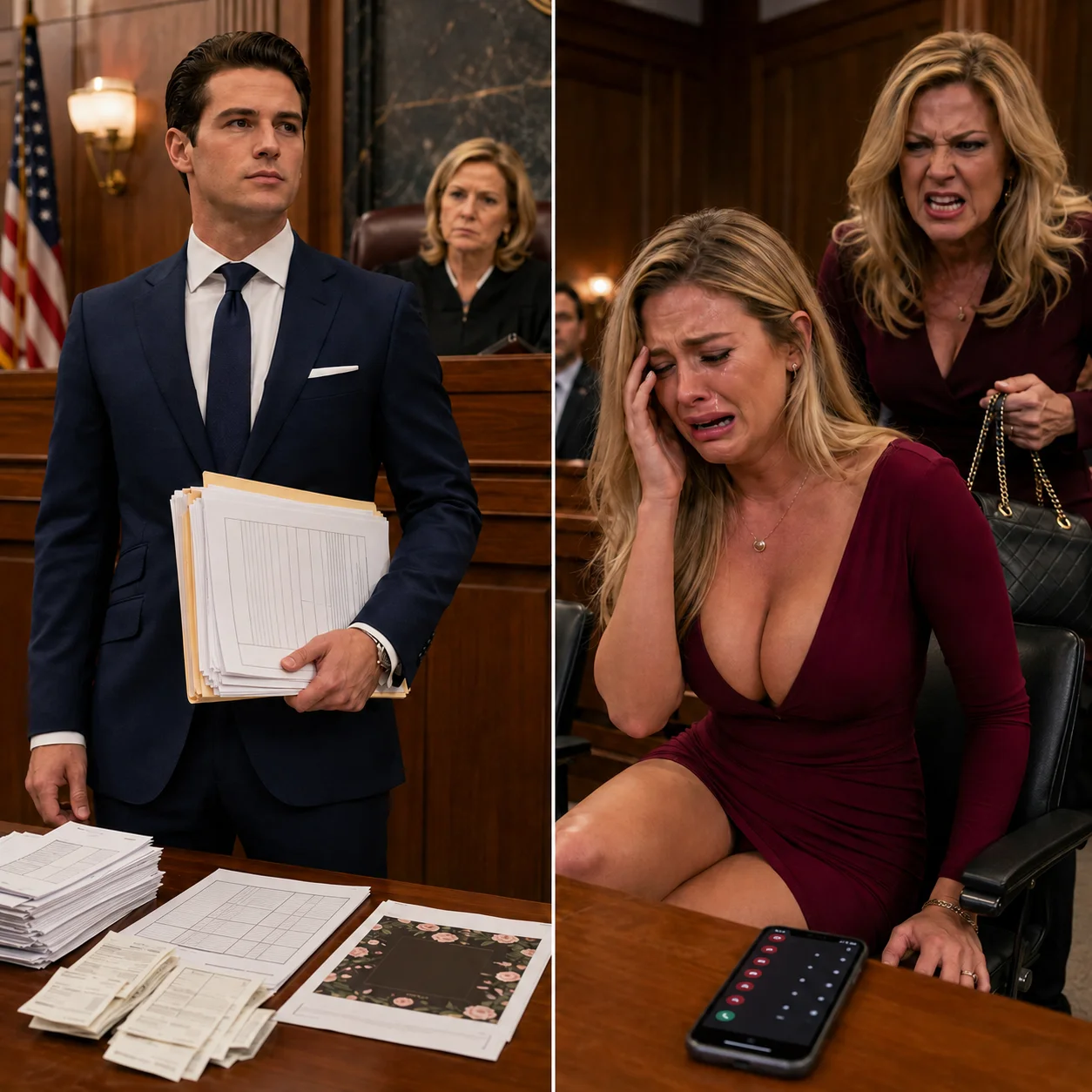
When my fiancée looked me in the eye and said, “Our love is toxic because of your family. Choose me or them,” I expected to feel panic.
I thought the ground would drop out from under me. I thought I would beg her to calm down, promise to set boundaries, offer some compromise I could live with until I convinced myself it wasn’t really a surrender. After all, we had been together four years. We had a wedding planned for next spring. Deposits paid. Venue booked. Caterer, photographer, florist, DJ, all the expensive little pieces of a life we were supposed to be building.
Instead, something inside me went very still.
“Done,” I said.
Amber blinked. “Done what?”
I looked at the woman I had planned to marry and realized she had handed me the cleanest version of the truth I was ever going to get. “We’re done. I choose my family.”
That was when she laughed, because she honestly thought she had not been understood.
She thought the ultimatum was a tactic. I treated it like a decision.
My name is Logan. I’m 32. Amber is 29. We were together for four years, engaged for one, and until the last few months, I would have told anyone we were solid. Not perfect, because no relationship is, but solid in the way you think love becomes after enough shared routines. Sunday groceries. Favorite takeout orders. Half-finished shows on Netflix. The casual language of wedding planning slowly taking over your apartment until you have fabric swatches on the counter and vendor contracts in a folder by the printer.
The wedding was supposed to be next spring. We had not ordered invitations yet, but we were close. We had paid deposits on almost everything important. In total, we were out a little over $20,000, most of it paid from my savings because I had the liquid cash and Amber said she would square up her half later.
Yes, I know.
Lesson learned.
The cracks started showing around my family.
I am close with them. Not in a weird, dependent, “my mom still does my laundry” way. Just close. My parents host Sunday dinner. My sister Grace and I actually like each other. We show up for birthdays, hospital visits, moving days, bad breakups, and random barbecues. That was normal to me. It was normal to Amber too, at first. She used to say she loved that I came from a family who cared.
Then Grace had her first baby, Bobby.
My parents were thrilled. I was thrilled. Grace was exhausted and hormonal and happier than I had ever seen her. Bobby was tiny, wrinkly, loud, and perfect. I became one of those annoying new uncles who shows people pictures nobody asked to see. I will own that. But it was a happy time in my family, and I thought Amber would be happy with us.
Instead, she started making comments.
“They’re a bit much.”
“Do we have to go over again?”
“Grace only talks about the baby now.”
At first, I tried to be understanding. Babies change family dynamics. New parents can become temporarily boring to everyone who is not also staring at the miracle of a tiny human learning how fingers work. I figured Amber felt left out or overwhelmed.
One night, I said, gently, “Maybe it’ll feel different when you have a niece or nephew. Or when we have kids.”
Wrong sentence.
Her face changed instantly. “Are you calling me unmaternal?”
“No,” I said. “I’m saying Bobby is new and everyone’s excited.”
“So now I’m the problem because I’m not obsessed with your sister’s baby?”
That became the pattern. Everything was an attack. If I wanted to go to Sunday dinner, I was choosing them over her. If I took a call from Grace, I was letting my sister invade our relationship. If my mom asked about wedding details, Amber said she was controlling. My family, who had only ever been welcoming even through Amber’s moods, became the villain in every story she told.
The blowup happened on a Saturday.
My parents were having a barbecue. Grace and Bobby would be there. Nothing formal. Burgers, potato salad, my dad pretending he knew how to grill vegetables, my mom holding the baby like the world might end if she put him down.
Amber flat-out refused to go.
“Why not?” I asked.
She was standing in our bedroom in front of the mirror, not getting ready, arms crossed like she had been waiting for me to ask. “Because I’m sick of your family.”
I stared at her. “What?”
“They’re always there. They’re always in our business. Our love is toxic because of them.”
I remember that sentence clearly because it sounded rehearsed. Not emotional. Not spontaneous. Like she had read it somewhere and decided it gave her feelings legal authority.
I said, “My family invited us to a barbecue.”
“It’s never just a barbecue with them,” she snapped. “You never choose me. It’s always them. You need to choose me or your family.”
Her voice was pure acid.
And that was when the stillness came over me.
Maybe it was four years of little compromises suddenly adding up. Maybe it was the thought of Bobby growing up with an aunt who resented his existence before he could hold his own head up. Maybe it was the realization that if I married Amber, this would not stop at barbecues. It would become holidays. Birthdays. Emergencies. My parents getting older. Grace needing help. Any love I gave someone else would be treated as theft from her.
I said, “Done.”
Amber blinked. “Done what?”
“You want me to choose? I choose my family. Wedding’s off. We’re over.”
She actually laughed.
“Logan, don’t be dramatic. You don’t mean that.”
“I do.”
“You didn’t get what I meant,” she said, her tone shifting from anger to irritation. “You’re supposed to tell them to back off. You’re supposed to pick me, and then we set boundaries.”
“No, Amber. I got it perfectly. Ultimatum given. Choice made.”
Her face drained, but I did not wait for the next performance. I grabbed my keys and left. I drove to my parents’ house while she called me seven times in a row. By the time I pulled into their driveway, I felt sick, angry, and weirdly relieved all at once.
Telling my family was brutal.
My mom cried. My dad got quiet in that dangerous way fathers do when they are furious but trying not to make it worse. Grace looked heartbroken for me, which somehow hurt more than anything. She kept apologizing, saying she never meant to cause problems.
I told her she hadn’t.
Bobby slept through the entire thing in a little striped onesie, completely unaware that his existence had apparently detonated my engagement.
Sunday morning, I went back to the apartment. Amber had taken some of her things, but left most of them. Clothes in the closet. Shoes everywhere. Skincare lined up like a luxury pharmacy in the bathroom. Those awful decorative llamas she loved on the bookshelf. The apartment felt half-haunted.
Then the messages started.
At first, she was confused.
“Logan, we need to talk.”
“You can’t just cancel a wedding like this.”
“I didn’t mean it like that.”
Then angry.
“You’re overreacting.”
“You’re punishing me for having feelings.”
“You’re letting your family ruin us.”
Then pleading.
“You were supposed to fight for me.”
That one made me stare at the screen for a long time. She had confused love with obedience. To her, fighting for her meant cutting off my family so she could feel chosen. To me, loving someone did not mean letting them make you smaller and calling it devotion.
I spent that Sunday calling vendors.
The venue. Caterer. Photographer. Florist. DJ. Cake. Rentals. Each conversation was worse than the last in that polite, contractual way. People were sympathetic. Some sounded genuinely sorry. But contracts are contracts, and deposits are deposits. Non-refundable meant non-refundable.
By Monday morning, I had a spreadsheet.
Every wedding expense. Every invoice. Every non-refundable clause highlighted. Total deposits lost: $20,350. Amber’s half: $10,175.
I emailed her.
Subject: Wedding cancellation — your share of deposits owed.
“Amber, as the wedding was canceled following your ultimatum and the dissolution of our engagement, please find attached a summary of non-refundable deposits. Your share is $10,175. Payment is due within 14 days. If not received, I will pursue recovery in small claims court.”
The explosion was instant.
Calls. Texts. Emails. Then calls from her mother, Marilyn, and her sister, Alexis.
Marilyn tried honey first. “Logan, sweetheart, this is a terrible misunderstanding. Amber’s a mess. She loves you. You can’t bill her for a wedding you canceled.”
“Marilyn,” I said, “Amber gave an ultimatum. I chose. The financial fallout is shared.”
Alexis skipped honey and went straight to venom. “You’re a monster. She’s heartbroken, and you send a bill? She was just trying to make your relationship stronger.”
“Boundaries are discussed,” I said. “Ultimatums are declarations of war. She declared it.”
Amber finally got me on the phone crying and yelling at the same time.
“Logan, you didn’t understand. I meant we needed to talk about them, not that you actually choose.”
“You told me to choose.”
“You were supposed to choose me and then we’d work on boundaries!”
“You mean I was supposed to throw my family away so you could feel secure.”
“That’s not fair.”
“No,” I said. “What’s not fair is expecting me to pay $20,000 for a wedding you blew up because you thought my family was competition. The bill stands. Pay it or we go to court.”
Then I hung up.
After that, I blocked her number and all her social media. I did not do it to be dramatic. I did it because every message was an attempt to drag me into another debate over words she now regretted using. She wanted to relitigate the meaning of the ultimatum. I was done pretending it meant anything other than what she said.
For the next two weeks, I received a masterclass in entitlement.
Amber switched to email since she could not text me. Long rambling manifestos arrived at all hours. Wedding stress had made her say “toxic.” I did not understand how overwhelmed she had been. She had done most of the emotional labor of planning, apparently, despite the fact that I had handled the vendor contracts, payment schedules, and half the appointments. She realized now family was important, but “we” needed to be the priority. She would even consider apologizing to my family if I dropped the ridiculous bill.
That line told me everything.
She would consider apologizing if I paid ten thousand dollars for the privilege.
Deleted.
Then came the flying monkeys.
Marilyn and Alexis called my parents daily. My mom was too polite at first, which meant she answered more than she should have. My dad simply started hanging up the second he heard their voices. Grace got vile DMs from Alexis on Instagram accusing her of ruining my relationship because she “couldn’t handle not being the center of attention after having a baby.” Grace blocked her, but not before sending me screenshots.
Alexis even tried ambushing my dad at his golf club. She cornered him near the parking lot and started ranting about how I was financially abusing Amber. My dad gave her the silent treatment so thoroughly that club security eventually asked Alexis to leave.
Classy.
A few mutual friends reached out too, clearly fed Amber’s edited version. One guy, Randy, messaged me, “Dude, Amber’s a wreck. She said you flipped out and canceled everything over nothing, and now you’re trying to bankrupt her.”
I replied with the exact ultimatum, word for word.
Randy went quiet for a while. Then he said, “Oh. She skipped that part.”
You think?
Meanwhile, Amber’s Instagram became a public shrine to betrayal. Vague sad selfies. Quotes about abandonment. Photos of her looking wistfully out of windows as if she were starring in a perfume ad called Consequences. Alexis naturally appeared in the comments throwing around phrases like “abusive narcissist” and “financial predator,” sometimes naming me directly.
I screenshotted everything.
The day after the 14-day deadline passed with no payment, I filed in small claims court.
Filing fees were added to the total owed, of course.
The summons was sent by registered mail to her parents’ address, where she had apparently been staying since leaving the apartment. Around three hours after she was served, I got a call from an unknown number. It was Marilyn, predictably hysterical.
“You’re ruining Amber’s future!”
“The matter is now for the courts, Marilyn,” I said.
Then I hung up and blocked that number too.
Apparently, accountability equals ruining someone’s future if that someone has been enabled long enough.
There was also the issue of Amber’s belongings. She had left a mountain of stuff in my apartment: clothes, shoes, bags, half-used makeup, candles, decorative pillows, and those nightmare llamas that always looked like they were judging me. Her emails, once the love bombing failed, became demands. I had to pack it all and deliver it to her. Or let her come over “for a few days” to sort through things.
Absolutely not.
I sent one reply.
“Amber, your belongings will be boxed by my doorstep on Saturday at 2 p.m. You have 30 minutes to collect them. Uncollected items will be donated Monday. This is the only available time.”
Two more outrage emails followed from her and Marilyn. Unreasonable. Cruel. Impossible. Trying to steal her valuables. Most of it was fast fashion, impulse buys, and ceramic animals, but fine.
Saturday at 2 p.m., I placed ten neatly labeled boxes outside my door and watched from the window.
At 2:05, Alexis pulled up. She glared at the boxes, glared at my window, and started aggressively chucking them into her car. It took three trips and a lot of dramatic huffing, but she was gone by 2:25 without ringing the bell.
Perfect.
Court was set for six weeks later.
Those six weeks were just more of the same, only louder.
Somehow, Amber and her family got my work email. I still do not know how. Amber started sending rants there too. “You’re destroying me.” “I’ll never recover.” “How can you do this to someone you loved?” I filtered everything into a documentation folder and did not read most of it.
Then Marilyn crossed a line so low even I was impressed.
She CC’d my HR department on an email painting me as unstable, vindictive, and financially predatory. She implied I was harassing Amber, attempting to bankrupt her, and creating a hostile situation that reflected poorly on my employer.
My boss, Leslie, is a legend.
I had already given her the short version in case something insane happened. She saw the email, rolled her eyes, and told HR it was a personal vendetta from an ex-fiancée’s family. The issue died there. Still, the audacity of trying to drag my job into a wedding deposit dispute confirmed I had made the right choice.
A week before court, I received a letter from a lawyer. Not a particularly intimidating one. More like a “we advertise on bus benches” situation. The letter said Amber was willing to offer $2,000 as a gesture of goodwill, citing emotional distress and limited means. It also demanded that I publicly apologize for contributing to her trauma.
I actually snorted when I read it.
After a brief consult with a lawyer to make sure I used the right language, I responded: amount owed $10,175 plus $155 filing fees, total $10,330, based on documented shared liabilities. No apology. See you in court.
A few days before the hearing, my mom got a call from Amber’s aunt Lorie.
Lorie was less aggressive than Marilyn, but she came with the same mission. Amber was on the verge of a breakdown. Amber could not eat. Amber could not sleep. Amber was terrified of court. Could my mom please talk some sense into me?
My mom, who had apparently reached her limit, said, “Amber made her bed. Logan is asking for what’s fair. She should have thought of that.”
Then Lorie mentioned something interesting.
Apparently, Amber had been talking excitedly to cousins about a much-needed spa weekend she wanted to take “to de-stress after all this.” Lorie did not have concrete proof. No booking confirmation. No receipt. But the timing was suspicious enough that it planted a seed.
On court day, I suited up and walked in calm.
Not because I felt nothing. I was angry. Annoyed. Sad in some tired corner of myself I had not fully cleaned out yet. But I was also prepared. I had a folder with everything: invoices, contracts, non-refundable clauses, the itemized spreadsheet, proof of service, screenshots, emails, and documentation of the harassment. I also printed public pricing from the local luxury spa Amber had allegedly been discussing, just in case her “limited means” became central.
Amber arrived with Marilyn.
Amber looked pale and exhausted. Marilyn looked ready for war. No Alexis, which was probably for the best because I suspect the judge would not have enjoyed her commentary.
Our case was called before a no-nonsense older judge who looked like she had heard every possible version of “I didn’t mean it like that” and had not been impressed in years.
I stated my claim simply.
We were engaged. We both agreed to the wedding expenses. I paid the deposits with the understanding Amber would reimburse half. Amber issued an ultimatum requiring me to choose between her and my family. I chose my family, ending the engagement. The deposits were non-refundable, and I was seeking her half plus filing fees.
I presented the invoices and highlighted contract clauses.
Then it was Amber’s turn.
She cried immediately.
It was a huge misunderstanding, she said. She never meant for me to actually choose. She only meant we needed boundaries. I overreacted. I unilaterally canceled the wedding. She should not have to pay because I was the one who called the vendors.
Marilyn tried to heckle from the gallery. “He’s bullying her!”
The judge turned her head slowly. “Ma’am, speak again and you will wait outside.”
Marilyn fumed silently after that.
The judge looked back at Amber. “Did you tell Mr. Logan he needed to choose between you and his family?”
Amber hesitated.
The judge’s face did not move.
Amber glanced at Marilyn, then mumbled, “Yes, but I didn’t think—”
“Yes or no,” the judge said.
Amber’s voice dropped. “Yes.”
“These deposits were for a wedding you both intended to have?”
“Yes, but—”
“And the contracts state the deposits are non-refundable?”
Amber looked down at the documents like they might rearrange themselves into sympathy. “I guess.”
The judge looked at my paperwork again, then at Amber. “When one party issues an ultimatum that directly causes the dissolution of an engagement, that party may bear responsibility for shared financial losses. Your statement gave him a choice. He made it.”
That was the moment Amber seemed to understand the room was not going to respond like her mother. There would be no emotional loophole. No rewriting. No “Logan misunderstood.” A neutral adult with authority had asked her a direct question, and the answer trapped her.
Then came the money discussion.
Amber’s letter from her lawyer had claimed limited means, so the judge asked about her financial situation. Amber described her modest salary, her emotional distress, and how this debt would devastate her.
I asked if I could address the claim of limited means based on recent information about discretionary spending plans.
The judge nodded.
I explained that I had been informed Amber was discussing a luxury spa weekend planned for shortly after court. I was careful not to present it as a confirmed booking. I simply stated that the information had come through a family contact and that public prices for similar weekend packages at the spa appeared inconsistent with claims of severe financial hardship.
Amber went white.
Marilyn audibly gasped.
The judge arched one eyebrow. She did not even need to comment. The point had landed.
A few minutes later, judgment was entered in my favor.
Full amount.
$10,330: Amber’s $10,175 share of the non-refundable deposits plus $155 filing fees.
She had 30 days to pay. If not, I could pursue collection through wage garnishment or bank levy.
Amber sobbed.
Marilyn muttered something about appeals. Good luck appealing a small-claims judgment on no actual grounds.
I gathered my papers, said, “Thank you, your honor,” and walked out.
In the hallway, Marilyn cornered me.
“You rotten man,” she hissed. “You’ll regret this. We’ll appeal.”
I was too tired to even be angry.
“It’s done, Marilyn,” I said. “The judge ruled. Tell Amber to pay. This was all her.”
Then I walked away.
People keep asking whether I felt victorious. The honest answer is complicated. Ten thousand dollars is not pocket change. I am glad I got the judgment. I am glad the court recognized what happened. I am glad Amber had to admit, on record, that she gave the ultimatum she had spent weeks trying to rebrand as a misunderstood request for boundaries.
But the real relief was not the money.
It was the public truth.
For months, Amber and her family had tried to turn me into the villain because I refused to play my assigned role. I was supposed to come crawling back. I was supposed to choose her and then let her dictate how much family I was allowed to have. When I did not, I became abusive, cruel, unstable, financially predatory. The judge stripped all of that down to facts.
Did she give the ultimatum?
Yes.
Were the deposits real?
Yes.
Were they non-refundable?
Yes.
Is she responsible for her share?
Yes.
That was it. No dramatic speech. No moral sermon. Just consequences.
After court, my family had celebratory pizza night. Nothing fancy. Just my parents’ kitchen, Grace balancing Bobby on one hip, my dad opening a bottle of cheap wine like it was champagne, and my mom joking that maybe now we could upgrade the coffee.
Grace hugged me before I left.
“I’m proud of you,” she said. “For standing up for us.”
That hug was worth more than the judgment.
A week later, Amber paid the first portion through a payment arrangement rather than letting me start garnishment. I do not know whether Marilyn helped, whether the spa weekend disappeared, or whether the threat of collections finally pierced the fog of entitlement. I did not ask. Payments are now scheduled, documented, and handled through the proper channels. If she misses them, I will enforce the judgment.
No speeches. No negotiation. No emotional hostage-taking.
Just paperwork.
The mutual friends have gone mostly quiet. A few apologized after hearing she admitted the ultimatum in court. Randy bought me a beer and said, “Man, I really should have asked more questions.” I told him that would be a good habit generally.
Amber’s Instagram also changed. The vague heartbreak posts stopped. Alexis deleted several comments naming me. Marilyn has not contacted my HR again, which is probably the wisest decision anyone in that family has made since this started.
As for me, I am good.
Not untouched. Nobody walks away from a four-year relationship and a canceled wedding without bruises. Sometimes I still think about the version of Amber I loved, the one who laughed with me in grocery aisles and cried during dog commercials and once drove two hours to bring me soup when I had the flu. I do not think she was fake all the time. That would be easier. I think she was real, and so was the part of her that believed love meant total possession.
That is the part I could not marry.
Because someday, my parents will need me. Grace will need me. Bobby will grow up and have games, birthdays, school plays, probably some terrible recorder concerts I will be morally obligated to attend. I want a partner who understands that love expands. Amber treated love like a throne with room for one person beside me, and everyone else had to kneel or leave.
She gave me a choice because she assumed she had already won.
She was wrong.
I chose my family. I chose myself. I chose sanity over a marriage where every Sunday dinner would become a loyalty test and every relationship outside my home would be evidence against me.
Amber wanted me to prove my love by abandoning the people who had loved me long before she did.
Instead, she learned that choices have price tags.
Hers was $10,330.
Mine was a canceled wedding, a painful lesson, and a future that suddenly feels a lot lighter than the one I almost walked into.
![[FULL STORY] He Threw Me Out While I Was Pregnant With Triplets — Then Asked If They Were His… Minutes Before He Lost Everything](https://social-media.rabedo.com/thumbnails/1776848545_Groom_confronting_woman_202604221559.jpeg)
![[FULL STORY] My Fiancée Called Me “Boring” at Her Bachelorette Party — So I Canceled the Wedding and Left 200 Guests Shocked](https://social-media.rabedo.com/thumbnails/1776412246_fe315bda-056a-4f6d-9453-ab5e194b1b2a.png)