
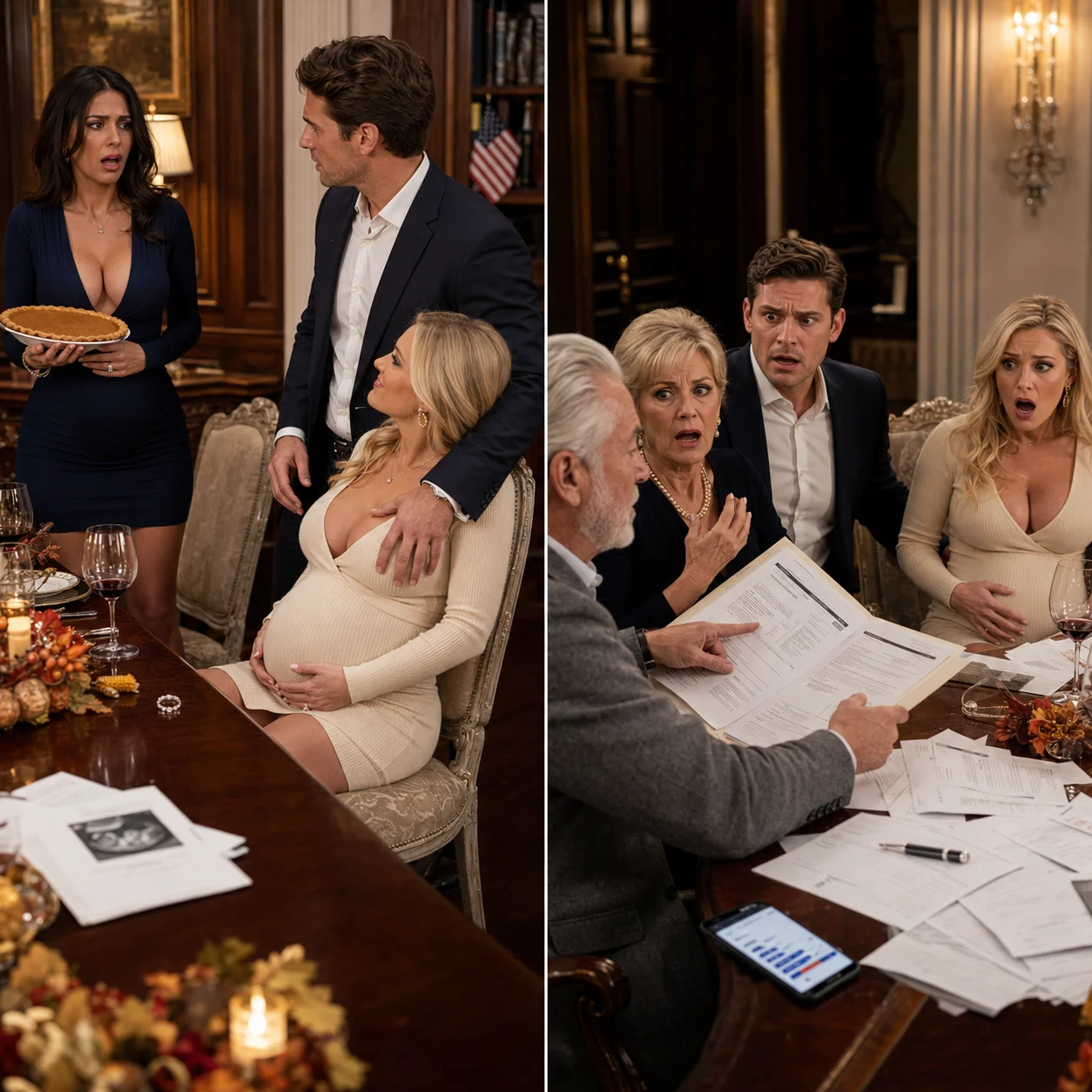
I knew my marriage was over the moment my husband touched another woman like she already belonged to him.
Not casually. Not accidentally.
It was the kind of touch that came from repetition. Familiar. Possessive. The touch of a man who had stopped remembering he was supposed to hide what he was doing.
My name is Nora Blake, and for eight years I lived inside a marriage built on performance.
From the outside, Aaron Blake looked like the kind of husband women envied. He was handsome in an effortless way, financially successful before forty, charming enough to make waiters laugh and investors trust him within five minutes of meeting him. He knew how to fill a room. More dangerously, he knew how to make people feel chosen by him.
Including me.
Especially me.
When I met Aaron, he was ambitious but broke. I was working at a flower shop near the harbor, living in a tiny apartment with drafty windows and exactly enough money to survive if nothing unexpected happened. Aaron talked about real estate the way other men talked about religion. He believed in growth, leverage, expansion. He believed he was destined for something larger than ordinary life.
I believed in him too.
I worked weekends to help cover his first business loan. I emptied my savings account so he could secure his first property. I spent nights labeling folders, answering emails, organizing invoices, bringing sandwiches to renovation sites, and reassuring him during every crisis. Back then Blake Harbor Properties was not some respected regional development company. It was two exhausted people sitting at a folding table eating cheap takeout while trying to survive another month.
Aaron used to take my face in both hands and say, “One day this will all belong to us.”
I thought he meant we were building something together.
I didn’t realize he only meant until he found someone he thought fit the picture better.
By our eighth Thanksgiving as a married couple, Aaron had become exactly the kind of man he always wanted to be. Expensive watch. Tailored coats. Investor dinners. Articles in local business magazines. His mother adored displaying him like proof that the Blake family still mattered.
Margaret Blake loved appearances more than people.
Her house reflected that perfectly.
Every holiday dinner looked staged for a magazine spread. The long mahogany table polished until it reflected candlelight. Crystal glasses nobody actually relaxed enough to drink from properly. Place cards handwritten in elegant calligraphy. Tiny corrections disguised as etiquette.
“Nora dear, salad forks go on the outside.”
“Nora, mashed potatoes can be rustic without looking careless.”
“Nora, perhaps next year leave the flowers to the florist.”
I was the florist.
But in Margaret’s world, that was precisely the problem.
I was useful. Never equal.
Still, I kept trying. That was the humiliating part. I spent years trying to earn comfort in rooms where acceptance was intentionally conditional. Aaron always told me not to take his mother personally.
“She’s hard on everyone.”
That wasn’t true. Margaret reserved a very specific kind of criticism for women she considered socially temporary.
Women like me.
That Thanksgiving began like all the others. I arrived early to help prepare dinner while Margaret supervised from the kitchen island with a glass of wine and commentary disguised as conversation.
Aaron texted around four.
Running late. Investor meeting. Start without me if needed.
I stared at the message longer than necessary.
Months earlier, I would have believed him instantly. But by then, suspicion had already begun collecting inside me in tiny pieces I kept forcing myself to ignore.
Late nights.
Locked phone.
New cologne.
The communications director at his company, Cassandra Wells, laughing too comfortably beside him at events.
Once, I walked into Aaron’s office unexpectedly and found Cassandra sitting on the edge of his desk while he stood between her knees. They jumped apart fast enough to insult me.
Aaron said I was paranoid.
Cassandra smiled sympathetically and asked if I was okay.
And somehow I apologized.
That was the thing about emotional manipulation. It does not happen all at once. It happens slowly enough that you start distrusting your own instincts before you distrust the liar.
Dinner was scheduled for seven.
At 6:43, the front door opened.
Aaron’s voice came first. Warm. Relaxed. Happy.
Not the strained exhaustion of a man leaving a business meeting.
Then he walked into the dining room with Cassandra beside him.
The room changed instantly.
People who are innocent do not silence rooms merely by entering them. Guilty people do.
Cassandra looked beautiful in a careful, devastatingly intentional way. Cream sweater dress. Soft makeup. Honey-blonde hair curled loosely over one shoulder. She carried herself with the calm confidence of a woman who had already been reassured she would be welcomed.
Aaron’s hand rested against the small of her back.
My stomach dropped so hard it physically hurt.
“Nora,” Aaron said casually, as though introducing a coworker at a networking event. “Cassandra’s joining us tonight.”
Nobody looked surprised except me.
That realization cracked through my chest before anyone said another word.
Margaret stood first.
“How lovely,” she said smoothly, kissing Cassandra on the cheek. “We’ve heard so much about you.”
Not nice to finally meet you.
Not what a surprise.
We’ve heard so much about you.
Past tense familiarity. Existing knowledge.
Everyone at that table knew something I didn’t.
Paige stared at her napkin. Richard avoided eye contact completely. Aaron pulled out a chair for Cassandra beside him.
My chair.
I stood there holding the pumpkin pie I had baked that afternoon while my husband seated another woman where I had sat every Thanksgiving for eight years.
“Nora,” Margaret said lightly, “would you mind taking the end seat tonight? It’ll make serving easier.”
Serving.
That word settled over me like humiliation made visible.
I had cooked half the meal. I had financed Aaron’s first business. I had spent nearly a decade performing gratitude for being tolerated by his family.
And still, in their minds, I was staff.
I slowly placed the pie on the table.
“She’s sitting in my seat,” I said.
Aaron exhaled sharply. Irritated already.
“Don’t start this tonight.”
“Start what?”
“A scene.”
The audacity of men who publicly humiliate you and still expect you to protect their comfort is astonishing.
I looked at Cassandra.
That was when she rested her hand gently against her stomach.
Small movement.
Deliberate.
Devastating.
I felt the entire room tilt.
“Is she pregnant?” I asked.
Silence.
Aaron did not deny it.
Cassandra lowered her eyes modestly, performing softness like she’d rehearsed it.
Margaret sighed impatiently. “Nora, your tone is inappropriate.”
Aaron covered Cassandra’s hand with his own.
“Yes,” he said. “She’s pregnant.”
Something inside me went completely still.
“How far along?”
Aaron remained silent.
Cassandra answered quietly.
“Sixteen weeks.”
Sixteen weeks.
Four months.
Four months earlier, Aaron sat beside me in a fertility clinic while a doctor explained why another treatment cycle had failed. Four months earlier, I cried in a parking garage while Aaron held me and whispered, “Maybe it just isn’t our time yet.”
The entire time another woman was already carrying his child.
I laughed once because the alternative was screaming.
“You let me keep trying?” I asked. “You let me inject hormones into my body while she was already pregnant?”
Aaron’s expression hardened with irritation rather than shame.
“Nora, you couldn’t give me a family.”
The sentence shattered across the table.
Not because it was true.
Because he wanted it to wound me publicly.
Margaret said nothing.
Nobody defended me.
Nobody even looked uncomfortable enough.
I realized then that silence can become participation if people sit inside it long enough.
Then, from the far end of the table, a chair scraped quietly against the floor.
The sound was almost delicate.
Everyone turned.
Samuel Reed stood slowly beside his chair.
Until that moment, he had barely spoken all evening. Silver-haired. Reserved. Dressed simply despite obvious wealth. Richard had introduced him earlier as an investor reviewing Blake Harbor Properties for a major expansion opportunity.
Aaron smiled tightly. “Mr. Reed, I apologize for the personal drama.”
Samuel ignored him completely.
Instead, he looked directly at me.
“Nora,” he said calmly, “did you know you still legally own controlling interest in Blake Harbor Properties?”
The room froze.
Aaron’s face changed instantly.
Real fear looks different from embarrassment. It strips charm away completely.
“What?” I whispered.
Samuel opened the leather briefcase beside his chair and removed a thin folder.
“I was conducting due diligence before investing,” he said. “During that process, I discovered some irregularities.”
Aaron stood immediately. “This isn’t the place.”
“I disagree,” Samuel replied evenly. “Considering the circumstances, this is exactly the place.”
He placed the folder on the dinner table between the wineglasses and serving dishes.
The first page contained my name.
Nora Elaine Blake.
Beneath it:
Majority Shareholder — 51% Ownership.
My pulse roared in my ears.
Aaron looked pale.
Margaret stared at the documents like they might explode.
Samuel continued calmly.
“And more concerning,” he said, “several recent transactions appear to contain forged authorization signatures under Mrs. Blake’s name.”
The word forged sucked all oxygen from the room.
Cassandra slowly removed her hand from Aaron’s.
For the first time all evening, she looked genuinely frightened.
Aaron recovered quickly because men like Aaron survive through confidence.
“This is a misunderstanding,” he snapped.
Samuel folded his hands. “Forgery rarely improves with discussion.”
Aaron reached for the folder.
Samuel stopped him with one hand.
“I strongly recommend you don’t touch potential evidence.”
Evidence.
That word transformed Thanksgiving dinner into something colder. More dangerous.
I stared down at the paperwork in disbelief.
I recognized the original ownership agreement immediately. Eight years earlier, Aaron and I signed incorporation documents together at our tiny kitchen table. Aaron insisted ownership stay slightly in my favor initially because my savings funded the launch.
“It’s temporary,” he’d said. “Once expansion happens, we’ll restructure everything.”
Apparently he never legally managed to.
Or never bothered because he assumed I would never understand enough to notice.
I flipped through more pages.
Loan restructures.
Property acquisitions.
Debt transfers.
My signature appeared everywhere.
Except it wasn’t my signature.
It looked close enough to fool strangers. But I knew my own handwriting intimately. The slight hesitation on the capital N. The upward hook on the B in Blake. Those details were gone.
“That isn’t mine,” I said quietly.
Aaron’s voice sharpened instantly. “You signed hundreds of things over the years.”
“I remember my own signature.”
“You’re emotional.”
That word again.
Emotional.
The favorite weapon of men who mistake manipulation for intelligence.
Cassandra suddenly looked at Aaron. “You told me she wasn’t involved in the company.”
“Not now,” Aaron hissed.
But panic had already entered her expression.
“You said everything was legally handled.”
Legally handled.
Interesting phrase.
I looked directly at her.
“You knew he was married. Did you know he was stealing too?”
Her face flushed. “I didn’t steal anything.”
“You sat in my seat carrying my husband’s child.”
For the first time all night, genuine shame flickered across her face before pride replaced it.
“Aaron said the marriage was over.”
I laughed bitterly. “That’s strange. Four months ago he was still attending fertility appointments with me.”
Cassandra went completely white.
She looked at Aaron differently after that.
Not lovingly.
Not proudly.
Like a woman suddenly realizing she had trusted a liar professionally skilled at deception.
Margaret stood abruptly.
“This conversation ends now.”
I turned toward her.
“No,” I said calmly. “It’s finally starting.”
Richard spoke for the first time in several minutes.
“Aaron,” he said quietly, “did you forge Nora’s signature?”
Aaron barked out a harsh laugh.
“You can’t seriously believe—”
“That wasn’t my question.”
Silence.
That silence answered everything.
The next hour blurred into fragments.
Margaret insisting this stay private.
Aaron pacing near the fireplace trying to regain control.
Cassandra sitting rigidly silent beside untouched food.
Samuel calmly organizing documents while explaining ownership percentages and transaction records.
And me.
Standing in the center of my collapsing marriage feeling strangely calm.
Shock eventually burns itself out. After enough betrayal, your body cannot sustain panic forever.
At some point, I removed my wedding ring and set it beside my untouched dinner plate.
Aaron noticed immediately.
“Nora,” he warned softly.
I ignored him.
Instead, I looked at Samuel.
“What should I do?”
It was the first practical question I asked all night.
Samuel answered without hesitation.
“You leave this house with copies of these documents. You retain legal counsel immediately. You preserve every email, financial record, text message, and account you can access. And you do not discuss this privately with your husband.”
Aaron snapped.
“This is insane.”
“No,” Samuel replied calmly. “What’s insane is bringing your pregnant mistress to Thanksgiving dinner while actively concealing financial fraud from your majority shareholder.”
I almost laughed.
Majority shareholder.
For eight years I had been treated like decorative support staff in a company I legally controlled.
Margaret recovered enough to sneer at me.
“If you pursue this publicly, you’ll embarrass yourself too.”
I looked at her carefully.
For years I feared this woman’s disapproval. Suddenly it seemed incredibly small.
“I think your son already handled the embarrassing part.”
Paige made a choking sound that might have been laughter.
I gathered the folder.
Aaron stepped closer.
“You have no idea what you’re doing.”
He meant legally.
Financially.
Emotionally.
But for the first time in years, his certainty no longer frightened me.
“Maybe not,” I said. “But I’m going to learn.”
I left Thanksgiving dinner without my husband.
Without dessert.
Without the seat they spent years convincing me I was lucky to have.
Outside, cold November air hit my face hard enough to make me dizzy.
Samuel followed me quietly to my car.
“You knew before tonight,” I realized.
“I suspected enough to investigate,” he admitted. “I didn’t know whether you were aware or involved.”
“I wasn’t.”
“I know.”
That simple sentence nearly broke me more than the affair had.
I know.
Not skepticism.
Not correction.
Belief.
Samuel handed me a business card.
“Elise Vaughn,” he said. “Corporate fraud attorney. Call her tomorrow morning.”
I stared back toward Margaret’s glowing dining room windows.
Inside, I could see Aaron arguing angrily with Cassandra while Margaret hovered nearby like reputation itself had caught fire.
“My marriage ended tonight,” I whispered.
Samuel regarded the house for a moment.
“No,” he said quietly. “Your illusion did.”
The drive to my friend Leah’s house felt surreal.
Aaron called seventeen times.
Then came the messages.
You embarrassed me.
Don’t speak to Samuel again.
You’re overreacting.
Please come home.
We can fix this.
I made mistakes.
Think carefully before destroying everything.
Destroying everything.
As if I were the wrecking ball instead of the woman standing inside the collapse.
Leah opened the door before I knocked.
The second she saw my face, her expression changed.
“What happened?”
I made it three steps inside before completely falling apart.
Not graceful tears. Not cinematic heartbreak.
Violent, exhausted sobbing that folded me onto her hallway floor while I tried to explain through broken sentences.
Pregnant.
My seat.
Forgery.
Sixteen weeks.
Leah didn’t interrupt once. She simply held me until breathing stopped hurting.
Around one in the morning, we spread Samuel’s documents across her kitchen table.
Leah used to work as a paralegal before becoming a school administrator. The longer she read, the more serious her face became.
“Nora,” she said carefully, “this isn’t just divorce ugly.”
I swallowed hard.
“This could become criminal.”
The word criminal made my stomach twist.
“He could ruin me?”
Leah looked directly at me.
“He may already have tried.”
The next morning I met Elise Vaughn.
She listened for nearly an hour without interrupting.
The affair.
The pregnancy.
The fertility treatments.
Thanksgiving.
The forged signatures.
When I finished, she folded her hands.
“Your husband made two critical mistakes,” she said.
“Only two?”
“Legally? Yes.” A faint smile crossed her face. “First, he failed to properly remove your controlling ownership interest. Second, he mistook emotional control for legal authority.”
For the first time since Thanksgiving, I felt something dangerously close to clarity.
Elise moved quickly.
Asset preservation orders.
Financial audits.
Forensic signature analysis.
Emergency restrictions against unauthorized transactions.
Divorce filings.
Evidence preservation notices.
Every hour revealed something worse.
Aaron had used company funds to pay for Cassandra’s luxury apartment.
He had personally guaranteed leases while concealing ownership structures from lenders.
He forged my authorization on multiple transactions.
He represented himself publicly as sole owner despite corporate records stating otherwise.
The affair was ugly.
The fraud was catastrophic.
Three days later, Leah accompanied me back to the marital house to collect personal belongings.
Aaron wasn’t home.
But Cassandra had clearly been there.
A cream scarf draped across my armchair.
Prenatal vitamins on my kitchen counter.
A sticky note reading:
Ask Aaron about nursery paint samples.
I stood frozen in the hallway while humiliation flooded through me again in fresh waves.
Not because another woman existed.
Because she had lived inside my life while I was still begging my husband to love me honestly.
Leah quietly placed the vitamins into an evidence bag Elise provided.
“We’re taking everything relevant,” she said firmly.
Aaron arrived before we finished packing.
The moment he saw the boxes, rage flashed across his face.
“What the hell is this?”
Leah stepped protectively toward me.
“She’s retrieving personal property.”
Aaron ignored her entirely.
“Nora, tell your friend to get out of my house.”
My house.
Interesting choice of words for a man who forged ownership documents.
“Elise instructed me not to communicate directly with you,” I said calmly.
He laughed harshly.
“You think some lawyer cares about you? Samuel Reed sees you as leverage.”
“Our company,” I corrected quietly.
His expression darkened instantly.
There it was.
The real terror underneath everything.
Not losing me.
Losing control.
“You don’t understand that business,” he snapped.
“I understand enough to know you stole from it.”
He stepped closer. “Be careful.”
Leah immediately lifted her phone and began recording.
Aaron noticed and transformed instantly.
Charm slid back over him like a tailored suit.
“Nora,” he said softly, “I know Thanksgiving got emotional—”
I nearly laughed.
Emotional.
Again.
“You told me I couldn’t give you a family.”
His jaw flexed.
“I was angry.”
“No,” I said quietly. “You were honest.”
He pulled an envelope from his coat pocket.
“I was planning to give you this after Thanksgiving.”
Divorce documents.
Settlement proposal.
Prepared before dinner even happened.
My humiliation had been staged.
He expected shock and shame to make me sign quickly before I understood anything legally.
The only reason his plan failed was because Samuel Reed unexpectedly exposed him first.
I handed the envelope directly to Leah without opening it.
“My attorney can review it.”
Aaron stared at me for several long seconds.
“You’re making a mistake.”
I looked directly at him.
“No,” I said calmly. “I made one eight years ago.”
The court battle lasted months.
Aaron filed first, portraying me as emotionally unstable and uninvolved in business operations. He claimed our marriage had been effectively over for years. He described Cassandra as a “subsequent relationship formed after emotional separation.”
Emotional separation.
That phrase became almost funny eventually.
Especially once records confirmed he attended fertility appointments with me while actively maintaining another household with Cassandra.
The forensic analysis confirmed the signatures were likely forged.
Financial audits uncovered unauthorized expenditures.
Lenders began cooperating once legal exposure became clear.
Then Cassandra called me unexpectedly.
She sounded frightened.
“Aaron told me you stopped trying to have children years ago,” she whispered.
The exhaustion I felt in that moment surprised me.
Not rage.
Not triumph.
Just exhaustion.
“He lied to both of us,” I said quietly.
She cried.
I did not comfort her. But I warned her to hire independent counsel because Aaron was already collapsing under legal pressure.
Weeks later, she filed for child support separately and submitted messages where Aaron promised her marriage, equity, and a house “once Nora is handled.”
Handled.
Not divorced.
Handled.
That word haunted me for weeks.
The temporary court hearing changed everything publicly.
Aaron’s attorney argued that removing him from Blake Harbor Properties would devastate the company.
Then Elise presented evidence.
Forged signatures.
Misrepresented ownership.
Improper expenditures.
Coercive settlement timing.
Margaret’s voicemail urging me to “walk away gracefully for the sake of the unborn child.”
The judge’s expression hardened visibly.
Aaron testified despite legal advice not to.
That was his biggest mistake.
Men accustomed to controlling rooms often self-destruct under oath.
Elise dismantled him carefully.
“No written authorization?”
“No recorded approval?”
“No witnesses?”
“You used corporate funds to house your mistress?”
Every answer tightened the trap further.
By the end of the hearing, the court appointed a temporary receiver to oversee company operations and restricted Aaron’s financial authority completely.
When we exited the courtroom, Aaron looked at me with something I had never seen before.
Fear.
Not fear of losing love.
Fear of losing ownership.
Margaret cornered me in the hallway afterward.
“You’ve made your point,” she hissed.
I studied her calmly.
Outside her carefully curated dining room, she looked smaller somehow.
“The documents made the point,” I replied.
For the first time in years, she had no social power left to hide behind.
Months passed.
The criminal investigation expanded.
Additional financial irregularities surfaced.
Aaron had leveraged company properties recklessly while financing a lifestyle built on lies.
Meanwhile, something unexpected happened to me.
I started learning.
Real estate finance.
Asset management.
Commercial leasing structures.
Debt exposure.
Governance procedures.
At first, I asked questions timidly, embarrassed by how little I understood.
Then I remembered Aaron depending on that embarrassment.
So I stopped apologizing.
By spring, people at Blake Harbor stopped referring to me as “Aaron’s wife.”
They started calling me Ms. Blake.
The first time someone asked for my approval on a transaction instead of Aaron’s, I sat in my car afterward and cried quietly from sheer disbelief.
Not because I felt powerful.
Because I finally felt visible.
Cassandra gave birth in April.
A son.
I expected the news to destroy me emotionally.
Instead, I mostly felt sadness for a child born into dishonesty before he even existed.
She left Aaron three weeks later.
Apparently manipulation loses some of its charm once lawyers and financial disclosures become involved.
The divorce mediation happened in June.
Aaron looked exhausted by then. Older somehow. Less polished. Like stress had stripped away the carefully maintained image he once weaponized so effectively.
The settlement heavily favored me.
I retained controlling ownership in Blake Harbor.
Aaron surrendered operational control.
Additional shares transferred to offset financial misconduct.
The marital house would be sold.
Restitution obligations remained pending.
Aaron hated one provision especially.
Reimbursement for fertility treatment expenses incurred while concealing Cassandra’s pregnancy.
“This is humiliating,” he snapped.
Elise didn’t even blink.
“It’s accounting.”
Aaron looked at me.
“You really want this documented?”
I remembered him holding my hand in fertility clinics while another woman carried his child.
“Yes,” I said calmly. “I do.”
He stared at me for a long moment.
Then quietly said, “You loved me.”
I met his eyes.
“I did.”
And for the first time, saying it didn’t make me feel weak.
Loving someone honestly is not shameful.
Betraying that love is.
“But you loved being admired,” I said softly. “Not being known.”
For once in his life, Aaron had no response.
Eventually, he accepted a plea agreement related to forged financial instruments and misrepresentation.
No dramatic prison sentence.
Real life rarely offers cinematic justice.
But he lost something worse to him than freedom.
Control.
Blake Harbor survived after painful restructuring.
We sold overleveraged properties, repaired lender relationships, implemented oversight protections, and rebuilt carefully.
I remained involved.
Not because revenge fueled me.
Because I finally understood what belonged to me.
One year later, Leah convinced me to host Thanksgiving at my new townhouse.
I resisted initially.
The holiday still carried bruises.
But Leah said something that changed my mind.
“Then make new memories bigger than the old ones.”
So I did.
No polished silver.
No seating hierarchy.
No performance.
Just friends, mismatched chairs, grocery store flowers, too many candles, and mashed potatoes nobody criticized.
Samuel came.
Elise came.
Denise from Blake Harbor came.
Even Paige came carrying a pie she admitted she didn’t bake.
We laughed harder than I expected.
At one point Leah raised her wineglass.
“To Nora,” she announced proudly, “who learned corporate governance entirely out of spite.”
“It was hygiene,” Elise corrected dryly.
Everyone laughed.
I looked around the table and realized something profound.
Nobody there thought I was lucky to be included.
I belonged because I was loved.
Near the end of dinner, my phone buzzed with confirmation that the sale of the old marital house had officially closed.
The house where Aaron lied to me.
The house where Cassandra left prenatal vitamins on my counter.
The house where I packed my life into cardboard boxes while my husband called me emotional.
Gone.
My portion of the proceeds would help fund a new affordable housing project Blake Harbor was developing under stricter oversight and transparent financing.
Every major document required my authorization.
My real signature.
The one with the slight hesitation on the capital N.
Later that night, after everyone left, I stood alone on my small patio holding a cup of tea while cold air settled around the neighborhood.
For a long time, I thought closure would come from watching Aaron suffer enough.
From Margaret apologizing.
From the world publicly validating my innocence.
Some of those things happened partially.
Some never happened at all.
The real closure came differently.
Quietly.
It came the first time I slept peacefully without checking my phone.
The first time I corrected someone who called Blake Harbor “my ex-husband’s company.”
The first time I looked at my reflection without seeing failure staring back.
The first time I sat at a table without wondering whether I deserved the seat.
Aaron brought his pregnant mistress to Thanksgiving dinner and told me she deserved my place.
At the time, I thought it was the worst moment of my life.
Now I understand it differently.
That was the night I stopped begging for space at someone else’s table and finally learned how to build my own.


![[FULL STORY] She Told Me to Leave Her Life… So I Did Before Sunrise](https://social-media.rabedo.com/thumbnails/1777023162_a454c7c7-0f85-406a-a682-87ba6f3eba8d.png)
![[FULL STORY] My Fiancée Said I'm Not Introducing You To My Wealthy Friends, You're Too Embarras](https://social-media.rabedo.com/thumbnails/1777455804_5.png)