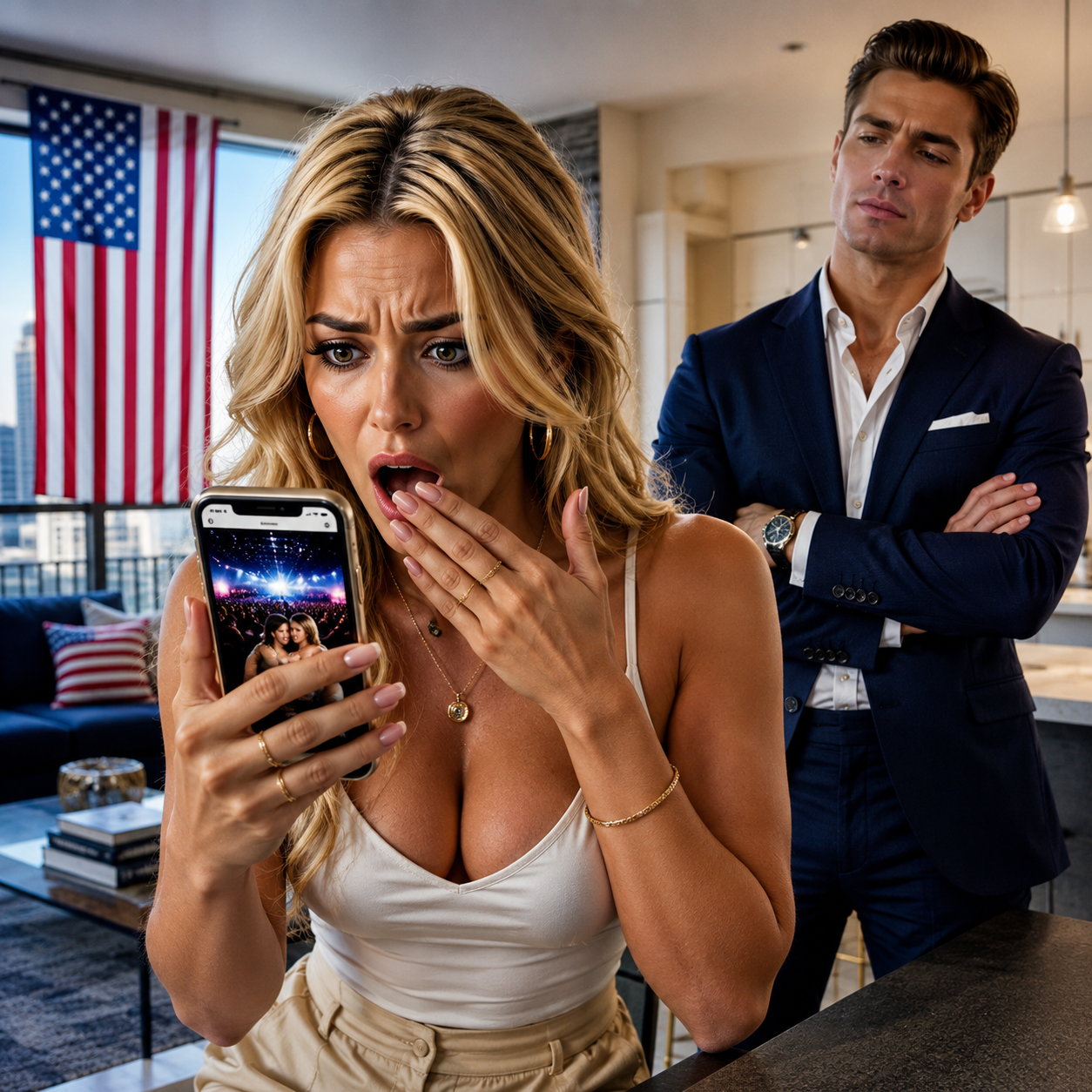
“I know.”
Her eyes searched my face. “You’re not annoyed about it, are you?”
“No.”
“You seem annoyed.”
“I’m not annoyed.”
She touched my cheek, soft and sweet. “I’m sorry I’m complicated.”
That sentence used to melt me. That night, it made something in my stomach turn.
“You’ve never told me exactly what happened,” I said carefully.
Her expression closed a fraction. “I told you enough.”
“I know. I’m not pushing. I just realized I don’t know much about it.”
“There isn’t much to know,” she said. “I was young. There was a boat. It was awful. I don’t like remembering it.”
“What kind of boat?”
She blinked. “What?”
“The boat. Was it a fishing boat? Sailboat? Something else?”
A small silence opened between us.
“I don’t remember,” she said.
That was impossible. Not literally impossible, maybe, but emotionally impossible. If something had traumatized you so deeply that you avoided boats for decades, you would remember whether it had sails.
I looked at her, and for the first time in three years, I didn’t see vulnerability. I saw calculation.
She smiled faintly, like she was trying to pull the moment back into familiar territory. “Why are you interrogating me?”
“I’m not.”
“It feels like you are.”
“I just asked a question.”
“And I answered it.”
No, I thought. You dodged it.
But I let it go.
After she fell asleep that night, curled on her side with one hand tucked under her cheek, I sat at my kitchen table and opened my laptop. I searched Harbor Point Yacht Club annual gala four years ago. The club’s public website had archived event galleries, though most images were small and watermarked. I found the same gala. Then another. Then another.
Lena appeared in more than one photo.
Not every year. Not every event. But enough.
There she was at a summer regatta brunch, wearing white sunglasses and laughing beside the same blond man. There she was standing on an actual dock, one foot resting casually against a mooring cleat, with sailboats behind her. There she was in a group photo labeled New Member Spring Reception.
New member.
I clicked the photo until it expanded. It was grainy, but there was no mistaking her face.
My girlfriend, who allegedly couldn’t stand within fifty feet of a boat without panicking, had once been a member of Harbor Point Yacht Club.
I searched the blond man next. It took less than ten minutes.
His name was Bennett Whitmore.
He came from one of those families whose wealth had its own ecosystem. Real estate holdings. Maritime investments. A foundation with his mother’s name on it. A local magazine article described him as “an active supporter of coastal preservation and youth sailing initiatives.” Another article mentioned his engagement to Helena Harper, daughter of Douglas Harper, founder of Harper Maritime Consulting.
Helena Harper.
Lena.
I sat very still.
My girlfriend had told me her last name was Hart.
Lena Hart.
I checked her social media, then her driver’s license photo I had once seen when booking a hotel. Lena Marie Hart. But names could be changed. Or shortened. Or invented. I didn’t know anymore.
I kept searching, and by two in the morning I found the article that made my chest go hollow.
“Whitmore-Harper Engagement Announced at Harbor Point Yacht Club.”
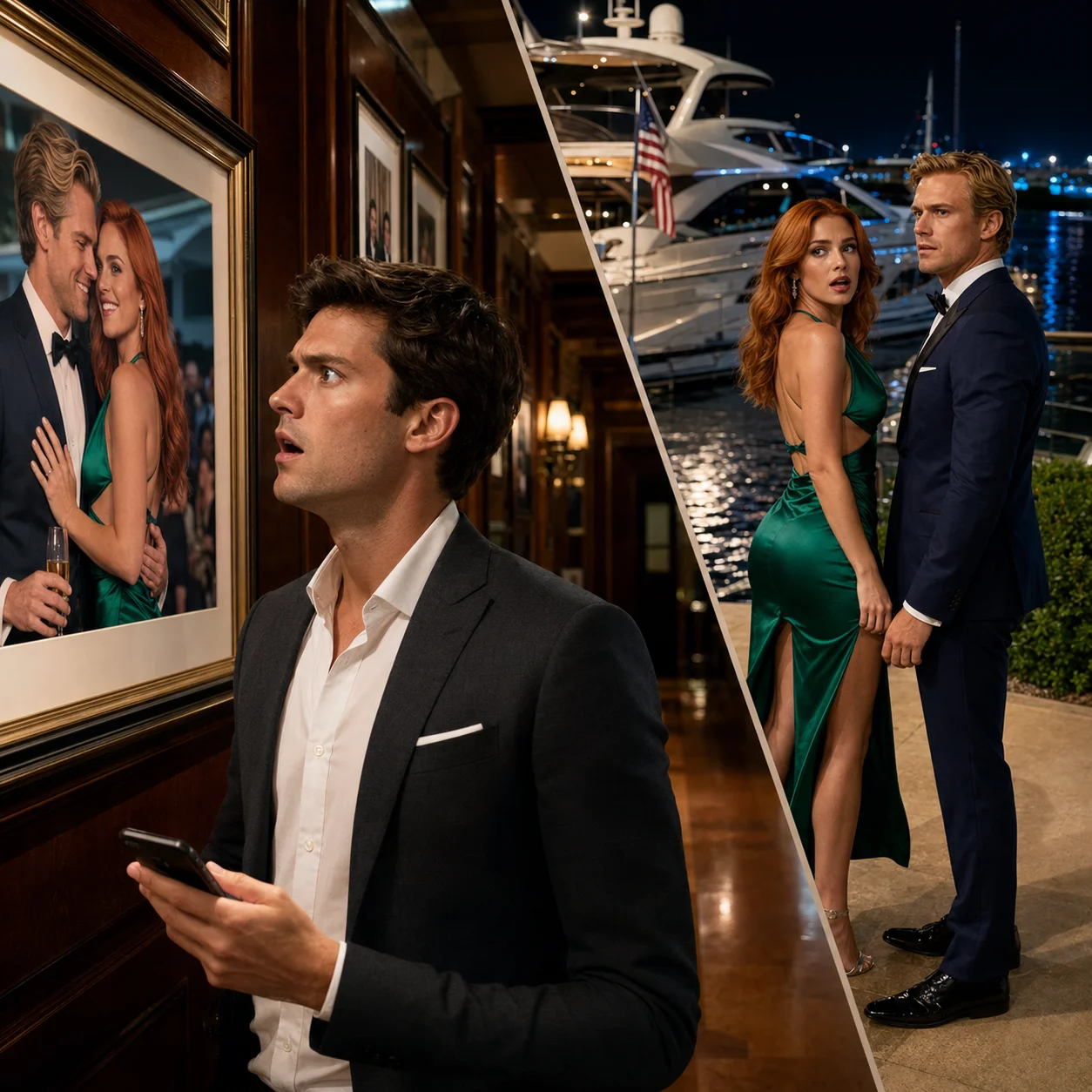
The article was five years old. The photo showed Bennett Whitmore standing beside Lena—Helena—with his hand on her waist, her left hand displayed toward the camera, a diamond ring blazing under the flash.
My girlfriend had been engaged before.
Not only that. She had been engaged to a man from the yacht club she pretended she was too traumatized to even drive past.
I closed the laptop and looked across the room at the hallway leading to my bedroom, where Lena was asleep in my bed.
The feeling wasn’t anger yet. Anger would come later. At that moment, all I felt was displacement, like someone had quietly moved every wall in my house while I wasn’t looking.
The next morning, I made coffee like normal. Lena came downstairs wearing my sweater again, kissed the back of my neck, and asked if I had slept badly. I told her I had work stress. She gave me that sympathetic look I had trusted for years.
Then she said, “Actually, I need to talk to you about something.”
My stomach tightened.
“There’s a private client dinner next Friday,” she said, pouring coffee. “Really important people. The kind of event that could open doors for me. I was wondering if you could come as my plus-one.”
That surprised me. Lena rarely invited me to her work events. She always said they were boring, full of clients who wanted her attention. I used to feel flattered when she kept that part of her life separate, like our relationship was too real to mix with business. Now I wondered what she had been hiding.
“Where is it?” I asked.
She hesitated half a second too long.
“Downtown.”
“What venue?”
“Just a private dining room.”
“What’s it called?”
She looked annoyed. “Why does it matter?”
“I like knowing where I’m going.”
“The Palmetto Room,” she said.
I knew the Palmetto Room. It was inside Harbor Point Yacht Club.
I set my mug down.
“You want me to go to a yacht club?”
Her face went blank.
“No,” she said quickly. “It’s not really a yacht club event. The Palmetto Room is just a rented space.”
“At Harbor Point.”
“It’s a building, Daniel.”
“With boats.”
“You’re being weird.”
I almost laughed. “I’m being weird?”
She folded her arms. “Yes. I’m trying to include you in something important, and suddenly you’re acting like I’m tricking you.”
There it was. The accusation before the question. The emotional smoke before the fire.
“Are you okay going there?” I asked.
Her eyes sharpened. “Why wouldn’t I be?”
“Because of your boat thing.”
“Oh.” Her expression softened too quickly. “Right. I mean, I’ll manage. It’s different when it’s work.”
Different when it’s work.
Different when it was convenient.
I nodded slowly. “Sure. I’ll go.”
For the next week, I became very calm.
That’s something people misunderstand about betrayal. They expect shouting, smashed glasses, dramatic midnight confrontations. Sometimes betrayal makes you quiet. It makes you observant. It turns love into evidence.
I didn’t snoop through Lena’s phone. I didn’t follow her. I didn’t hire anyone. I simply watched what she offered freely.
She spent more time texting, but tilted the screen away. She received two calls from a number she didn’t answer in front of me. She became overly affectionate, then strangely irritable. On Wednesday night, she asked what suit I planned to wear to the dinner. On Thursday, she said maybe I shouldn’t come after all because the guest list had changed.
I said, “I already moved things around at work.”
She forced a smile. “Right. Of course.”
Friday night arrived cold and bright, with a sharp wind coming off the water. Lena dressed in a dark green satin gown I had never seen before. She looked stunning. Painfully stunning. The kind of beautiful that makes people forgive questions before they finish asking them.
At the club, the valet greeted her by name.
“Good evening, Ms. Harper.”
She froze.
I turned my head slowly.
The valet looked embarrassed, like he had spoken out of turn. Lena recovered with a laugh so light it sounded rehearsed.
“Oh, wow,” she said. “Old paperwork. It’s Hart now.”
The valet nodded quickly. “Of course. My apologies.”
Old paperwork.
Inside, people recognized her. Not everyone, but enough. A silver-haired woman touched her arm and said, “Helena, darling, it’s been ages.” A man near the bar raised his glass. Someone else asked if Douglas was coming.
Each time, Lena smiled, deflected, and moved me along.
By the time we reached the Palmetto Room, I had learned one thing clearly: Lena wasn’t afraid of Harbor Point. Harbor Point knew her.
The dinner was elegant and suffocating. White tablecloths. Low floral arrangements. Waiters moving like ghosts. Lena introduced me as Daniel, “my boyfriend,” with a brightness that felt slightly aggressive. No one mentioned Bennett at first.
Then he arrived.
Bennett Whitmore walked into the room ten minutes late, wearing a navy suit and the easy confidence of a man entering a place where he had never once questioned his welcome. He saw Lena immediately.
And he stopped.
It was brief, but I caught it. The pause. The flicker of recognition. The history moving across his face before manners covered it.
“Helena,” he said.
Lena’s fingers tightened around her wineglass.
“Bennett,” she replied.
No “nice to see you.” No introduction. No explanation.
His eyes moved to me. “And you are?”
“Daniel.”
“Daniel,” he repeated, offering a hand. “Bennett Whitmore.”
“I know,” I said.
Lena looked at me.
Bennett smiled faintly. “Do you?”
“Local articles.”
“Ah.”
He sat two chairs away from us.
The dinner became unbearable after that. Lena laughed too loudly at jokes. Bennett barely looked at her, which somehow made everything worse. At one point, an older man across the table mentioned a charity sailing race from years ago and said, “Helena practically lived on the water back then.”
My fork stopped halfway to my mouth.
Lena said, “That was a long time ago.”
The man chuckled. “You were fearless. Bennett could barely get you off that boat.”
Bennett’s jaw tightened.
I looked at Lena. Her face had gone pale, but not with fear. With exposure.
After dessert, I stepped outside onto the terrace for air. The marina spread out below, dozens of boats rocking gently in their slips. Their lights shimmered on the black water. Behind me, the glass doors opened and closed.
I didn’t turn around.
“I wondered when you’d ask,” Bennett said.
I looked over. He stood a few feet away, hands in his pockets.
“Ask what?”
“What you’re really doing here.”
“I came with my girlfriend.”
He let out a quiet breath that almost became a laugh. “Is that what she calls herself now?”
My pulse changed.
I faced him fully. “What does that mean?”
Bennett studied me for a moment. “You don’t know.”
It wasn’t a question.
“I know she lied about knowing you,” I said. “I know she used to be engaged to you. I know she was a member here. I know she told me she was afraid of boats.”
That last part made his expression shift—not amused, not angry, but sad in a way I didn’t expect.
“She’s not afraid of boats,” he said.
“I figured that out.”
“She’s afraid of what happened on one.”
The words landed differently than I expected.
“What happened?” I asked.
Bennett looked toward the water. “That’s not my story to tell.”
“She made it part of mine when she lied for three years.”
He nodded slowly. “Fair.”
For a moment, he seemed to debate with himself. Then he said, “There was an accident. Not the kind she told you. No storm. No childhood trauma. It happened six years ago, during a private party on my father’s boat. A young crew member was injured badly because someone ignored safety instructions. There was drinking, arguing, people showing off. Lena was there. So was I.”
My mouth went dry. “Was she responsible?”
Bennett didn’t answer right away.
“She didn’t cause the injury directly,” he said finally. “But she lied afterward. To protect her father. To protect herself. The crew member sued. The club investigated. My family settled privately. Her father lost clients. Our engagement collapsed.”
I looked back through the glass. Lena stood near the bar, speaking to a woman in pearls, her smile fixed and bright.
“Why would she lie about being afraid of boats?” I asked.
“Because it keeps people from asking about that world,” Bennett said. “About me. About her father. About the accident. Fear earns sympathy. Shame earns questions.”
That sentence sat in the cold air between us.
Fear earns sympathy. Shame earns questions.
“Why are you telling me this?” I asked.
Bennett’s expression hardened slightly. “Because I wish someone had told me sooner when I was standing where you are.”
Before I could respond, Lena appeared at the terrace doors.
“There you are,” she said.
She looked between us, and something in her face broke—not completely, just enough to show the panic underneath.
“What are you two talking about?” she asked.
Bennett said nothing.
I said, “Boats.”
Her eyes flashed.
“Daniel.”
“Helena.”
She flinched when I used the name.
Bennett quietly excused himself and went back inside, leaving us alone with the marina lights and the cold wind.
Lena wrapped her arms around herself. “You don’t understand.”
“No,” I said. “I don’t. That’s the problem.”
She looked toward the water. “I was going to tell you.”
“When?”
“I don’t know.”
“Before or after we got married?”
Her head snapped toward me.
I hadn’t planned to say it, but there it was. Marriage had been hovering around us for months. Not officially. No ring. But conversations about houses, future kids, where we might move if my promotion came through. I had been quietly saving for a proposal.
The thought made me feel stupid.
She stepped closer. “I love you.”
“Don’t use that as a curtain.”
Her eyes filled with tears. “That’s not fair.”
“What isn’t fair? Asking why my girlfriend invented a trauma to hide an ex-fiancé and an entire former life?”
“It wasn’t invented,” she said, voice shaking. “Something did happen.”
“But not what you told me.”
“No.”
“And instead of telling me the truth, you trained me to protect a lie.”
That made her cry harder.
“I was ashamed,” she whispered.
For the first time that night, I saw something real in her. Not performance. Not calculation. Real shame, raw and ugly. But the problem with truth arriving late is that it doesn’t erase the years when lies were treated like love.
“Tell me everything,” I said.
She wiped her face. “Not here.”
“Yes, here.”
“Daniel—”
“Here, Lena. Or Helena. Whoever you are.”
She stared at me for a long moment, then seemed to shrink inside her expensive dress.
Her real name was Helena Marie Harper. Lena Hart was not fully fake—Hart had been her mother’s maiden name, and she had legally changed it after the scandal. Her father, Douglas Harper, had built his career advising wealthy maritime clients and covering their mistakes with contracts, influence, and quiet intimidation. Lena had grown up around yacht clubs, private docks, sailing lessons, charity galas, and people who treated consequences like a fee.
Bennett had been her escape and her trap at the same time. Their engagement was less romantic than it looked from the outside, tied up in family expectations and business alliances. She said she had loved him, but she had also loved the life. The access. The certainty. The way doors opened.
Then came the party on the Whitmore boat.
A young deckhand named Marcus Reed tried to stop Douglas Harper’s drunk client from taking a smaller tender out at night. There was an argument. Someone shoved past him. Marcus fell hard against metal equipment and suffered a spinal injury that ended his maritime career. Lena saw more than she admitted in the investigation. Her father pressured her to say Marcus had been drinking and acting recklessly. She did.
Marcus’s lawsuit dragged on. His reputation was damaged. The settlement helped financially but didn’t fix what had been said about him. Bennett found out Lena had lied, and their engagement ended. Her father blamed her for not being “stronger.” The club distanced itself quietly. Lena changed her name, rebuilt herself in event planning, and decided the easiest version of the story was fear.
“I told myself it wasn’t really a lie,” she said, crying softly. “I couldn’t look at boats without thinking about what I did.”
“That’s guilt,” I said. “Not fear.”
“I know.”
“Did you ever correct it?”
She looked confused. “Correct what?”
“What you said about Marcus.”
Her silence answered before her mouth did.
“No,” I said quietly.
“I didn’t know how.”
“You knew how to change your name.”
She recoiled as if I had slapped her.
Maybe it was cruel. Maybe it was necessary. I still don’t know.
We left separately. She wanted to come home with me, but I told her no. She begged me not to “make decisions while emotional,” which almost made me laugh because every major decision in our relationship had been made while I was uninformed.
That night, she called seventeen times. Then she texted.
Please let me explain better.
I was scared.
I didn’t mean to hurt you.
You’re the only real thing in my life.
I love you. Please don’t disappear.
I didn’t answer.
The next morning, I did something that felt both invasive and overdue. I searched Marcus Reed.
He wasn’t hard to find. He lived two towns over and ran a small adaptive sailing nonprofit for injured veterans and disabled youth. The irony was so sharp it almost didn’t feel real. His biography mentioned a maritime injury but gave no details. His photo showed a man in his late thirties with kind eyes, seated in a wheelchair on a dock beside a group of smiling teenagers.
I stared at that photo for a long time.
Then I emailed him.
I kept it short. I said my name was Daniel. I said I had recently learned about an incident involving Harbor Point years ago and Helena Harper. I said I understood if he didn’t want to respond. I apologized if my message reopened something painful.
He replied two days later.
His message was calm. Too calm.
He said he knew exactly who Helena Harper was. He said he had made peace with much of what happened, but not with being painted as drunk and reckless when he had been trying to prevent a dangerous situation. He said the money had helped with medical bills, but the lie had followed him for years in ways money didn’t touch. Some people still believed he caused his own injury.
At the end, he wrote: “If Helena is finally telling the truth, tell her the truth is late, but it is not useless.”
I read that sentence five times.
Lena came to my townhouse that evening without asking. I saw her through the doorbell camera before she knocked. She looked different without the polished confidence—pale, exhausted, her hair tied back, no makeup.
I opened the door but didn’t invite her in.
“I contacted Marcus,” I said.
Her face crumpled.
“You what?”
“I contacted Marcus Reed.”
She gripped the strap of her purse. “Why would you do that?”
“Because somebody should have.”
She looked away, breathing hard. “What did he say?”
I handed her a printed copy of his email.
She read it standing on my porch. By the time she reached the last line, tears were running down her face again, but these tears felt different. Less afraid of being caught. More afraid of finally seeing herself clearly.
“I ruined his life,” she whispered.
“No,” I said. “The injury changed his life. Your lie helped ruin his name.”
She nodded, and for once she didn’t argue.
We stood there in silence while a neighbor’s dog barked somewhere down the street.
“What do I do?” she asked.
It was the first honest question she had asked me in days.
“You tell the truth.”
“To who?”
“To Marcus. To anyone who heard the lie. To your father if necessary. To yourself first.”
She looked at me with desperate hope. “And then what happens to us?”
I wanted to comfort her. The old version of me would have. I would have pulled her inside, made tea, told her healing wasn’t linear, told myself that love meant helping someone become better.
But I had spent three years protecting a wound she had disguised as trauma while the person actually wounded was living with the consequences.
“I don’t know,” I said. “But I know we can’t continue like nothing happened.”
She nodded slowly, like she had expected the words but still hoped they would not arrive.
Over the next week, Lena did something I honestly didn’t expect.
She contacted Marcus.
I know because he emailed me afterward—not details, just a brief message saying she had reached out, admitted what she had done, and asked if there was any public statement she could make that would help repair the damage. He said he wasn’t ready to forgive her, but he appreciated that she had finally stopped hiding.
She also wrote to Harbor Point’s board, correcting her original statement from years earlier. She copied Bennett, her father, and the attorney who had handled the settlement. I don’t know exactly what consequences followed, but I know her father called her more than twenty times in one night. I know because she sent me a screenshot and wrote, “For the first time, I’m not answering.”
Part of me was proud of her.
That made everything harder.
People like clean endings. They want the liar to stay a villain or the confession to magically restore love. Real life is messier. Lena did the right thing, finally, but she did it after years of letting me love a character she had written for herself.
We met one last time at a quiet coffee shop two weeks later.
She looked thinner. Not dramatically, but enough that I noticed. She wore jeans, a simple black sweater, and no jewelry. For once, she didn’t look like she was trying to become the most interesting person in the room.
“I moved out of my apartment,” she said.
“Why?”
“I couldn’t afford it without taking money from my father.”
That surprised me. “Was he paying for it?”
“Part of it,” she admitted. “Not directly. But yes.”
Another lie, then. Smaller than the others, but still there.
She looked down at her coffee. “I’m staying with my cousin in Columbia for a while. I’m going to keep working, but I need to rebuild things without his money.”
“That’s good.”
She nodded.
Then she said, “Do you hate me?”
I thought about it.
“No.”
Her eyes filled again.
“I wish I did,” I said. “It would be easier.”
She wiped her cheek quickly. “Can we ever start over?”
I looked at the woman across from me, and I saw all of her at once. The charming girl from the wine tasting. The girlfriend who remembered my favorite coffee order. The woman who held my hand at my mother’s surgery. The liar at the yacht club. The daughter shaped by a corrupt father. The coward who let Marcus carry shame that wasn’t his. The person now trying, painfully late, to become honest.
“I hope you start over,” I said. “But not with me.”
She closed her eyes.
I expected her to plead. She didn’t. Maybe that was her first real act of love toward me—accepting the consequence without trying to negotiate it down.
“I’m sorry,” she whispered.
“I know.”
“I did love you.”
“I know that too.”
And that was the worst part. I believed she loved me. But love mixed with deception becomes something you can’t safely drink from.
We left the coffee shop together and paused on the sidewalk. For a second, habit almost took over. I almost hugged her the way I had a hundred times. She almost stepped toward me.
Instead, she held out her hand.
I took it.
It was a strange goodbye. Gentle. Devastating. Honest in a way our relationship should have been from the beginning.
Three months later, I received an invitation in the mail.
Not from Lena.
From Marcus Reed’s nonprofit.
They were hosting a fundraising event for adaptive sailing, and apparently Marcus had added me to the mailing list. I almost threw it away because the idea of attending anything involving boats felt darkly absurd after everything. But on the back of the invitation, there was a handwritten note.
“Truth is late, but it is not useless. Come if you want to see what people can still build after damage.”
So I went.
The event was held at a modest marina, nothing like Harbor Point. No white columns. No polished brass. No old money pretending it had invented the ocean. Just a wooden dock, folding chairs, string lights, and people who seemed genuinely happy to be there.
Marcus spoke briefly that evening. He didn’t mention Lena by name. He didn’t mention the lawsuit. He talked about fear, though—not the kind people perform to avoid accountability, but the kind people face because they want their lives back.
Near the end of his speech, he said, “Water doesn’t only remember what was lost. Sometimes it carries you somewhere new.”
I stood near the back, hands in my pockets, looking out at the darkening marina.
For years, I had avoided boats because Lena told me they hurt her. Then I avoided them because they reminded me of her lies. That night, for the first time, I realized boats had never been the problem for me either.
The problem was trusting someone who used vulnerability as camouflage.
After the speech, Marcus found me near the refreshment table.
“You came,” he said.
“I did.”
“Glad you did.”
I hesitated, then said, “How are things with Lena? I mean Helena.”
He gave a small smile. “She sent a donation last week. No note. Just the donation.”
“Good.”
“She also submitted a corrected statement to one of the maritime trade publications that repeated the old version years ago.”
I looked at him. “Did they publish it?”
“Online correction. Small, but real.”
I nodded.
Marcus studied me for a moment. “You still care.”
“Probably.”
“That doesn’t mean you made the wrong choice.”
“I know.”
But hearing him say it helped.
As I left that night, I walked past the dock where several small adaptive sailboats rested in the water. They rocked gently, tied securely, waiting for morning. I thought about the first time Lena had gone stiff beside me at the marina and how quickly I had built my life around protecting her from something I didn’t understand.
I don’t regret being kind. I don’t regret believing someone I loved.
But I learned that kindness without truth can become a cage. And love that requires you to ignore your own instincts is not patience. It is self-abandonment dressed up as loyalty.
A year later, I heard from Lena one final time.
It was an email, short and carefully written. She said she had moved to Savannah, was working for a nonprofit arts organization, and had not spoken to her father in eight months. She said she was in therapy. She said she didn’t expect a response but wanted me to know that telling the truth had cost her almost everything she used to think she needed.
Then she wrote, “Losing you was the consequence I deserved. Becoming honest is the only way I know how to honor what you gave me.”
I stared at that email for a long time.
Then I archived it.
Not deleted. Not answered. Archived.
Some people stay in your life as a lesson you don’t need to reread every day.
I still live in the same townhouse. I still work too much. I still plan things three months ahead. But I say yes more often now. To trips. To dinners. To uncomfortable conversations. Last summer, my brother invited me back to his lake house, and this time I went.
On the second day, he asked if I wanted to take the small boat out before sunset.
For a moment, I almost said no.
Then I remembered the framed photo at Harbor Point. Lena’s smile. Bennett’s arm. The lie that had shaped three years of my choices. I remembered Marcus on the dock, telling a crowd of strangers that water could carry people somewhere new.
So I stepped into the boat.
The lake was quiet, the sky burning orange along the horizon. My brother drove slowly, and I sat at the front with the wind pressing against my face. Nothing dramatic happened. No revelation. No cinematic healing. Just water, light, and the simple fact that I was no longer living inside someone else’s fear.
When we returned to the dock, my brother asked, “You good?”
I looked back at the lake.
“Yeah,” I said. “I’m good.”
And for the first time in a long time, I meant it.


![[FULL STORY] My fiancee demanded a massive loan for a "dream wedding" and called me cheap, so I left her to fund her own fantasy.](https://social-media.rabedo.com/thumbnails/1777022640_C1.png)