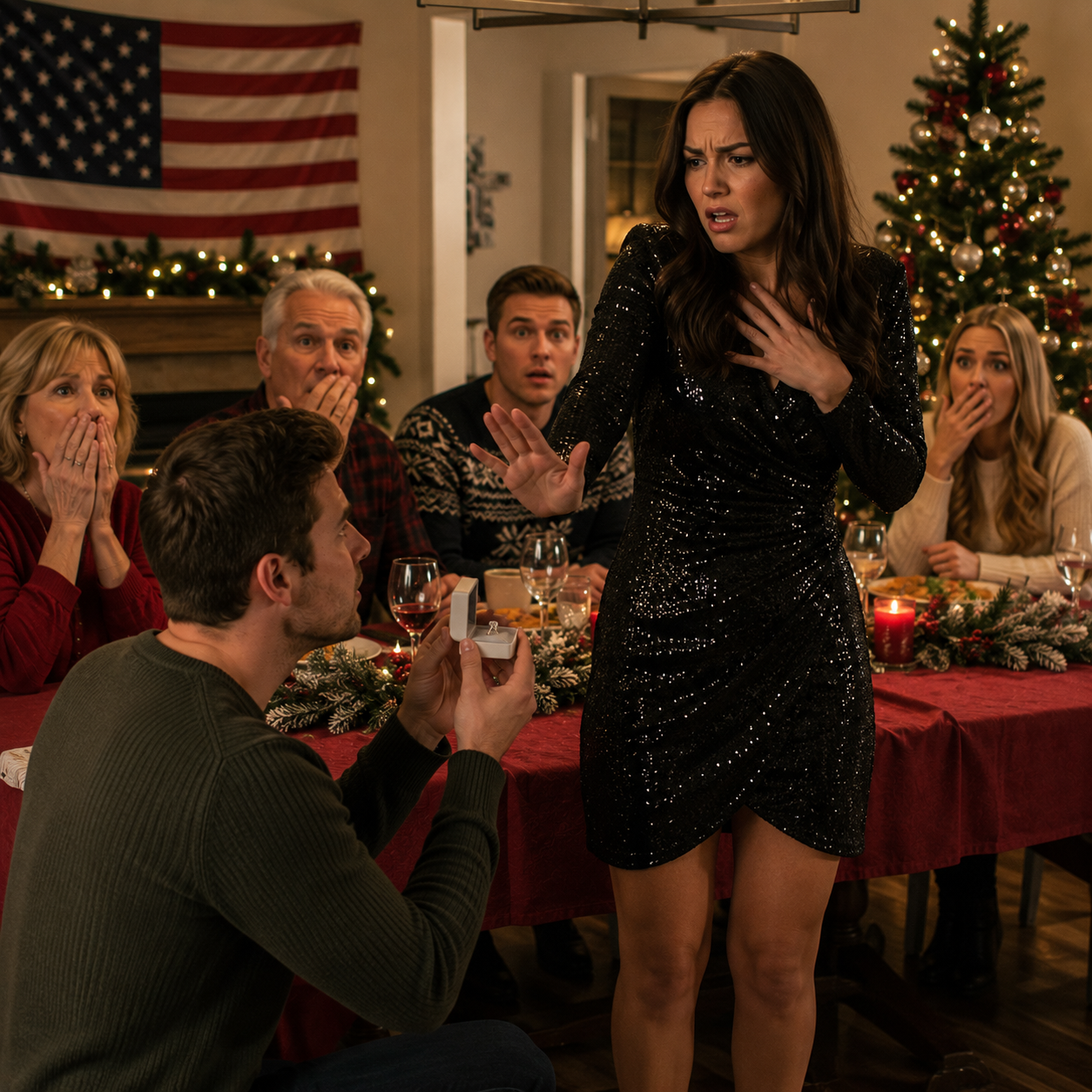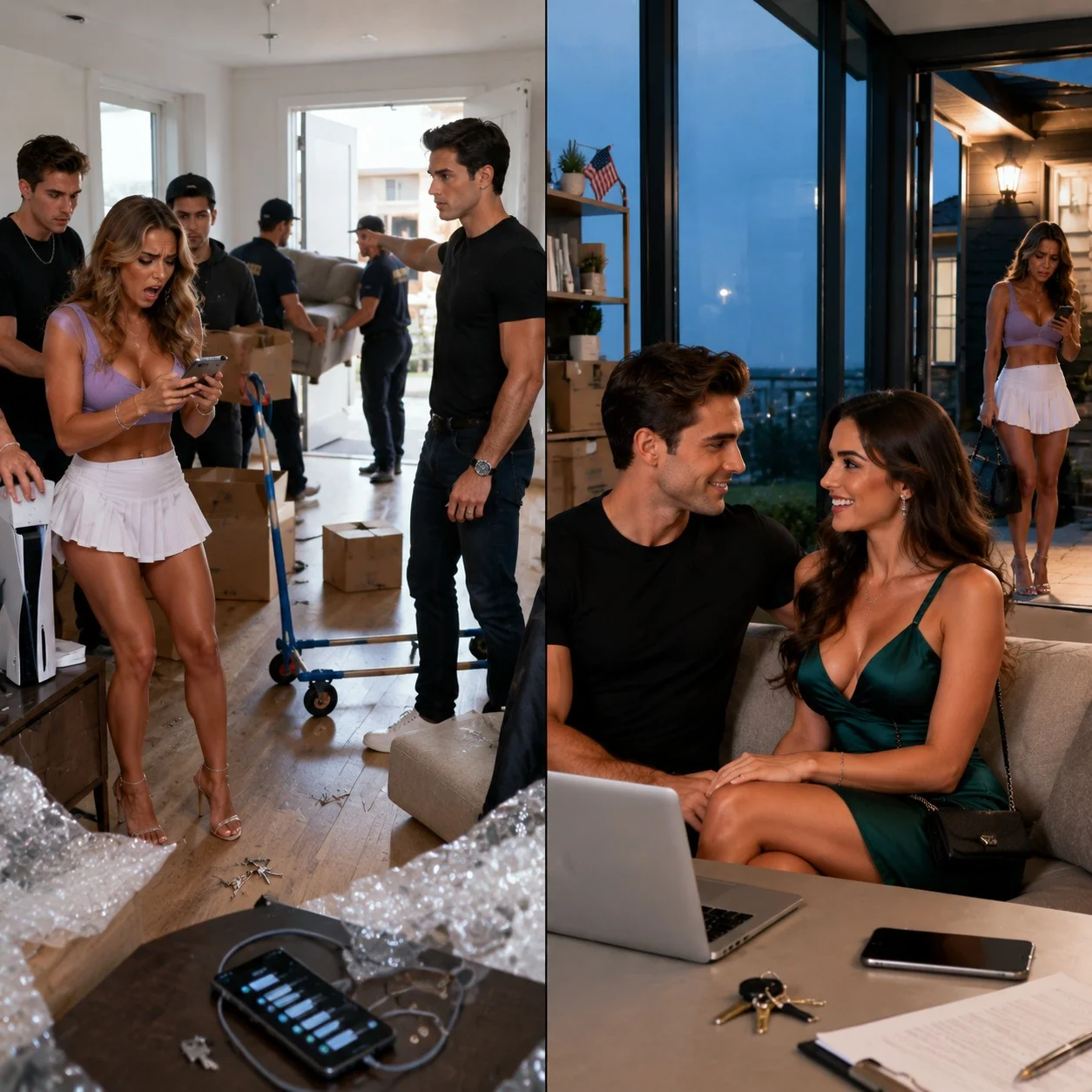
The last thing Clara said to me before walking out of our apartment was not that she was sorry. It was not that she hoped I would find happiness. She looked at me with cold pity, like I was some sad little future she had narrowly escaped, and said, “You’ll die single. No one wants a guy like you.”
I did not yell. I did not beg. I did not follow her to the door with a speech about our five years together. I just looked at the woman I had loved through cheap rent, late bills, bad birthdays, quiet mornings, and all the small humiliations of building a life before you have anything impressive to show for it.
Then I said two words.
“We’ll see.”
At the time, I did not know those words would stay with me longer than the pain. They were not a threat. They were not even confidence. They were just the only answer I had left after someone I loved tried to reduce my entire future to one cruel sentence.
Our relationship did not end in one dramatic explosion. It ended slowly, in all the tiny ways people stop respecting each other before they finally admit it out loud. Clara wanted more, though she could never explain what “more” meant without making it sound like a life she had seen online and decided she deserved. More excitement. More ambition. More money. More proof that she had not settled.
I was a graphic designer then. Stable, quiet, decent at my job, but not the kind of man she could brag about at dinner parties. I loved calm weekends, good coffee, computer projects, and building things with my hands when the world felt too loud. Clara called it boring. She said I was safe, but she said the word like it was an insult.
That final night, we stood in our cramped apartment surrounded by five years of shared life. The couch we had saved for. The cheap bookshelf leaning slightly to one side. The framed prints I had designed myself because we could not afford real art back then. A chipped blue mug on the counter that she used every morning even though she said it was ugly. I remember noticing all of it while she told me she could not see a future with me anymore.
It felt strange, watching a home become evidence of a life someone else suddenly considered too small.
“I need more than this,” she said.
“More what?” I asked.
Her mouth tightened, like even having to explain it irritated her. “More everything.”
I nodded slowly, because what else could I do? You cannot argue someone into respecting the life you built together. You cannot negotiate your way back into someone’s imagination once they have started picturing themselves somewhere shinier without you.
Then came the sentence.
“You’ll die single. No one wants a guy like you.”
Something inside me went still. Not broken, exactly. Clear. Clara looked almost disappointed when I did not collapse. I think she had expected tears, anger, maybe one final desperate attempt to convince her I was worth choosing. Instead, I walked to the closet, pulled out empty boxes, and told her she should start packing.
She laughed under her breath like I was proving her point.
By midnight, half her clothes were gone. By morning, the apartment smelled like cardboard, dust, and the perfume she had worn on our first date. The silence she left behind was not peaceful at first. It was sharp. It sat in every room and waited for me to walk into it.
The first few weeks after she left were brutal in a quiet way. I went to work. I answered emails. I came home. I heated frozen dinners and ate them standing at the counter because sitting at the table felt too intentional. At night, I would catch myself looking toward the door, expecting to hear her key, before remembering she was not coming back.
Clara moved on fast.
His name was Marcus. Finance guy. Sports car. Nice watch. The kind of man who looked expensive even in casual clothes. Their life appeared online almost immediately, arranged in perfect little squares like proof. Restaurants with tiny portions and huge bills. Weekend trips. Hotel balconies. Champagne flutes held at sunset. Clara laughing with her head tilted back just enough to show the diamond necklace I knew I had not bought.
Every post felt like a message meant only for me.
Look what I found after you.
I saw it. Of course I saw it. Anyone who says they don’t look is either lying or stronger than I was then. But after a while, something strange happened. The photos stopped crushing me and started clarifying me.
Clara had not left because my life was small. She left because she could only measure a life by how loudly it could be shown to other people. I had spent years shrinking the parts of myself that embarrassed her, trying to become smoother, more social, more impressive, less absorbed in the things that actually made me feel alive.
So instead of chasing the image she had chosen over me, I did something she never expected.
I stopped trying to become the kind of man Clara wanted, and started becoming the kind of man I had buried to keep her comfortable.
I quit my design job.
Even now, that sentence sounds braver than it felt. It was not glamorous. It was terrifying. I had savings, but not enough to feel safe. I had skill, but not enough proof that skill could feed me. I had one real obsession, the hobby Clara had always mocked: custom computer builds.
Not basic machines. High-end, liquid-cooled, artistic systems for gamers, editors, creators, designers, and people who wanted performance wrapped in beauty. I loved the architecture of it. The precision. The glow of a finished system humming to life after hours of quiet work. The way tubing, glass, metal, light, and power could become something almost sculptural if you cared enough about details nobody else noticed.
Clara used to call it my nerdy little hobby. She hated the weekends I spent surrounded by cables, components, glass panels, and tools. She saw it as wasted time. Something childish. Something that proved I lacked ambition.
So I decided to find out if she had been right.
I emptied most of my savings, rented a cheap little workshop on the industrial side of town, and worked like someone trying to dig himself out from under a curse. Eighteen-hour days. Burn marks on my fingers. Cheap meals eaten cold between builds. Bills that made my stomach turn. Months where I would unlock the shop before sunrise and wonder if Clara’s voice in my head had been the truth all along.
Some nights, I sat alone in that workshop surrounded by machines that glowed like little cities in the dark, and I thought about quitting. Not because I hated the work, but because the risk felt endless. Every invoice mattered. Every delayed client payment felt like a threat. Every mistake cost money I did not have.
Then one build changed everything.
It was a custom etched-glass machine, absurdly powerful, clean-lined, liquid-cooled, lit from within like something from another world. I posted it online without expecting much. A week later, a professional video editor messaged me and offered more money than I had ever made from a single project.
That sale became the next build. Then the next. Slowly, the niche circles started noticing me. Gamers. Filmmakers. Streamers. Designers. People wanted something nobody else had. My waiting list grew. My little workshop became a real business. I hired one assistant, then another. I upgraded tools. I stopped calculating groceries by anxiety and started breathing a little easier.
But the bigger change was Emily.
She walked into my shop on a rainy Tuesday because her car had broken down outside and she needed to use a phone. That was all. No grand cinematic entrance. No perfect lighting, no music swelling, no destiny announcing itself. Just wet hair, muddy boots, and a dead phone clutched in one hand.
She apologized before she even stepped fully inside, like asking to borrow a charger was some unforgivable crime.
“I’m so sorry,” she said, standing in the doorway while rain dripped from her jacket. “My car died, my phone died, and apparently I’m living in a bad commercial for roadside assistance.”
I laughed before I could stop myself.
Behind her, the street was gray and wet, the kind of afternoon that made everything feel paused. Inside, the workshop was full of cables, glass panels, fans, and half-built machines. I remember thinking she didn’t belong in that place. Then she looked at one of my custom builds sitting on the main bench, its soft light moving through clear tubing, and said, “That’s beautiful.”
Not cool. Not expensive. Not impressive.
Beautiful.
That word hit me harder than it should have.
I handed her a charger, then a towel, then coffee because the rain was getting worse and the tow company said it would take an hour. We started talking, and somehow two hours disappeared. Emily was a landscape architect. She understood work that took patience, vision, and dirt under your nails. When she looked at my computers, she did not see a childish hobby or a pile of expensive parts. She saw craftsmanship. She saw art. She asked about the tubing, the cooling loops, the case design, the tiny details most people ignored.
At one point, she noticed the small burn on the side of my finger and asked, “You really make these yourself?”
Not with judgment.
With wonder.
Being loved by Emily, when love finally came, felt nothing like being loved by Clara. There was no constant audition. No pressure to become someone more impressive. No quiet fear that my life was embarrassing her. Emily loved peace. She loved effort. She loved the parts of me Clara had treated like flaws.
She came by the shop sometimes after work with takeout, sitting cross-legged on an old chair while I finished builds. She learned the names of my employees. She remembered which clients were difficult. She brought small plants for the windowsill because she said every space where people worked hard deserved something alive in it.
A year after we met, I proposed near that same rainy spot outside the workshop where she had first walked into my life. It was not elaborate. No hidden photographer. No crowd. Just us, after closing, the pavement still damp from an afternoon storm, the sign above the shop humming softly in the evening light.
I barely got through the question before she said yes.
By then, my business had become something real. A waiting list. Employees. Clients who knew my name before they ever shook my hand. The life Clara once mocked had grown roots without her, and Emily had been there for the hard parts, not just the polished ones.
When Emily said yes, I thought of Clara’s final words.
“You’ll die single. No one wants a guy like you.”
Maybe no one like Clara did.
And that had become the greatest mercy of my life.
Wedding planning became its own little storm of joy. Emily had a vision for a countryside estate, warm lights, flowers everywhere, candid photos instead of stiff poses. She wanted the day to feel alive, not staged. I cared about only one thing: that she would be walking toward me at the end of the aisle.
So when she found the photographer, I barely paid attention.
One night, Emily called me over to her laptop with her face glowing.
“I found the photographer,” she said. “She’s perfect.”
The website was called Captured Moments. The photos were stunning — emotional, artistic, alive. Couples laughing in golden fields, fathers crying before ceremonies, brides holding their mothers’ hands, grooms looking like their hearts had climbed into their throats. The photographer’s bio used only a first name.
Clara.
I registered the name, but not enough to feel alarm. Clara was not rare. The profile photo was black and white, half-hidden behind a camera. Emily handled the calls, the contract, the deposit. I was always at the workshop when they spoke, buried in orders and deadlines. She kept telling me how much she liked the photographer, how easy she was to talk to, how perfectly she understood the feeling of the wedding.
I smiled and trusted her.
The past was supposed to stay buried where it belonged.
The wedding day arrived impossibly bright.
The countryside estate sat beyond a long gravel drive, with old trees, pale stone walls, and gardens that looked like they had been waiting all year for that specific afternoon. Warm lights had been strung between branches. White chairs faced a floral arch. The air smelled like roses, cut grass, and the faint sweetness of summer. My family sat in the front row with tears already shining in their eyes before anything had even happened.
I stood at the altar with my hands shaking, my best man beside me whispering jokes I barely heard.
Then the music started.
Emily appeared.
For those few minutes, the whole world disappeared. Not because the wedding was perfect, though it was. Not because the guests were watching, though they were. But because Emily was walking toward me with tears in her eyes and flowers in her hands, and I understood with a force that nearly knocked the breath out of me that some people do not save you by fixing your life. They save you by seeing the life in you that someone else tried to make you ashamed of.
We said our vows. Hers made everyone cry. Mine made her laugh once through tears because I promised to build her a greenhouse someday with “unreasonably good cable management.” We exchanged rings. We kissed. Everyone cheered.
For a little while, pain felt like something from a life I had only read about.
Then our wedding planner came over and said it was time for family photos.
“She’s ready for you by the gardens,” she said, pointing toward the old oak tree.
A woman in black stood with her back to us, adjusting a tripod. Camera strap across her shoulder. Professional stillness. Emily squeezed my hand, laughing about how perfect the light was, and pulled me forward.
The photographer turned around.
And for one second, my wedding day went completely silent.
Clara.
The air left my lungs so violently I almost missed a step. Her face went white, and the professional smile she had been wearing collapsed into something raw and panicked. Around us, the celebration continued. Guests laughed behind us. Glasses clinked somewhere near the reception tent. Music drifted across the lawn. But beneath that old oak tree, time stopped.
Emily looked between us.
“You two know each other?”
Clara’s fingers tightened around her camera. She knew. In that instant, she knew she was not just photographing a wedding. She was about to spend the next several hours documenting the life she had sworn I would never have.
I looked at her, calm in a way that surprised even me, and said, “We used to.”
Emily’s expression shifted. Not jealousy. Not suspicion. Just alertness. She knew about Clara. Not every detail, but enough. She knew about the five-year relationship, the breakup, the sentence that had lodged itself somewhere deep in me. She knew because Emily had never made me feel weak for telling the truth.
Clara swallowed hard. Her eyes flicked to my ring, then to Emily’s dress, then back to my face, and I saw the exact moment the old words came back to haunt her.
“You’re Clara,” Emily said quietly.
Clara blinked. “I—yes. I didn’t realize.”
That was the first lie of the day.
Maybe she had not recognized my full name on the booking. Maybe Emily had handled most of the communication. Maybe the contract had used initials, or maybe Clara had been careless. But looking at her face, I saw something more complicated than surprise. Shock, yes. Panic, absolutely. But underneath it, something that looked almost like being caught in a room she had entered on purpose.
Emily’s hand tightened around mine.
“We can have the second shooter take over,” she said softly, looking at me rather than Clara. “Right now. We don’t have to do this.”
I loved her for that. I loved that on her wedding day, in her dress, surrounded by guests and schedules and money already spent, her first instinct was not to protect the timeline or avoid awkwardness. It was to protect me.
I looked at Clara. She looked smaller than I remembered. Not physically, exactly, though she was thinner, sharper around the face. It was more that the force she used to carry into rooms had dimmed. The woman who once looked at our apartment like it was beneath her was now standing in front of the life she had mocked, camera in hand, hired to preserve it.
“No,” I said. “It’s fine.”
Emily searched my face. “Are you sure?”
I nodded. “I’m sure.”
Clara opened her mouth, then closed it.
The photos began.
If there is a particular kind of karma I never could have invented, it is having your ex pose your new wife in golden light while pretending her hands are not shaking. Clara was professional at first, or tried to be. She guided my parents into place. Adjusted angles. Asked people to move closer. Told Emily to tilt her chin slightly. Her voice only cracked once, when she asked me to put my arm around my wife.
My wife.
Emily leaned into me, warm and steady, and smiled like the world had never been cruel enough to make this moment impossible.
Clara lifted the camera.
Click.
There was something strangely merciful about the shutter. It gave everyone a role. Clara could hide behind the lens. I could stand beside Emily. Emily could smile while holding my hand in a way that told me I was not alone.
But the past has a way of leaking through even the cleanest script.
During a short break between photo groups, Clara lowered her camera and looked at me for longer than she should have.
“I didn’t know it was your wedding,” she said under her breath.
Emily had stepped a few feet away to fix the flower girl’s crooked crown, but she was still close enough that I knew she could hear if she wanted to.
“I believe you,” I said, though I did not entirely.
Clara’s mouth trembled. “You look... different.”
“I am.”
Her eyes flicked toward the reception area, the guests, the estate, my employees laughing near the bar, the discreet luxury of a day Emily and I had paid for without pretending it was proof of anything.
“I saw your business online,” Clara said. “A while ago.”
That answered one question.
“I see.”
“I didn’t think—” She stopped herself.
“You didn’t think what?”
She looked down at the camera in her hands. “I didn’t think you’d actually do it.”
There it was.
Not an apology. Not yet. Just the honest shape of her disbelief. She had left thinking my life was a room she had outgrown. She had not expected that room to have doors she had never bothered to open.
Before I could respond, Emily came back to my side.
“Everything okay?” she asked.
Clara immediately straightened. “Yes. Sorry. We’re ready for couple portraits by the west garden.”
Emily looked at her for a long moment. Then she smiled politely, the kind of smile that does not invite closeness.
“Great. Let’s do it.”
The couple portraits should have been awkward. Maybe they were for Clara. For me, they became something else entirely.
Emily and I walked through the garden while Clara followed with her camera. The sun dipped lower, turning the estate gold. Emily’s veil caught the light. She laughed when the wind nearly stole it. I caught it, and she kissed me before Clara even had to ask. Somewhere behind the camera, I heard the shutter go again and again.
Each click felt like a small reversal.
Clara had once told me no one would want a guy like me. Now she was documenting a woman who wanted me without condition, without embarrassment, without asking me to become louder or shinier or less myself.
At one point, Clara asked us to stand under a stone arch. Emily rested one hand on my chest, her ring catching the light. Clara adjusted the lens, then hesitated.
“Can you look at each other?” she said.
Emily looked up at me.
The noise of the wedding faded. Her eyes were bright, not just with happiness, but with understanding. She knew this moment was layered. She knew the woman behind the camera had once wounded me deeply. And instead of performing happiness for Clara, Emily simply gave me the real thing.
“You okay?” she whispered.
“Better than okay.”
“You don’t have to prove anything today.”
“I know.”
And I did. That was the difference.
Two years earlier, I might have wanted Clara to see me happy so badly that it would have poisoned the happiness itself. I might have mistaken being witnessed for being healed. But standing there with Emily, I realized I did not need Clara to regret leaving. I did not need her to admit she had been wrong. My life was not a courtroom, and my wedding was not evidence.
Still, evidence was being captured.
After the portraits, Clara disappeared for a while to photograph details. Rings on velvet. Tables under warm lights. Flowers. Place cards. Guests hugging. I barely saw her through dinner, except occasionally at the edge of the room, camera raised, face unreadable.
The reception was beautiful. My best man gave a speech that managed to be embarrassing and touching in equal measure. Emily’s father cried through half of his toast. My mother danced with me and whispered, “You look peaceful,” like it was the highest blessing she could offer.
Then, near the end of dinner, Marcus walked in.
At first, I did not notice him. Emily did. Her hand paused over her glass.
“Is that her guest?” she asked quietly.
I followed her gaze.
Marcus stood near the entrance to the reception tent in a fitted navy suit, scanning the room with the impatience of a man who expected spaces to rearrange themselves around him. I recognized him instantly from the old photos. Finance guy. Sports car. Weekend trips. Clara’s curated proof that she had upgraded.
Only he did not look like an upgrade now. He looked irritated.
Clara saw him from across the tent and froze.
He walked straight toward her, not caring that she was working, not caring that guests were nearby. I could not hear the first words he said, but I saw Clara’s face tighten. She shook her head once, subtle and urgent. He leaned closer. She stepped back.
Emily noticed my attention and turned to our planner.
“Can you make sure everything’s okay?” she asked.
The planner moved quickly, but not before Marcus raised his voice enough for the nearest tables to hear.
“You said this job would pay enough to cover it.”
Clara’s face drained of color.
“Not here,” she hissed.
“I’m tired of not here,” Marcus snapped. “You’ve been dodging me for weeks.”
The room did not go silent all at once. It quieted in ripples. Conversations faded table by table. Clara looked around, realizing too late that she had become the subject instead of the observer.
The planner stepped in with a professional smile. “Sir, this is a private event. I’m going to have to ask you to lower your voice.”
Marcus laughed bitterly. “Private event? She dragged me into debt chasing private events.”
Clara’s eyes flashed. “Stop.”
But Marcus did not stop. Men like Marcus rarely stop when embarrassment finally gives them an audience.
“You want to know why she took this wedding?” he said, looking around like the room had asked him. “Because she needed the money. Because the luxury life she posts about? Half of it was on credit. My credit. Her credit. Everyone’s credit.”
“Marcus,” Clara said, voice shaking.
He pointed at her camera. “She bought new equipment she couldn’t afford because she thought rich weddings would save her. She told me she knew people with money. Said she could get back into the right circles.”
My stomach tightened.
Emily’s hand found mine under the table.
Marcus turned, and for the first time, his eyes landed on me. Recognition flickered. Maybe Clara had shown him old photos. Maybe he remembered me from the ghost of her social media past.
Then he smiled in a way I did not like.
“Oh,” he said. “You’re him.”
Clara whispered, “Don’t.”
But the damage was already coming.
“You’re the guy she used to joke about,” Marcus said. “The computer guy.”
I felt Emily go still beside me.
A hot, protective anger moved through me, not for my own sake this time, but because my wedding had become a stage for someone else’s collapse.
The planner signaled security. The estate had two staff members at the edge of the tent, and they started moving in.
Marcus, seeing he had seconds left, decided to throw the last match.
“She said photographing your wedding would be poetic,” he said loudly. “Said maybe you’d see what you lost.”
Clara looked like she had been slapped.
And there it was.
The hidden truth.
Maybe she had not known from the first inquiry. Maybe she had. But at some point before the wedding day, Clara had realized exactly whose wedding she had agreed to photograph. She could have withdrawn. She could have assigned another photographer. She could have told Emily the truth professionally and avoided all of this.
Instead, she came.
Maybe for money. Maybe for curiosity. Maybe for the sick little satisfaction of imagining she would walk into my happiness and prove it was smaller than hers. Maybe all three.
The silence that followed Marcus’s words was brutal.
Emily rose from her chair.
She did not shout. She did not cry. She looked more regal in that moment than anyone I had ever seen. Still in her wedding dress, still holding my hand, she walked toward Clara with the calm of someone who knew exactly where the line was.
“Is that true?” Emily asked.
Clara’s eyes filled with tears. “Emily, I can explain.”
“That wasn’t my question.”
Clara looked at me, then back at Emily. “I didn’t know at first.”
“At first,” Emily repeated.
“I recognized his name later. I thought...” Clara’s voice broke. “I thought I could handle it.”
Emily’s face did not change. “And did you tell me?”
“No.”
“Did you tell my husband?”
The word husband landed with quiet force.
Clara flinched. “No.”
Marcus gave a bitter laugh behind her. “Of course she didn’t. Clara likes a good reveal.”
Security reached him then and guided him toward the exit despite his protests. He kept talking as they moved him out, but his voice faded into the night. Clara stood in the middle of the reception tent, camera hanging from her hand, surrounded by the wedding she had chosen to enter under false pretenses.
For one long moment, I thought Emily might fire her on the spot.
Instead, Emily turned to the planner.
“Please collect all memory cards from her cameras before she leaves,” she said calmly. “Make sure our contract is reviewed. If there’s a second shooter, they can finish the night. If not, have guests send us their photos. I don’t want this woman working another minute of our wedding.”
Clara’s eyes widened. “Emily, please. The photos—”
“The photos are ours,” Emily said. “The contract says so. You are not keeping our wedding hostage because you brought your past and your boyfriend’s debts into it.”
That sentence cut cleaner than any insult could have.
Clara turned to me then, tears sliding down her face.
“I’m sorry,” she said.
The reception held its breath.
Two years earlier, I had imagined that apology a thousand ways. In my darker moments, I pictured Clara crawling back after Marcus left her, admitting I had been the better man, begging for the life she had thrown away. In my better moments, I imagined I would not care.
Reality was quieter.
She looked exhausted. Humiliated. Human in a way I had not allowed myself to picture for years. And I felt something unexpected.
Not love. Not satisfaction.
A kind of final sadness.
“You’re not sorry because of what you said to me,” I said softly. “You’re sorry because this time, everyone heard who you became.”
Her face crumpled.
“I didn’t mean it,” she whispered.
“Yes, you did,” I said. “Back then, you meant every word. And maybe you needed to. Maybe that version of you had to believe I was nothing so leaving felt like ambition instead of cruelty.”
Clara covered her mouth.
“But you were wrong,” I continued. “Not because I got successful. Not because I’m standing here in a nice suit at a beautiful wedding. You were wrong because being quiet was never the same as being worthless. Being safe was never the same as being small. And love was never supposed to feel like an audition.”
Emily’s hand tightened around mine.
Clara lowered her eyes. “I’m sorry,” she said again, but smaller this time, like she finally understood the apology was not a key.
I nodded once.
“I hope you become someone who means that before consequences force it out of you.”
Then I turned away.
The planner and second shooter handled the practical mess. Clara surrendered the memory cards after a tense exchange and was escorted quietly from the estate. Marcus was already gone. The guests, to their credit, did not swarm us with questions. A few people looked shocked, a few sympathetic, and my best man looked like he wanted to chase Marcus down the driveway, but Emily raised one hand gently and everyone seemed to understand.
The night could have broken there.
Emily refused to let it.
She took my face in both hands under the warm lights and said, “This is still our wedding.”
I laughed once, unsteadily. “That was not in the schedule.”
“No,” she said. “But neither was me breaking down outside your shop with a dead phone, and that worked out pretty well.”
Then she kissed me in front of everyone.
The tent erupted in cheers, partly out of relief, partly because people love a comeback even during a wedding reception. The band, bless them, understood the assignment and launched into something loud and joyful. My best man dragged me to the dance floor. Emily’s friends surrounded her in a white, laughing circle of fabric and flowers. Slowly, the ugly little shadow Clara had brought into the room lost its shape.
We danced.
Not to prove anything. Not for Clara, who was gone. Not for Marcus, who had unintentionally done what truth always does when forced into public: clear the air. We danced because the day still belonged to us, and because happiness, real happiness, is not fragile just because someone bitter tries to touch it.
Later that night, when the guests were eating cake and the sky had turned deep blue over the estate, Emily and I slipped away for five minutes beneath the old oak tree.
The same place Clara had turned around.
Emily leaned against me, her dress gathered carefully over one arm, her hair coming loose from its pins.
“Are you okay?” she asked.
I looked toward the reception tent glowing in the distance, full of people who loved us enough to stay joyful after an interruption.
“I think so,” I said. “It was strange seeing her.”
“I know.”
“For a second, I felt like that apartment again. Like I was standing there while she told me I’d die single.”
Emily looked up at me. “And then?”
“And then I looked at you.”
Her expression softened.
I took her hand and brushed my thumb over her ring. “Then I realized the worst thing she ever said to me only had power because part of me believed it. I don’t anymore.”
Emily rested her head against my shoulder.
“Good,” she said. “Because I would’ve hated to marry a man who planned to die single.”
I laughed, and this time it did not shake.
A week later, the photos arrived.
The second shooter had done an incredible job finishing the night, but the files from Clara’s memory cards were there too, transferred through the planner and reviewed by the studio per the contract. We were prepared for them to be stiff or awkward. Instead, they were breathtaking.
That was the cruel little irony. Clara had captured everything.
My face when Emily walked down the aisle. Emily laughing as the wind caught her veil. My mother crying during the vows. Our hands with rings. The kiss. The golden portraits in the garden. Even the photo under the stone arch where Emily looked up at me like I was not a man who had been discarded, but a man who had finally been found.
Clara had photographed the truth better than she had ever understood it.
There was one image near the end that stopped me completely. It had been taken moments before Marcus walked in, during dinner. Emily and I were sitting close together, her hand on my arm, both of us laughing at something my best man had said. The light was warm. My face was unguarded. I looked happy in a way I did not recognize at first because I had spent so long mistaking tension for normal.
Emily saw me staring at it.
“That one,” she said.
So that became the photo we framed.
Not the most polished one. Not the grandest. Just the realest.
As for Clara, I heard pieces later, mostly through unavoidable mutual connections. Marcus left for good after the wedding incident, though not before their financial mess became ugly. Captured Moments took a hit after Emily’s planner filed a formal complaint about nondisclosure and unprofessional conduct, but Emily, being kinder than most people would have been, did not post anything publicly. She only left a private report with the vendor network so other couples could make informed decisions.
Clara sent one email two months after the wedding.
The subject line was simple.
“I’m sorry.”
I almost deleted it, but Emily told me I should read it if I needed to, and ignore it if I didn’t. No pressure. No jealousy. No performance.
So I read it.
Clara wrote that she had known three weeks before the wedding. She had seen my business profile attached to the venue’s vendor coordination form and recognized me. She admitted she should have withdrawn immediately, but curiosity and pride had gotten the better of her. She said she wanted to see if I was really happy, and a part of her had wanted to believe it was all pretend.
Then she wrote something I did not expect.
“I told myself you were boring because I was terrified that a quiet life with someone decent should have been enough for me. I thought wanting more made me ambitious. Maybe sometimes it did. But with you, I used it as an excuse to be cruel. Seeing you with Emily hurt, but not because I wanted you back. It hurt because she loved the exact things I punished you for, and I finally understood that I had not escaped a small life. I had made myself too small to recognize a good one.”
I sat with that for a long time.
Then I replied with four sentences.
“I accept your apology. I hope you build a better life honestly. Please don’t contact us again. Take care, Clara.”
Emily read it before I sent it. She kissed my shoulder and said, “That sounds like peace.”
She was right.
One year later, on our first anniversary, Emily and I returned to the countryside estate. Not for a grand party, just dinner at the little restaurant nearby and a walk through the gardens where we had taken our portraits. The old oak tree was still there, its branches wide and quiet, holding no opinion about anything it had witnessed.
Emily brought a small framed copy of our favorite wedding photo, the candid one from dinner. She said she wanted to take a picture of us holding it beneath the tree, “for narrative symmetry,” because she had learned enough from me to tease me like that.
I set my phone on a timer against a stone bench. Emily leaned into my side. The photo in our hands caught the late afternoon light.
Just before the timer clicked, she whispered, “We’ll see.”
I turned to her, surprised.
She smiled. “That’s what you said, right?”
I nodded, feeling something in my chest loosen for the last time.
Two years earlier, those words had been all I could say after Clara tried to curse my future.
Now they meant something different.
We’ll see did not mean I would prove Clara wrong. Not anymore. It meant life was still opening. It meant love had found me in a workshop on a rainy Tuesday. It meant the parts of me someone once mocked had become the foundation of everything good that came after.
The camera clicked.
In the photo, Emily is laughing, I’m looking at her instead of the lens, and behind us the old oak tree stands in soft gold light. There is no bitterness in the frame. No revenge. No ghost of an ex hiding behind a camera.
Just a man who was told no one would want him, standing beside the woman who did.
And that was better than any revenge Clara could have imagined.
![[FULL STORY] She Called Me the “Stinky Country Girl” at My Own Hotel — Then Her Family’s Scam Collapsed in Front of Everyone](https://social-media.rabedo.com/thumbnails/1776414213_669839669_978011704751032_8167109489873768825_n.jpg)
![[FULL STORY] During wedding shopping, my fiancée ran into her ex.The moment she saw him, she told him, "Leave](https://social-media.rabedo.com/thumbnails/1776938789_32.png)
![[FULL STORY] She Left Our Friend’s Party With Another Guy And Texted Saying It Just Happened. I Replied Okay ...](https://social-media.rabedo.com/thumbnails/1777223905_C20.png)