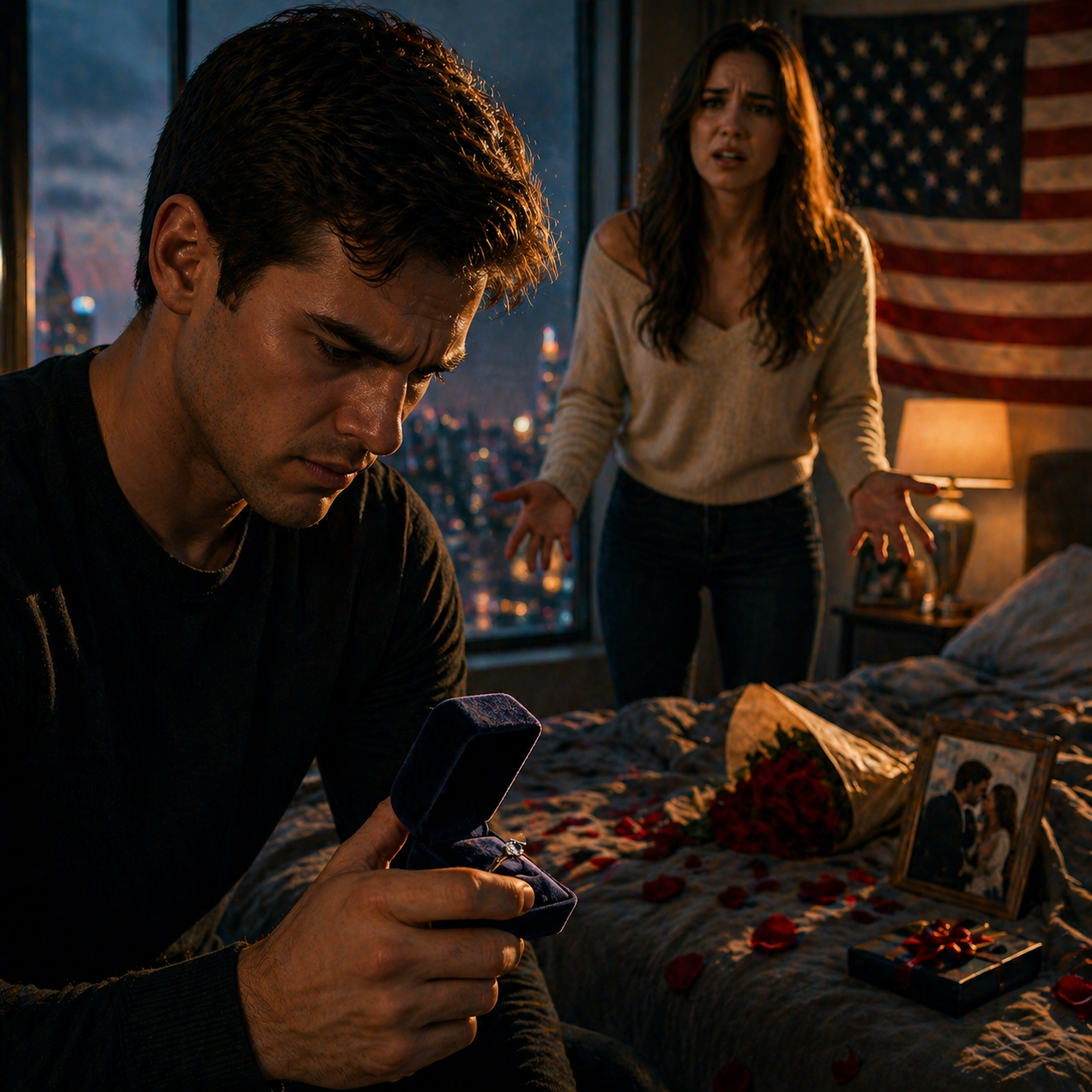
“Big client review today,” she said. “Wish me luck.”
“Good luck,” I said.
She paused by the door and gave me a tired smile. “I might be late.”
“Okay.”
That was the last normal thing she said to me.
Around 10:15, my phone rang. I was at the dining table with blueprints spread around my laptop, arguing with a spreadsheet, when an unknown number flashed on the screen.
I almost ignored it, but something made me answer.
“This is Daniel.”
“Hi, Daniel? This is Mark Ellison from Northline Corporate Travel. I’m Natalie’s department director.”
I straightened. “Oh. Hi. Is everything okay?”
“That’s actually what I’m trying to find out.” His voice sounded polite but uneasy. “I’m sorry to bother you. I know this is unusual.”
My stomach tightened.
“What happened?”
“Well, I’ve been trying to reach Natalie on her personal number, and it’s going straight to voicemail. Her company email has an auto-reply, but HR said they didn’t authorize the time sheet adjustment. I just wanted to confirm whether there was some kind of family emergency.”
I stood slowly from the chair.
“Family emergency?”
“Yes. She submitted vacation time starting two Mondays ago, but there’s been some confusion. She told one of the coordinators she might be unreachable because of a family medical situation. I didn’t want to pry, but we have a client file issue we need resolved. Since you’re listed as her emergency contact, I thought I should check in.”
For a moment, all I could hear was the hum of the refrigerator.
Two Mondays ago.
Vacation time.
Unreachable.
I gripped the edge of the table.
“I’m sorry,” I said carefully. “Did you say Natalie has been on vacation for two weeks?”
There was silence on the other end.
Then Mark said, “Yes.”
“She went to work this morning.”
Another silence.
This one was worse.
Mark cleared his throat. “Daniel… Natalie hasn’t been in the office since the seventeenth.”
The room seemed to tilt.
I looked at the coffee mug she had left by the sink. The faint lipstick mark on the rim. Her keys were gone. Her work bag was gone. Her second phone was gone.
“My wife left this house an hour ago,” I said. “She said she had a client review.”
Mark exhaled quietly. “I see.”
No, he did not.
Neither did I.
“Does she have a company phone?” I asked.
“What?”
“A work phone. Did Northline issue her a second phone recently?”
“No,” he said slowly. “We don’t issue phones to account managers. They use the secure app on their personal devices.”
I closed my eyes.
There are moments in life when your mind tries to protect you by refusing to assemble the obvious shape of things. It hands you the pieces one at a time, pretending they are unrelated.
Vacation for two weeks.
Fake work phone.
Leaving the house every morning.
Late nights.
Hidden charger.
Perfume.
Gym.
Unreachable.
I wanted to ask Mark another question, but my throat would not work.
He filled the silence.
“I’m sorry. I didn’t realize there was… a discrepancy. I only called because there’s an account transition issue. Natalie didn’t complete a handoff, and the client is threatening to escalate.”
“Right,” I said, though I had no idea what he was talking about.
“Is she safe?”
That question nearly broke something in me.
Safe.
I pictured Natalie walking out that morning with her laptop bag and calm smile.
“I don’t know,” I said honestly.
Mark’s tone changed. Less corporate now. More human.
“Daniel, I’m sorry. I didn’t mean to put you in this position.”
“You didn’t,” I said. “She did.”
After we hung up, I stood in the dining room for several minutes without moving.
Outside, a lawn crew started somewhere down the street. The buzz of their equipment rose and fell like an insect trapped behind glass. My laptop pinged with a meeting reminder. The ordinary world had the nerve to continue.
I opened Natalie’s regular phone location on our shared family app.
Unavailable.
Of course.
She had disabled location sharing two weeks earlier, claiming the app was draining her battery. I remembered believing her. I remembered even helping her change some settings.
I laughed once, a dry sound that scared me.
Then I sat down and did something I had never done in our marriage.
I started looking.
Not through her private messages. Not yet. There was no phone to search anyway.
I looked at our life.
Bank accounts.
Credit card statements.
Calendar invites.
Mileage on her car.
Receipts in the drawer where we shoved random papers.
And once I started looking, the story she had built began tearing open so quickly it was almost insulting.
There were hotel bar charges on the credit card she said she used only for gas and groceries.
A boutique purchase for $418 from a store twenty-five miles away.
Parking garage payments downtown on days she claimed to be working from home in our guest room.
A charge from a beach resort restaurant two hours south of our city.
The date on that one made my hands go cold.
It was from the previous Thursday.
The same Thursday she had texted me a picture of a salad at her desk and complained about eating lunch during a “hellish compliance training.”
I clicked the transaction details.
Two entrées.
Two cocktails.
One dessert.
I sat back in my chair and stared at the screen.
People talk about rage like it is fire. But what came over me first was not fire. It was ice. A slow freezing from the inside out.
I did not scream. I did not throw anything. I did not punch a wall.
I opened a folder on my laptop and named it “Natalie.”
Then I started saving everything.
Screenshots. PDFs. Dates. Times. Receipts. Account numbers partially hidden. Notes from memory. Mark Ellison’s phone number. A summary of the call.
At 12:03 p.m., Natalie texted me from her regular phone.
Crazy day. Might grab dinner with Erin after work. Don’t wait up. Love you.
I stared at the message until the words lost meaning.
Then I typed back:
No problem. Hope the client review went well.
The bubble appeared almost immediately.
Then disappeared.
Then appeared again.
It was exhausting. I’ll tell you later.
I laughed again.
This time, it did not scare me.
It clarified me.
I spent the afternoon doing my job because the body does strange things under emotional shock. I attended the supplier call. I corrected a bid. I answered emails. I made notes. My voice sounded normal enough that no one asked if I had discovered my wife was living a second life between breakfast and lunch.
At 5:40 p.m., I called my older sister, Rebecca.
She answered on the second ring. “Hey, what’s up?”
I tried to speak and failed.
She knew immediately.
“Daniel?”
I swallowed. “Can you come over tonight?”
“What happened?”
“I think Natalie is cheating.”
Rebecca went silent.
Then she said, “I’ll be there in twenty.”
Rebecca was forty-one, a divorce attorney, and the kind of woman who could make a room behave just by entering it. She had never fully trusted Natalie, though she never said it in a cruel way. Rebecca loved me enough to keep her suspicions private until they became useful.
She arrived at 6:15 with Thai food I did not ask for and a face that told me she was ready to go to war.
I told her everything.
The phone. The fake work policy. Mark’s call. The two-week vacation. The receipts. The lies.
She listened without interrupting, except to ask precise questions.
“Joint accounts?”
“Yes.”
“Mortgage?”
“In both names. House bought after marriage.”
“Kids?”
“No.”
“Prenup?”
“No.”
“Any large withdrawals?”
“I haven’t checked everything yet.”
Her eyes sharpened. “Check now.”
We pulled up the joint savings.
My mouth went dry.
Three withdrawals over twelve days.
$4,000.
$3,500.
$6,200.
Total: $13,700.
All transferred to an account ending in numbers I did not recognize.
Rebecca leaned closer to the screen.
“Do you know that account?”
“No.”
“Screenshot it. Download statements. Tonight.”
I did.
My hands were shaking now.
“Could she be hiding money for divorce?” I asked.
Rebecca did not answer right away, which was an answer.
“She could be doing a lot of things,” she said. “But from this moment forward, you stop giving her the advantage of your trust.”
That sentence hurt more than I expected.
Trust had been the foundation of my marriage. Even when things felt off, I had believed trust was the mature choice. The loving choice. The thing that separated a husband from a jealous boyfriend.
Rebecca touched my arm.
“I know,” she said quietly. “But trust is not a suicide pact.”
Natalie came home at 10:32 p.m.
I heard her car pull into the driveway, then the soft beep of the alarm, then her key in the lock. Rebecca had left an hour earlier after making me promise not to confront Natalie without a plan.
So I sat on the couch, watching a show I could not name, while my wife entered our home smelling like expensive hotel soap.
She stopped when she saw me.
“You’re awake.”
“Couldn’t sleep.”
She set her purse on the entry table. I noticed, with an almost painful focus, that she kept one hand on the strap.
“How was dinner with Erin?” I asked.
“Good.” She kicked off her heels. “She’s overwhelmed. Her mom’s health stuff again.”
“Sorry to hear that.”
“Yeah.”
She started toward the hallway.
“How was the client review?” I asked.
Her back stiffened.
Then she turned slowly.
“It was fine.”
“What client?”
Her eyes narrowed. “Why?”
“Just curious.”
“You’re never curious about my clients.”
“Maybe I’m trying to be more involved.”
She smiled, but there was no warmth in it. “That’s sweet. But I’m exhausted.”
She disappeared into the bedroom.
A minute later, the shower turned on.
I sat there until the water stopped.
In the morning, she left again for “work.”
I followed her.
I am not proud of that. It felt ugly. Small. Like something a person does after they have already lost part of themselves. But when someone you love turns your normal life into a stage set, sometimes the only way to find the truth is to step backstage.
I stayed three cars behind her silver Acura as she took the highway out of our suburb, away from downtown where her office was.
Not toward Northline.
Not toward any client site I knew.
She drove forty minutes south, exited near a lakefront district filled with restaurants, boutique hotels, and rental condos, then pulled into the parking garage beneath a luxury apartment building called The Marlowe.
My hands tightened on the steering wheel.
The Marlowe was not a hotel. It was not a conference center. It was not a place for a client review.
It was a place where people lived.
I parked across the street behind a coffee shop and watched her walk toward the glass entrance. She was not rushing. She was not nervous. She looked like she belonged there.
At the door, a man came out to meet her.
Tall. Dark hair. Light blue shirt. No tie. Sunglasses tucked into the front of his collar.
He smiled, and she smiled back in a way I had not seen from her in months.
Then he kissed my wife.
Not quickly.
Not carefully.
Not like someone afraid of being seen.
He kissed her like this was routine.
My first instinct was not anger.
It was disbelief so pure that I almost looked away to check whether I had misunderstood what my eyes were showing me.
But there was no misunderstanding.
Natalie put her hand on his chest. He touched her waist. They laughed about something. Then they went inside together.
I sat in my car with both hands on the steering wheel and felt the last stupid loyal part of me die quietly.
I took a photo.
Then another.
Then I drove away before I did something that would make her the victim.
I called Rebecca from a gas station parking lot.
“She’s with someone,” I said.
“Did you confront them?”
“No.”
“Good.”
“I want to.”
“I know. Don’t.”
“She kissed him right in front of the building.”
“Did you get photos?”
“Yes.”
“Send them to me. Then go home.”
“I can’t go home.”
“You can, and you will. Because from now on, every move matters.”
Rebecca’s voice became the rope I held onto for the next twenty-four hours.
She told me to open a separate bank account in my name only and move half of the joint liquid funds, no more, no less. She told me to change passwords on my personal email, work email, cloud storage, phone account, and retirement portal. She told me not to empty accounts, not to threaten, not to post anything, not to contact the man, and not to destroy property.
“Evidence, discipline, lawyer,” she said. “That’s your religion now.”
I did everything she told me.
That afternoon, I met with a divorce attorney Rebecca trusted, a calm man named Howard Bell who wore brown glasses and spoke like he had seen every flavor of human betrayal and no longer found any of it surprising.
I laid out the timeline.
Howard listened, took notes, and asked for documents.
When I mentioned the withdrawals, he looked up.
“Joint funds transferred to an unknown account while she was misrepresenting her whereabouts?”
“Yes.”
“Good to know.”
“Good?”
“Useful,” he corrected. “Not good.”
He explained things plainly. Our state followed equitable distribution. Infidelity alone might not decide everything, but misuse of marital funds could matter. Documentation mattered. Timing mattered. My behavior from this point forward mattered a lot.
“Do not confront her emotionally,” he said. “If you must speak, keep it short. Assume you are being recorded.”
That sentence landed strangely.
Being recorded.
By my wife.
The woman who used to fall asleep with her hand on my chest.
“What if she tries to come after me legally?” I asked.
Howard gave me a look over the top of his glasses.
“Mr. Carter, people who maintain elaborate lies often do not stop lying when discovered.”
I left his office with a folder, a checklist, and the sensation that my marriage had become a business problem with a body count.
That night, Natalie came home at 9:11.
I was at the kitchen table.
This time, I was not pretending to watch TV.
She froze when she saw the papers in front of me.
“What’s all this?”
I looked up. “We need to talk.”
Her face changed in stages. First annoyance. Then caution. Then something close to fear, quickly buried.
“About what?”
“Your vacation.”
The house went silent.
Even the refrigerator seemed to hold its breath.
Natalie blinked. “What?”
“Mark Ellison called me yesterday.”
She stared at me.
“He asked why you’d been on vacation for two weeks.”
For one second, I saw the real Natalie.
Not my wife.
Not the woman I thought I knew.
The strategist.
Her eyes moved over the table, my laptop, the papers, my face. She was calculating what I knew, what I could prove, where the exits were.
Then she laughed.
It was a terrible performance.
“Oh my God. That. Daniel, there was a scheduling error.”
“A scheduling error?”
“Yes. HR messed up my PTO. I told you work was chaotic.”
“Mark said you haven’t been in the office since the seventeenth.”
“Because I’ve been doing hybrid client visits.”
“Northline doesn’t issue work phones.”
Her mouth closed.
I watched the lie machine inside her search for a new gear.
“Who told you that?”
“Your boss.”
She looked away. “Mark doesn’t know everything.”
“He’s your department director.”
“Exactly. He’s management. They never know what actually happens.”
“Natalie.”
“What?” she snapped.
“I saw you.”
Her eyes flicked back to mine.
“At The Marlowe.”
The color drained from her face.
I had imagined that moment a dozen times since watching her kiss him. I thought she might cry. Scream. Confess. Apologize.
Instead, she became cold.
“You followed me?”
I stared at her.
That was the first thing she chose.
Not I’m sorry.
Not let me explain.
Not it meant nothing.
You followed me?
“Yes,” I said.
Her voice rose. “That’s insane.”
“So is telling your husband you’re going to work while you’re on vacation with another man.”
“You don’t know what you saw.”
“I saw you kiss him.”
“You invaded my privacy.”
“You used our savings.”
She flinched.
There it was.
Not guilt over the affair.
Fear over the money.
I leaned back slightly. “Who is he?”
She folded her arms. “I’m not doing this.”
“You’re doing something. You’ve been doing something for two weeks.”
“I need space.”
“You had two weeks of space.”
“That’s not fair.”
I almost smiled. “Fair?”
Her eyes filled with tears then, sudden and dramatic.
“I was unhappy,” she said.
There it was. The universal password people use when they want betrayal to sound like self-care.
“I tried to talk to you,” she continued. “For months. You were always working, always tired, always practical. I felt invisible.”
I had expected pain.
What I felt was clarity.
“When did you try to talk to me?”
She opened her mouth, then closed it.
“When, Natalie?”
“You don’t listen.”
“That’s not an answer.”
She wiped under one eye. “His name is Adrian.”
The name hit me like a thrown object, not because it mattered, but because now the ghost had a label.
“How long?”
She looked toward the window.
“How long?”
“Six months,” she whispered.
Six months.
For six months, I had kissed her goodbye, planned grocery lists, paid bills, asked about her day, slept beside her, worried about her stress, and believed the woman lying inches from me still belonged to our life.
My hands curled under the table.
“Did you use our money on him?”
“No.”
“Natalie.”
“No,” she said louder. “Not on him. It was for me.”
“For what?”
She hesitated.
That hesitation told me the next truth before she did.
“The apartment,” she said.
I stared.
“The Marlowe?”
She swallowed. “It was temporary.”
“You rented an apartment with him.”
“I needed somewhere to think.”
“With Adrian.”
“It’s complicated.”
“No. It’s expensive.”
Her tears vanished as quickly as they had come.
“You’re being cruel.”
I laughed once. Not loudly. Just enough.
“I’m being cruel?”
“You’re interrogating me like a criminal.”
“You stole from our joint savings to fund an affair apartment.”
“I didn’t steal. It’s our money.”
“That’s going to be an interesting sentence to repeat in court.”
Her expression hardened.
“Court?”
I slid the attorney’s business card across the table.
“I met with a lawyer today.”
For the first time, Natalie looked genuinely frightened.
“You filed?”
“Not yet.”
“Daniel, wait.”
She stepped toward me.
I stood.
“No.”
Her voice softened. “Please. Can we just slow down?”
“That’s funny. You didn’t slow down when you signed vacation forms and walked out every morning pretending to go to work.”
“I panicked.”
“For two weeks?”
“I didn’t know how to tell you.”
“You didn’t want to tell me. There’s a difference.”
She reached for my arm.
I stepped back.
That small movement broke something in her face.
“Daniel…”
“I’m sleeping in the guest room tonight,” I said. “Tomorrow, we discuss logistics. Not feelings. Logistics.”
Her mouth trembled.
“You’re just giving up?”
That question almost made me lose control.
I looked at the woman who had built a second life on the foundation of my trust and asked me why I was giving up.
“No,” I said quietly. “You gave up. I’m just accepting your decision.”
I walked away before she could answer.
That night, I did not sleep.
Natalie cried in the primary bedroom for about an hour. Then the crying stopped. Around 2:00 a.m., I heard muffled talking through the wall.
The second phone.
Of course.
By morning, she had changed strategies.
She was sitting at the kitchen island in yoga pants and my old college sweatshirt, eyes red, hair messy, looking smaller than usual.
“I called in sick,” she said when I entered.
I poured coffee. “From vacation?”
She winced. “I deserved that.”
I did not respond.
“Daniel, I ended it.”
I turned slowly.
“With Adrian,” she said. “I ended it last night.”
“Convenient.”
“I mean it.”
“Was that before or after you called him at two in the morning?”
Her face flushed.
“I needed closure.”
“Closure is what people ask for after honesty. You were coordinating.”
Her jaw tightened. “You’re not even giving me a chance.”
“No.”
The word surprised both of us.
I set my coffee down.
“No, I’m not.”
She stared at me, wounded and furious at the same time.
“We’ve been married seven years.”
“I know exactly how long we’ve been married.”
“Does that mean nothing?”
“It meant enough for me not to cheat.”
She recoiled like I slapped her.
Good, I thought, and hated myself for it.
Over the next few days, Natalie tried everything.
First came remorse.
She wrote me a four-page letter about loneliness, identity, emotional neglect, and how Adrian “saw” her during a vulnerable period. The letter mentioned my work schedule nine times and her choices twice.
Then came seduction.
She wore the blue dress I loved, made salmon with lemon butter, lit candles, and touched my hand during dinner like we were on a date that could rewind time.
I ate three bites and said, “I need the login for the lease portal at The Marlowe.”
The candles suddenly looked ridiculous.
Then came anger.
“You are not innocent,” she said three nights later, standing in the hallway. “You checked out of this marriage long before I did.”
“I checked out of a conversation,” I said. “You checked into an apartment.”
Then came fear.
“What am I supposed to do?” she whispered. “If you divorce me, I can’t afford this house alone.”
“You can’t afford The Marlowe either.”
She looked down.
“You spoke to them?”
“No. Your charges did.”
Then came the worst one.
Blame disguised as vulnerability.
“I thought maybe if I stepped away for a while, you’d fight for me.”
I looked at her for a long moment.
“You wanted me to compete with a man I didn’t know existed, for a marriage I didn’t know was on trial?”
She cried then.
Real tears, maybe.
But by that point, I no longer trusted even her sadness.
Howard filed the divorce petition the following Monday.
Natalie was served at home because she still had not returned to work. She held the envelope in both hands like it was a dead bird.
“You actually did it,” she said.
“Yes.”
“I thought after everything…”
“After everything is exactly why.”
She moved out two days later, not to The Marlowe, but to her friend Erin’s spare room. Adrian, apparently, had not been as available once consequences became part of the romance.
That information came from Natalie herself during a moment of accidental honesty.
“He needs time too,” she said bitterly while packing shoes into a suitcase.
I paused in the bedroom doorway.
“Adrian?”
She looked at me like she regretted speaking.
I said nothing.
She zipped the suitcase violently.
“He’s going through his own situation.”
“Is he married?”
Her silence was answer enough.
I closed my eyes.
Of course he was.
Of course my wife’s grand escape from our suffocating marriage had led directly into another woman’s husband.
The next month was a slow excavation of damage.
Howard subpoenaed records. Rebecca helped me organize documents. Natalie hired an attorney who immediately tried to paint the withdrawals as “personal transition funds” and the affair as “irrelevant marital conduct.”
Then Howard requested details on where the transition funds went.
Suddenly, Natalie became very interested in settlement.
I learned more than I wanted to know.
The apartment at The Marlowe had been leased under Adrian’s name, but Natalie had paid the security deposit and first month through transfers routed into an online account she opened quietly. She had bought furniture. Clothes. Weekend hotel stays. Spa treatments. A watch that was not for me.
The second phone was prepaid, purchased with cash at an electronics store.
She and Adrian had used it to communicate because, according to one message Natalie’s attorney accidentally included in a disclosure batch, “Daniel never checks anything but let’s not be stupid.”
That sentence stayed with me.
Not because of the cheating.
Because of the contempt.
Daniel never checks anything.
I had mistaken trust for intimacy.
She had mistaken it for weakness.
Mark Ellison called me once more, about three weeks after the truth came out.
“I wanted to let you know Natalie resigned,” he said.
I was standing in the garage, sorting through boxes because I could not sit still in the house anymore.
“I figured something happened.”
“There were some internal issues,” he said carefully. “Unapproved leave, incomplete account handoffs, expense irregularities. I can’t get into details.”
“I understand.”
He hesitated. “I’m sorry again for how that call landed.”
“Honestly?” I said. “You did me a favor.”
“I didn’t know.”
“I know.”
After we hung up, I sat on an old paint bucket and stared at the concrete floor.
That was when grief finally came.
Not the dramatic kind.
No collapsing. No yelling.
Just a quiet, heavy sadness for the life I thought I had. For the Saturday mornings. The inside jokes. The vacations we took. The house we painted together. The stupid ceramic bowl she bought in Santa Fe that I hated but kept because she loved it.
I grieved the version of Natalie who maybe never existed.
And I grieved the version of myself who had loved her without armor.
The divorce took six months.
During that time, Natalie changed faces so often I stopped trying to recognize her.
At mediation, she was composed and wounded.
Outside the conference room, she hissed that Rebecca had poisoned me.
In emails, she was formal.
In late-night voicemails, she was broken.
“I miss my husband,” she said once at 1:14 a.m. “I miss who we were. I made a mistake, Daniel. A terrible mistake. But you are turning it into my whole identity.”
I listened to that voicemail three times.
Then I deleted it.
Not because I felt nothing.
Because I felt too much, and feeling too much around Natalie had already cost me enough.
Adrian disappeared from the story almost immediately. His wife found out too, apparently through a restaurant receipt in his car. Unlike me, she confronted him publicly in the parking lot of his dental practice, which became local gossip for about a week. Natalie was humiliated that he did not leave his wife. I was humiliated that any part of me still cared how that made her feel.
The settlement was cleaner than I expected.
Because we had no children, because the money trail was ugly, and because Natalie wanted to avoid deeper discovery, she agreed to reimburse half of the funds used for the apartment and related expenses through a reduced share of our liquid assets. We sold the house. I kept my retirement untouched. She kept her car. We split what remained according to terms Howard called “fair enough to finish this.”
The day we signed the final papers, Natalie asked if we could talk alone.
Howard looked at me.
I nodded.
We stood in a small courtyard outside the mediator’s office, beside a dry fountain and a row of planters nobody had watered properly.
Natalie looked different. Thinner. Less polished. Her hair was shorter, her face pale under careful makeup. She held a folder against her chest like a shield.
“I know you hate me,” she said.
“I don’t.”
She looked surprised.
“I wanted to,” I admitted. “It would’ve been simpler.”
Her eyes filled.
“I never stopped loving you.”
I looked at her then, really looked at her, and felt the strange mercy of distance.
Maybe she believed that.
Maybe in whatever fractured place inside her, love and betrayal had learned to live in the same room.
But I did not have to live there with them.
“You stopped respecting me,” I said. “That mattered more.”
She wiped her cheek.
“I was selfish.”
“Yes.”
“I was scared.”
“Probably.”
“I was wrong.”
I nodded. “Yes.”
Her mouth trembled. “Is there any version of life where, years from now, you and I could…”
“No,” I said gently.
She closed her eyes.
The word did not feel cruel this time. It felt clean.
“No,” I repeated. “I hope you become someone you can live with. But I’m not going to be part of that process.”
For a moment, she looked like she might argue.
Then she nodded.
“I’m sorry, Daniel.”
“I know.”
And I did know.
The apology was real.
It was just too late to matter the way she wanted it to.
After the divorce, I moved into a smaller house on the edge of town with a maple tree in the front yard and a kitchen that got morning light. For the first few weeks, I barely furnished it. A couch. A bed. A table. One coffee mug. It looked temporary, like I was waiting for permission to exist again.
Rebecca came over one Saturday with curtains, a tool kit, and absolutely no patience for my sad bachelor minimalism.
“You are not living like a divorced monk,” she said, drilling brackets into the wall.
“I have furniture.”
“You have evidence of furniture.”
She made me laugh.
That was the first laugh that did not feel like a reflex.
Slowly, life returned in small, unimpressive ways.
I learned to cook meals for one without making enough for a family. I bought new sheets Natalie had never touched. I started running in the mornings, not because I wanted revenge abs or some dramatic transformation, but because moving forward physically made it harder to remain emotionally frozen.
I went to therapy.
I hated it at first.
My therapist, Dr. Gaines, had a calm office and an alarming ability to sit in silence until I accidentally told the truth.
For weeks, I talked about Natalie’s lies.
Then one day, Dr. Gaines asked, “What did her lies make you believe about yourself?”
I almost gave a practical answer.
Then I said, “That I was stupid.”
She waited.
“And replaceable,” I added.
There it was.
The wound beneath the facts.
Cheating is not just about sex. It is about reality. Someone steals your sense of what was true and leaves you standing in the wreckage, wondering whether your love was noble or naïve.
It took me months to understand that trusting my wife had not made me stupid.
Breaking that trust had made her dishonest.
Those were not the same thing.
Almost a year after Mark Ellison’s call, I ran into him at a downtown sandwich shop.
I recognized his voice before his face. He was standing behind me in line, ordering turkey on rye, when he said, “Daniel Carter?”
I turned.
He looked older than I expected, maybe early fifties, with tired eyes and a kind expression.
“Mark,” I said.
He offered a hand. “Good to finally meet you under less strange circumstances.”
I shook it. “You could say that.”
We sat together for lunch. It was awkward for the first five minutes, then oddly comfortable. He told me Northline had tightened some internal systems after Natalie’s resignation. I told him I had sold the house and moved.
“I’ve wondered sometimes if I should’ve handled that call differently,” he said.
“You asked a reasonable question.”
“It blew up your life.”
“No,” I said. “It showed me where the explosion already was.”
He nodded slowly.
Then he said something I never forgot.
“People think exposure destroys things. Most of the time, exposure just turns the lights on.”
That was exactly what had happened.
The marriage was already broken. I had simply been walking through the dark, barefoot, pretending the floor was safe.
A few weeks after that lunch, I received a letter from Natalie.
Not an email. Not a text. A real letter, forwarded from my old address.
I let it sit unopened on my counter for two days.
When I finally read it, I expected excuses.
There were some.
But fewer than before.
She wrote that she had moved to another city to live near her mother. She was working again, not in corporate travel, but as an office coordinator at a medical supply company. She had started therapy. Adrian had stayed with his wife. Erin had stopped speaking to her after Natalie overstayed in her spare room and lied about looking for apartments.
She wrote, “I used to think the worst thing I did was cheat. Now I think the worst thing I did was treating your trust like something I could spend until it ran out.”
I read that sentence twice.
Then I folded the letter and placed it in a drawer.
I did not respond.
Some people think closure requires a final conversation.
Sometimes closure is not answering.
Two years have passed since the morning my phone rang and Natalie’s boss asked why she had been on vacation for two weeks.
I am thirty-eight now. I still live in the house with the maple tree. The kitchen has more than one mug. The walls have art Rebecca approves of, mostly because she picked half of it. I still sometimes wake at night and remember the second phone face down on the counter, innocent-looking and full of ruin.
But it does not own me anymore.
I dated once too early and ended it kindly. Then I waited. Then, eventually, I met someone named Claire at a volunteer build for a veterans’ housing project. She was an architect, sharp and funny, with a laugh that did not ask me to prove anything.
On our fifth date, I told her the outline.
Not every ugly detail. Just enough.
She listened, then said, “I don’t need you to trust me blindly. I’d rather earn it clearly.”
That sentence did more for me than she probably knew.
We are not married. We are not rushing. I do not believe love should be a leap anymore. I think it should be a bridge, built plank by plank, with both people doing the work where the other can see.
Sometimes I wonder what would have happened if Mark had not called.
Maybe Natalie would have kept leaving every morning with her fake work phone and fake client reviews. Maybe Adrian would have gotten bored. Maybe she would have come back emotionally, deciding she had “chosen” me after all, and I would have lived for years in a marriage where I was not loved so much as retained.
That thought used to make me sick.
Now it makes me grateful.
The truth did not arrive gently. It did not knock. It kicked my front door open, dragged every lie into the light, and left me standing in the wreckage with nothing but proof.
But proof, I learned, is a kind of mercy.
Because once you know, you can stop auditioning for someone who already betrayed you.
Once you know, you can stop mistaking confusion for love.
Once you know, you can leave.
And I did.
Natalie once told me the second phone was for work.
In a way, she was right.
It worked perfectly.
It showed me who she was.
And it showed me who I still had the chance to become.