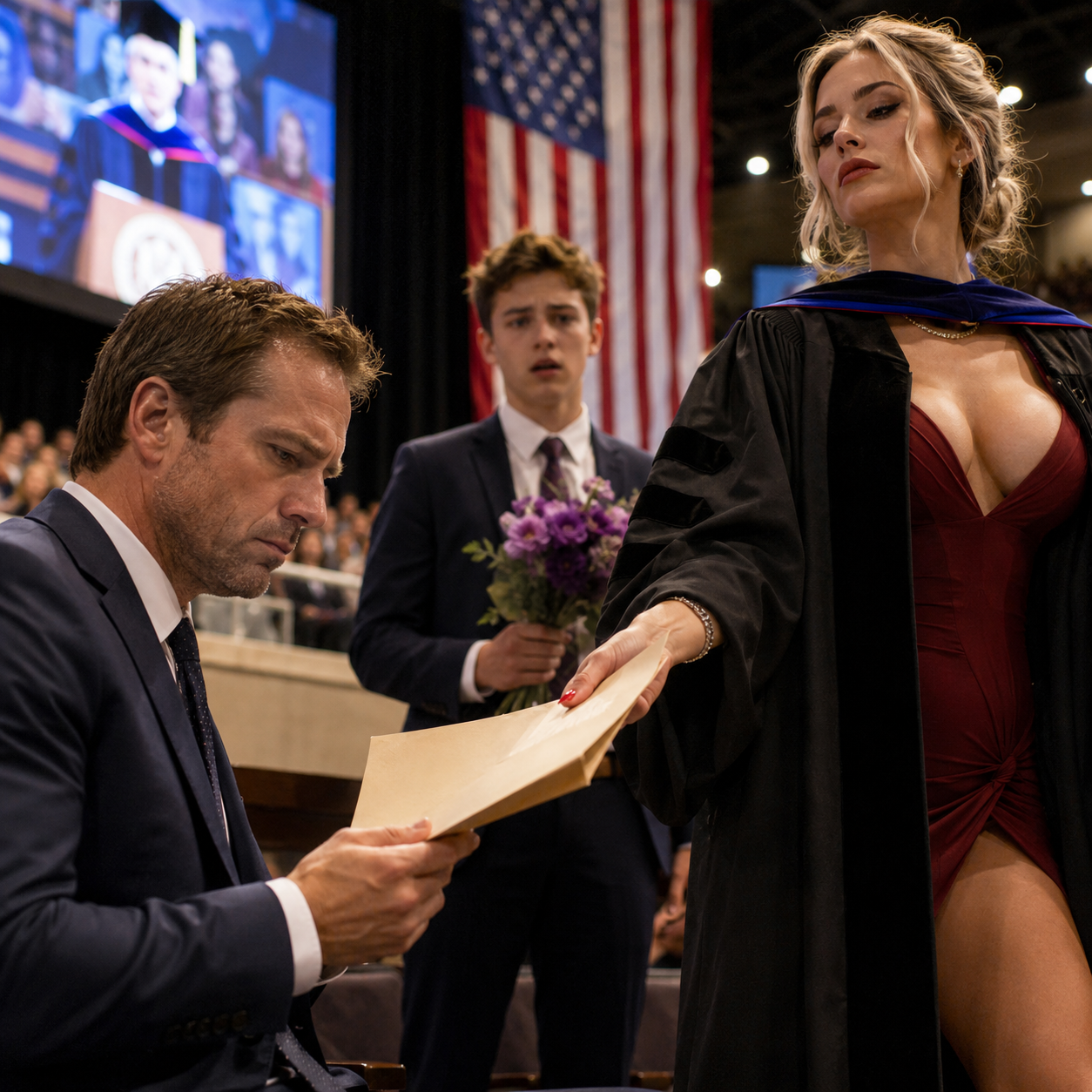
My wife texted, “I’m divorcing you next week.”
I calmly responded.
Then I filed first.
After that, I confirmed the prenup she insisted on was ironclad, invested everything that belonged solely to me, and waited.
Forty-eight hours after her lawyer got involved, he was the one panicking on the phone.
My name is Brian Anderson. I was thirty-eight years old when my marriage ended not with a screaming match, not with a tearful confession, not with a dramatic confrontation in the kitchen, but with a casual text message while I was staring at a quarterly budget projection on my monitor.
It was one of those soul-sucking spreadsheets that make your eyes blur after a while. Revenue projections, operating costs, new client onboarding expenses, software license renewals. The glamorous side of owning a small business, as I liked to joke. I had built my company before my marriage, back when my office was a secondhand desk in a rented room above a dentist’s practice and my idea of lunch was whatever protein bar hadn’t expired yet.
By the time Amanda sent that text, the company was stable, profitable, and finally growing into something bigger than survival.
Then my phone buzzed.
Amanda: Hey, just a heads up. I’m divorcing you next week. My lawyer will be in touch.
Just like that.
A casual bomb.
For a second, the numbers on the screen blurred. My brain did that strange thing where it tried to reject the words because they were too ridiculous to have arrived so neatly between two business emails. Divorce next week. Lawyer will be in touch. Like she was rescheduling a dentist appointment.
System reboot.
I sat back in my chair and stared at the message.
I had always been a planner. It was how I ran my business. It was how I managed risk. It was how I entered my marriage, though I used to tell myself that love was the one place where planning could soften into trust.
Amanda was different.
Amanda liked to say, “Let the universe decide.”
That sounded charming when we were younger. Spontaneous. Romantic. Free-spirited.
Later, I learned that people who say “let the universe decide” often still want control. They just want someone else to absorb the consequences when the universe sends an invoice.
We had been married seven years. The beginning had been good. Not perfect, because no marriage is, but good. She was beautiful, sharp, socially magnetic, the kind of woman who could make a dinner party feel more expensive just by laughing in the right places. She came from money, though not as much as she liked people to think. Her grandparents had left a trust fund with conditions, restrictions, and enough family oversight to keep her from burning through it all at once.
When we got engaged, Amanda insisted on a prenup.
At the time, it made sense. She had family money. I had a growing business I had started before we met. She said it was just to keep things clean. No messy fights. No uncertainty. No bitterness if life ever changed.
I remember her sitting across from me at a restaurant, sipping white wine, saying, “It’s not about distrust, Brian. It’s about being adults.”
She had her own lawyer.
I had mine.
We both had weeks to review everything.
She was enthusiastic about it then because she believed it protected her.
Years later, it would protect me.
My suspicions had been growing for months before that text. Amanda had started coming home later. She guarded her phone like it contained nuclear launch codes. She took weekend trips to “find herself,” which apparently required boutique hotels, expensive spas, and poor cell service. Conversations became shorter. Eye contact became rarer. She stopped asking about my business unless money was involved.
Then there were the withdrawals.
Small ones at first, from an old joint account I thought was basically dormant. A few hundred here. Eight hundred there. Then a thousand. Not enough to trigger a crisis individually, but enough to form a pattern.
I noticed because noticing was what I did for a living.
The Friday before Amanda’s text, I had already consulted Miss Donna.
Her full name was Donna Whitaker, but I had called her Miss Donna for years because she had been my attorney since the early days of my business and because calling her anything else felt disrespectful. She was in her early sixties, sharp as a blade, and had the kind of calm that made other lawyers nervous. She didn’t talk fast. She didn’t bluff. She didn’t waste adjectives.
When I sat across from her that Friday, she had the prenup open in front of her with a yellow legal pad beside it.
“This is very clean,” she said.
“That good?”
“For you? Extremely.”
Amanda had insisted on provisions that kept separate property separate. My business, founded before the marriage, remained mine. My premarital investment accounts remained mine, including any growth tied directly to those assets. Spousal support was waived by both parties. Joint accounts would be divided according to actual balances. Personal belongings stayed with their owner. Assets acquired together would be handled separately, but there were very few of those beyond household items and modest joint savings.
Amanda had signed an acknowledgment confirming she had independent counsel, time to review, no duress, and full understanding of the terms.
Miss Donna tapped that page with one manicured finger.
“She will have a hard time pretending she did not understand this.”
“She may try.”
“People try many things during divorce,” Miss Donna said. “That does not make them intelligent.”
That same Friday, following her advice, I initiated the process of reorganizing some of my separate assets. I liquidated a portion of premarital individual stock holdings and moved the proceeds into a new investment fund under my sole name, tied to the same separate-property chain documented in the prenup. Nothing hidden. Nothing fraudulent. Nothing pulled from marital money. Everything traceable.
Miss Donna also had divorce papers drafted.
Not filed.
Ready.
I still hoped, foolishly perhaps, for a conversation. A reckoning. A confession. Some final adult moment where Amanda would sit across from me and tell me what she wanted without pretending she had not already been building an exit behind my back.
Instead, she sent the text.
I read it once more.
Amanda: Hey, just a heads up. I’m divorcing you next week. My lawyer will be in touch.
I did not reply right away.
I called Miss Donna.
“She just made her move,” I said.
There was a pause, then the faint sound of papers shifting.
“File the papers now,” I said. “Expedite whatever you can.”
“Consider it done, Brian,” Miss Donna replied.
Her voice was crisp. Almost pleased.
Only after that did I type my response.
No need for him to reach out. My lawyer is filing as we speak. Papers should be served to your office by tomorrow at the latest.
Amanda replied almost immediately.
What? You filed? WTF? Brian, you can’t divorce me.
I stared at that sentence longer than the first one.
You can’t divorce me.
Not don’t.
Can’t.
That told me everything.
I typed back.
Consider it in progress. The prenup is ironclad, by the way. Hope you kept your copy safe. Miss Donna has mine, and it’s been thoroughly vetted.
Then, because I am not always as mature as I pretend to be, I forwarded her the broker confirmation that had landed in my inbox minutes earlier.
Subject: FYI.
Attached was the confirmation of trade executions and the personal portfolio update showing my separate assets had been successfully reinvested.
All perfectly legal.
All perfectly documented.
All beyond her reach.
Amanda did not respond.
I took screenshots of everything.
Saved them to the cloud.
Emailed them to Miss Donna.
Then I sat there for a minute, hands still on the keyboard, breathing through the strange absence of panic.
The shock was there, of course. You do not spend seven years married to someone and feel nothing when they casually announce they are leaving. There was grief too, though it arrived in fragments: Amanda laughing on our honeymoon, Amanda falling asleep on my shoulder during a flight delay, Amanda dancing barefoot in our kitchen years ago when my first major client signed.
But those memories were drowned by the coldness of her message.
She wanted a divorce next week.
She was about to find out it was happening today.
And not on the terms she had imagined.
The rest of the afternoon became a blur of calls with Miss Donna, emails, account reviews, password changes, and digital housekeeping. I secured access to accounts held solely in my name. I updated recovery emails. I checked business permissions. I downloaded statements. I made sure every financial “t” was crossed and every “i” had a receipt attached.
There is a particular calm that comes from knowing you are standing on paperwork instead of emotion.
By Wednesday morning, I woke up feeling strangely steady.
Amanda had called sixteen times overnight.
Her voicemails swung from rage to disbelief to something close to panic.
“How dare you?”
“That money is ours.”
“You don’t get to blindside me.”
“You are making a huge mistake.”
Blindside.
That word almost made me laugh.
Around midday, the official salvo arrived by email from her attorney, Mr. Timothy Vance.
He addressed the message to “Mr. Anderson” and copied Amanda using her maiden name, Amanda Davenport, which I assumed was meant to look formal and intimidating. It didn’t help that he sounded like a man who had learned aggression from legal dramas.
Mr. Anderson,
It has come to our attention that you have initiated divorce proceedings in a frankly underhanded and malicious manner. Your attempts to hide marital assets through last-minute investment schemes will not stand up to scrutiny. My client was under duress when signing the prenuptial agreement, and its validity will be vigorously contested.
We expect full disclosure, substantial spousal support, and fifty percent of your business interests by end of day tomorrow. Failure to comply will result in immediate court action to freeze all known assets.
Sincerely,
Timothy Vance
I read it twice.
Then I forwarded it to Miss Donna with one line.
Thought you’d enjoy this. He’s bold.
She called within ten minutes.
“Pure legal comedy,” she said.
I could hear the smile in her voice.
“Let me handle Mr. Timothy Vance. He is about to receive an education.”
I almost felt sorry for him.
Almost.
That evening, I walked through the house and saw it differently. The expensive candles Amanda liked on the console table. The imported throw blanket she said “elevated the living room.” The shoe boxes stacked near the guest closet. The framed wedding photo still sitting on the sideboard, both of us younger, both of us smiling like the future had signed a contract promising not to change.
I wondered when she had decided I was an obstacle instead of a husband.
Then I remembered the withdrawals.
The late nights.
The weekend trips.
The text.
And the question stopped hurting.
Thursday morning, Amanda showed up at the house.
I was on a video call with two clients when I saw her car pull into the driveway through the window beside my desk. I muted my microphone.
“Sorry, gentlemen,” I said. “Five-minute interruption.”
Then I watched Amanda use her old key and walk straight in.
I cursed myself.
In the whirlwind of the last thirty-six hours, changing the locks had not hit the top of the list. Miss Donna had focused on asset protection first. I had focused on accounts, paperwork, business access, and not doing anything stupid.
Amanda stormed into my home office without knocking.
“Brian, we need to talk.”
“I’m working.”
“This is more important.”
“No,” I said, calm enough to surprise both of us. “It is not. And this is no longer your house to just walk into. Miss Donna will contact your lawyer about retrieving your personal belongings. Supervised.”
Her face flushed.
“My lawyer says you’re trying to screw me.”
“Does he?”
“He says that prenup won’t hold.”
“Miss Donna finds it robust.”
Amanda hated that word immediately. I could tell.
“The prenup you insisted on,” I continued. “The one designed to protect separate assets. The one you wanted because you thought your trust fund made you the vulnerable party.”
Her mouth tightened.
“That money I spent was on us.”
“The Chanel bag for five thousand dollars was on us?”
She blinked.
“The solo spa weekends were on us? The withdrawals from the old joint account? The emergency fund in your name I wasn’t supposed to know about?”
Her face went pale for one brief second before anger rushed in to cover it.
“You can’t prove any of that.”
“I don’t need to prove anything for the prenup to say what it says.”
“You are being unbelievable.”
“No,” I said. “I am being exact.”
She hated that even more.
I leaned back in my chair.
“My financials are an open book per the agreement. I hope yours are too.”
Amanda crossed her arms, but it looked less like confidence now and more like bracing.
“You can’t just leave me with nothing.”
“Nothing?” I repeated. “You get your personal items. Your car, which I paid off. You’re welcome. Half the joint savings, about thirty-nine hundred dollars. Anything else legally owed under the agreement.”
Her jaw dropped.
“Thirty-nine hundred dollars? Are you insane? I need support.”
“Spousal support was waived.”
“I gave you the best years of my life.”
“And I gave you seven years of mine. We both had lawyers. You weren’t under duress.”
“You don’t understand,” she said, and for the first time her voice cracked. “I have expenses.”
“I know.”
That answer unsettled her.
I watched her decide whether to cry. Amanda had always been good at choosing emotion strategically, but that day the tears looked less controlled. Not sorrow, exactly. More like panic finally finding moisture.
“You’re being cruel, Brian.”
“Am I? Or am I adhering to the agreement you wanted?”
She stared at me.
I stood.
“You sent a divorce text like you were giving me a scheduling update. You made your choice. You just didn’t anticipate that I had already made mine in response.”
Her tears hardened into rage.
“You’ll regret this.”
“Maybe,” I said. “But I doubt it.”
She left by slamming the door hard enough to rattle the frame.
For a moment, the house went quiet.
There was a pang then. A small one. A flicker of the old instinct to run after her, smooth things over, make the room warmer, protect the woman I married from the consequences of the woman she had become.
Then I remembered her text.
The entitlement.
The lawyer’s email.
The way she had walked into my office as if ownership was a feeling.
The calm returned.
By the end of that day, Miss Donna emailed Mr. Timothy Vance her response.
It was a masterpiece of polite legal evisceration.
She cited specific clauses. Attached Amanda’s signed acknowledgment of independent counsel. Included the schedules listing my premarital assets and Amanda’s premarital assets. Explained that the recently reinvested funds were traceable to property explicitly defined as separate under the agreement. Reminded him that spousal support had been waived by both parties. Requested that future communications avoid unsupported accusations.
Then she ended with:
We trust this resolves any confusion caused by your client’s incomplete representations.
Confusion.
That was pure Miss Donna.
Timothy Vance shot back a shorter email later that night, still blustery, still doubling down on duress, now adding that the prenup might be unconscionable due to the current disparity in assets. He conveniently ignored the fact that Amanda’s net worth had been higher than mine at signing, at least on paper, thanks to the family trust she liked to discuss whenever it suited her.
Miss Donna replied before close of business.
More clauses.
More receipts.
Less patience.
By Friday morning, the last forty-eight hours had become very telling.
Amanda’s entitlement, fueled by her lawyer’s initial aggression, was hitting brick walls faster than she could blame someone else for building them.
The credit card company called Thursday afternoon. Amanda had tried to report a card tied to an old joint account as “frozen by my vindictive husband” after several large attempted purchases were declined. The fraud representative was polite. I explained that divorce proceedings had begun and directed them to Miss Donna for any documentation they needed.
Then my bank called.
Amanda had tried to withdraw the entire $7,800 from the joint savings account.
The teller flagged it.
Miss Donna moved quickly. The account was preserved for division, and Amanda apparently caused a scene in the branch, shouting about “her money” loudly enough that two people in line heard the word “prenup” and started pretending not to listen.
Mr. Timothy Vance’s latest angle was that my investments had been made with joint marital funds.
Miss Donna’s answer was immediate.
Please see Schedule A of the signed prenuptial agreement detailing Mr. Anderson’s premarital assets and Schedule B detailing Miss Davenport’s. The source of the recently invested funds aligns with Schedule A. We have all relevant brokerage statements. Perhaps your client is confused.
That Friday morning, I was drinking coffee at my kitchen island when my phone rang from an unknown number.
I let it go to voicemail.
Seconds later, a text came from Miss Donna.
Mr. Vance’s office. He is trying to reach you directly. Do not engage. He just called me. Voice several octaves higher than usual. I think the coffee and a careful read of our attachments finally sunk in.
I stared at her message and smiled.
Not happily, exactly.
More grimly.
A few minutes later, I called her.
“So,” I said, “Timothy’s enlightenment has arrived?”
Miss Donna chuckled.
“Brian, it seems Mr. Timothy Vance, or perhaps a competent paralegal in his office, finally digested the prenup alongside the statements we sent.”
“And?”
“His exact words were, ‘Miss Donna, there appears to have been a significant misunderstanding regarding our client’s representations of the asset delineation.’”
I nearly choked on my coffee.
“He said that?”
“He sounded like a man who had swallowed his own invoice.”
“What does that mean?”
“It means Amanda did not tell him the extent of what she signed away. Or that your brokerage account was yours before marriage. Or that all growth attached to that account remained separate property. He tried to pivot again to unconscionability, but I reminded him that her net worth was higher at signing and that she had independent counsel.”
“And he?”
“Deflated.”
I could picture it.
The aggressive email writer realizing he had sprinted into a wall his own client failed to mention.
“Then came the best part,” Miss Donna said.
“Of course there’s a best part.”
“He asked whether you would be willing to renegotiate spousal support out of goodwill because Amanda is facing unexpected financial hardship and has certain lifestyle expectations.”
I laughed out loud.
Not a polite laugh.
A real one.
Lifestyle expectations.
After the text.
After the attempted withdrawal.
After accusing me of hiding assets.
After demanding half my business.
“Did you remind him?” I asked.
“Oh, I did,” Miss Donna said. “I suggested that Amanda’s financial hardship appears to be a direct consequence of her actions and her misunderstanding of a binding document she enthusiastically signed. I also informed him that any goodwill evaporated with her initial text and the baseless allegations that followed.”
“What did he say?”
“He mumbled something about discussing options with his client.”
“He’s panicking.”
“He’s defeated,” Miss Donna corrected. “There is a difference.”
That sentence stayed with me.
Amanda had thought her lawyer would scare me into negotiating.
Instead, her lawyer had discovered he was representing a woman who had built her entire plan on not reading the agreement she once demanded.
That weekend, I changed the locks.
Finally.
I also changed alarm codes, removed Amanda’s access to shared digital services, updated business emergency contacts, and packed her personal belongings into labeled boxes in the guest room. I did not touch anything that could reasonably be disputed. I did not throw away sentimental items. I did not damage anything. Every box was photographed. Every valuable item logged.
Miss Donna called it “boring and beautiful.”
That was exactly how I wanted the divorce to be.
Boring.
Documented.
Undeniable.
Amanda did not want boring.
She wanted chaos because chaos had always worked for her. She was good in chaos. She could cry, accuse, charm, spin, call people cruel, imply things, rewrite timelines, make everyone feel responsible for her distress.
But paperwork does not care how attractively someone cries.
Over the next two weeks, her voicemails became a rotating performance.
First came pleading.
“Brian, please. We can work this out. I made a mistake.”
Then rage.
“You’re a monster. You’re trying to leave me with nothing.”
Then bargaining.
“Okay, okay, I get it. The prenup. But surely you can give me something more for old times’ sake. I don’t know how I’m going to live.”
Old times’ sake.
Apparently old times’ sake had not extended to not ambushing me by text.
Nothing, of course, was an exaggeration.
She would leave with her paid-off late-model SUV. Her personal belongings, which included a truly staggering amount of designer clothes, bags, shoes, cosmetics, and jewelry. Her half of the joint account. Whatever other property was clearly hers under the agreement.
What she would not get was my company.
That was the real injury.
Amanda genuinely believed that despite the prenup explicitly stating my business was my separate property, she was entitled to a major piece of it because she was my wife and had “supported me emotionally.”
Support, which had become increasingly hard to locate over the previous year.
Support, which apparently looked like contempt, mysterious weekend trips, secret withdrawals, and a lawyer demanding fifty percent of something she had signed away years earlier.
A month after the infamous text, the dust began settling into what I can only describe as a fine layer of oh God, what have I done on Amanda’s side.
Mr. Timothy Vance tried a few more desperate angles.
There was a letter suggesting emotional distress caused by my “precipitous and unfeeling divorce filing,” conveniently ignoring the fact that Amanda had texted me she was divorcing me before I filed.
Miss Donna shut that down by pointing out that preparing for divorce when one suspects infidelity, financial subterfuge, and hostile legal action is not unfeeling.
It is prudent.
Then he floated the idea of a modest settlement to “avoid unpleasantness in court.”
My response through Miss Donna was simple.
The prenup is the settlement. There will be no further negotiation.
That was the beginning of the end.
Amanda’s official capitulation came the following week. Her attorney signed off on the divorce agreement, which was, surprise surprise, exactly what the prenup stipulated.
No spousal support.
No claim on my business.
No claim on my investments.
No claim on my premarital assets.
Division of joint property only.
A clear path forward.
No dramatic courtroom showdown.
No judge banging a gavel while gasping at evidence.
Just signatures.
That was almost better.
I heard through a mutual acquaintance, who had quickly become more my acquaintance than hers, that Amanda moved in with her sister after realizing her financial runway was shorter than she had expected. The “independent woman fund” she had been siphoning money into apparently wasn’t as substantial as she hoped. Or maybe it had already been earmarked for whatever future she had been planning without me.
As for the trust fund from her grandparents, the one she had used for years as evidence that she didn’t need anyone?
Turns out there were strings.
Many strings.
Access was limited, and her parents still had influence. They were old-fashioned people in ways Amanda found charming when it benefited her and suffocating when it didn’t. They believed in commitment. They believed in consequences. They were not thrilled when they learned the circumstances of the divorce, especially after Miss Donna’s documentation made it impossible for Amanda to sell the story as poor abandoned wife versus vindictive husband.
Her lifestyle expectations took a nosedive.
No more weekly salon blowouts.
No more thousand-dollar shopping sprees.
No more leisurely lunches at trendy spots she could not afford on her own salary.
No more spa weekends disguised as “self-care retreats.”
No more assuming Brian would quietly pay the bill because Brian always had.
There was one last sad attempt at manipulation a few days after the agreement was finalized.
Amanda texted me from a number I had not blocked yet.
I’m really struggling, Brian. I might lose my apartment. I don’t know what to do.
I stared at the message for a long time.
There was a small, stupid part of me that felt a flicker of pity.
Of course there was.
I had loved her. I had built seven years of routines around her. I knew how she took her coffee, what songs made her cry, what childhood stories she told when she had too much wine. You do not stop caring about someone overnight just because they made it easier to leave.
But then I remembered the coldness of her divorce text.
The arrogance of her lawyer’s first demand.
The attempts to portray me as the villain.
The bank scene.
The credit card call.
The way she had tried to step over the agreement she once championed because the terms no longer favored her.
She had made her bed.
A very expensive, poorly planned bed.
I did not reply.
I blocked the number.
That night, I slept better than I had in months.
Life after Amanda was not instantly joyful. That is not how endings work. Anyone who tells you they walked out of a seven-year marriage and immediately felt triumphant is either lying or had already been dead inside for a long time.
I grieved.
Quietly.
Sometimes inconveniently.
A song would come on in the grocery store, and I would remember a road trip we took in year two. I would open the wrong cabinet expecting to see her vitamins. I would reach for my phone to tell her something funny before remembering she was no longer the person I told things to.
But underneath the grief was something steadier.
Relief.
My business thrived because I had energy again. Real energy. The kind I had forgotten existed. I worked smarter. I took calls without bracing for whatever mood I would come home to. I saw friends I had neglected because Amanda found them boring or “not our level.” I made dinner for myself and realized I liked silence when it wasn’t punishment.
The investment fund I moved before everything exploded continued performing well. It was up 3.5 percent in the first week, and it kept climbing steadily after that. I will not pretend that didn’t feel good.
It did.
Not because Amanda would never see the money, though that was a nice little cherry on top.
It felt good because it represented something bigger.
I had acted before panic could make me sloppy.
I had protected what was mine.
I had trusted my instincts.
For years, I had allowed Amanda to treat planning as boring, caution as paranoia, and financial discipline as something less glamorous than her “let the universe decide” philosophy.
Then the universe decided.
And it decided in favor of the man with documentation.
A few months after the divorce was final, I received a letter from Amanda.
Not a text.
Not a voicemail.
An actual letter, written in her careful handwriting on expensive stationery that still smelled faintly like her perfume.
For a moment, I considered throwing it away unopened.
Instead, I read it.
She said she was sorry.
She said she had been unhappy and afraid to admit it.
She said she had resented the way my business became more stable while her life felt smaller than she imagined it would be. She said she had convinced herself that leaving dramatically would make her feel powerful. She said her lawyer had misunderstood things because she had described them “emotionally, not legally,” which was one of the more Amanda sentences I had ever read.
She did not fully admit to an affair.
She referred vaguely to “emotional confusion” and “outside validation.”
Close enough.
Near the end, she wrote:
I thought the prenup meant I was safe. I never thought it would be the thing that proved how badly I had miscalculated.
That was the only line that felt completely honest.
She asked if we could meet for coffee someday, not to reconcile, just to “end with kindness.”
I sat with the letter for an hour.
Then I placed it in a folder with the divorce papers.
I did not respond.
Maybe that sounds cold.
But I had learned something important.
Closure is not always a conversation.
Sometimes closure is refusing to reopen a door just because the person who slammed it didn’t like what was on the other side.
One year after the divorce text, I took a Friday off and drove to the coast alone.
Amanda had always wanted vacations to be impressive. The right hotels. The right restaurants. The right pictures. This time, I rented a small beach cottage with unreliable Wi-Fi and a porch that faced the water. I brought books, a notebook, and no expectations.
On the second morning, I woke before sunrise and walked barefoot along the shoreline with coffee in a travel mug. The beach was nearly empty. Just gulls, gray water, and a few early runners moving like shadows in the mist.
I thought about the man I had been when the phone buzzed beside that quarterly spreadsheet.
I thought about how quickly a life can split into before and after.
I thought about Amanda’s first text and my first reply.
She started it with a message.
I ended it with a signature.
But the truth was, our marriage had ended long before either of those things. It ended in the late nights, the secret withdrawals, the contempt disguised as independence, the assumption that I would keep paying for a life she was already planning without me.
The text just gave me permission to stop pretending.
Someone asked me once if I felt bad about how everything turned out.
I told them I felt justified.
Not happy in a jumping-for-joy kind of way.
Not triumphant in the way people imagine revenge feels.
Just justified.
There is peace in knowing you did not start the fire, but you did know where the exits were.
Amanda gambled, thinking she had the winning hand. She believed being the first to say divorce meant controlling the story. She believed her lawyer’s aggression could scare me into ignoring the document she had signed. She believed my quietness meant hesitation.
She did not realize I had already seen her cards.
And she had forgotten I was holding the ace she handed me years earlier.
The prenup.
The one she wanted.
The one she signed.
The one that protected exactly what it said it would protect.
Today, my house is mine again. The locks are changed. The closets are organized. The expensive decorative pieces Amanda insisted made the house feel “elevated” have been replaced by things I actually like. My office is quiet. My business is thriving. My friends come over for dinner without anyone making them feel beneath the room.
Sometimes I still feel the amputation of seven years.
But I no longer mistake pain for regret.
Amanda taught me something valuable, though not in the way she intended. She taught me that love without respect becomes a liability. She taught me that agreements matter most when people stop being kind. She taught me that calm is not weakness and preparation is not cruelty.
Natural consequences are the best kind.
No screaming was required.
No dramatic courtroom showdown.
No revenge campaign.
Just the quiet, methodical execution of a well-laid plan and a pre-existing agreement.
She thought she was divorcing me next week.
I divorced her first.
She thought my business was up for grabs.
It wasn’t.
She thought her lawyer would scare me.
He ended up calling mine in a panic.
She thought I would fold because I had loved her.
She forgot that loving someone does not require financing their betrayal.
And honestly?
I sleep pretty damn well these days.

![[FULL STORY] She Snapped: "Quit Acting Like We're Married, You Don't Control Where I Go or Who I’m With " The](https://social-media.rabedo.com/thumbnails/1776734860_12.png)


![[FULL STORY] My Fiancée's Dad Declared: "Agree to This Agreement for Her Education Debt, or the Marriage Is](https://social-media.rabedo.com/thumbnails/1776919022_8.png)