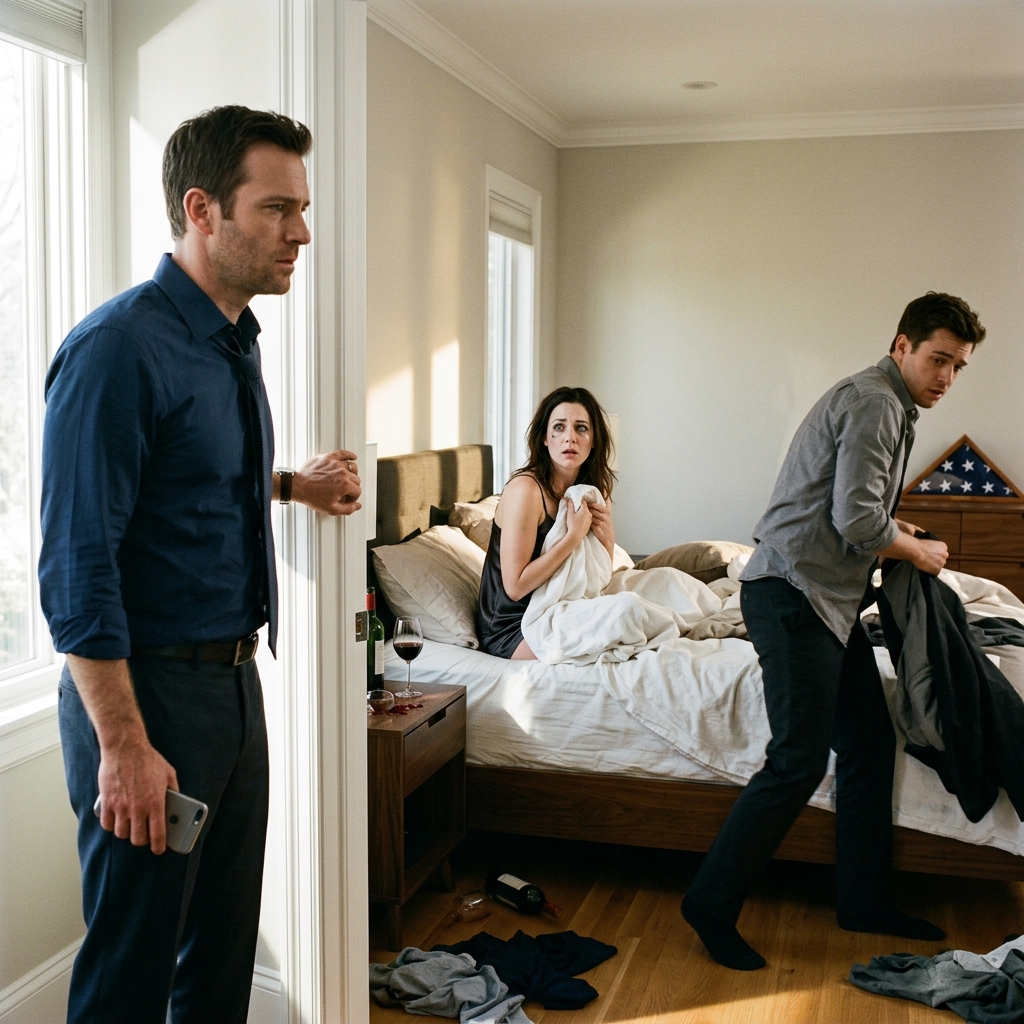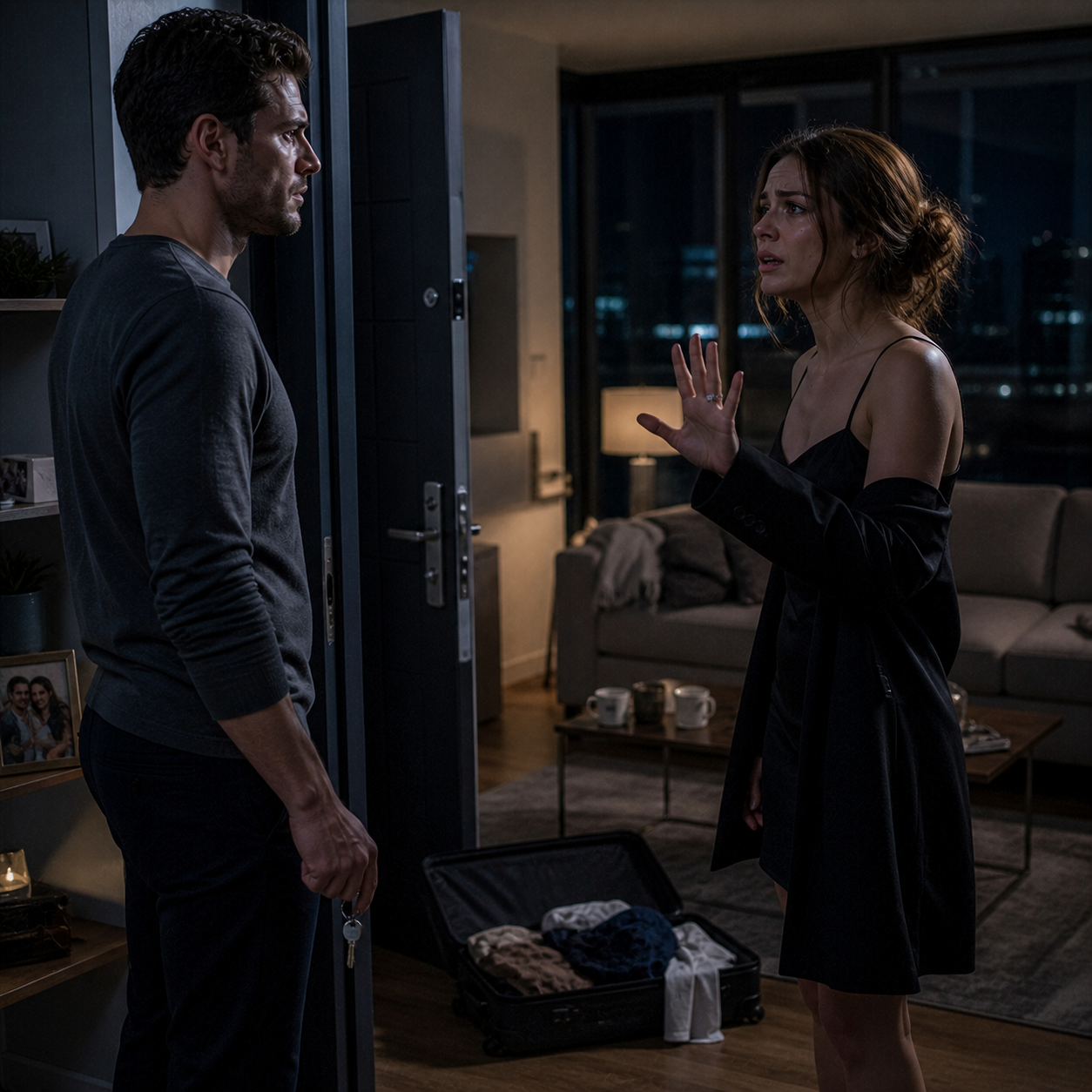

She looked rested. More than rested, actually. Glowing. Her cheeks had color. Her eyes were bright. She smelled like that amber-jasmine perfume.
“Good retreat?” I asked.
She hesitated for half a second. “Yeah. Really good.”
I hugged her. She hugged me back, but not with the desperate tightness from Friday. This time, she seemed calm. Almost peaceful.
For the next few days, she talked about the retreat in vague, pretty words. Renewal. Sisterhood. Reflection. Surrender. She mentioned a lakeside prayer circle, a session about forgiveness, a bonfire where everyone shared burdens.
But when I asked practical questions, the details got blurry.
“How was the lake house?”
“Beautiful.”
“What was the food like?”
“Simple. You know, retreat food.”
“Who all went?”
“The usual group. Megan, Rachel, Lisa, some newer women.”
“Did Pastor Diane preach?”
“She led most of it, yes.”
Nothing she said sounded impossible. But none of it sounded lived-in either. It sounded like a person describing a place from a brochure.
Still, I let it go.
Life returned to normal.
Or at least I thought it did.
Three weeks later, the phone call came.
It was a Wednesday afternoon. I had taken half a day off work because Milo had a vet appointment. Afterward, I stopped at home to drop him off before heading back to the office. I was standing in the kitchen, pouring coffee into a travel mug, when the landline rang.
We barely used the landline anymore. Mostly telemarketers, doctor reminders, or my mother calling because she still believed cell phones caused brain fog.
I almost ignored it.
Then I picked up.
“Hello?”
“Good afternoon,” a polished male voice said. “May I speak with Mr. or Mrs. Reynolds?”
“This is Mr. Reynolds.”
“Wonderful. My name is Thomas Ellery, guest relations manager at The Bellamy Resort and Spa. I’m calling regarding your recent stay with us.”
I frowned. “I’m sorry, I think you have the wrong number.”
There was a pause. Papers shuffled faintly on his end.
“My apologies, sir. Is this Mark Reynolds?”
“Yes.”
“And your wife is Emily Reynolds?”
My fingers tightened around the phone. “Yes.”
“Then I believe I do have the correct reservation. I’m calling as a courtesy because Mrs. Reynolds had asked about our anniversary package during checkout. We wanted to offer a preferred guest rate if you wished to extend or rebook the honeymoon suite for another weekend.”
For a moment, I thought I had misheard him.
“The what?”
“The honeymoon suite, sir.”
I stared at the kitchen wall. Milo’s leash was still hanging over the chair. The coffee mug sat untouched on the counter.
“I’m sorry,” I said slowly. “When exactly was this stay?”
“One moment.” Another pause. “April tenth through April twelfth.”
The church retreat weekend.
My mouth went dry.
“And this was under my wife’s name?”
“Yes, sir. Emily Reynolds. The booking was for two guests.”
I could hear my own heartbeat.
“Two guests,” I repeated.
“Yes, sir.”
“And you’re saying I was listed on the reservation?”
Another pause, longer this time. His professional tone shifted slightly, like he sensed something was wrong.
“The reservation notes included Mr. and Mrs. Reynolds, yes. I apologize if there has been some confusion.”
I looked down at my left hand. My wedding ring caught the kitchen light.
“No,” I said quietly. “There has definitely been some confusion.”
Mr. Ellery cleared his throat. “I’m very sorry, sir. Would you like me to remove your number from our follow-up list?”
“No,” I said. “Actually, could you email me a copy of the invoice?”
“I’m afraid we can only send billing details to the email on file.”
“What email is on file?”
He hesitated. “For privacy reasons, I can confirm only if you provide it.”
I gave him Emily’s personal Gmail.
“That is correct,” he said.
Of course it was.
“Send it there,” I said. “Thank you.”
I hung up before my voice could break.
For several minutes, I did not move.
The Bellamy Resort and Spa was not a lake house. It was not a humble church retreat. It was a luxury mountain resort two hours away, known for couples’ packages, private balconies, champagne breakfasts, and suites with fireplaces. I knew because Emily had once shown me photos of it years earlier and said, “Maybe someday, for an anniversary.”
Apparently someday had come.
Just not with me.
My first instinct was to call her.
My second instinct was to drive to her school and demand answers in the parking lot.
My third instinct, the one I followed, was to sit down at the kitchen table and breathe until I could think.
Anger came first, hot and clean. Then disbelief. Then a strange, humiliating shame, as if I had done something wrong by being deceived.
I opened my laptop and searched The Bellamy Resort. The homepage showed exactly what I feared: candlelit balconies, couples holding hands, rose petals on white sheets, a smiling bride in a bathrobe. The honeymoon suite was advertised with a king bed, private terrace, mountain view, oversized soaking tub, complimentary champagne, and breakfast for two.
Breakfast for two.
Two guests.
Mr. and Mrs. Reynolds.
Except I had spent that weekend eating chili alone while my wife sent me heart emojis from another man’s bed.
I checked Emily’s social media. Nothing. No tagged photos. No retreat posts. No women’s ministry group pictures.
Then I checked the church’s Facebook page.
There was no mention of a women’s retreat that weekend.
Maybe they didn’t post everything, I told myself. Maybe the retreat had been private. Maybe The Bellamy had made an error. Maybe Emily had gone there with the church group for some reason.
The lies we tell ourselves at the edge of pain are almost tender.
I called the church office.
A receptionist named Linda answered.
“Hi,” I said, trying to sound normal. “This is Mark Reynolds, Emily’s husband. I was wondering if Pastor Diane is available?”
“She’s in a meeting right now. Can I take a message?”
“It’s not urgent,” I said. “I just had a quick question about the women’s retreat from April tenth to twelfth.”
There was a small pause.
“The women’s retreat?”
“Yes.”
“I don’t believe we had one that weekend.”
My grip tightened on the phone.
“Are you sure?”
“Yes, sir. The women’s spring retreat was actually postponed. Pastor Diane’s mother had surgery, so it was moved to June.”
The kitchen seemed to tilt.
“June,” I repeated.
“That’s right.”
“Okay,” I said, my voice suddenly far away. “Thank you.”
I ended the call and sat there staring at nothing.
There it was.
Not confusion. Not a reservation mistake. Not a church retreat at a fancy resort.
A lie.
A deliberate, planned, carefully decorated lie.
Emily came home that evening around five-thirty. I heard her key in the door and felt my entire body go still.
“Hey,” she called. “I brought Thai food.”
Milo ran to greet her. I stayed at the kitchen table.
She appeared in the doorway holding takeout bags, smiling. “You okay?”
I looked at her. Really looked at her.
Same soft brown hair. Same gentle eyes. Same woman who had held my hand during my grandfather’s funeral. Same woman who had cried when we adopted Milo. Same woman who had promised before God, our families, and everyone we loved to forsake all others.
And suddenly, she looked like a stranger wearing my wife’s face.
“Yeah,” I said. “Long day.”
She set the food down. “Mine too.”
I almost laughed.
Instead, I smiled faintly and said, “Let’s eat.”
That night, I did not confront her.
I watched her talk about a difficult parent meeting at school. I watched her feed Milo a tiny piece of chicken when she thought I was not looking. I watched her rinse plates and hum worship music under her breath.
The performance was flawless.
Maybe it had always been flawless.
When she went upstairs to shower, she left her phone on the coffee table.
Before that day, I had never gone through Emily’s phone. Not once. I knew her passcode because we had the kind of marriage where phones were supposed to be boring. Birthdays, grocery lists, dog photos, church group chats.
My hands shook as I picked it up.
The passcode still worked.
There were no obvious messages. No strange names. No dating apps. No incriminating photos in her camera roll.
Then I checked deleted messages.
There was a thread with a contact saved as “Diane W.”
Pastor Diane.
Except the messages did not sound like a pastor.
I restored the thread with my thumb trembling.
The most recent message was from three days earlier.
Diane W: Still thinking about our weekend. I miss waking up next to you.
Emily: Don’t say that. It makes it harder to go back to normal.
Diane W: Maybe normal is the problem.
Emily: Please don’t start.
Diane W: You know I love you.
I stared at the screen until the words blurred.
Diane W.
Not Pastor Diane.
Someone saved under Pastor Diane’s name.
I scrolled up.
There were months of messages.
Some emotional. Some flirty. Some explicit enough that I felt physically sick. But the worst were not the sexual ones. The worst were the ordinary ones.
Did you eat lunch?
I wish I could hold your hand at church.
He has no idea, does he?
I hate lying to him, but I can’t lose you.
One message from Emily made something inside me go cold.
Mark is a good husband. That’s what makes this impossible.
Not I love my husband.
Not I made a mistake.
Mark is a good husband.
Like I was a problem made inconvenient by decency.
I found photos hidden in a private folder. Emily on a resort balcony wearing the cream dress she had bought for the “retreat.” Emily holding a champagne flute. Emily smiling at someone behind the camera with a look I recognized because she used to look at me that way.
Then I found the man.
His name was not Diane. His name was Daniel Westbrook.
He was a worship guitarist at our church.
Thirty-two years old. Recently divorced. Handsome in that careless way some men are, with dark hair, tired eyes, and a permanent expression of wounded sincerity. I knew him. We had shaken hands. I had complimented his music. Once, after service, I helped him carry speakers to his truck.
He had been in my house for a Christmas small group dinner.
He had stood in my kitchen drinking cider while my wife laughed at something he said.
I put the phone back exactly where I found it.
When Emily came downstairs in pajamas, her hair damp from the shower, I was sitting on the couch with the TV on. She curled beside me like nothing had changed.
“Can we watch something light?” she asked. “My brain is fried.”
I looked at her hand resting on my arm.
“Sure,” I said.
That night, I lay awake beside her until sunrise.
She slept peacefully.
I did not sleep at all.
The next morning, I called in sick. After Emily left for work, I made coffee and began gathering evidence.
It sounds cold when I say it like that. Evidence. As if my marriage had become a legal file. But some instinct told me that if I confronted her with only emotion, she would twist it, minimize it, cry, apologize, explain, confuse me. I knew Emily. She was gentle, but she was persuasive. She could make betrayal sound like pain. She could make deception sound like fear. She could make me feel guilty for discovering what she had done.
So I documented everything.
Screenshots from the restored messages. Photos from the hidden folder. The call log from The Bellamy. The church confirmation that no retreat had happened. Credit card statements showing charges I had overlooked because we kept partly separate accounts. A boutique purchase for the cream dress. A charge at a wine bar near the resort. Gas station receipts along the route to the mountains.
Then I looked up Daniel.
His public Instagram was mostly worship music, sunsets, Bible verses, and vague posts about healing after heartbreak. But his tagged photos told a different story. In one picture from February, Emily’s reflection was faintly visible in the window behind him at a coffee shop. In another, her hand appeared at the edge of a table, wearing the bracelet I gave her for our third anniversary.
I felt like a detective in the ruins of my own life.
By noon, I had enough.
By two, I had called an attorney.
Her name was Patricia Hale. She had handled my coworker’s divorce the year before. Calm voice, sharp questions, no nonsense. I sat in her office the next day with a folder in my lap and embarrassment burning in my chest.
“I feel ridiculous,” I admitted.
Patricia looked at me over her glasses. “You feel betrayed. That is not the same thing.”
I handed her the folder.
She reviewed the material quietly. Every page she turned felt like another nail closing something.
Finally, she said, “North Carolina allows divorce after one year of separation. Adultery can matter in certain claims, especially post-separation support and alimony, depending on circumstances. But before you do anything dramatic, protect your finances and your documentation.”
“I don’t want to destroy her,” I said.
Patricia’s expression softened slightly. “Then don’t. But do not confuse mercy with leaving yourself exposed.”
That sentence stayed with me.
For the next week, I lived two lives.
In one, I was Emily’s husband. I kissed her goodbye. Asked about her day. Took out the trash. Sat beside her at dinner.
In the other, I quietly opened a separate bank account, copied financial records, checked mortgage details, changed passwords, backed up evidence, and followed my attorney’s advice exactly.
The hardest part was church.
On Sunday, Emily wanted to attend service like usual.
I almost refused. Then something in me decided I needed to see them together.
Daniel stood on stage with his guitar, eyes closed, singing about surrender. Emily stood beside me, hands raised slightly, her face lifted in worship. From the outside, they looked like two sincere believers among many.
Then Daniel opened his eyes.
For half a second, he looked at Emily.
It was quick. Almost invisible. But I saw it.
So did she.
Her throat moved as she swallowed.
I stood there in the sanctuary, surrounded by hymns, with a kind of cold clarity settling into my bones.
They were not just lying to me.
They were using the safest parts of my life as cover. Church. Friendship. Prayer. Service. Community. They had hidden betrayal inside trust and dared to call it complicated.
After service, Daniel approached us.
“Hey, Mark,” he said, smiling with that humble, wounded expression. “Good to see you, man.”
He held out his hand.
I looked at it for one second too long before shaking it.
“Daniel,” I said. “How are you?”
“Can’t complain. God is good.”
Emily looked at the floor.
I smiled. “Isn’t He?”
Daniel’s smile faltered.
Small victories are strange when your heart is broken.
The confrontation happened the following Friday.
Not because I planned it for that day, but because Emily made a mistake.
She told me she had a late meeting at school.
At 6:20 p.m., I got a notification from our shared bank account for a charge at a restaurant downtown. A small Italian place with dim lighting and private booths. Not a school.
I drove there.
I don’t remember deciding to. One minute I was standing in the kitchen looking at the notification, and the next I was parking across the street from the restaurant with my hands gripping the steering wheel.
Through the window, I saw them.
Emily and Daniel sat in a corner booth. Her hand was on the table. His fingers covered hers. She was crying softly, and he was leaning toward her like he was the only person in the world who understood her.
For a moment, I just watched.
There was no rage then. No screaming impulse. Just a deep, exhausted sadness.
I walked inside.
The hostess smiled. “Table for one?”
“No,” I said. “I see my wife.”
Emily looked up when I reached the booth.
The color drained from her face so quickly it was almost violent.
Daniel pulled his hand away.
“Mark,” Emily whispered.
I looked at the table. Two glasses of red wine. One half-eaten plate of pasta. Her wedding ring on her finger, shining under the soft restaurant light like an insult.
“Late meeting?” I asked.
She opened her mouth, but no sound came out.
Daniel stood halfway. “Mark, listen—”
“Sit down,” I said.
He froze.
I had never spoken to anyone like that before. Calm. Quiet. Final.
Daniel slowly sat.
Emily’s eyes filled with tears. “I can explain.”
“I know,” I said. “That’s what scares me.”
Her face crumpled.
I placed a folded paper on the table. A copy of the Bellamy Resort invoice.
The honeymoon suite. Two guests. April tenth through twelfth.
Emily looked at it, then at me, and whatever lie she had been preparing died before reaching her lips.
“How long?” I asked.
She pressed a hand to her mouth.
“How long, Emily?”
Daniel said quietly, “It’s not that simple.”
I turned to him. “I didn’t ask you.”
He looked away.
Emily was crying now. “Since January.”
I breathed in slowly.
Four months.
Four months of secret messages, hidden meetings, fake church events, carefully rehearsed lies.
“Was the retreat ever real?”
She shook her head.
“Did Megan know?”
“No.”
“Did anyone know?”
She hesitated.
That hesitation told me enough.
“Who?” I asked.
“Rachel suspected,” she whispered. “But I told her it was emotional confusion. I said we were praying through it.”
I laughed once, without humor.
“Praying through adultery in a honeymoon suite. That’s creative.”
She flinched.
Daniel’s jaw tightened. “You don’t need to humiliate her.”
I looked at him for a long moment.
“You helped another man’s wife lie about a church retreat so you could take her to a resort honeymoon suite,” I said. “Humiliation is the most generous thing you deserve.”
People nearby had gone quiet. The restaurant seemed to hold its breath.
Emily reached for my hand. I stepped back.
“Mark, please,” she said. “I never meant for it to become this.”
“That’s the part I don’t understand,” I said. “What did you mean for it to become?”
She sobbed softly. “I was lonely.”
The word hit me harder than I expected.
Lonely.
Not because it was impossible. Maybe she had been. Maybe I had missed things. Maybe our marriage had become too quiet, too routine, too predictable. Maybe I had failed her in ways I did not see.
But loneliness does not book a honeymoon suite.
Loneliness does not create fake retreats.
Loneliness does not save another man’s number under a pastor’s name.
Loneliness does not come home glowing and kiss your husband with resort perfume still on your skin.
“You could have told me,” I said.
“I was afraid.”
“Of what?”
“Of hurting you.”
That time, I did smile. It felt like something breaking.
“No,” I said. “You were afraid of consequences. Hurting me was never the problem. You did that just fine.”
Her crying became harder.
I placed a second envelope on the table.
Inside was a letter from my attorney outlining separation terms.
Emily stared at it.
“What is this?”
“The beginning of honesty,” I said.
Daniel looked alarmed. “Mark, come on. This is between you and Emily.”
I turned to him. “You made yourself part of my marriage. Don’t get shy now.”
Emily whispered, “Are you divorcing me?”
I looked at my wife, at the woman I had loved through flu seasons and bad days and quiet mornings. The woman who knew how I took my coffee. The woman who had once cried during our vows. The woman who had turned my trust into a hiding place.
“I’m separating from you,” I said. “The divorce will come after that.”
She shook her head frantically. “No. Please. Let’s talk at home. Please, Mark. Not like this.”
“I tried home,” I said. “You brought Daniel there for Christmas.”
Her face collapsed into fresh shame.
I stepped back from the booth.
“You can come by tomorrow while I’m there to pack a bag. After that, communication goes through email or attorneys.”
“Mark,” she pleaded.
I wanted to comfort her. That was the sickest part. Some old husband-instinct still wanted to kneel beside her and say it would be okay.
But it was not okay.
And I was finally done pretending.
I walked out of the restaurant alone.
That night, Emily called twenty-three times.
I did not answer.
She texted until after midnight.
Please come home.
I love you.
I made a terrible mistake.
It wasn’t just sex.
I was confused.
Daniel made me feel seen.
I never stopped loving you.
Please don’t tell anyone.
That last message told me more than all the others.
Please don’t tell anyone.
Not please don’t leave.
Not please let me repair this.
Please protect my image.
The next morning, I packed her things into the guest room. Not cruelly. Not dramatically. Clothes folded. Toiletries boxed. Jewelry placed carefully on the dresser.
When she arrived, she looked like she had not slept. Her eyes were swollen. Her hair was pulled into a messy bun. She wore no makeup.
For one painful second, she looked like the Emily I used to know.
“I ended it,” she said as soon as she stepped inside.
I stood in the hallway. “That’s your decision.”
“I told Daniel we can’t see each other.”
“Okay.”
“Mark, please don’t be cold.”
“I’m not being cold,” I said. “I’m being controlled.”
She started crying again. “I know I don’t deserve forgiveness right now. But please don’t throw away our marriage without trying.”
That sentence almost broke me.
Because I had tried. I had tried every day I trusted her. I had tried when I believed her stress was pain. I had tried when I gave her space. I had tried when I cheered for her retreat. I had tried when I sat across from her at dinner knowing she had betrayed me and still gave her one more night of peace before everything changed.
“I didn’t throw it away,” I said quietly. “You did. I’m just refusing to live in the trash with it.”
She recoiled like I had slapped her.
Then came the apologies. The explanations. The childhood wounds. The pressure of church expectations. The loneliness. Daniel’s divorce. Their emotional connection. The first coffee. The first kiss. The guilt. The thrill. The shame. The way she kept telling herself it would end.
I listened.
Not because it changed anything, but because a part of me needed to hear the whole ugly shape of it.
When she finished, I asked one question.
“Did you love him?”
She looked down.
That was answer enough.
She packed in silence.
Before she left, she turned at the door.
“Did you ever really love me?” she asked.
The unfairness of it stunned me.
“Yes,” I said. “That’s why this hurts.”
She nodded, tears slipping down her face, and walked out.
The church found out two days later.
Not from me blasting them online. Not from some dramatic public revenge. I simply requested a meeting with Pastor Diane, the real one, and two elders. I brought documentation because I was done letting hidden things survive on vague language.
Pastor Diane looked devastated.
Daniel was immediately removed from the worship team pending review. Emily stepped down from women’s ministry. Rachel, who had suspected more than she admitted, sent me a long message apologizing for not speaking up sooner.
I did not respond.
Some people tried to soften it.
“We all fall short.”
“Marriage is worth fighting for.”
“Forgiveness is important.”
“Daniel was vulnerable after his divorce.”
“Emily must have been in a dark place.”
I learned then that betrayal makes people uncomfortable because it forces them to choose between truth and peace. Many choose peace and call it grace.
But real grace does not require the betrayed person to bleed quietly so everyone else can keep their illusions.
My parents were heartbroken. My mother cried harder than I did at first. My father sat beside me on the back porch one evening and said nothing for almost ten minutes.
Then he said, “You don’t have to hate her to leave.”
That became the sentence I carried through the next year.
I moved into a small rental house across town during the separation. Emily stayed in our home temporarily while we worked through legal arrangements. Milo came with me because Emily admitted she could not handle caring for him while staying with her sister.
Those first months were brutal in quiet ways.
Grief did not arrive like a storm. It arrived like routine.
I reached for two mugs in the morning before remembering I only needed one. I heard a song she loved in the grocery store and abandoned my cart in the cereal aisle. I found one of her scarves in my trunk and sat there for twenty minutes with it in my hands. I missed her and hated that I missed her. I hated Daniel. I hated myself for not seeing it sooner. I hated the resort manager’s polite voice. I hated the phrase honeymoon suite.
But healing, like betrayal, happens in details.
I started running in the mornings because sleep was unreliable. I joined a weekend hiking group because Saturdays were too long. I went to therapy even though the first session felt like trying to describe a house fire while still coughing smoke.
My therapist, a calm woman named Janice, told me something I resisted at first.
“Closure is not when the person who hurt you finally explains it in a way that stops hurting,” she said. “Closure is when you stop needing their explanation to decide what you deserve.”
I wrote that down.
Emily tried for months.
Letters. Emails. Voicemails. She sent me a handwritten apology that was twelve pages long. Some parts were sincere. Some parts still sounded like she wanted me to understand her pain more than she wanted to face mine.
Daniel left the church and moved to Charlotte. Their relationship did not last. I heard that from someone else, not because I asked. Apparently, love born in secrecy struggled under daylight.
I wish I could say that news made me happy.
It didn’t.
It only made the whole thing feel even more senseless.
A year after the phone call, the divorce became final.
We met one last time at a mediator’s office to sign the final paperwork. Emily looked different. Smaller somehow. Not physically, but spiritually, like the version of herself she had performed for years had finally exhausted her.
After the signatures were done, she asked if we could speak privately for a moment.
I almost said no.
Then I agreed.
We stood outside near a row of crepe myrtle trees, the spring air warm and heavy.
“I know apologies don’t fix anything,” she said.
“No,” I said. “They don’t.”
She nodded. “But I am sorry. Not just because I lost everything. I’m sorry because you trusted me with the safest parts of you, and I used them against you.”
For the first time, her apology did not sound like a plea.
It sounded like truth.
I looked at her for a long moment.
“I believe you’re sorry,” I said.
Her eyes filled with tears.
“But I’m still glad I left.”
She closed her eyes, absorbing it.
“I know,” she whispered.
We said goodbye without hugging.
That surprised me. Once, I thought our final goodbye would be dramatic. Tears, accusations, maybe one last embrace. But it was quiet. Two people standing in a parking lot with a finished marriage between them.
I drove home with the windows down.
Milo was waiting by the door when I got back, tail thumping against the wall like a drumbeat. I knelt and buried my face in his fur.
For the first time in a long time, the house did not feel empty.
It felt mine.
Two years later, I still think about that phone call sometimes.
Not every day. Not even every month. But occasionally, when I pass a resort advertisement or hear someone mention a church retreat, memory taps me on the shoulder.
The pain is dull now. A scar, not a wound.
Emily remarried last fall, not to Daniel. I found out through a mutual friend. I hope she is honest this time. Truly, I do. Hate is too heavy to carry forever, and I have learned that wishing someone well from a distance does not mean inviting them back into your life.
As for me, I eventually met someone named Claire at a community volunteer event. She is funny, direct, and allergic to vague answers. On our third date, she told me, “I don’t do secretive. If I’m upset, you’ll know. If I’m happy, you’ll also know, probably too loudly.”
I laughed harder than the joke deserved.
We are taking things slowly.
I like slowly now.
I no longer believe love is proven by blind trust. Real love can survive questions. Real love does not need fake names, deleted messages, or holy excuses. Real love does not hide in honeymoon suites while sending heart emojis home.
The strangest part is that the resort manager probably never knew what he did. To him, it was just a courtesy call, a follow-up, a chance to sell another romantic weekend.
To me, it was the moment the wall cracked and light came in.
Brutal light, yes.
But light all the same.
Because sometimes the truth does not arrive with shouting or confession. Sometimes it arrives in a polite voice on an ordinary Wednesday afternoon, asking if you would like to extend a honeymoon you never took.
And sometimes that one accidental question saves the rest of your life.
![[FULL STORY] My Fiancée Used My Wedding To Toast Her Secret Love, But She Didn't Know I Already Had Her Replacement Standing In The Back.](https://social-media.rabedo.com/thumbnails/1777186755_C13.png)


![[FULL STORY] My Girlfriend Said She Didn’t Love Me Anymore… So I Quietly Stopped Doing One Thing, and Everything Collapsed](https://social-media.rabedo.com/thumbnails/1777102013_fa7a0d6a-6a42-42e5-a507-172e01977fdc.png)