

The desktop was messy in Emily’s way. Screenshots everywhere. Vendor contracts. Seating chart drafts. A folder labeled WEDDING FINAL, though I knew from experience there were at least six versions of anything Emily called final. I found the florist invoice, downloaded it, sent the deposit, and opened the shared wedding budget file to update the payment.
That was when a notification appeared saying storage was almost full.
I frowned. The laptop had a large drive. We mostly used cloud storage. I clicked into storage management, expecting to find old videos or duplicate downloads. The largest category was documents. I opened Finder and sorted by size.
At first, nothing looked unusual. Wedding assets. Work files. A folder of vacation photos from Italy. A backup from Emily’s old phone. Then I saw a folder nested inside another folder, tucked under a boring label: Archive.
Inside Archive was another folder: E.D. Personal.
My initials were not E.D. Emily’s were E.R., Emily Rhodes. Daniel’s last name, if I remembered correctly, was Donovan.
I sat very still.
The reasonable part of me said not to open it. The reasonable part of me also remembered sitting at the kitchen island while Emily watched me erase years of harmless photographs because their existence made her feel threatened. Trust is not privacy when only one person is allowed to have it. Trust is not a locked room built inside a house you both pay for, especially after one person has demanded access to your old ghosts and burned them in front of you.
I opened the folder.
There were subfolders organized by year.
Emily and I started dating in 2023.
My mouth went dry.
I clicked 2022 first. The thumbnails loaded slowly, rows of images appearing like evidence laid out on a table. Daniel at a beach, laughing with wet hair. Daniel asleep on a couch. Daniel shirtless in a kitchen I recognized from Emily’s old apartment. Emily and Daniel at a vineyard, her hand on his chest, his mouth near her temple. Screenshots of messages. Scanned letters. Videos. So many videos.
I did not open the videos at first. I did not need to. The thumbnails told enough. Not explicit in the way people might imagine, but intimate in a more devastating way. Domestic. Private. Preserved. A man making coffee in her kitchen. A man assembling furniture. A man dancing badly in socks while Emily filmed him and laughed. A man kissing the top of her head in a mirror selfie. A man sitting beside her hospital bed, holding her hand.
The hospital photo stopped me.
I clicked it.
Emily looked younger, pale, tired, smiling weakly from a bed. Daniel sat beside her with dark circles under his eyes, his hand wrapped around hers. The date was February 2022.
She had told me Daniel never showed up for her when it mattered.
I closed the photo.
Something cold began moving through me, not rage yet, not heartbreak exactly, but the sickening sensation of a foundation shifting under your feet. I clicked the folder labeled Messages.
Inside were screenshots. Hundreds of them.
Some were old. Some dated from their relationship. Some were from after, including months after Emily and I became serious.
I opened one from May 2023, two months after Emily and I agreed to be exclusive.
Daniel: I saw your post. You look happy.
Emily: I am trying to be.
Daniel: Is he good to you?
Emily: Yes.
Daniel: Then I’ll stay away.
Emily: I didn’t ask you to stay away.
Daniel: Em.
Emily: Don’t call me that if you mean goodbye.
I leaned back from the screen. The apartment felt suddenly unfamiliar. The sofa where we had watched movies. The rug we had chosen after an argument in West Elm. The bookshelf holding our engagement photo in a silver frame. All of it remained physically unchanged, but meaning had started draining out of the room.
I clicked another message. October 2023.
Emily: I dreamed about the lake house again.
Daniel: Don’t do that to yourself.
Emily: I can’t help it.
Daniel: You’re with someone.
Emily: That doesn’t erase memory.
That doesn’t erase memory.
A laugh came out of me, quiet and humorless. One week earlier, memory had been unacceptable when it belonged to me.
I kept reading. Not every message was romantic. That almost made it worse. They were emotional. Familiar. Soft in places she had told me were closed. Daniel sent her a photo of a bookstore they used to visit. Emily replied with a heart. She sent him a song at midnight. He said, “You cannot keep opening this door.” She said, “I know.” In December 2023, after I took her to Vermont for her birthday, she messaged him from the hotel bathroom.
Emily: He is sweet. He tries so hard.
Daniel: That sounds like a complaint.
Emily: It isn’t.
Daniel: But?
Emily: But sometimes being loved correctly makes me feel guilty for missing being understood incorrectly.
I stared at that sentence for a long time.
He is sweet. He tries so hard.
I had been reduced to effort. A decent man standing in the lobby of someone else’s unfinished grief.
I did not shout. I did not throw the laptop. I did not call her immediately. That is not my nature. My father was an engineer before me, and he taught me that emotion is important, but sequence matters. When a bridge fails, you do not interview the river first. You secure the plans, examine the stress points, identify whether the collapse came from load, design, corruption, or neglect.
So I kept going.
The folder contained more than photos and messages. There were letters she had written but apparently never sent, drafts saved as PDFs. I opened one from January 2024. The title was simply D.
Daniel,
I keep telling people you were the lesson, but sometimes I think you were the language and Nathan is the translation I am supposed to accept because it is safer. He is kind. He is stable. He would never hurt me the way we hurt each other. But he also does not know the parts of me you know. Maybe that is my fault. Maybe I don’t show him. Maybe I like being simple in his eyes.
I stopped reading for a moment because my vision blurred, not with tears exactly, but with the body’s refusal to process humiliation at full speed.
Simple.
She liked being simple in my eyes.
I read the rest.
I am engaged now. Everyone is happy. My mother cried. My sister says Nathan is the kind of man women pray for after wasting years on men like you. She is probably right. That is what makes this feel cruel. I should be grateful. I am grateful. But gratitude is not the same as being free.
The letter ended without a signature.
I closed it.
Outside, late afternoon light fell across the living room floor. Somewhere on the street below, children laughed. A delivery truck beeped as it backed up. Life continued with insulting normalcy while mine split quietly in two.
Then I found the most recent folder.
My hand felt numb when I clicked it.
There were only four items inside. Two screenshots. One photo. One video.
The screenshots were from three weeks earlier.
Daniel: I heard you’re getting married in October.
Emily: I am.
Daniel: Are you happy?
Emily: That is not a fair question.
Daniel: It’s the only question.
Emily: Nathan is a good man.
Daniel: Again. Not what I asked.
Emily: I don’t know how to answer you without becoming someone I hate.
The second screenshot was worse.
Daniel: You asked me once to tell you if I thought you were making a mistake.
Emily: Don’t.
Daniel: You’re making a mistake if you’re marrying him just because he feels like solid ground.
Emily: Solid ground is not a crime.
Daniel: No. But calling it love might be.
I stood up so quickly the laptop shifted on my knees. I walked to the kitchen, poured a glass of water, drank half of it, and realized my hand was shaking.
Three weeks earlier, Emily had been tasting cake with me. Three weeks earlier, she had leaned against my shoulder in the bakery and fed me a bite of lemon elderflower frosting from a tiny silver fork. Three weeks earlier, she had told the baker, “He pretends he doesn’t care, but he secretly loves all of this.” Three weeks earlier, Daniel Donovan had been asking whether she was marrying me because I was solid ground.
I returned to the laptop and opened the photo.
It was a picture of Daniel sitting in a restaurant booth across from Emily. Not a selfie. A candid shot, maybe taken by her. He was older than in the previous photos, beard trimmed, eyes tired. On the table between them were two coffee cups.
The metadata said it was taken nine days before Emily asked me to delete Caroline.
Nine days.
The video was twenty-seven seconds long.
I should not have opened it. But truth has a gravity that pulls you even when you know the landing will hurt.
The video showed Daniel standing outside what looked like a train station at night. Emily’s voice came from behind the camera.
“Say it again,” she said softly.
Daniel looked uncomfortable. “Emily.”
“Please.”
He exhaled. “I miss you. That doesn’t mean I’m asking you to blow up your life.”
“You always say things halfway.”
“No,” he said. “I am saying the whole thing for once. I miss you. I still love you in a way I wish I didn’t. But if you marry him, I’m not going to be the ghost in your marriage. I won’t do that to him.”
Emily said nothing.
Daniel looked past the camera, directly at her. “Delete my number after tonight.”
The video ended.
I sat in silence.
Not because there was nothing to feel, but because there was too much. Anger would have been easier if Daniel had been the villain she described. If he had been tempting her, chasing her, mocking me. But the man in the video had shown more respect for my future marriage than the woman wearing my ring.
That was the first time I removed the ring from the story in my mind. Not physically. It was still on her finger somewhere in Chicago. But emotionally, something unclasped.
I did not call Emily that night.
She called me at 8:13 p.m.
I watched her name light up on my phone and felt a strange calm settle over me, the kind that arrives when pain becomes too sharp to hold casually. I answered.
“Hey,” she said brightly. “I just got back to the hotel. The welcome dinner was exhausting. Everyone here talks like they are pitching investors even when they are asking where the bathroom is.”
I closed the laptop. “Sounds fun.”
“You okay? You sound tired.”
“Long day.”
“Did you send the florist deposit?”
“Yes.”
“My hero.”
The word landed badly.
She kept talking. About the conference, the hotel room, a woman from Denver who wore too much perfume, the terrible chicken at dinner. I listened, making small sounds in the right places. It amazed me how normal she sounded. How easily a person could carry a secret life and still complain about conference chicken.
Then she said, “Did you think about our first dance song?”
“No.”
“Nathan.”
“I had other things to handle.”
She sighed. “Okay. We’ll figure it out when I’m back.”
“When are you back?”
“Wednesday evening. Flight lands at six.”
“I’ll pick you up.”
“You don’t have to. I can Uber.”
“I’ll pick you up.”
There was a pause. “That sounds ominous.”
“It isn’t.”
“You promise?”
There it was again. Promise. The word she used like a ribbon around my neck.
“Yes,” I said. “I promise.”
After we hung up, I made a copy of the folder. Not out of revenge. Out of clarity. People like Emily were skilled at turning facts into emotional weather. If I confronted her without evidence, the conversation would become about my invasion of privacy, my insecurity, my tone, my misunderstanding. I had watched her do it with smaller things. A forgotten dinner reservation became my poor communication. A rude comment to my brother became his sensitivity. A charge on our joint credit card became my obsession with money. Emily did not lie crudely. She shifted rooms until you could no longer find the door you entered through.
So I made copies. I documented dates. I saved the metadata. I took screenshots of the folder structure. I did not send them to anyone. I did not call her mother. I did not text Daniel. I did not post some dramatic quote online. I simply preserved reality before anyone could edit it.
Then I sat in the living room until midnight, looking at our engagement photo on the bookshelf.
In the photo, Emily’s hand rested on my chest, her ring catching the light. I stood behind her with my arms around her waist. We looked happy because in that moment I was. I wondered whether she had been thinking of Daniel when the photographer told us to look at each other like we had a secret.
The next morning, I called my lawyer.
Not because I wanted to destroy her. Because weddings are not just romance. They are contracts waiting to become legal weather systems. Venue deposits, vendor agreements, joint accounts, gifts already received, a lease renewal we had signed together, insurance policies we had started discussing, a house we had nearly made an offer on. Love had paperwork. So did leaving.
My lawyer, Grace, had handled my business contracts for years. She was direct, expensive, and allergic to drama.
“This is personal,” I said when she answered.
“Personal can still be expensive,” she replied. “Talk.”
I told her the facts. Not the emotional parts. Not the sentence about solid ground. Not the folder names burned into my memory. Just the timeline.
Grace listened without interrupting.
“Are you married yet?” she asked.
“No.”
“Shared property?”
“Lease only. Some wedding deposits. Joint savings account for wedding expenses, mostly funded by me.”
“Any house purchase?”
“Not yet.”
“Good. Do not sign anything else. Do not cancel anything impulsively until we review contracts. Do not move money in a way that looks punitive. Document contributions. Preserve communications. If you end the engagement, keep it clean.”
“I am not trying to punish her.”
“Then don’t. People create their own punishments when truth arrives.”
That sentence stayed with me.
People create their own punishments when truth arrives.
For the next two days, I functioned like a man walking through a museum of his own life after closing time. I went to work. I reviewed drawings. I answered emails. I met a client for lunch and discussed drainage easements while part of me replayed Emily’s voice saying, “Recently Deleted too.” I came home to the apartment and noticed everything differently. Her makeup on the bathroom counter. Her mug in the sink. The wedding invitation sample pinned to the corkboard. The tiny framed print she had bought that said HOME IS WHERE WE BEGIN AGAIN.
Begin again.
I wondered how many beginnings she had kept open.
On Tuesday night, Emily texted me a photo from the conference cocktail reception. She wore a navy dress and stood between two colleagues, smiling with polished ease.
Wish you were here, she wrote.
I stared at the message.
For the first time in our relationship, I did not answer immediately. Ten minutes passed. Then twenty.
She sent another message.
Everything okay?
I typed: Yes. Busy.
She replied with a heart.
I did not send one back.
Wednesday evening, I picked her up from the airport.
The arrivals lane was crowded, headlights flashing against wet pavement. Emily stepped out through the sliding doors with her suitcase, scanning traffic until she saw my car. She smiled, lifted her hand, and for one brief, brutal second, my body responded before my mind could stop it. I loved her shape in a crowd. I loved knowing her walk. I loved the woman I thought she was.
She climbed in, leaned over, and kissed my cheek.
“Hi,” she said. “You look serious.”
“Long week.”
“It has been three days.”
“A lot can happen in three days.”
She laughed lightly, buckling her seat belt. “Okay, mysterious.”
I pulled away from the curb.
Traffic was heavy. Rain blurred the windshield. Emily talked about her presentation, which had apparently gone well. She told me her boss hinted at a promotion. She complained that the hotel pillows were too thick. She reached over and touched my arm while describing a joke someone made at dinner. I let her talk. I needed to hear how long normal could continue when truth sat between us like a third passenger.
When we got home, she kicked off her heels by the door and sighed. “God, I missed our apartment.”
Our apartment.
She walked into the kitchen, opened the fridge, and frowned. “You didn’t eat the salmon?”
“No.”
“I told you it would go bad.”
“I had other things on my mind.”
She turned then, really looking at me for the first time. “Nathan, what is going on?”
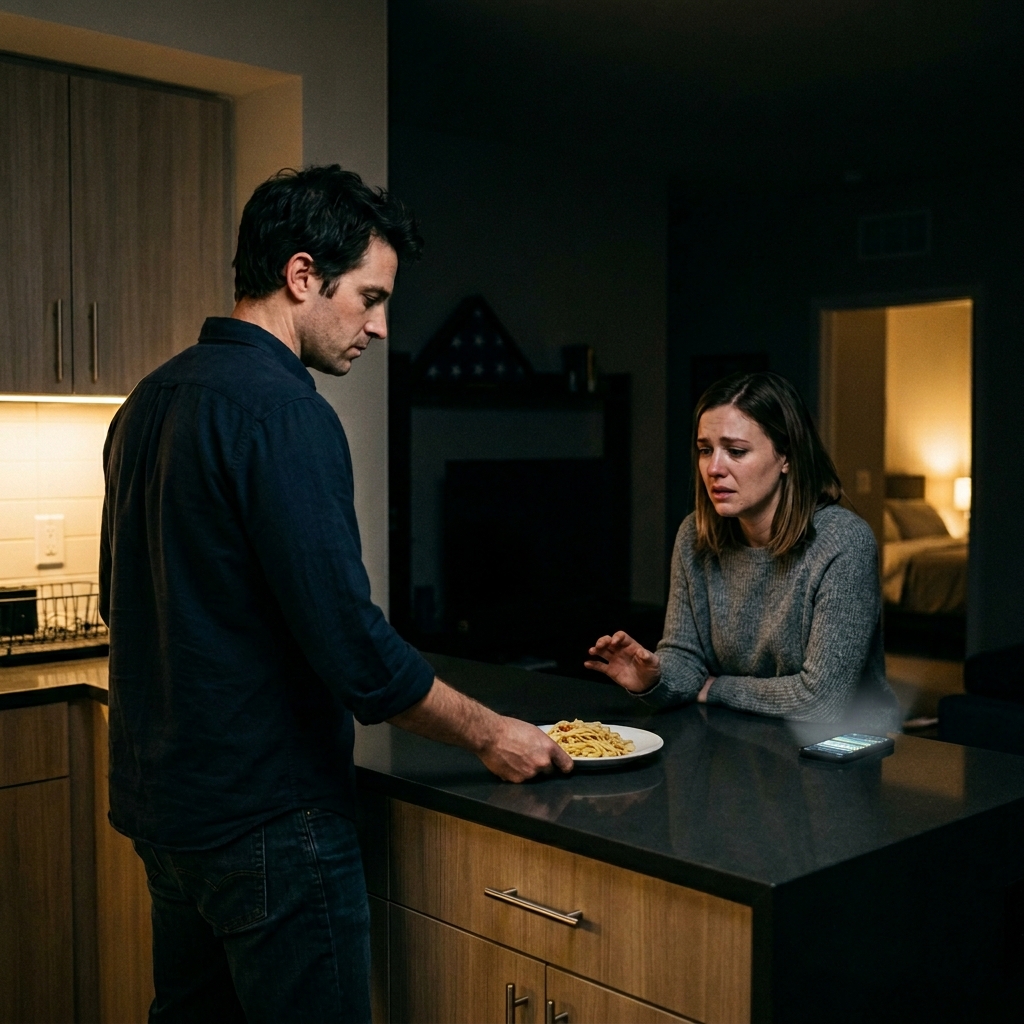
I stood near the kitchen island. The same place where I had deleted Caroline. The symmetry was almost theatrical.
“We need to talk.”
Her expression changed. Not fear yet. Irritation first. People who control narratives dislike unexpected openings.
“Okay,” she said slowly. “About what?”
“Daniel.”
The name entered the room and removed all the oxygen.
Emily did not move. Her hand remained on the refrigerator door.
“What about Daniel?”
“I found the folder.”
For one second, her face went completely blank. That was how I knew she understood exactly which folder.
Then she closed the refrigerator door carefully.
“What were you doing in my private files?”
Not “what folder.” Not “what did you see.” The defense appeared before the grief.
I nodded once, almost to myself. “That is where you want to start?”
“You went through my files.”
“On our shared laptop.”
“That does not make everything on it yours.”
“No. But it makes your demand last week interesting.”
Her eyes flashed. “Do not turn this around.”
“I am not turning anything. I am leaving it exactly where it is.”
She crossed her arms. “You invaded my privacy.”
“You watched me delete every photo of Caroline from my phone because you said old pictures threatened you.”
“That was different.”
“How?”
“Because you had them accessible. On your phone. Like you wanted to look at them.”
“You had seven years of Daniel organized by year in a hidden archive on our shared laptop.”
Her lips pressed together. “It was an old backup.”
“There were messages from three weeks ago.”
Silence.
That was when her anger faltered. Not disappeared. Faltered. Emily looked toward the living room, then back at me, calculating.
“You don’t understand.”
“No,” I said. “I think I finally do.”
“Daniel and I were complicated.”
“So were Caroline and I. You still made me erase her.”
“That is not fair.”
“No, Emily. Fair would have been both of us treating the past with honesty. Fair would have been you admitting that Daniel was still emotionally present before asking me to perform loyalty for you in the kitchen.”
Her voice rose. “Perform loyalty? I asked you to respect me.”
“You asked me to destroy harmless memories while you preserved an entire shrine.”
“It was not a shrine.”
“What would you call it?”
She looked away. “History.”
The word struck me harder than I expected.
“When it is yours, it is history,” I said. “When it is mine, it is disrespect.”
Her eyes filled with tears then. Emily’s tears were powerful. I had seen them soften me before arguments could finish. But this time they landed against something already closed.
“I was scared,” she said.
“Of what?”
“Of marrying you while still having unresolved feelings.”
There it was. The first true sentence.
I waited.
She wiped under one eye. “Daniel was not good for me. He loved me, but it was chaotic. We hurt each other. We broke up and got back together so many times I lost track. When I met you, you were different. You were steady. Kind. Safe.”
Safe. Solid ground. Sweet. Tried so hard.
I almost smiled, but there was no humor left in me.
“Do you love me?” I asked.
She looked wounded by the simplicity of the question. “Of course I love you.”
“Do you love him?”
She opened her mouth.
Nothing came out.
That silence answered more honestly than any sentence could have.
I nodded. “Thank you.”
“Nathan, no. That is not fair. Love is not always clean. People can—”
“Do not make this philosophical.”
“I am trying to explain.”
“You are trying to make betrayal sound like complexity.”
Her face hardened. “I did not cheat on you.”
“You met him nine days before you asked me to delete Caroline.”
“It was coffee.”
“You filmed him telling you he still loved you.”
“I needed closure.”
“No. You needed options.”
She flinched.
I stepped away from the island, needing distance before my voice became something I would regret. “Daniel told you not to make him a ghost in our marriage. He showed me more respect in twenty-seven seconds than you showed me in three years.”
That broke through. Her face crumpled, not with guilt alone but with panic.
“You watched that?”
“Yes.”
“Nathan…”
“Did you tell him you were going to ask me to delete Caroline?”
“No.”
“Did you ask me because you felt guilty after seeing him?”
She looked down.
There are answers people give with their whole bodies.
I closed my eyes briefly. “So it was not about Caroline.”
“I saw those photos and I panicked,” she whispered. “I thought if you had pieces of her, maybe that meant I was allowed to have pieces of him. And I hated that. I hated feeling like that. I wanted us clean.”
“Us?”
“I wanted to start over.”
“You wanted me clean. You wanted yourself hidden.”
She sobbed once, covering her mouth. “I was going to delete it.”
“When?”
“I don’t know.”
“Before or after the wedding?”
She had no answer.
That was the moment the engagement ended. Not when I found the folder. Not when I watched the video. Not even when she could not say she no longer loved him. It ended when I realized she had been willing to marry me with that folder still intact, with that silence still alive, with that unequal standard buried beneath our wedding plans like a crack in the foundation.
I walked to the bedroom and took a small overnight bag from the closet.
Emily followed me. “What are you doing?”
“Leaving for tonight.”
“No. We need to talk.”
“We are talking.”
“You can’t just walk out.”
I turned to face her. “I can. I learned that from you.”
“What is that supposed to mean?”
“It means you walked out emotionally and left your body here to plan a wedding.”
She recoiled as if I had slapped her.
I packed calmly. Toothbrush. Charger. Two shirts. Work clothes. My passport from the top drawer, because something in me no longer trusted any shared space. Emily stood in the doorway crying, twisting her engagement ring around her finger.
“Are you ending this?” she asked.
“I am ending tonight.”
“That is not an answer.”
“It is the only one I have right now.”
She stepped toward me. “I love you.”
I looked at her for a long moment. “I believe you love what I gave you.”
Her tears spilled over. “That is cruel.”
“No. Cruel was asking me to erase my past while you kept yours breathing.”
I left the apartment that night and checked into a hotel downtown. Not a dramatic luxury suite. Just a quiet business hotel with clean sheets, bad lobby coffee, and blackout curtains. I placed my bag on the floor, sat on the edge of the bed, and finally let the shaking come.
Heartbreak is not always loud. Sometimes it is sitting alone under fluorescent bathroom light, brushing your teeth like a normal person while your reflection looks like someone who has survived an accident no one else can see. I slept badly. At 2:00 a.m., I woke and reached for Emily before remembering. At 4:30, I read the screenshots again, not because I wanted pain, but because grief lies when it misses someone. Evidence keeps grief honest.
By morning, Emily had called eleven times and sent twenty-three messages.
Please come home.
I am so sorry.
It was not what you think.
I handled it badly.
I was afraid to lose you.
Please do not make a permanent decision while angry.
The last message arrived at 6:12 a.m.
I deleted the folder.
I stared at that one.
Then another message came.
I mean it. It is gone. I chose you.
A week earlier, that sentence might have saved something. Now it only confirmed how little she understood. Deleting the folder after being caught was not choosing me. It was cleaning the crime scene after the police arrived.
I went to work.
People think emotional devastation makes you useless, but sometimes it makes you efficient. I answered emails with surgical clarity. I reviewed drainage calculations. I approved a revised bid package. I called the vineyard and requested cancellation terms. I called the photographer and asked about transfer options. I reviewed the florist contract. By lunchtime, I had a spreadsheet of recoverable and nonrecoverable deposits. By three, Grace had sent instructions about the joint account. I removed my direct contributions, leaving Emily’s portion untouched and documented. I sent Emily a message that was not emotional, because emotion was no longer useful in writing.
We need to pause all wedding plans immediately. I am not ready to discuss reconciliation. Please do not delete or alter any shared financial records. I will cover cancellation losses for vendors I personally selected. For joint deposits, we can divide according to contribution. I will stay elsewhere for now.
She replied within seconds.
Pause? Nathan, please don’t do this over old files.
Old files.
I put my phone face down.
That evening, her sister called me. Then her mother. Then her best friend, Lauren. I answered none of them. Not because I wanted to be cruel, but because I knew Emily was telling a version of the story where I found old pictures, became jealous, and abandoned her. People who fear accountability often summon witnesses before facts can arrive.
The next day, Lauren texted me.
I know you are upset, but Emily loves you. Everyone has a past. Please do not punish her for being honest about complicated feelings.
I laughed when I read that. Not because it was funny, but because the narrative had already dressed itself in better clothes. Emily was not deceptive. She was honest about complicated feelings. I was not betrayed. I was punishing her. The folder was not a secret. It was a past.
I replied with one sentence.
Ask Emily what she asked me to delete one week before I found Daniel’s folder.
Lauren did not respond for six hours.
Then she wrote: I did not know that.
Of course she did not.
By Friday, Emily wanted to meet. I chose a public place, a quiet café near my office where the tables were spaced far apart and nobody we knew was likely to appear. She arrived ten minutes early. I watched through the window before entering. She looked smaller somehow, not physically, but spiritually reduced, like someone who had spent days fighting reality and was beginning to lose.
She wore a simple black sweater, jeans, no makeup except mascara. The ring was still on her finger.
I sat across from her.
“Thank you for coming,” she said.
I nodded.
She clasped her hands around her coffee cup. “I have been trying to figure out how to say this without making it worse.”
“Try the truth.”
Her eyes flickered. “I did not sleep with Daniel after we got together.”
“I know.”
“You do?”
“I never accused you of that.”
Relief crossed her face too quickly.
I leaned back. “Physical cheating would have been simpler.”
She looked down. “I know.”
“Do you?”
“Yes.” Her voice broke. “Because this was emotional. Because I kept him. Because I made rules for you that I was not following.”
It was the first time she said it plainly.
I waited.
She inhaled shakily. “When I saw Daniel before asking you to delete the photos, I was not planning to meet him. He messaged me that he was in town. I should not have gone. I know that. But part of me thought if I saw him, I would finally feel nothing. I wanted proof that I had moved on.”
“And did you?”
“No.”
The honesty hurt, but I respected it more than excuses.
She wiped her face with a napkin. “I came home terrified. Then I saw the photos of Caroline on your phone, and I felt this horrible jealousy. Not just because of her. Because you seemed so normal about your past. Like it had a place but no power. And mine still had power. So I tried to control yours.”
“That is not love.”
“I know.”
“Do you?”
She looked at me then. “Yes. I know.”
The café hissed with milk steam behind us. A man near the door laughed into his phone. Ordinary life, again, refusing to pause for catastrophe.
Emily touched her ring. “I deleted everything.”
“Emily.”
“I did.”
“I believe you. That is not the point.”
“I chose you.”
“No. You chose not to lose me after your other choice became visible.”
She flinched. “I deserved that.”
“I am not trying to hurt you.”
“I know.”
“I need you to understand something. If you had come to me before the wedding and said, ‘I still have unresolved feelings and I am scared,’ it would have hurt, but we could have dealt with truth. Maybe we would postpone. Maybe we would separate. Maybe we would work through it. I do not know. But you did not give me truth. You gave me a loyalty test.”
Her lips trembled.
“You asked me to erase Caroline not because she threatened us, but because Daniel did. You transferred your guilt onto me and made me pay for it.”
“I know,” she whispered.
“And then, when I found out, your first response was privacy.”
“I panicked.”
“Yes. And your panic told the truth before you did.”
She covered her face with one hand. “What can I do?”
That question sounded humble, but it was still built around repair. What can I do to fix this? What task can restore the future? What sacrifice can buy back the vineyard, the terrace, the first dance, the version of us where everyone claps?
I looked at the woman I had planned to marry. I remembered the first night we met at a charity dinner when she corrected a donor’s pronunciation of my last name before I could. I remembered her falling asleep on my shoulder during a delayed flight. I remembered her crying when my father’s scan came back clear. I remembered loving her in ways that were real, even if they were incomplete.
Then I remembered my thumb hovering over the trash icon while she watched.
“I do not know,” I said. “But I know I cannot marry you.”
Her face collapsed.
“Nathan, please.”
“I cannot stand in front of my family and promise a life with someone who made honesty conditional.”
“We can postpone.”
“No.”
“Counseling?”
“For you, yes. For me, probably. For us, I do not know. But the wedding is over.”
She started crying openly then, quietly enough that nobody turned around, but deeply, painfully. I did not comfort her. That may sound cold, but comfort would have lied. My hand on hers would have said there was still a bridge where only wreckage remained.
“What do I tell people?” she whispered.
“The truth would be a good place to start.”
She laughed through tears, broken and bitter. “The truth makes me look awful.”
I stood. “Then maybe stop choosing things you need to describe carefully.”
I left her there.
The next month was a slow dismantling.
Weddings do not die instantly. They unravel through emails, refunds, awkward phone calls, disappointed relatives, and boxes of unused decorations arriving at your door because nobody canceled the order in time. The vineyard kept half the deposit. The florist refunded almost all of it because Grace knew how to read force majeure clauses better than most people read novels. The photographer allowed me to transfer the credit to a corporate event. Emily’s mother called me once and left a voicemail saying she was sorry for both of us. My father asked if I wanted him to come stay with me, and when I said no, he said, “Then I’ll just keep my phone on.” That was his way of loving without intrusion.
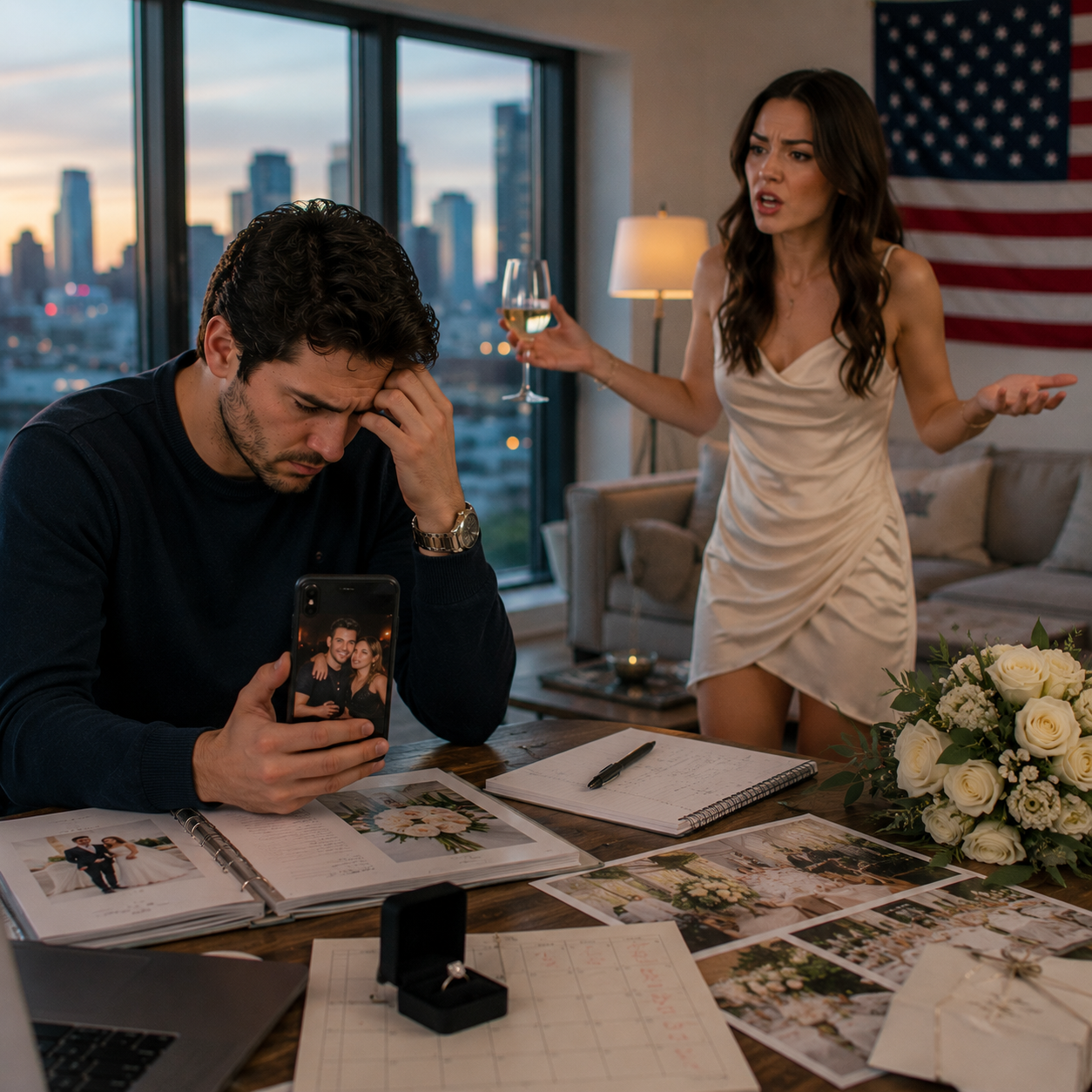
Emily moved out of the apartment two weeks after the café conversation. I offered to leave instead, but the lease and most payments were mine, and she said she could not stand being surrounded by what we had planned. Her sister helped her pack. I stayed at work until they finished. When I came home, the apartment looked staged by grief. Half-empty closet. Bare spaces on shelves. The engagement photo gone. On the kitchen island, she left the ring box.
Inside was the diamond.
Under it, a note.
Nathan,
I am sorry I asked you to erase something I had no right to fear while hiding what I was too afraid to face. You were not second place. But I understand why it felt that way. I loved you badly. You deserved clean love. I hope one day I become the kind of person who can give that to someone without making them pay for the damage someone else left behind.
Emily.
I read it once, then put it back in the box.
Did I believe her? Partly. That is the uncomfortable thing about betrayal. People can be sorry and still unsafe. They can love you and still use you as shelter from storms they refuse to name. They can mean the apology and still not be entitled to the future they damaged.
Three months later, I saw Daniel.
Not because I looked for him. Because life has a dark sense of timing.
I was leaving a downtown coffee shop after a client meeting when a man held the door open for me. I recognized him from the folder before my mind had time to soften the shock. He recognized me too. His face changed, not with guilt exactly, but with the weary acceptance of someone meeting the consequence he had tried to avoid.
“Nathan?” he asked.
I stopped. “Daniel.”
We stood on the sidewalk while people moved around us.
He nodded toward the street. “I am sorry.”
“For what part?”
He accepted that. “For being anywhere near your life when I knew I should not be.”
I studied him. There was no arrogance in him. No victory. He looked like a man who had paid for his own mistakes and did not want interest added.
“Did you know she asked me to delete my ex?”
His brow furrowed. “No.”
“I did not think so.”
He looked down. “For what it is worth, I told her not to marry you if she was not clear.”
“I saw.”
His eyes lifted. “She told you?”
“I found the video.”
He exhaled slowly. “Then you know I was trying to close the door.”
“Yes.”
“I should have closed it sooner.”
“Yes.”
We stood in silence.
Then he said, “She loved you.”
I looked at him. “That does not help.”
“I know.”
“Did she love you?”
He looked across the street, where traffic moved beneath gray winter light. “Not in a way that could have become anything good.”
It was an honest answer.
I nodded once and walked away.
That conversation gave me no satisfaction, but it gave me something cleaner than hatred. Daniel was not the enemy. Caroline had never been the enemy. The enemy was the lie that love means being chosen while someone secretly keeps another door unlocked.
By spring, the apartment felt like mine again. I replaced the rug. Moved the bookshelf. Took down the wedding corkboard and hung a framed print of the Blue Ridge Mountains. I restored old photos from a cloud backup I had forgotten about, including the picture of Max with Caroline. When it reappeared on my phone, I stared at it for a long time. Not because I missed Caroline, but because I understood something I should have known from the beginning.
Memory is not betrayal.
Deception is.
I kept the photo. Not to defy Emily. Not to cling to the past. I kept it because Max had been a good dog, my father had loved him, and my life before Emily did not deserve to be treated like contraband.
Emily reached out once in April.
Her message was brief.
I started therapy. You were right about a lot. I am not asking for anything. I just wanted you to know I am sorry without trying to win something back.
I read it twice.
Then I replied.
I hope therapy helps. I mean that.
She wrote back: Thank you.
That was the last time we spoke.
People sometimes ask whether I regret ending it. They ask carefully, usually after enough wine, when curiosity gets braver than manners. They want to know if a folder was really worth canceling a wedding over. But it was never about the folder. It was about the rule behind it. Emily believed her fear entitled her to control my past, while her own fear entitled her to hide hers. She wanted the benefits of honesty from me and the protection of secrecy for herself. That is not a mistake. That is architecture.
And I almost married into it.
The strangest part is that I am not bitter about love. Wiser, yes. Slower, definitely. But not bitter. I still believe people can build honest lives together. I still believe marriage can be beautiful. I still believe someone’s past does not have to threaten the future, as long as it is actually past and not a room they keep visiting when you are not looking.
Now, when I date, I do not ask whether someone has old photos. Of course they do. I do not ask whether they have loved before. I hope they have. Love teaches people, even when it fails. What I pay attention to is whether their standards match in both directions. Whether their boundaries are doors or weapons. Whether their vulnerability asks for connection or control. Whether they can tell the truth when the truth does not flatter them.
A year after the canceled wedding, I visited my father on a warm Saturday in June. He had moved slower since the cancer treatments, but he still insisted on grilling steaks himself because he claimed I “had no respect for fire.” After dinner, we sat on his porch while dusk settled over the yard. Fireflies blinked in the grass. He handed me a glass of bourbon and asked, without looking at me, “You lonely?”
I smiled faintly. “Sometimes.”
“Better than married lonely.”
I looked at him.
He shrugged. “Your mother used to say that. Before we got good at being married, we had to get good at being honest. Hardest part of the whole thing.”
I turned the glass in my hand. “What if honesty comes too late?”
“Then it is still useful,” he said. “Just not always for saving what it exposes.”
That was the closest thing to closure I ever got.
I did not get revenge. I did not ruin Emily’s reputation. I did not send the folder to her family or make dramatic speeches at the canceled venue. The most devastating thing I did was step out of the role she had assigned me: safe man, steady man, grateful man, man who would absorb confusion and call it love.
I stopped auditioning for a future she had not entered honestly.
Sometimes, I think about that Sunday evening in the kitchen. The rain. The wineglass. Emily’s voice asking me not to get defensive. My phone in my hand. Her eyes watching while I erased pieces of my own life to make her feel secure inside a lie she had not confessed.
If I could go back, I would not refuse cruelly. I would not shout. I would simply ask one question.
“Before I delete my past, have you finished telling me yours?”
Because love does not require two people to arrive untouched. Nobody does. We all come carrying names, photographs, regrets, songs we cannot hear without remembering someone else. The right person does not demand that you pretend the road behind you never existed. They stand beside you and tell the truth about their own.
Emily wanted a clean beginning.
But clean beginnings cannot be built from hidden endings.
And the week after I deleted every photo of my ex, I found out my fiancée had not been afraid of my past at all.
She had been afraid that if I was allowed to keep mine, she would have to admit she was still living inside hers.
![[FULL STORY] My Wife Met Her Ex At A Bar To Test My Jealousy. I Stayed Calm As He Mocked Me For An Hour While ...](https://social-media.rabedo.com/thumbnails/1776412934_e6e4a114-c2fb-4246-8916-41935bb535ab.png)
![[FULL STORY] She Gave Away the Concert Tickets I Bought for Her… Then Tried to Come Back When Her New Guy Fell Apart](https://social-media.rabedo.com/thumbnails/1777013970_ecfc4a1f-9724-43d7-bd24-c1ea5ef2570e.png)