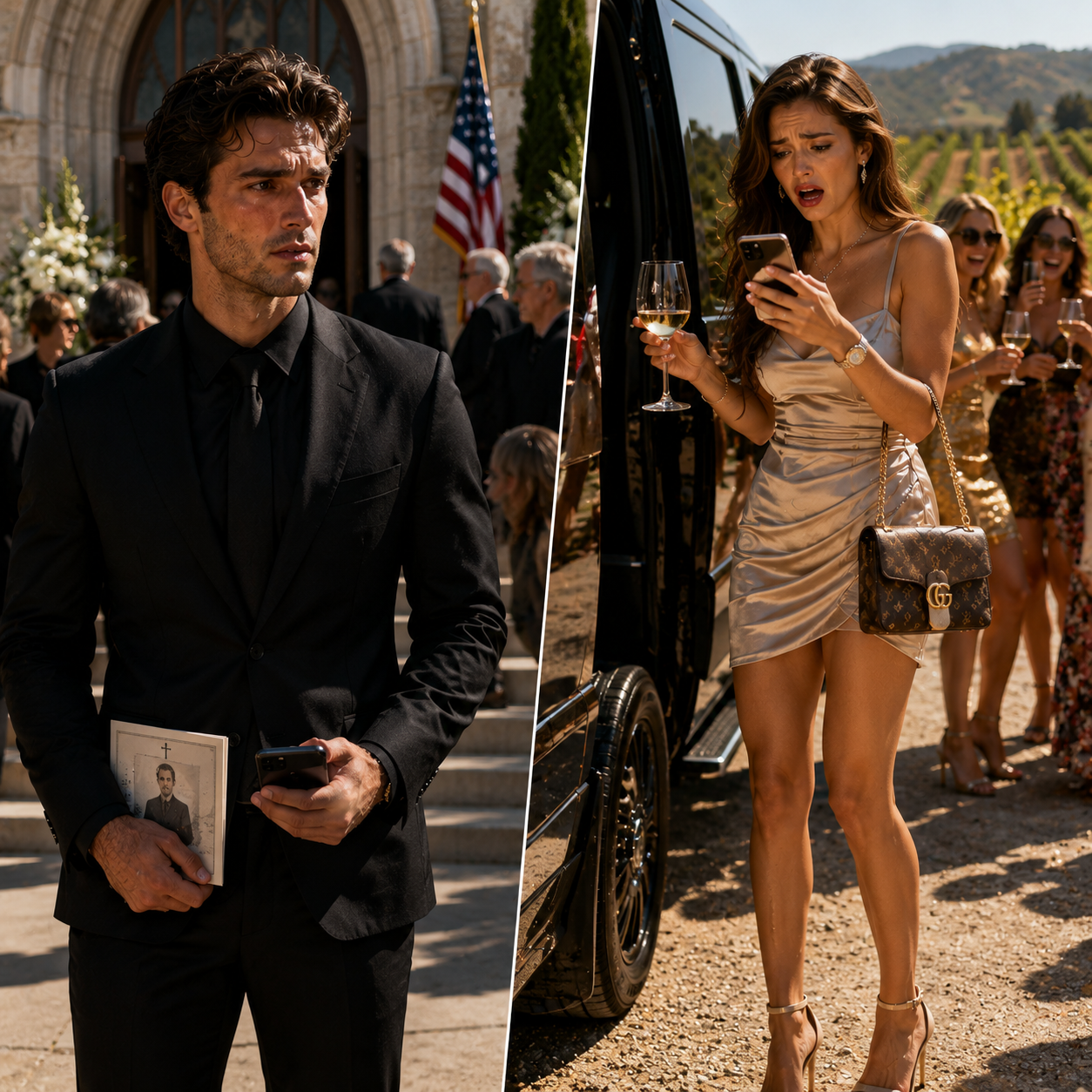
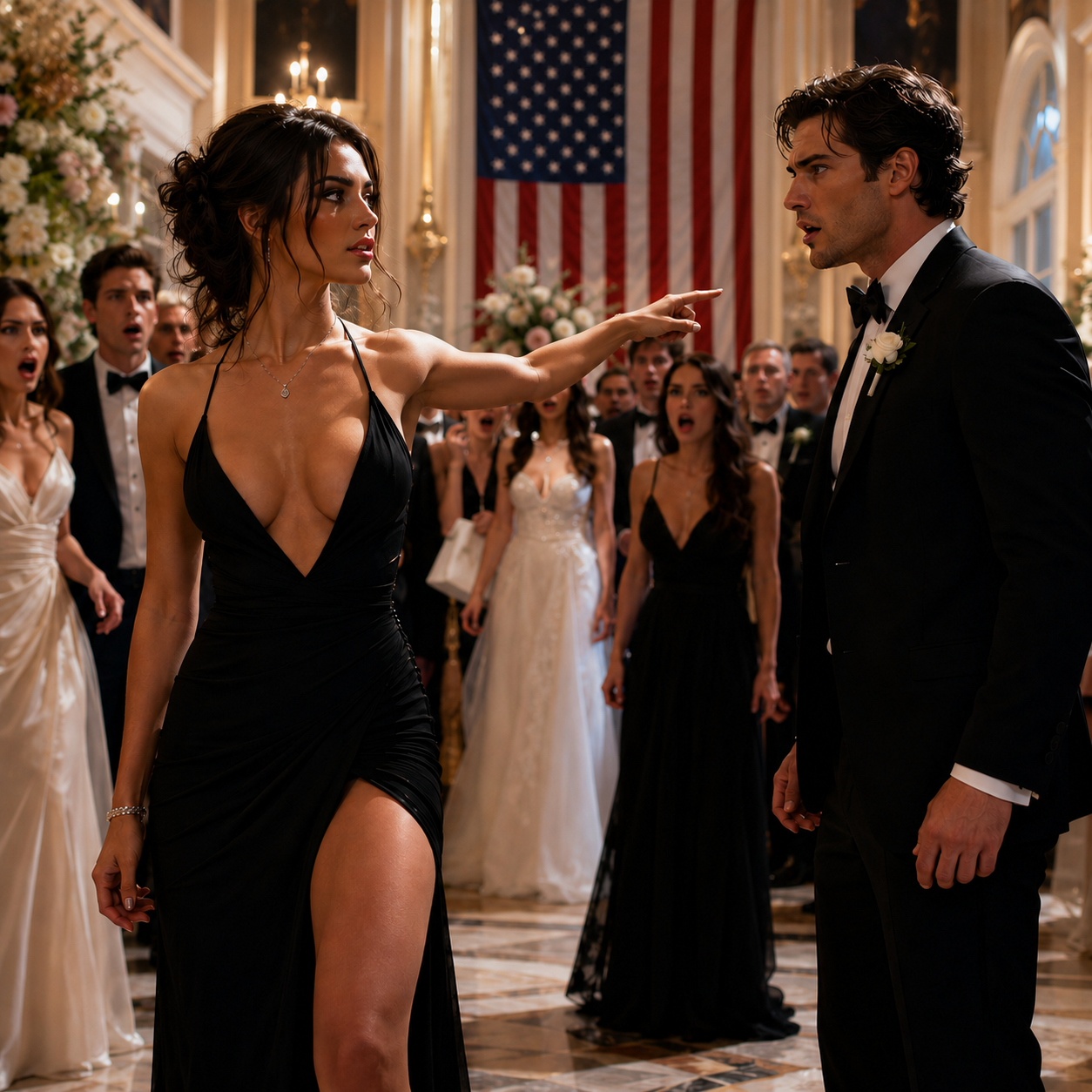
People romanticize revenge as fire. They imagine shouting, swinging, dramatic exits, slammed doors. Real revenge, the kind that lasts, is colder. It is waking up the next morning and deciding no one who humiliated you gets the privilege of watching you become careless. It is learning patience from pain. It is rebuilding so quietly that by the time they hear your name again, the room has already changed ownership.
I sold my share of Pierce Mercer Hospitality six months later, but not to Julian. I sold it to a private buyer at nearly twice what he had offered. He called me furious, accusing me of sabotage, betrayal, greed. I listened until he ran out of breath, then said, “No hard feelings, right?”
He hung up.
After that, I disappeared from his world.
That is how people described it, anyway. Disappeared. What I actually did was work. I took everything I had learned and invested where people were too distracted by glamour to notice infrastructure. Event spaces. Vendor networks. Boutique hotels. Historic properties with debt problems and emotional value. I bought quietly, through holding companies and partnerships. I found owners who were tired, families fighting over inheritance, banks impatient with maintenance costs. I restored buildings other men only saw as liabilities. I hired better people than myself and paid them well enough to stay. I stopped chasing rooms where Julian was the loudest man and started buying rooms men like Julian begged to enter.
The Bellamy House was the crown jewel.
Built in 1893 by a railroad magnate for his opera singer wife, it sat on three acres near the lake with white stone columns, arched windows, grand staircases, a ballroom with hand-painted ceilings, and a terrace overlooking water that turned gold at sunset. It had been neglected for years, rented out cheaply for corporate retreats and dull banquets, its beauty hidden under bad carpet and worse management. When I first walked through it, rain dripped through a ceiling in the east wing and dust covered the chandeliers. Grace had looked at me like I was insane when I said, “This place is going to be impossible to book.”
It took fourteen months and more money than I care to admit. We restored the floors, repaired the roof, preserved the murals, updated the kitchen, redesigned the gardens, trained the staff, curated the vendor list, rebuilt the brand. But I kept my name off everything. The public owner was Bellamy Heritage Group. The operating manager was a woman named Diane Shaw, brilliant and terrifying, who could make a billionaire apologize for being seven minutes late. My involvement stayed private because I had no desire to become a headline. I did not need applause anymore. Ownership was quieter than applause and infinitely more useful.
By the time Julian’s invitation arrived, The Bellamy House had a two-year waiting list.
And Julian had booked it for his wedding.
I went back to my office and closed the door.
Grace looked up from her desk as I passed. “Everything okay?”
I held up the invitation. “Do we have a wedding on June twenty-first?”
She blinked once. Grace had been with me long enough to recognize the tone. “At Bellamy?”
“Yes.”
She typed quickly. “Pierce-Hart wedding. Six p.m. Full estate rental. Premium package. Ninety thousand deposit paid. Balance due fourteen days before the event.”
Hart.
Vanessa Hart.
I looked down at the invitation again. Julian Pierce and Vanessa Hart.
Of course.
There was a symmetry to it so cruel it almost felt literary. Julian had not married Elise. That had ended badly, according to gossip I had never asked for and never trusted enough to enjoy. He had eventually found his way back into elite circles through Vanessa, who had apparently decided he was charming enough, ambitious enough, and useful enough to marry. I wondered if she knew what he had done to me. I wondered if he had told her a version where I was bitter, weak, jealous. Probably. Julian never wasted a story when he could edit himself into the hero.
“Do they know?” Grace asked.
“No.”
“Know what?”
“That I own it.”
Grace leaned back slowly. “Oh.”
That one syllable contained an entire legal department’s worth of possibilities.
I sat at my desk and read the handwritten note again. Hope you can make it, Cal. No hard feelings, right? Would be a shame if you missed seeing how things turned out.
I should have thrown it away. I should have ignored him. I had built a life beyond his reach. That should have been enough.
But people misunderstand closure. They think closure means indifference. Sometimes it does. Sometimes closure means standing in the place where someone tried to bury you and letting them realize you own the land.
I called Diane.
She answered on the second ring. “Please tell me this is not about the mayor’s daughter asking for fireworks again.”
“No. It’s about the Pierce-Hart wedding.”
Silence.
Diane had a way of becoming still through the phone.
“What about it?”
“I received an invitation.”
Another pause. “As a guest?”
“As a joke.”
“I see.”
“I want to review the contract.”
“I’ll send it.”
“And Diane?”
“Yes?”
“Do not change anything. Do not warn anyone. Do not behave differently.”
Her voice lowered slightly. “Understood.”
The contract arrived in my inbox three minutes later.
Julian had not signed it. Vanessa had. Her father, Richard Hart, had also signed as guarantor. The balance was due in ten days. There were strict clauses about conduct, property damage, vendor compliance, security, and payment. Standard. Clean. Enforceable.
I read every line anyway.
Then I sat for a long time, watching sunlight move across my office floor.
A younger version of me would have wanted to ruin everything immediately. Cancel the wedding. Leak the truth. Call Julian and let him hear victory in my voice. But I was not young anymore, and I had learned the difference between revenge and exposure. Revenge requires effort. Exposure only requires light.
I RSVP’d yes.
Not through the card. Through the wedding website.
The form asked for dietary restrictions.
I almost typed betrayal, but maturity has its small victories.
Two days later, my phone rang from a number I had not saved but still recognized.
Julian.
I let it ring until the last second.
“Cal,” he said when I answered, his voice bright with the false warmth of a man calling from a stage. “You actually RSVP’d.”
“You invited me.”
“I did.” He chuckled. “Honestly, I wasn’t sure you’d have the stomach for it.”
“For a wedding?”
“For this one.”
I leaned back in my chair. “Congratulations.”
There was a pause, small but revealing. Julian had expected anger, sarcasm, maybe wounded silence. Calm always frustrated him.
“Thanks,” he said. “Means a lot.”
“No, it doesn’t.”
He laughed harder than the line deserved. “Still dry as ever.”
“What do you want, Julian?”
“Just wanted to say I’m glad you’re coming. Really. After everything, it feels… mature, you know? Full circle.”
“Full circle.”
“Yeah. I mean, we were kids together. Built something together. Lost our way a little. But life moves on.”
“Does it?”
“Mine did.”
There it was. The little blade hidden inside velvet.
I looked out at the city. “Then enjoy it.”
“Oh, I will.” His voice changed, became softer, more intimate, uglier. “Vanessa thought inviting you was unnecessary. I told her it was important. Closure, you know? Besides, some people need to see what winning looks like.”
I smiled then. Not because it amused me. Because the universe had just handed me confirmation in his own voice.
“You’re right,” I said. “Some people do.”
He paused again. “Good. Then I’ll see you there.”
“You will.”
When the call ended, I did not move for nearly a minute.
Then I sent the recording to my attorney.
Not because I planned to use it. Because old habits had become survival instincts, and survival instincts had made me wealthy.
The next ten days passed quietly.
Quietly does not mean nothing happened.
The balance for the wedding was due. It did not arrive.
Diane informed the Hart family’s planner according to policy. The planner apologized and said Richard Hart’s office was processing payment. Two more days passed. No payment. Diane sent a formal notice. Still nothing.
That was interesting.
Richard Hart was not a man who forgot ninety thousand dollars. He was the kind of man who considered money a language, and late payment an insult. If the balance had not been paid, either the insult was intentional or the money was complicated.
On the third overdue day, Vanessa called Diane personally. I listened from my office through the conference line, muted.
Vanessa’s voice was smooth but tight. “There seems to be some confusion.”
Diane’s voice was professional enough to freeze wine. “The final balance remains unpaid.”
“My father’s office handles these things.”
“Of course. We’ve sent the notices to the address and email listed in the contract.”
“I understand, but canceling or altering anything at this point would be unacceptable. We have guests flying in. Media. Donors. Family.”
“No one has mentioned cancellation, Ms. Hart. I am simply informing you of the contractual deadline.”
“I’m sure payment will be made.”
“We look forward to receiving it.”
After the call, Diane said, “That family is not as liquid as they want people to think.”
“No,” I said. “They’re not.”
I had not followed Hart Development closely, but I knew enough to know their empire had taken damage. Commercial real estate had not been kind to men who built too much on borrowed confidence. Richard Hart still looked rich because looking rich was cheaper than being solvent if you had the right tailor and enough people afraid to ask questions.
Two days before the wedding, the balance arrived.
From Vanessa’s personal account.
Not Richard’s.
I stared at the payment confirmation longer than necessary.
Grace, standing in my doorway, said, “Is that important?”
“Maybe.”
“Are you going to attend as a guest or as the owner?”
“Yes.”
She smiled despite herself. “That is deeply unsettling.”
“Thank you.”
The day of the wedding arrived bright and warm, with the kind of June sky brides believe they ordered personally. The Bellamy House looked unreal in sunlight. White stone glowing. Gardens perfect. American flag moving gently from the front portico because we always displayed it for formal events unless clients requested otherwise. Staff moved with quiet precision across the property. Florists arranged white roses and pale blue hydrangeas along the staircase. Musicians tuned strings in the ballroom. Crystal glasses caught the light. Everything looked expensive, effortless, and inevitable.
I arrived at three in the afternoon through the service entrance.
Not in my wedding guest suit. In a dark charcoal suit with no tie, carrying myself not like a man invited to witness someone else’s triumph, but like a man inspecting his own house.
Diane met me near the east corridor.
“You’re early,” she said.
“I own the place.”
“That remains technically true.”
“Any problems?”
“The groom tried to access the wine cellar for photographs. I said no.”
I nodded. “Good.”
“The bride’s mother cried in the powder room for eleven minutes.”
“Sentimental?”
“Financial, I suspect.”
“Richard?”
“Hasn’t arrived yet.”
That was very interesting.
“Julian?”
“In the groom’s suite, behaving exactly as described.”
I looked at her.
“Like a man who thinks charm is a substitute for character,” she said.
“That’s accurate.”
Diane handed me a slim folder. “Updated event sheet. Security notes. Vendor contacts. Also, the bride’s planner asked whether we could delay final settlement of overtime charges until after the honeymoon.”
I looked at the folder. “No.”
“That was my response.”
“I knew I hired you for a reason.”
“You hired me because I frighten people.”
“Also useful.”
At five-thirty, guests began arriving.
From an upstairs balcony window, I watched them step out of black cars and rideshares and hired SUVs. Women in silk dresses. Men in tailored suits. Old friends I had not seen in years. Former clients. People who had believed Julian’s version of events because it was easier than asking me for mine. A few faces from that rooftop fundraiser appeared, older now, softer around the jaw, still carrying the same instinct for proximity to power.
They walked beneath the American flag and into my venue praising the architecture.
I wondered how many of them would recognize me.
I wondered how many would pretend not to.
At six-ten, I entered through the main doors like any other guest.
The room shifted subtly when people saw me. Not dramatically. This was not a movie. No one gasped. No glass shattered. Real discomfort travels in glances. A woman near the guest book touched her husband’s arm. A former investor looked at me, looked away, then looked again. One of Julian’s old college friends widened his eyes like he had seen a ghost he owed money.
I signed the guest book.
Caleb Mercer.
The attendant smiled. “Bride or groom?”
I looked at the floral arch at the end of the hall, at the white aisle runner, at the chairs arranged with military precision.
“Complicated,” I said.
She laughed because she thought I was joking.
Julian saw me before the ceremony.
He was standing near the staircase in a black tuxedo, hair perfect, smile practiced, surrounded by groomsmen who looked like they had been selected for height and compliance. For one second, his expression flickered. Surprise first. Then satisfaction. Then something like hunger.
He excused himself and crossed the foyer toward me with open arms.
“Cal,” he said loudly enough for nearby guests to hear. “You made it.”
I did not hug him.
His arms hung there for half a second before he converted the motion into a clap on my shoulder. Old Julian. Always able to turn rejection into choreography.
“Wouldn’t miss it,” I said.
He grinned. “That’s big of you.”
“No. Just punctual.”
A couple beside us pretended not to listen.
Julian lowered his voice. “You look good, man. Seriously. Better than I expected.”
“I’ll try not to take that personally.”
He laughed. “Still sharp. I missed that.”
“No, you didn’t.”
For a moment, the mask thinned. The smile stayed, but the eyes cooled.
“Careful,” he murmured. “It’s my wedding day.”
I looked around at the restored ceilings, the polished marble, the staff moving beneath chandeliers I had paid to repair. “So I’ve heard.”
He leaned closer. “I invited you because I wanted peace.”
“No, you invited me because you wanted an audience.”
His jaw shifted.
Before he could answer, Vanessa appeared at the top of the staircase.
She was stunning. I will give her that. Some people look beautiful because they are styled well. Vanessa looked beautiful because she understood attention as architecture. Her dress was elegant, fitted, expensive without being vulgar, lace and satin catching the light as she descended. Her dark hair was pinned back loosely, diamond earrings flashing. She smiled at guests like she had been born halfway down a staircase with people waiting below.
Then she saw me.
Her smile did not break. But it became more deliberate.
“Caleb,” she said when she reached us. “I’m glad you came.”
“Congratulations, Vanessa.”
“Thank you.” Her gaze moved between me and Julian. “I hope today can be… gracious.”
“That depends on the hosts.”
Julian chuckled too quickly. “Cal’s joking.”
Vanessa did not laugh. That told me she was smarter than he deserved.
The ceremony began fifteen minutes late because Richard Hart still had not arrived. I watched Vanessa glance twice toward the entrance, each time with irritation sharpened by worry. Julian whispered something to her. She smiled for the guests, but her hand tightened around her bouquet.
Finally, a planner hurried over and murmured into Vanessa’s ear. Her face went still.
Richard was not coming.
The ceremony proceeded without him.
That changed the air. Not enough for everyone to understand, but enough for those trained in social weather. A missing father at a high-society wedding is not simply absence. It is a headline waiting for permission. Vanessa walked herself down the aisle, chin lifted, beautiful and furious. Julian stood at the altar watching her with an expression that tried to pass as tenderness but looked more like calculation. He knew the optics were bad. He hated bad optics.
I sat in the fourth row on the groom’s side because that was where the usher placed me, or perhaps because Julian had arranged it that way. Close enough for him to see me. Close enough for me to see everything.
The officiant spoke about love, trust, partnership, loyalty. Weddings are full of dangerous words. People say them in front of flowers and candles as if beauty makes them true.
When Julian said his vows, his voice trembled perfectly.
“Vanessa, you believed in me when others doubted me. You saw the man I could become, not the rumors of who I had been.”
Several guests glanced at me.
There it was.
Even at his wedding, Julian could not resist staging himself against my shadow.
I looked at him calmly.
His eyes found mine for half a second as he said, “You taught me that real love means choosing the future over the past.”
I almost admired the audacity. Almost.
Vanessa’s vows were colder, cleaner, less emotional. She spoke of ambition, partnership, building a legacy. She did not mention trust. That omission interested me.
They were pronounced husband and wife at 6:52 p.m.
People clapped.
Julian kissed Vanessa like he knew cameras were watching.
Cocktail hour unfolded on the terrace. Lake wind moved through the guests, carrying perfume, laughter, and the soft clink of glasses. I stood near the balustrade with a glass of sparkling water and watched old acquaintances decide whether approaching me was socially safe.
The first was Martin Hale, a former client who had moved his company’s events to Julian after the split.
“Caleb,” he said, smiling with the discomfort of a man stepping over a grave he helped dig. “It’s been years.”
“Martin.”
“You look well.”
“I am.”
“Still in hospitality?”
“In a sense.”
He laughed, relieved by what he thought was modesty. “I heard you were doing some investment work.”
“That too.”
“Good for you. Good for you.” He looked around. “Beautiful venue, isn’t it? Hard to book, apparently. Julian said Vanessa pulled strings.”
“I’m sure he did.”
Martin sipped his drink. “Listen, about everything back then… business was messy. You know how it is.”
“I know how people are.”
His smile faltered. “Right. Well. Glad you landed on your feet.”
I looked at his polished shoes, his expensive watch, his face carefully arranged into neutrality. “People keep saying that as if they weren’t hoping I wouldn’t.”
He opened his mouth, closed it, then excused himself.
After that, fewer people approached.
Good.
At seven-thirty, guests were called into the ballroom.
The Bellamy ballroom at night is one of the few rooms I have ever seen silence wealthy people. The ceiling rises two stories, painted with pale clouds and gold-leaf borders. Crystal chandeliers hang low enough to feel intimate but high enough to feel untouchable. Tall windows face the lake, and at sunset the entire room fills with fire. That night, white flowers climbed the columns, candles glowed along the tables, and the American flag stood near the far wall beside the family honor display because Vanessa’s grandfather had served in the Navy, or so the program claimed.
It was perfect.
I took my assigned seat.
Table twelve.
Back corner.
Near the service doors.
Of course.
I smiled.
Julian had arranged for me to be close enough to witness but far enough to understand my place. It was such a Julian move that for a second I felt almost nostalgic. He still thought proximity defined power. He still thought the head table mattered more than the deed.
Dinner began with speeches.
Vanessa’s maid of honor cried beautifully. Julian’s best man told a story about Julian’s “relentless drive” and “loyal heart,” which nearly made me choke on my water. Then Julian stood.
The room applauded.
He adjusted his cufflinks, smiled at Vanessa, then turned toward the guests.
“I look around this room tonight,” he said, “and I see more than friends and family. I see proof. Proof that no matter where you start, no matter who doubts you, no matter who misunderstands your ambition, you can build a life worth celebrating.”
Applause.
He continued, voice warm, eyes shining. “Some of you knew me when I was just a kid with big dreams and no money. Some of you were there when I started my first company. Some of you stood by me when things got difficult, when partnerships ended, when people I cared about decided to believe the worst.”
Another glance in my direction. This time more people followed it.
There it was again. The stage. The spotlight. The old game.
Julian lifted his glass.
“But tonight isn’t about old wounds. It’s about gratitude. I’m grateful for every person here, even the people from my past who taught me resilience.”
Soft laughter moved through the room.
At my table, a woman stared hard at her salad.
Julian smiled directly at me.
“To moving forward,” he said.
The room drank.
I did not.
Julian noticed.
His smile sharpened.
Then, because restraint had never been his strength, he added, “And to finally being exactly where we belong.”
More laughter. A few claps. Some uncomfortable shifting. Vanessa’s expression tightened, but she held her smile.
I placed my untouched glass on the table.
Diane appeared beside me like a shadow.
“Mr. Mercer,” she said quietly. “There is a situation.”
I stood without hurry. “Excuse me.”
Julian saw Diane speak to me. His eyes followed as I left through the side doors.
In the corridor, Diane handed me a tablet. “Richard Hart is here.”
I looked at the security feed.
Richard Hart stood in the front foyer in a tuxedo, face pale, hair disheveled, speaking angrily to two security staff members. He looked like a man who had spent the day losing arguments with people who used numbers instead of opinions.
“What does he want?” I asked.
“To enter the reception.”
“Why was he stopped?”
“He is not on the final approved entry list.”
I looked at her.
Diane looked back calmly. “The bride’s planner removed him at 5:48 p.m. after confirming he would not attend.”
Interesting.
“Does Vanessa know?”
“Not yet.”
“Bring him to the private library.”
“Are you sure?”
“No. But do it.”
The Bellamy library was one of my favorite rooms. Dark wood, restored shelves, leather chairs, a fireplace no longer used but still beautiful. Richard Hart stood near the desk when I entered, breathing hard, anger and panic wrestling behind his eyes.
He turned. “Who the hell are you?”
“Caleb Mercer.”
Recognition moved across his face, followed by confusion, followed by disdain. “You.”
“Me.”
“I need to speak to my daughter.”
“Then speak to her.”
“These people won’t let me into the reception.”
“That’s because you were removed from the guest list.”
“By mistake.”
“By your daughter’s planner.”
His mouth tightened.
I walked to the desk, picked up the event sheet, and set it down again. “Why are you here, Mr. Hart?”
His eyes narrowed. “That’s none of your business.”
“This is my property.”
The room changed.
Not physically. Nothing moved. But Richard Hart did. His shoulders lowered a fraction, then stiffened as if his pride had realized what his body revealed.
“Your property,” he said.
“Yes.”
“The Bellamy House belongs to Bellamy Heritage Group.”
“It does.”
He understood then. Not everything, but enough.
A bitter laugh left him. “Does Julian know?”
“No.”
For the first time all night, Richard looked genuinely amused. “Well. That is something.”
“Why are you here?” I repeated.
He looked toward the door. “My daughter is making a mistake.”
“She already made it. The ceremony is over.”
“You think a ceremony means anything when the paperwork can still be challenged?”
That got my attention.
“What paperwork?”
Richard stared at me as if deciding whether humiliation was worth assistance. Then he said, “Julian pressured Vanessa into signing revised prenuptial terms last night.”
I said nothing.
“He told her I was trying to sabotage the marriage. He told her Hart Development was collapsing and that I intended to use her assets to stabilize the company, which is absurd.”
“Is it?”
His jaw flexed. “Complicated is not collapsed.”
“That sounds like collapsed with better tailoring.”
He glared. “I came because I found out Julian had his attorney alter the agreement. There are clauses tying Vanessa’s personal trusts to joint ventures under his management after marriage.”
“And she signed?”
“She was upset. He isolated her. Told her I had abandoned her. Then I missed the ceremony because my legal team was trying to stop a lender from filing notice before Monday.” He pressed his lips together, realizing he had said too much. “I need to speak to her before she signs anything else tonight.”
“Tonight?”
“There’s a postnuptial addendum. He planned to have it notarized after the reception under the excuse of estate consolidation before their honeymoon.”
For a second, the old anger returned. Not hot. Not wild. Precise.
Julian had not changed. He had evolved.
He was not just humiliating me. He was marrying Vanessa with a knife under the bouquet.
I looked at Richard Hart, a man I did not like, telling me something I believed because it matched the pattern of a predator I knew intimately.
“Do you have proof?” I asked.
He pulled a folder from inside his jacket and placed it on the desk. “Drafts. Emails. Messages from his attorney’s office sent to Vanessa directly.”
I opened the folder.
The documents were real enough to be dangerous. I was not Vanessa’s savior. I did not owe her anything. But I knew what it felt like to stand beside Julian Pierce and mistake closeness for safety.
Diane stepped in silently. “The cake cutting is scheduled in eight minutes.”
I looked at Richard. “Stay here.”
“I’m going to my daughter.”
“No,” I said.
He bristled. “You don’t tell me—”
“I do in my building.” My voice did not rise. It did not need to. “You came late, angry, and desperate. If you storm into that ballroom, Julian will turn you into the villain before you reach the head table. Sit down.”
Richard stared at me.
Men like him are not used to being instructed by men they once would have dismissed. That was probably good for his character.
Eventually, he sat.
I turned to Diane. “Find Vanessa. Privately. Tell her there is a legal matter concerning her father and her husband that requires her attention before any additional documents are signed.”
Diane nodded. “And Julian?”
“Do not tell him anything.”
But Julian had already noticed too much.
When I returned to the ballroom, he was no longer at the head table. He was near the service corridor, speaking sharply to a staff member who looked seconds away from calling security.
He saw me and smiled without warmth.
“What’s going on, Cal?”
“Cake, I think.”
“Don’t do that.”
“Do what?”
“Act like you belong back here.”
I looked around the corridor. Staff moved around us carefully, pretending not to listen. “Interesting choice of words.”
He stepped closer. “I saw Diane talking to you. I saw you leave. Now Vanessa’s planner is panicking and her father is apparently in the building after pulling some dramatic stunt. So I’m going to ask once. What are you doing?”
“Attending your wedding.”
“As a guest.”
“Yes.”
“Then stay in your lane.”
I studied him. He was angry now. Truly angry. Not because he knew the truth, but because he sensed control slipping and could not find the cause.
“You always did hate lanes,” I said. “Unless you were assigning them to other people.”
His face hardened. “You know what your problem is? You still think silence makes you strong.”
“No. I think silence makes other people comfortable enough to reveal themselves.”
He laughed once, ugly and low. “There it is. The wounded philosopher. You came here tonight thinking what? That you’d stare at me from the back of the room and feel morally superior?”
“I came because you invited me.”
“I invited you because I wanted you to see I won.”
Behind him, a waiter stopped moving.
Julian did not notice. He was too focused on me now, too committed to the blade.
“You were always the guy in the back office,” he said. “Useful, sure. Dependable. But forgettable. You know why people believed me after everything? Because they wanted to. Because I gave them something better to look at than your sad little dignity.”
There it was. Finally. The truth, stripped of audience polish.
I felt nothing dramatic. No shaking hands. No tight throat. Just a calm so complete it almost felt merciful.
“You should go back to your reception,” I said.
His eyes narrowed. “Or what?”
Before I could answer, Diane appeared at the corridor entrance.
“Mr. Mercer,” she said, clear enough for Julian to hear, “Ms. Hart is waiting for you in the library.”
Julian froze.
One word did it.
Mercer.
Not Cal. Not guest. Mr. Mercer, spoken by the general manager of the most exclusive venue in the city with professional deference.
Julian looked at Diane, then at me.
“What did she call you?”
Diane’s face remained perfectly neutral.
I adjusted my cuff. “My name.”
“No.” His voice dropped. “Why is she calling you that?”
I looked at him for a long moment.
Then I said, “Because she works for me.”
The corridor became silent.
Julian blinked once.
“What?”
“The Bellamy House belongs to one of my companies.”
For the first time in all the years I had known him, Julian Pierce had nothing ready.
His mouth opened slightly, then closed. His eyes flicked toward the ballroom, the chandeliers, the staff, the flowers, the doors, the entire production he had built to display his victory. I watched understanding hit him piece by piece. The venue. The invitation. The back corner table. The jokes. The speech. The fact that he had brought hundreds of people into my house to prove I did not matter.
Color drained from his face.
“You’re lying,” he said.
“No.”
“You set this up.”
“You booked the venue. Vanessa paid the balance. You invited me.”
His breathing changed.
I leaned slightly closer, keeping my voice low. “No hard feelings, right?”
That landed.
I saw it land.
Julian looked as if I had reached back through years and returned every word he had ever used as a weapon.
Then the mask snapped back, badly fitted now. “You think owning a building makes you better than me?”
“No.”
“Then what?”
I looked past him toward the ballroom, where guests were beginning to murmur, sensing disturbance like animals before weather.
“It makes you louder in my building than I prefer.”
Diane stepped forward. “Mr. Pierce, Ms. Hart has requested a private conversation. Security will escort you to the library if you wish to join her.”
His eyes sharpened. “Vanessa?”
“Yes.”
“What did you tell her?”
Diane’s voice did not change. “That there was a legal matter requiring her attention.”
Julian turned back to me. Now I saw fear. Not of me. Of exposure.
“What legal matter?”
I said nothing.
That terrified him more than any answer could have.
The walk to the library felt longer than it was. Julian went ahead, fast and stiff. Diane followed. I came last, not because I needed drama, but because I wanted to watch him enter a room where he no longer controlled the story.
Vanessa stood near the fireplace, still in her wedding dress, holding the folder her father had brought. Richard sat in a leather chair, looking exhausted but alert. A notary Julian had apparently arranged stood awkwardly near the window with a briefcase, clearly regretting his life choices.
Vanessa looked at Julian when he entered.
Not with tears.
That was important.
With calculation.
“Were you going to have me sign this tonight?” she asked.
Julian stopped. “Vanessa, your father is manipulating you.”
“Answer me.”
“That document protects us.”
“From whom?”
“From financial interference.”
“From my father or from me?”
Julian’s jaw clenched. “This is exactly what I warned you about.”
Richard stood. “You little parasite.”
“Careful,” Julian snapped. “You’re standing in public with lenders circling your corpse of a company. Don’t pretend you came here out of fatherly love.”
Vanessa inhaled sharply.
Julian realized too late that anger had made him honest.
I stood by the door, silent.
Vanessa looked down at the folder again. “You told me he was lying about the debts.”
“He exaggerates.”
“You told me there was no postnuptial addendum.”
“It was a contingency draft.”
“There’s a notary here.”
The notary raised one hand weakly. “For the record, I was told both parties had agreed to execute documents voluntarily after the reception.”
No one looked at him.
Julian moved toward Vanessa, softening his voice. “Baby, listen to me. You’re overwhelmed. Your father embarrassed you today by not showing up. Caleb is here because he wants to ruin this. He has hated me for years. He’s been waiting for a chance.”
Vanessa’s eyes moved to me.
I met them evenly. “I didn’t know your father was coming. I didn’t know about the documents. I didn’t know the balance would be paid from your personal account. And until the invitation arrived, I didn’t know your wedding was here.”
Julian laughed bitterly. “Oh, please.”
Vanessa said, “But you did know he owned the venue?”
Julian turned to her. “What?”
She did not look away from me. “Did you?”
“No,” I said.
Julian stared at me with hatred so open it almost felt intimate.
Vanessa’s expression shifted, just slightly. “You didn’t tell him?”
“No.”
“Why?”
“Because he was happier not knowing.”
That answer changed something in the room.
Vanessa looked at Julian again, and I saw her begin to understand the shape of the night. Not just the legal trap. The invitation. The joke. The fact that Julian had staged my humiliation without realizing he was standing on my floor.
“What did you say in your note?” she asked him.
He froze.
I could have stayed silent. I did not.
I reached into my jacket, pulled out the invitation, and handed her the card.
She read the note.
Hope you can make it, Cal. No hard feelings, right? Would be a shame if you missed seeing how things turned out.
Her face did not crumble. It hardened.
“That’s why you invited him?”
Julian swallowed. “It was a joke.”
“At our wedding?”
“He was part of my past.”
“You made him part of our wedding so you could humiliate him?”
“You don’t understand what he did to me.”
I almost laughed. Richard actually did.
Vanessa looked at me. “What did you do to him?”
“I trusted him.”
Silence.
Julian exploded.
“Oh, spare me,” he said. “You always act like some noble victim. You were weak. That’s what happened. Elise got tired of being ignored, clients got tired of dealing with your control issues, and I moved faster because I wasn’t afraid to take what I wanted.”
There it was again. In front of his bride. Her father. The notary. Diane. Me.
I felt years collapse into one clean line.
“You didn’t take what you wanted,” I said. “You took what other people trusted you to protect.”
His eyes flashed. “You lost because you didn’t know how to fight.”
“No,” I said. “I lost people who needed me weak to feel strong.”
Julian pointed toward the ballroom. “Those people out there chose me.”
“Then go ask them to pay your legal fees.”
That one broke through.
His confidence flickered.
Vanessa noticed.
“What legal fees?” she asked.
Julian looked at her too quickly. “None.”
Richard laughed again, harsher this time. “He’s being sued by two former investors.”
Julian snapped, “Shut up.”
Vanessa turned fully toward her father. “What?”
Richard looked at me, then back at her. “I didn’t tell you because I was still confirming. Pierce Advisory Group is under investigation for misrepresentation in a private placement. Civil for now. Maybe worse later.”
Vanessa’s grip tightened on the folder.
Julian’s face had become pale with rage. “This is why I needed protection. Your family leaks poison into everything.”
“My family?” Vanessa said quietly. “You brought a notary to our wedding reception.”
“For us.”
“For you.”
He stepped toward her again. “Vanessa, don’t do this. Not tonight. We can discuss it after.”
“No,” she said. “Tonight seems perfect.”
From the ballroom came a swelling murmur. Guests were waiting. The couple had disappeared. The cake remained uncut. Rumors were probably blooming faster than the flowers.
Diane checked her phone. “The planner is asking how long the delay will be.”
Vanessa turned to her. “Can the microphone be set up for an announcement?”
Julian went still. “Vanessa.”
She ignored him. “Can it?”
Diane looked at me.
I said, “Yes.”
Julian’s head snapped toward me. “You don’t get to do this.”
“I’m not doing anything.”
“You’re enjoying it.”
I considered that.
Then I said, “Less than I thought I would.”
That was true. The strange thing about watching someone like Julian unravel is that it does not heal the old wound. It only proves you were right about the blade.
Vanessa walked past him toward the door.
He grabbed her wrist.
It happened fast. Too fast for dignity, slow enough for everyone to see who he was.
Security moved before I had to speak. One guard stepped in, calm and firm. “Sir, release her.”
Julian looked at the hand on Vanessa’s wrist as if it belonged to someone else. Then he let go.
Vanessa did not look back.
The announcement happened ten minutes later.
Not in the dramatic way Julian deserved, but in the controlled way Vanessa chose. She entered the ballroom alone. Her dress still perfect. Her face composed. Julian followed several steps behind, flanked by tension and security, trying to smile as though nothing was wrong.
The guests quieted.
Vanessa took the microphone.
“Thank you all for your patience,” she said.
Her voice carried beautifully.
“I know this is an unusual interruption. I apologize for the delay in tonight’s program. There are private legal and personal matters requiring immediate attention, so the reception will be ending earlier than planned.”
A wave of whispers moved through the room.
Julian stepped forward. “Vanessa—”
She turned, and the look she gave him stopped him cold.
She continued. “Dinner service will continue for guests who wish to remain briefly, and transportation assistance will be provided. I’m grateful to everyone who came.”
That could have been the end.
It would have been gracious. Painful, but controlled.
Then Julian, because he had never understood when the room had stopped being his, reached for the second microphone.
“I just want to clarify,” he said, forcing a laugh, “that emotions are running high because of some interference from people who clearly came here tonight with old resentments.”
Every head turned.
Some toward Vanessa.
Some toward Richard.
Some toward me.
I was standing near the side wall, half in shadow, beside Diane.
Julian found me.
His voice sharpened. “Caleb Mercer has spent years blaming me for his failures. And now, apparently, he thinks owning a venue gives him the right to interfere in my marriage.”
The room inhaled.
There it was.
The reveal, delivered by the one person least prepared for it.
People looked around, confused. Owning a venue? This venue?
Diane closed her eyes briefly, as if disappointed in his lack of survival instinct.
Julian kept going. “So yes, congratulations, Cal. You bought a building. That doesn’t make you a man. It doesn’t change what happened. It doesn’t change the fact that everyone here knows who built a life and who just lurked in the background waiting to feel important.”
For a moment, I saw the old rooftop again. The raised glass. The laughter. The rain afterward. The car. The night I became someone he no longer recognized.
But this time I was not standing in his world.
He was standing in mine.
I walked toward the center of the ballroom.
No hurry. No anger. Just movement.
The crowd parted because crowds always recognize ownership before they understand it.
Diane handed me a microphone without being asked.
I looked at Julian first, then at the guests.
“I wasn’t planning to speak tonight,” I said.
My voice sounded calm through the speakers. Almost too calm.
“Most of you know me, or knew me. Some of you heard stories after Julian and I ended our business partnership. Some of you believed those stories. Some of you repeated them. That’s your business.”
No one moved.
“I came tonight because I was invited. The invitation included a personal note making it clear my presence was intended as entertainment. I accepted anyway.”
Julian scoffed, but no one laughed.
“I did not interfere with this wedding. I did not contact the bride’s father. I did not know about the legal documents now being discussed. And I did not tell Julian Pierce that The Bellamy House belonged to me because, frankly, he never asked who owned the ground beneath his performance.”
That line moved through the room like a struck bell.
Julian’s face twisted.
I turned to him.
“You wanted me here to see how things turned out.”
I let the silence hold.
“So I’m here.”
The ballroom was completely still.
“I’m not going to list what you did. Not because I can’t. Because I no longer need to convince anyone in this room of anything. The people who wanted truth could have asked years ago. The people who preferred theater bought tickets.”
A few faces lowered.
Good.
“But I will say this. You mistook silence for weakness. You mistook loyalty for stupidity. And you mistook my absence from your life as proof that I had disappeared.”
I looked around the ballroom, at the chandeliers, the flowers, the restored walls, the staff standing with quiet pride.
“I didn’t disappear. I built.”
Then I handed the microphone back to Diane.
That was all.
It was enough.
The room did not applaud. I was grateful for that. Applause would have cheapened it. Instead, people sat in the wreckage of their assumptions while Julian stood at the center of the room looking smaller than I had ever seen him.
Vanessa left first.
Richard followed her.
Julian tried to follow, but security stopped him when Vanessa requested space. He shouted once, not words, just her name turned into a demand. She did not turn around.
Guests began leaving in clusters. Some avoided my eyes. Some stared. One or two approached with apologies that sounded rehearsed by panic.
Martin Hale came up to me near the entrance.
“Caleb,” he said, voice low. “I owe you an apology.”
“Yes.”
He blinked, clearly expecting me to absolve him.
I did not.
He swallowed. “For what it’s worth, I’m sorry.”
“For what it’s worth,” I said, “you’ll know better next time.”
He nodded and left.
The last hour of the reception was not a reception. It was a controlled evacuation of social damage. Staff handled it flawlessly. Cars were called. Vendors were paid. The cake remained half displayed, untouched under soft light. Flowers that had cost more than my first car perfumed a room full of endings.
At 10:47 p.m., Julian found me on the terrace.
Security had allowed him there because I told them to. I was standing by the stone railing, looking at the lake. The night air was cool. Behind us, The Bellamy House glowed.
Julian looked ruined in the specific way vain men look ruined: not broken, but furious that damage could be visible.
“You got what you wanted,” he said.
I did not turn around. “No.”
“You expect me to believe that?”
“I don’t expect anything from you anymore.”
He came to stand beside me, leaving several feet between us. For once, he did not try to close the distance like we were friends.
“You humiliated me.”
I looked at him then. “You did that.”
His mouth tightened. “You could have stopped it.”
“Yes.”
That answer disturbed him more than denial.
“Why didn’t you?”
“Because every time someone tried to give you a quiet exit, you reached for a microphone.”
He looked back at the house. Through the windows, staff moved between tables, dismantling the fantasy piece by piece.
“I loved Elise,” he said suddenly.
I laughed once before I could stop myself.
He flinched.
“No, you didn’t,” I said. “You loved winning her.”
His eyes flashed. “You don’t know that.”
“I know you.”
For a moment, the years between us thinned. I saw the twelve-year-old with the split lip. The seventeen-year-old sleeping on my bedroom floor because his stepfather had thrown him out. The twenty-two-year-old promising we would never become like the men who used people. The twenty-six-year-old lying to my face under fluorescent office lights.
That was the tragedy. Not that Julian had become a stranger. That part would have been easier. The tragedy was that enough of the boy remained to make the man’s choices feel personal.
He leaned on the railing, suddenly tired. “You think you’re better than me.”
“No,” I said. “I think I became responsible for the parts of myself pain could have ruined. You didn’t.”
He was silent for a while.
Then he said, “Vanessa’s leaving.”
“Yes.”
“Her father will destroy me.”
“Maybe.”
“My investors will hear about tonight.”
“Probably.”
He looked at me. “Help me.”
There it was.
Not apology. Not remorse. Need.
Years ago, that would have worked. I would have heard the boy behind the man. I would have remembered hunger and broken homes and shared dreams. I would have stepped into the wreckage and called it loyalty.
But loyalty without boundaries is just self-harm dressed as virtue.
“No,” I said.
His face changed. “That’s it?”
“That’s it.”
“After everything?”
“Because of everything.”
He stared at me, breathing hard. “You cold bastard.”
“Maybe.”
“You’re really going to stand there and watch my life fall apart?”
I looked at the house I owned, the life I had built, the peace I had protected by refusing to carry men who enjoyed dropping knives on my back.
“No,” I said. “I’m going inside. My staff has had a long night.”
I left him on the terrace.
The next morning, the story was everywhere it mattered, though not everywhere publicly. Rich people hate public scandal until private gossip gives them currency. By noon, I had received seventeen messages from people who had not contacted me in years. Apologies. Congratulations. Invitations to coffee. Requests to reconnect. I answered none of them.
Vanessa filed for annulment within the week.
Richard Hart’s company did not collapse immediately, but it bled. Julian’s investor problems worsened. The lawsuit became public by the end of summer. His reputation, once built on charm and proximity, began to rot under documentation. People who had once laughed at his jokes discovered moral concern at impressive speed. That is another thing success teaches you: many people do not develop principles. They develop better information.
I did not celebrate.
I thought I would. For years, some hidden part of me had imagined Julian exposed, abandoned, forced to feel even a fraction of what he had made me feel. But when it happened, there was no fireworks in my chest. No healing thunder. Just quiet.
The kind of quiet that comes after a storm has already passed and you realize your house is still standing because you rebuilt it with stronger beams.
Three months later, The Bellamy House hosted another wedding.
A good one.
The bride laughed through her vows. The groom cried before she reached the aisle. Their families danced badly and sincerely. No one used the venue to prove a point. No one invited ghosts to sit in the back corner. Near the end of the night, I stood on the balcony above the ballroom and watched strangers love each other without strategy.
Diane joined me.
“You look thoughtful,” she said.
“That sounds dangerous.”
“It often is.”
I smiled.
Below us, the couple spun beneath the chandeliers.
“Do you regret letting him have the wedding here?” she asked.
I considered lying. Then decided against it.
“No.”
“Do you regret attending?”
“No.”
“Do you regret not destroying him sooner?”
That made me look at her.
Diane shrugged. “I frighten people, remember?”
I looked back at the ballroom. “No. If I had destroyed him sooner, it would have been revenge. This was consequence.”
“And is there a difference?”
“Yes.”
“What?”
“Revenge needs you. Consequence eventually works without you.”
She nodded slowly. “That’s almost wise.”
“Almost?”
“I don’t overpraise employers.”
“Healthy policy.”
We stood in silence for a while.
Later, after the guests had gone and the staff were resetting the room, I walked through The Bellamy House alone. I did that sometimes. Not as an owner inspecting property, but as a man reminding himself what had survived.
In the foyer, the American flag near the entrance moved slightly from the night breeze when someone opened a door. The marble floors reflected the chandelier light. The staircase rose white and clean, no trace of Vanessa’s wedding, no trace of Julian’s panic. Buildings are kinder than people that way. They remember structurally, not emotionally. Damage can be repaired if you know where the cracks are.
I stopped at the guest book table, where the new couple’s book waited to be packed away.
For some reason, I thought about Julian’s invitation again.
Would be a shame if you missed seeing how things turned out.
He had been right about that.
It would have been a shame.
Not because I needed to see him fall. Not because I needed the room to know the truth. Not because owning the venue made me victorious in some childish contest neither of us should have still been playing.
It would have been a shame because that night showed me something I had not fully understood.
For years, I thought the opposite of humiliation was vindication. I thought the wound would close when everyone saw who he was and who I had become. But vindication is still tied to an audience. It still asks the room to approve your survival.
The real opposite of humiliation is ownership.
Not just of buildings. Of your story. Your silence. Your reaction. Your future. Ownership is the moment you stop begging people to understand what happened and start living in a way their misunderstanding cannot reach.
Julian invited me to his wedding as a joke.
He thought I would sit in the corner of a beautiful room feeling small while he stood beneath chandeliers and proved he had won.
He did not know the chandeliers had been restored with my money.
He did not know the staff answered to me.
He did not know the floor beneath his polished shoes belonged to the man he had spent years calling weak.
But the best part was not the look on his face when he found out.
The best part was walking away afterward and realizing I did not need him to suffer forever.
I only needed him to stop mattering.
And by the time the last light went out inside The Bellamy House that night, he finally did.

![[FULL STORY] My Fiancée Told Her Elite Family I Wasn’t Good Enough, So I Reclaimed My Properties And Left Them Bankrupt In Their Own Arrogance.](https://social-media.rabedo.com/thumbnails/1776936553_24.png)