
I remember hearing the rain more clearly. I remember the refrigerator humming. I remember thinking that there were deposits due the next morning, a final headcount needed by Friday, a honeymoon balance already charged to my card. Practical thoughts, because pain had not arrived yet. It was still circling.
“Marissa,” I said slowly, “we’re getting married in three weeks.”
“I know.”
“That’s not really when people take breaks.”
She flinched. “That’s exactly why I need one. Don’t you see? If I’m feeling this way now, I need to understand it before I walk down the aisle.”
“What way?”
“Trapped,” she whispered, and the word landed between us like broken glass.
There are words you can survive and words that rearrange the furniture inside you. Trapped was one of the second kind. I had spent three years trying to be her safe place, and now she was telling me safety had become a cage. I wanted to defend myself. I wanted to list everything I had done, everything I had sacrificed, every bill I had paid, every anxiety I had absorbed so she could stay beautiful and overwhelmed. But the look on her face stopped me. She looked fragile. Confused. Almost childlike. So instead of asking whether there was someone else, I asked what she needed.
“A week,” she said too quickly. “Maybe two. I just need to go somewhere and think.”
“Where?”
“My aunt’s lake house in North Carolina.”
I knew the lake house. Her aunt had offered it as a bridal shower location months earlier. Quiet, isolated, bad cell service. Perfect for a woman claiming to need reflection.
“Do you want me to come?”
“No,” she said, and then softened it with my name. “Daniel, no. That defeats the purpose.”
I nodded because nodding was easier than falling apart. “Are we postponing the wedding?”
Her eyes widened, as if I had suggested something extreme. “I don’t know yet. I’m not saying I don’t love you.”
“What are you saying?”
“I’m saying I need space to make sure I’m marrying you for the right reasons.”
The right reasons. Another phrase that sounded mature until you realized it implied the wrong reasons had been invited into the conversation. I asked if she had doubts about me, and she said not exactly. I asked if I had done something, and she said no, which somehow hurt worse. If I had done something, I could fix it. If I had failed, I could improve. But what do you do when someone is unsure of your entire future because of a feeling they cannot name?
That night, she slept in the guest room. I did not sleep. I sat on the couch beneath a wedding planning binder thick enough to defend itself in court, listening to the rain and trying not to hate myself for being relieved she had not given the ring back. In the morning, she packed two suitcases. Two suitcases for a week at a lake house, but I did not question it. Her hands were shaking. Mine were too. At the door, she hugged me hard and said, “Please don’t tell everyone yet. I don’t want people in our business while I’m trying to think.” I promised. She kissed my cheek, not my mouth, and left wearing sunglasses though the sky was cloudy.
For the first three days, I became a loyal defendant in the trial of our relationship. When my mother called to ask about the rehearsal dinner menu, I said everything was fine. When the venue coordinator emailed about final payments, I paid them. When Marissa’s father texted that he hoped I was ready to join “this crazy family,” I stared at the message until the screen dimmed and replied, “Can’t wait.” I protected her absence like it was sacred. I told myself love meant giving her room. I told myself panic before marriage was normal. I searched online for “fiancée needs break before wedding” and found a thousand strangers advising patience, therapy, communication, boundaries. No one said, “Check the resort’s Instagram page.” No one said, “Sometimes the woman clearing her head is already using the honeymoon suite with another man.”
Marissa texted sparingly. Day one: “Made it. Need quiet tonight. Thank you for understanding.” Day two: “I’m okay. Please don’t pressure me.” Day three: “Thinking of you. This is hard but necessary.” Every message was polished enough to be printed on a self-help mug. I replied with restraint. “Take the time you need.” “I love you.” “I’m here.” I hated how noble I sounded. Nobility is easy when you still believe it will be rewarded.
On day four, I received an email from the honeymoon resort.
At first, I thought it was promotional. The subject line read: “Your Paradise Memories Are Waiting.” I almost deleted it because paradise felt cruel while my fiancée was supposedly crying beside a lake. But then I saw the preview text: “We hope you enjoyed your stay with us, Mr. Harper.” My last name. Harper. I opened it.
There was a link to a guest photo gallery.
My first thought was impossible. We were not supposed to arrive until after the wedding. Maybe the resort had sent it to the wrong Daniel Harper. Maybe there had been a system glitch because I had prepaid certain honeymoon experiences. Maybe paradise memories were generated automatically by some algorithm designed to torment abandoned grooms. I clicked the link because denial is curious.
The page opened slowly. Tropical blue header. White sand. A resort logo in gold. “Thank you for celebrating love with us.” Below that, a grid of professional photos loaded one by one.
The first photo was of a couple from behind, standing on a wooden pier at sunset. The woman wore a white backless dress and a wide straw hat. The man beside her wore linen pants and a pale blue shirt. His arm was around her waist.
I knew her shoulders before I knew her face.
The second photo showed them laughing over champagne on a catamaran. Her head was thrown back. His hand rested on her thigh. The third photo showed them in front of a flower arch with the ocean behind them. She was holding a bouquet of tropical flowers. Not a wedding bouquet exactly, but close enough to make my throat close. The fourth photo showed them kissing in the shallow water near the beach, his hands on her waist, her fingers tangled in his hair.
Marissa.
Adrian.
My honeymoon.
There are moments when the body understands before the mind agrees. My hands went cold. My chest tightened. The room narrowed until all that existed was the screen and the impossible brightness of her smile. She did not look trapped. She did not look confused. She did not look like a woman wrestling with lifelong commitment beside a lonely lake. She looked radiant. Free. Chosen. She looked like the heroine of the honeymoon I had paid for.
I did not scream. I did not throw the laptop. I did not call her. I sat very still because movement seemed dangerous. Somewhere in the apartment, a clock ticked. Outside, traffic moved as if the world had not just been split into before and after. I clicked through every photo. Thirty-eight images. Dinner on the beach. Couples massage robes. Sunset cruise. Champagne breakfast on a balcony I recognized from the suite description. Adrian feeding her a piece of fruit like they were in a perfume commercial. Marissa wearing the white swimsuit she had ordered “for our honeymoon” and modeled for me two weeks earlier, laughing beside the private plunge pool I had upgraded because she said she wanted to wake up and see water.
Then I saw the caption beneath one of the images.
“Congratulations to M + A on their romantic escape.”
M + A.
Not even hidden. Not even ashamed. Initials in gold script beneath a photograph taken by the resort photographer, attached to the account I had created, charged to the card I had used, emailed to the groom who was still telling family members the wedding was on.
I downloaded every image. Then I downloaded them again to a backup folder because I did not trust reality to remain available. I checked my credit card statement. Charges from the resort appeared three days earlier. Spa upgrade. Private dinner. Excursion fee. Additional guest experience package. My stomach turned as the numbers formed a language of humiliation. She had not just used the trip. She had expanded it. Improved it. Taken the honeymoon I gave her and decorated her affair with my money.
I called the resort, my voice so calm it sounded recorded. A cheerful woman named Elise answered. I explained that I had received a guest gallery for a trip that was not supposed to occur until June. There was a pause, then typing. She asked me to confirm my reservation number. I did. She asked for my email. I gave it. Another pause.
“Mr. Harper,” she said carefully, “it appears the reservation dates were modified.”
“By whom?”
“I see authorization from the guest listed on the booking.”
“There was only supposed to be one guest listed besides me.”
“Yes, sir. Ms. Vale contacted our concierge team. She requested to move the stay earlier due to a private celebration.”
“What kind of private celebration?”
The woman went quiet long enough for me to hear the customer service training fighting with human discomfort. “I’m not able to characterize the guest’s event beyond what’s noted.”
“What’s noted?”
Another pause. “Romantic pre-wedding retreat.”
I almost laughed. It came out as breath. “And the male guest?”
“I’m not able to disclose details of another guest.”
“Was his name Adrian Cole?”
Silence.
That was answer enough.
I thanked her. She sounded as though she wanted to apologize but could not figure out which policy allowed compassion. Before hanging up, I asked her to email me an itemized receipt for all charges under my card. She said she could send it to the account holder email. Mine. The email arrived three minutes later.
Seven pages. My paradise had paperwork.
I expected rage to arrive then. Instead, something colder came. Clarity. Pain was there, yes, but behind it stood an accountant with rolled-up sleeves. This is what she did. This is what it cost. This is who knew. This is what happens next.
I printed everything. The photos. The receipts. The reservation modification log Elise had included by accident or mercy. The emails confirming excursion add-ons requested by Marissa. The concierge note that said: “Ms. Vale requests rose petals and champagne for arrival. Guest states partner prefers chilled Sauvignon Blanc.” Partner. I stared at that word for a long time. Three years of loyalty, and I had been replaced in a hotel note.
That night, Marissa texted me from paradise.
“I miss you. This time is helping me see things clearly.”
I looked at the message while one of the resort photos sat open on my laptop behind it, showing Adrian kissing her neck beneath a sunset I had purchased.
I typed, “I’m glad. Take all the time you need.”
Then I put my phone face down and laughed for the first time in four days. It was not a happy sound. It was the sound of a man discovering the limit of his own humiliation.
The next morning, I called my brother.
Nathan was two years older than me, a divorce attorney with the emotional warmth of a locked filing cabinet and the protective instincts of a guard dog. He had never loved Marissa. He never said it directly because he knew I would defend her, but he asked too many careful questions. Why was I paying for everything? Why did she need access to my credit card for vendor deposits? Why did her emergencies always become my invoices? At the time, I thought he was cynical because his job had made him suspicious of love. Now I understood that maybe suspicion was just pattern recognition with a law degree.
He answered on the second ring. “What happened?”
“Why do you assume something happened?”
“Because you’re calling before eight and you hate talking before coffee.”
I said, “Marissa is in Saint Lucia with Adrian.”
There was silence, then the scrape of a chair. “Your honeymoon Saint Lucia?”
“Yes.”
“With Adrian.”
“Yes.”
“While telling you she’s at a lake house?”
“Yes.”
Nathan exhaled once. “Send me everything.”
I did. Twenty minutes later, he called back. His voice had changed. It was no longer brother voice. It was courtroom voice.
“Do not confront her yet.”
“I wasn’t planning to.”
“Good. Do not cancel anything without documentation. Do not threaten. Do not warn. Do not post. Do not call Adrian. Do not call her parents yet.”
“I wasn’t planning that either.”
“That’s because shock is making you smarter than anger. Hold onto it.”
“What do I do?”
“You secure your finances first. Cards. Shared accounts. Vendor contracts. Apartment lease. Any passwords she knows. Then we discuss recovery where possible.”
Recovery. Such a polite word for dragging your dignity back from a beach resort.
Over the next two days, I became efficient in ways grief could not interrupt. I froze the card Marissa had used. I removed her authorized user access. I changed passwords for every account connected to wedding payments, travel bookings, streaming services, utilities, even the grocery delivery app because betrayal makes you realize intimacy has admin privileges. I contacted vendors one by one. Some deposits were nonrefundable. Some could be partially recovered. The photographer, a soft-spoken woman named Elaine, said she had dealt with cancellations before and would credit part of the payment toward another event. “I’m sorry,” she said quietly, after I explained only that the wedding would not proceed. “People can be very cruel around weddings.” It was the first time a stranger named the thing correctly, and I nearly broke.
The venue was harder. Rosemont House had strict cancellation terms. Twenty-one days out, most of the balance was due. I asked for the contract and read it three times. Then I noticed a morality clause tied to event security and reputational risk. Nathan read it too and said, “Interesting.” That was how lawyers smiled.
Marissa’s family began noticing something was off when I stopped covering for her with enthusiasm. Her mother, Celeste, called on Friday afternoon. Celeste Vale was a woman who believed softness was for fabrics, not daughters. She had spent months treating the wedding like a merger between families in which my role was funding partner. “Daniel,” she said, “Marissa isn’t answering me. Is everything all right?”
I looked at the stack of honeymoon photos on my desk. “You should ask her.”
“I have. She said she needed quiet.”
“Then maybe give her quiet.”
Celeste paused, unused to receiving anything from me that was not cooperation. “Are you two having problems?”
“Yes.”
“What kind of problems?”
“The kind Marissa needs to explain.”
Her voice sharpened. “Daniel, this is not the time to be vague. We have guests flying in.”
“I agree.”
“So should I be concerned?”
“Yes,” I said. “You should.”
I hung up before she could demand more. My hands shook afterward, but I did not regret it. For the first time in three years, I had handed Marissa’s consequences back to her side of the family.
She returned on Sunday night.
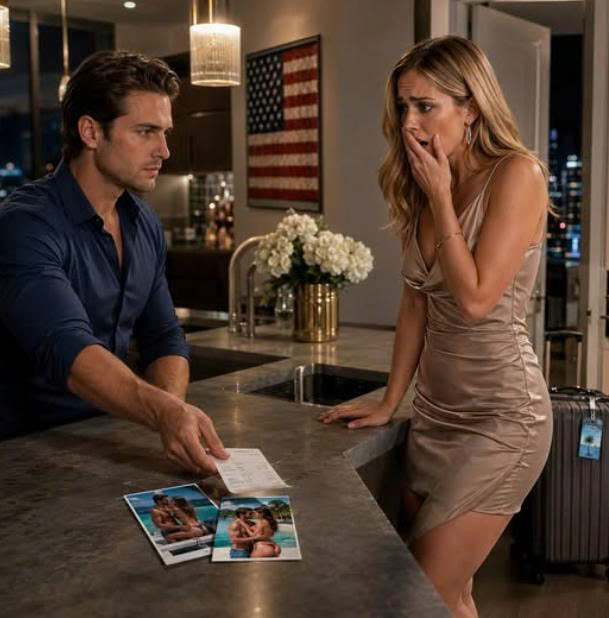
I knew because the door opened at 9:42 p.m. I was sitting at the kitchen island, the same place where she had told me she needed a break. The apartment was clean. Too clean, maybe. Her favorite candle was gone from the counter because I could not stand the smell. The wedding binder sat closed in front of me. Beside it was a plain manila envelope.
Marissa walked in looking tired in a way that had been carefully arranged. No makeup, hair loose, oversized cardigan, face solemn. She had dressed for reconciliation. Or confession. Or performance. Her suitcases rolled behind her. Two suitcases. One had a resort luggage tag still attached.
When she saw me, she stopped. “Hi.”
“Hi.”
She looked around, sensing something had shifted but not yet seeing the blade. “I wasn’t sure you’d be awake.”
“I wanted to hear how the lake was.”
Her face flickered. Small. Fast. “Quiet.”
“Good.”
She set her purse down slowly. “Daniel, I know this has been painful.”
“Yes.”
“I did a lot of thinking.”
“I’m sure.”
Her eyes searched mine. “Are you angry?”
I considered that. “Not in the way you’re hoping.”
That confused her. “What does that mean?”
“It means I’m not going to scream. I’m not going to beg. I’m not going to give you a scene you can survive by calling me unstable.”
Her lips parted. “Why would I call you unstable?”
I opened the envelope and slid the first photo across the island.
Sunset pier. White dress. Adrian’s arm around her waist.
Marissa looked down.
The human face is fascinating when it realizes the lie has already died. Hers did not crumble all at once. It changed in layers. First confusion, because the brain tries to reject evidence. Then recognition. Then calculation. Then fear. Finally, shame arrived, but it came late, and I did not trust it.
She whispered, “Daniel.”
I slid another photo forward. Champagne catamaran. Then another. Beach kiss. Then another. Private plunge pool. Then the receipt.
“I got the gallery email,” I said. “Your paradise memories were waiting.”
She put one hand on the counter as if the room had tilted. “I can explain.”
I almost smiled. “I know you can. That’s the problem. You can always explain.”
“It wasn’t what you think.”
“Which part? The kissing? The honeymoon suite? The rose petals? The couples massage? The romantic pre-wedding retreat?”
Her eyes filled with tears. There she was. The Marissa I knew. The one who could turn water into defense. “I was confused.”
“No. You were specific.”
“That’s not fair.”
“Fair?” I repeated quietly. “You moved our honeymoon to before the wedding. You took another man. You charged upgrades to my card. You told me you were at your aunt’s lake house. Then you texted me from the resort saying the time was helping you see clearly.”
She covered her mouth. “I didn’t mean to hurt you like this.”
That sentence told me more than an apology would have. Like this. Not “I didn’t mean to betray you.” Not “I didn’t mean to lie.” She meant the exposure had gone wrong. The damage had escaped the container she built for it.
“How did you mean to hurt me?”
She flinched. “That’s cruel.”
“No, Marissa. Cruel was letting me pay vendors while you were drinking champagne with Adrian in the suite I booked for our first week as husband and wife.”
At Adrian’s name, something defensive sparked. “Don’t make him the villain.”
I laughed once. “There it is.”
She straightened, tears still on her cheeks. “He didn’t force me.”
“I know.”
“I made choices.”
“Yes.”
“I needed to know if what I felt for him was real before I married you.”
The sentence emptied the room of everything soft. I stared at her. After all the lies, that was the truth she chose? That she had used our honeymoon as a test drive for another future?
“And was it?” I asked.
She looked away.
I nodded. “Thank you.”
“Daniel—”
“No. Thank you. That silence did what your honesty should have done months ago.”
She began crying harder. “I was scared. You’re so stable. You’re so good. And sometimes I felt like I was disappearing into this perfect life you built.”
“I built it with you.”
“No,” she said, shaking her head. “You built it around me. And everyone kept saying how lucky I was, how safe you were, how dependable, and I started wondering if I was choosing you because you were right or because you were easy.”
Easy. Safe. Dependable. Words that used to sound like virtues, now laid out like charges.
“So you chose Adrian because he was difficult?”
“He made me feel alive.”
There it was. The oldest excuse in the history of selfish people. Alive. As if the rest of us were just furniture. As if loyalty was a coma. As if building a future could never compete with being wanted in poor lighting by a man who did not have to remember the electric bill.
I gathered the photos calmly and put them back in the envelope. “The wedding is off.”
Her head snapped up. “Wait.”
“No.”
“Daniel, please. We need to talk about this.”
“We are talking.”
“No, you’re deciding.”
“Yes.”
She stared at me, stunned that I had taken control of a life she thought she could pause like a subscription. “You can’t just cancel everything.”
“I can.”
“What about the guests?”
“They’ll be informed.”
“My family will be humiliated.”
“That is unfortunate.”
Her expression shifted then. Fear became anger because anger is easier for guilty people to wear. “You’re being cold.”
“I learned from the weather.”
“What does that mean?”
“It means while you were on our honeymoon with another man, something in me froze.”
She pressed her palms against the island. “I made a mistake.”
“No. A mistake is forgetting the florist deposit. A mistake is ordering the wrong cake flavor. You planned travel, lied about your location, modified a reservation, invited Adrian, upgraded experiences, posed for photographs, came home, and prepared to perform emotional uncertainty. That is not a mistake. That is choreography.”
Her mouth opened, but nothing came out. For once, language failed her.
I stood. “You can sleep in the guest room tonight. Tomorrow we discuss logistics. The ring stays here.”
Her hand went automatically to it. “Daniel…”
“The ring stays here.”
She looked at the diamond as if seeing it for the first time as an object with consequences. Then slowly, shaking, she pulled it off and placed it on the island. The sound it made against the stone counter was small. Final.
I did not sleep that night, but I did not cry either. I lay in the bedroom while she sobbed behind the guest room door, and I felt something that was not peace exactly, but distance. She had taken our honeymoon. She had taken my trust. She had taken the version of me who would have asked what he did wrong. But she had not taken the part of me that could still choose.
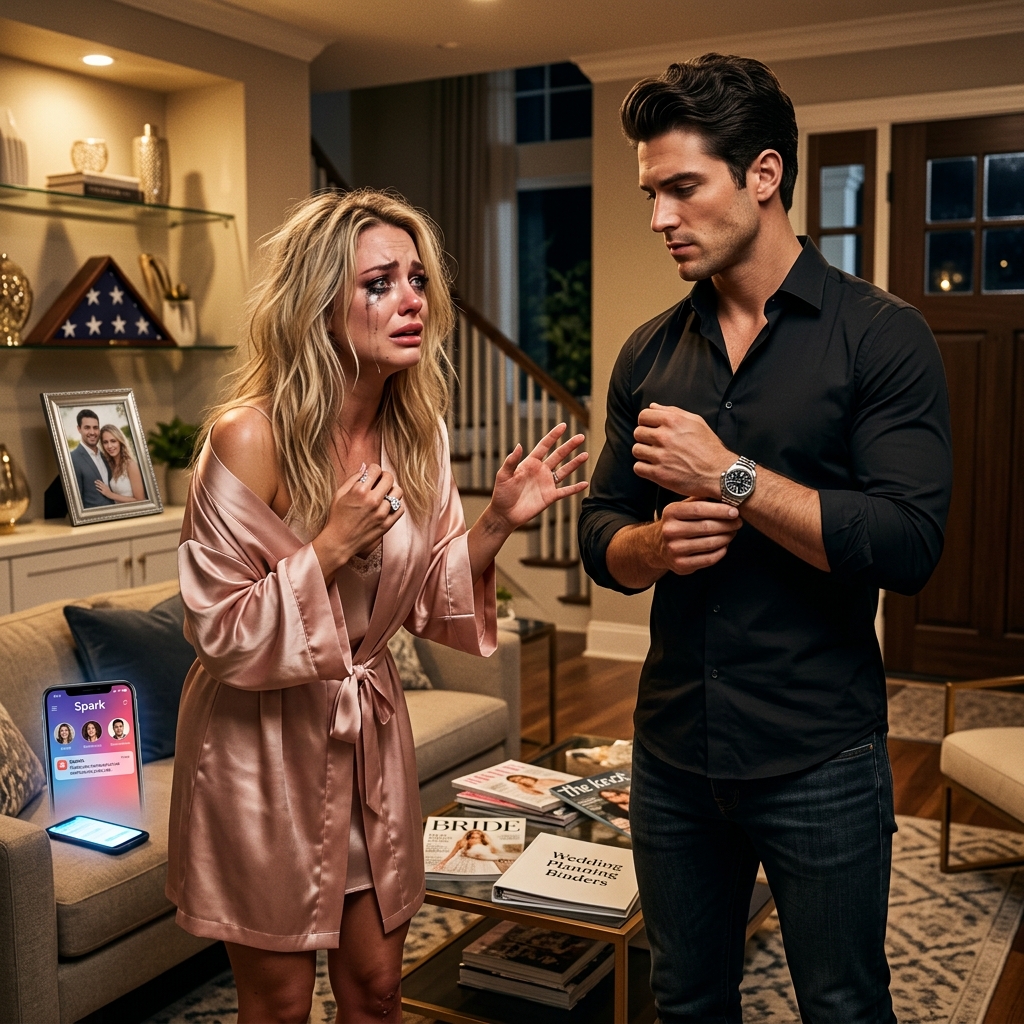
The next morning, Marissa tried softness first. She made coffee. She wore the robe I had bought her. She said she wanted counseling. She said she had ended things with Adrian. She said the trip had shown her the difference between fantasy and real love. “Being with him there felt exciting,” she admitted, “but it also felt empty. I kept thinking about you.”
I looked at her over the rim of my coffee. “Did you think about me before or after the couples massage?”
Her face collapsed. “Please don’t do that.”
“Do what?”
“Punish me with details.”
“The details are the only honest part of this conversation.”
She cried again. I did not comfort her. That was new. For three years, her tears had been a command my body obeyed. This time, they were weather outside a window.
At noon, Nathan came over with paperwork and the expression of a man who had brought a shovel to bury nonsense. Marissa looked alarmed when she saw him. “Why is your brother here?”
“To keep this clean,” I said.
“I don’t need a lawyer to talk to my fiancé.”
“You don’t have a fiancé.”
The sentence landed hard. Nathan glanced at me, not with pity but approval.
We went through everything. The apartment lease was in my name. She had moved in after we got engaged. She had thirty days to leave. Shared purchases would be divided by receipts or agreement. Wedding cancellations would be handled through formal notices. Any charges she authorized on my card for the resort after the reservation change would be itemized and requested for repayment. Marissa became increasingly pale as Nathan spoke.
“You’re making this transactional,” she said.
Nathan looked at her over his glasses. “It became transactional when you used his credit card for a romantic trip with another man.”
She hated him in that moment. I could see it. Maybe she had always hated the people who made me harder to manipulate.
“I don’t have that kind of money sitting around,” she said.
“You had enough confidence to spend it,” Nathan replied.
I raised a hand slightly. “Nathan.”
He leaned back, satisfied.
Marissa turned to me. “Are you really going to make me repay the honeymoon?”
“No,” I said.
Hope flashed in her eyes.
“I’m going to give you the opportunity to repay the charges you made after changing the booking. If you don’t, we’ll handle it formally.”
“That’s the same thing.”
“No. The same thing would be me using your money to take another woman on your dream trip and then asking you to care about my emotional confusion.”
She looked down.
By evening, the news began spreading because weddings are public machines. Once you stop feeding them lies, they make noise. I sent a simple message to our guest list: “Marissa and I will not be moving forward with the wedding. We ask for privacy and appreciate your understanding.” No details. No accusations. No photos. I gave her dignity she had not earned because I wanted my hands clean. Marissa’s version, however, apparently traveled faster. By midnight, I received three messages from mutual friends asking if it was true I had “abandoned her during a mental health crisis.” Another asked whether I had “financially controlled her.” One brave idiot named Kyle texted, “Bro, cold feet happen. Don’t ruin her reputation over insecurity.”
I stared at that one for a long time. Then I sent him one photo. Just one. The catamaran champagne shot. Marissa laughing, Adrian’s hand on her thigh.
Kyle replied nine minutes later.
“Holy shit. I’m sorry.”
I did not send more. I did not need to. Truth, when chosen carefully, travels with better posture than gossip.
The confrontation with her parents happened two days later at their house in Buckhead.
Celeste demanded it. “We need to sit down like adults,” she said in a voicemail sharp enough to cut bread. “This family deserves answers before you humiliate my daughter publicly.” I almost ignored it, but Nathan advised that a controlled meeting could prevent more lies. So I went, carrying a folder.
Marissa was there, sitting on the cream sofa in her parents’ formal living room, looking like a woman awaiting sentencing in a magazine spread. Her father, Richard, stood by the fireplace with his arms crossed. Celeste sat upright in a pearl-colored chair, wearing judgment like perfume. Adrian was not there, of course. Men like Adrian rarely appear for the invoice.
Celeste began before I sat down. “Daniel, I want to say first that we are very disappointed in how abruptly you’ve handled this.”
I placed the folder on my lap. “Are you?”
“Marissa was overwhelmed. Weddings are stressful. Women sometimes need space before making such a serious commitment.”
I looked at Marissa. She would not meet my eyes.
Richard cleared his throat. “Son, nobody’s perfect. If there was some disagreement, maybe it got out of hand.”
I almost felt sorry for him. He did not know yet. Or maybe he knew only the softened version: Marissa confused, Daniel cold, wedding paused by male pride. Celeste continued, “What concerns me is the vindictive nature of demanding money from her during an emotional crisis.”
That was when I opened the folder.
“I agree emotional crises are serious,” I said. “This, however, was a honeymoon.”
I placed the first photo on the coffee table. Celeste looked down. Her mouth tightened. Richard stepped closer. Marissa closed her eyes.
“This is from the resort gallery sent to my email,” I said. “The honeymoon reservation I paid for was moved earlier by Marissa. She went with Adrian Cole while telling me she was at her aunt’s lake house. These are receipts for upgrades charged to my card after the reservation was changed. This is the concierge note confirming romantic arrival arrangements.”
No one spoke.
I placed the beach kiss photo beside the receipt.
Celeste’s face changed color. “Marissa.”
Marissa whispered, “Mom.”
Richard picked up the receipt with shaking hands. He read silently, then looked at his daughter as if she had become someone else in the time it took ink to form numbers. “You went on the honeymoon?”
Tears slid down Marissa’s face. “I was confused.”
Richard’s voice broke. “With another man?”
“It wasn’t that simple.”
I stood. “It was exactly that simple. The complicated part is what people say afterward.”
Celeste was staring at the photos as though hatred needed a target and could not decide between me, her daughter, Adrian, or the glossy paper. “Why would you bring these here?”
“Because you asked for answers.”
“You could have just told us.”
“I did. Your family preferred a version where I was cruel. Paper is less emotional.”
Richard sank into a chair. For the first time since I had known him, he looked old.
Celeste turned on Marissa. “Do you understand what you’ve done?”
Marissa sobbed. “I know.”
“No, you don’t,” Celeste snapped. “You have no idea.”
It was strange, watching a woman who had defended her daughter like a queen suddenly realize the kingdom was on fire from inside the palace. I felt no satisfaction. Only exhaustion.
Richard looked at me. “Daniel, I am sorry.”
That nearly undid me. Not because it fixed anything, but because sincerity had become so rare in that room that one honest sentence felt violent.
“Thank you,” I said.
He nodded toward the folder. “We’ll make sure you’re repaid.”
Marissa looked up sharply. “Dad—”
He did not look at her. “You will repay him.”
Celeste pressed her lips together, then said, “And the wedding?”
I almost laughed. “There is no wedding.”
“We know that,” she said stiffly. “I meant the cancellation costs.”
“I’m handling the contracts tied to my name. Anything your family signed is yours. Anything Marissa charged under my account after the fraudulent reservation change will be repaid or disputed.”
“Fraudulent is a strong word,” Marissa said weakly.
Nathan, who had come with me and remained silent until then, finally spoke from near the doorway. “It is also a useful one.”
Celeste glared at him. He smiled politely.
That meeting ended with no hugs, no closure, no dramatic begging. Just Marissa crying into her hands while her father stared at the floor and her mother looked like she was calculating how to survive embarrassment without oxygen. I left the photos on the table. I had copies.
Two weeks before the date that was supposed to be my wedding, Adrian called me.
I was at work, reviewing quarterly forecasts, when an unknown number appeared. I almost ignored it. Something made me answer.
“Daniel,” he said, like we were old colleagues. “It’s Adrian.”
I leaned back in my chair. “No.”
“I think we should talk.”
“No.”
“Man to man.”
That did make me laugh. Quietly, but enough.
“You forfeited that category.”
He sighed, as if I was being difficult. “Look, I know this situation is messy.”
“Messy is spilling wine. This was organized.”
“I didn’t know the whole story.”
“You didn’t know she was engaged?”
Silence.
“You didn’t know the honeymoon was mine?”
More silence.
“Adrian, what exactly didn’t you know?”
His voice hardened. “She told me you two were basically done.”
“While wearing my ring?”
“She said the relationship had been over emotionally for a long time.”
There it was again. The sacred language of cheaters. Emotionally over. As if vows, plans, families, money, and trust are just paperwork after feelings start flirting elsewhere.
“Then she should have returned the ring before boarding the plane.”
He exhaled sharply. “I didn’t call to fight.”
“Why did you call?”
“Marissa is spiraling.”
“That sounds like a Marissa issue.”
“She feels like everyone is turning on her.”
“Reality can feel that way when you’ve been lying to everyone.”
He lowered his voice. “You don’t need to destroy her.”
I looked through the glass wall of my office at people walking past with coffee cups, unaware that a man who helped steal my future was asking me to be gentle with the thief.
“I haven’t destroyed her,” I said. “I canceled a wedding and told the truth when asked.”
“You sent photos around.”
“I sent one photo to one person who accused me of insecurity. Anything else is your shared network doing math.”
“You’re enjoying this.”
The accusation was so wrong it bored me. “Adrian, I was supposed to be packing for my wedding. Instead, I’m negotiating cancellation clauses and explaining to my mother why the woman she welcomed into our family used my honeymoon as an affair retreat. Enjoyment is not the word.”
He was quiet for a moment. Then he said, softer, “She doesn’t want me now.”
I closed my eyes.
There it was. The real reason for the call. Not guilt. Not honor. Rejection. Marissa had gone to paradise with him, then crawled back toward me when fantasy became unstable. Adrian was not calling because he cared what he had done to me. He was calling because he had not won.
“That must be painful,” I said.
“You don’t have to be sarcastic.”
“I’m not. I’m sure being chosen as an escape and rejected as a destination is uncomfortable.”
He cursed under his breath. “You’re a smug bastard.”
“No,” I said. “I’m just done being a useful fool.”
I hung up.
The week before the wedding date, Rosemont House called with an unexpected offer. Because our cancellation had drawn attention inside their management team, and because Nathan’s letter had used words like “misrepresentation,” “unauthorized modification,” and “potential reputational exposure,” they were willing to convert a portion of the wedding payment into a private event credit. Not a full refund, but enough that I did not feel robbed twice.
At first, I rejected the idea. What private event could I possibly want in the same venue where I had imagined marrying Marissa? But my mother, who had spent days crying quietly and pretending not to, surprised me.
“Use it,” she said.
“For what?”
“For yourself.”
“That sounds depressing.”
“No,” she said. “Let the room see you standing.”
My mother was not dramatic. She was a retired school librarian who believed in soup, thank-you notes, and leaving places cleaner than you found them. If she said let the room see you standing, she meant something deeper than revenge.
So on what would have been my wedding weekend, I hosted a dinner.
Not a party. Not a celebration. A dinner. Family, close friends, a few out-of-town relatives who had already bought flights and refused to let me sit alone in an apartment full of canceled dreams. Rosemont House moved us from the ballroom to a smaller garden room with windows overlooking the oaks. The staff removed all wedding décor. No flowers from Marissa’s palette. No string quartet. No cake. Just warm lighting, long tables, good food, and the strange tenderness of people showing up when spectacle has failed.
I wore the suit I had bought for the rehearsal dinner, not the wedding tux. My mother cried when she saw me, then pretended she had allergies. Nathan gave a toast that began, “I promise this will not be legally admissible,” which made everyone laugh harder than it should have. My father, a quiet man who fixed things more easily than he discussed feelings, gripped my shoulder and said, “Proud of you.” That was all. It was enough.
Halfway through dinner, my phone buzzed.
Marissa.
I had not blocked her because logistics remained, but I had muted her everywhere except calls. The message preview appeared.
“I’m outside. Please. Just five minutes.”
My chest tightened. I looked toward the garden doors.
Nathan noticed. “No.”
“I didn’t say anything.”
“You got the look.”
“What look?”
“The compassionate idiot look.”
I almost smiled. “I’m just going to hear what she wants.”
“She wants access.”
“I know.”
But I went anyway, because healing is not the same as pretending curiosity died.
Marissa stood beneath the portico outside Rosemont House, wearing a pale blue dress I recognized from our engagement photos. Her hair was curled. Her makeup was perfect except around the eyes. She looked beautiful, devastated, and strategically familiar.
For one second, memory tried to betray me. I saw her under the Asheville sunset saying yes. I saw her dancing barefoot in my kitchen. I saw the woman I had loved before I knew love could be used as a costume.
Then I saw the resort photo in my mind, Adrian’s hand on her thigh, and memory stepped back.
“What are you doing here?” I asked.
She swallowed. “I heard you were having something tonight.”
“Who told you?”
“Does it matter?”
“Yes.”
She looked away. “Kyle.”
Of course.
“I wanted to see you,” she said. “I needed to see you.”
“This is not a good time.”
“I know. I just… today was supposed to be our rehearsal dinner.”
“No. Today was supposed to be the day before our wedding. The rehearsal dinner was yesterday.”
Pain moved across her face. “You remember everything.”
“I paid for most of it. Hard to forget.”
She flinched. “I deserved that.”
“I’m not interested in what you deserve.”
“Then what are you interested in?”
“Peace.”
She started crying, but quietly this time. “I made the biggest mistake of my life.”
I looked out at the rain-wet driveway, at the valet stand, at the soft glow from the garden room behind me. “Probably.”
“I don’t love him.”
“I know.”
Her eyes lifted, hopeful and wounded. “You do?”
“Yes. I think you loved how he made you feel until feeling became consequence.”
She pressed a hand to her chest. “That’s not fair.”
“Maybe not.”
“I love you, Daniel.”
I breathed in slowly. There it was, the sentence I had wanted so badly two weeks earlier that I might have forgiven almost anything to hear it. Now it arrived late, carrying luggage.
“I believe you love what I gave you,” I said. “I believe you love being forgiven by me. I believe you love the version of yourself that exists when I’m standing beside you. But I don’t know if you ever loved me in a way that required you to protect me when I wasn’t watching.”
Her tears spilled faster. “I can learn.”
“You should. But not with me.”
She covered her mouth. Through the windows behind me came laughter from the dinner. My people. My family. The room where I was not being celebrated as a groom, but supported as a man.
“Is there really no chance?” she whispered.
I thought about lying. Saying maybe someday. Giving her a thread to hold so I could feel less cruel. But false hope is just another kind of cowardice.
“No,” I said. “There’s no chance.”
She nodded slowly, as if each movement hurt. “I don’t know who I am without you.”
That sentence, more than anything else, convinced me leaving was mercy for both of us. “Then find out before you attach yourself to another person.”
For a moment, she looked angry again. Then tired. Then very young.
“I’m sorry,” she said.
“I know.”
“Do you forgive me?”
I looked at her for a long time. Behind her, the driveway curved toward the main road. Beyond that, the life I thought I was entering had disappeared. But not all disappearance is loss. Sometimes what vanishes is the trap.
“Not yet,” I said. “But I’m going to. Not because you asked. Because I refuse to keep living inside what you did.”
She cried harder, but she did not argue. Maybe some part of her finally understood that tears were no longer keys.
I went back inside.
Everyone pretended not to watch me return, which meant everyone had absolutely watched. Nathan raised an eyebrow. I nodded once. He relaxed. My mother reached for my hand under the table and squeezed it. The dinner continued. People told stories. My cousin made fun of my childhood haircut. My father ordered dessert for the table without asking prices, which was his version of rebellion. For the first time in weeks, I laughed without feeling like I was betraying my own grief.
Later that night, after everyone left, I stood alone in the garden room while the staff cleared plates. The venue manager approached cautiously. “Mr. Harper, we found something in the bridal suite during final turnover from the canceled event prep.” She handed me a small garment bag. Inside was Marissa’s veil. Ivory, cathedral length, embroidered with tiny pearls. She had cried when she picked it out, saying it made her feel like a bride in an old film.
I held it for a moment, then gave it back. “Donate it if you can.”
The manager nodded. “Of course.”
Walking out of Rosemont House alone should have broken me. Instead, the night air felt clean. Not happy. Not healed. But clean. The kind of clean that comes after a storm tears branches from trees and leaves the ground ugly but honest.
In the months that followed, life became smaller before it became better. I moved to a different apartment because every corner of the old one had memories hiding in it. I sold the engagement ring and used part of the money to take my parents to Maine, a place my mother had always wanted to see but never prioritized. We ate lobster rolls on a pier in jackets too thin for the wind, and my father bought a lighthouse magnet like a tourist with no shame. I checked my email less. I cooked badly. I went to therapy because being calm through betrayal does not mean you are unharmed. It just means the wounds learned manners.
Marissa repaid the resort charges in installments through her father at first, then directly after Nathan insisted. Her messages became less emotional over time. Apologies. Updates. Once, a long email about how she had started therapy and realized she had confused attention with freedom. I read it twice and did not reply. Not because I hated her, but because some doors do not need to be slammed. They need to remain closed without performance.
Adrian’s agency lost two hospitality clients after rumors spread through their industry. I had nothing to do with that. People like Adrian forget that luxury circles are small, and nobody trusts a brand strategist who cannot manage his own scandal. Kyle, the mutual friend who had leaked my dinner location to Marissa, sent a six-paragraph apology I accepted in two words: “Take care.” Celeste Vale never contacted me again. Richard sent a Christmas card with no family photo, just a handwritten line: “Still sorry. Hope you are well.” I kept it for reasons I cannot explain.
A year later, I received another resort email.
Same company. Different promotion. “Return to paradise with someone you love.”
I stared at it for a long moment, expecting pain. It came, but softly. A bruise pressed after it has mostly healed. Then I deleted it.
That evening, I met friends for dinner downtown. Nothing dramatic. No beautiful stranger changing my life. No cinematic proof that the universe rewards pain immediately. Real healing is less theatrical than that. It looks like ordering food because you are hungry, not because someone else likes the restaurant. It looks like sleeping through the night. It looks like hearing a woman laugh at the next table and not comparing the sound to someone who broke you. It looks like realizing you have gone an entire day without replaying a photograph.
People ask sometimes how I found out, because humans are drawn to the mechanics of disaster. I tell them the resort sent me the honeymoon photos. They usually react with horror, then fascination, then the same question in different forms. Did you confront her immediately? Did you expose her online? Did you ever think about taking her back?
The answer to the last one is yes. Of course I did. Anyone who says love dies the moment betrayal appears is either lucky or lying. Love does not vanish just because it has been dishonored. It lingers. It argues. It shows you the good memories like evidence for the defense. It asks whether one terrible choice should erase a thousand ordinary tendernesses. But then trust stands up and says, “What about me?” And dignity says, “What about us?” And eventually, if you are very tired and very brave, you stop asking whether you still love someone and start asking what loving them costs you.
Marissa’s break taught me that some people do not ask for space because they are unsure. They ask for space because they want to test another life while keeping yours reserved. They want the comfort of your loyalty and the thrill of your absence. They want to stand at the edge of betrayal and call it self-discovery. They want to hurt you gently enough that they can still recognize themselves afterward.
But there was nothing gentle about those photos.
That was the gift hidden inside the cruelty. The evidence was too bright to romanticize. Too specific to excuse. Too expensive to ignore. I did not have to wonder. I did not have to compete with a ghost. I saw exactly where she was, who she chose, what she smiled like when she thought I was still waiting at home.
And once you see someone clearly, you cannot marry the blur.
So no, I did not get the wedding I paid for. I did not get the honeymoon I planned. I did not get the future I had rehearsed in quiet moments while she slept beside me. But I got something I did not know I needed.
I got out before the vows.
I got the truth before children, before mortgages, before decades of calling suspicion insecurity.
I got my name back from a reservation that never should have been changed.
And one day, when I do love again, I will not mistake being needed for being chosen. I will not confuse tears with honesty. I will not build paradise for someone who keeps another man’s passport in her pocket.
I will still be dependable. I will still pay bills on time. I will still remember birthdays and change the oil before the warning light comes on. I used to think those things made me easy to leave.
Now I know they make me hard to replace.
And somewhere, in a folder I no longer open, there are thirty-eight photographs of the best thing that never happened to me.

![[FULL STORY] The Ring, the Setup, and the Moment I Stopped Funding a Family That Targeted My Son](https://social-media.rabedo.com/thumbnails/1776419843_671534978_1915021669450999_3920134865190385157_n.jpg)