
My daughter said I was the reason her dad left, so I left her too.
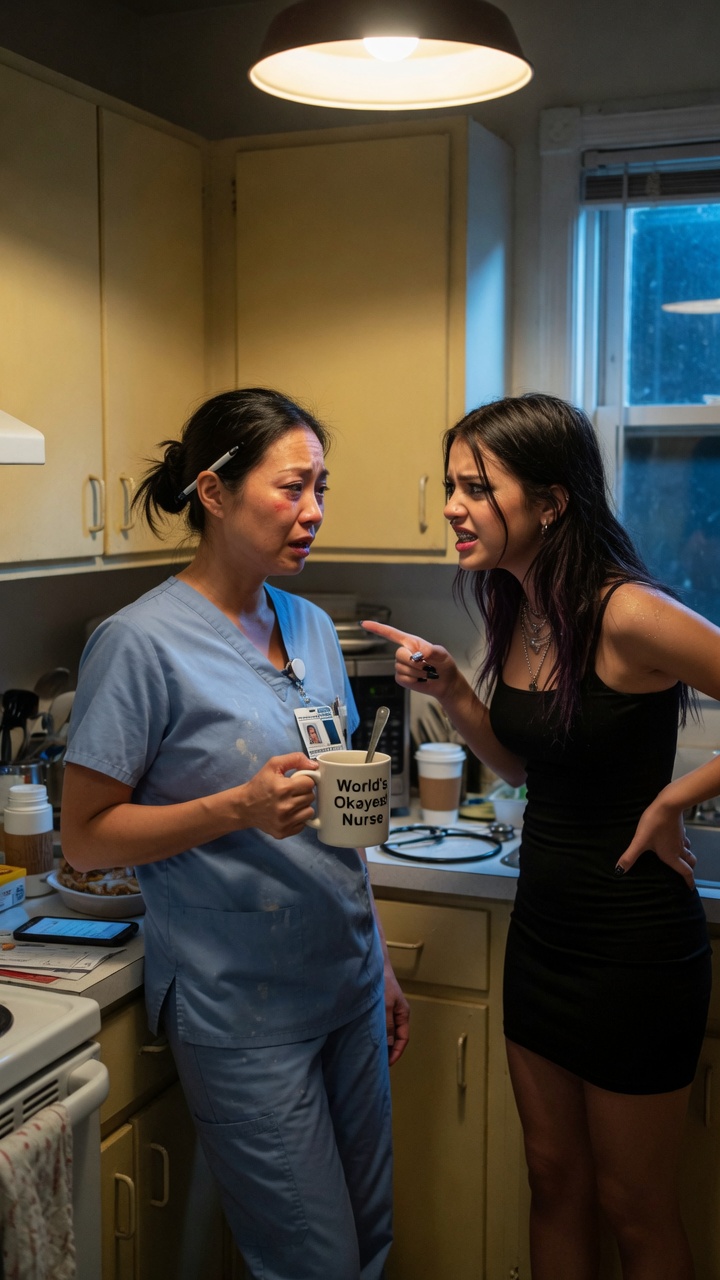
I was standing at the kitchen counter, spoon still in my coffee mug, when Ariana stormed in wearing a short black dress I’d never seen before. It was a school night. She had a geometry test in the morning.
“I’m going to Mia’s. Her mom said I could sleep over.”
I set the mug down slowly. “It’s a Tuesday, Ariana. You have a test.”
Her face twisted. “Mia's mom trusts her. You’re so controlling. No wonder Dad couldn’t stand living here.”
The words landed like a slap. I felt every double shift I’d worked, every night I’d chosen rice and beans so she could have new volleyball shoes, every lie I’d told her about her father “needing space.” All of it rose up in my throat at once.
I should have stayed calm. I should have sat her down and finally told her the truth.
Instead I said, “Fine. You want me gone? I’ll give you some space.”
I grabbed my keys, my phone, and the small duffel I kept in the hall closet for emergencies I never thought I’d need. I drove to my sister’s house two towns over and cried in her guest room until I fell asleep in my scrubs.
The first night I told myself I’d go back in the morning.
The second night I waited for her call.
By the third night, her Instagram stories showed parties, red Solo cups, and a boy with his arm around her I didn’t recognize. She looked… free.
She didn’t text until day five.
“Where’s the permission slip for the field trip? Do we have laundry detergent?”
I typed back the same answer every time: *You can handle it.*
On day seven she called at 11:17 p.m., voice shaking so badly I almost dropped the phone.
“Mom… please come get me. The party got out of control. Older guys showed up. I locked myself in the bathroom. I’m scared.”
Every instinct screamed to run to the car. Instead I asked the question I’d been carrying for years.
“Did you try calling your dad?”
Silence. Then a small, broken sound. “He didn’t answer. He said… he signed away his rights for a reason.”
I was already grabbing my keys.
I found her sitting on the curb outside a house blaring music, mascara streaked down her cheeks, hugging her knees. She climbed into the passenger seat without a word. We drove home in silence.
Inside the kitchen she sat at the table and stared at her hands.
“I didn’t know he signed away his rights.”
I sat across from her. “You were ten. I wanted you to believe your father loved you.”
She looked up, eyes red. “You let me blame you for years.”
“I thought I was protecting you.”
She started crying again. “I already knew, Mom. I just didn’t want to believe it. It was easier to be mad at you.”
I reached across the table and took her hands. “I’m sorry I left. That wasn’t fair.”
She squeezed my fingers. “You’re not the reason he left. You’re the reason I’m okay.”
We sat there holding hands across the old wooden table until the sky outside turned gray.
The next morning I woke to the sound of eggs sizzling. Ariana stood at the stove in her volleyball hoodie, my favorite mug already filled with coffee on the counter. She didn’t look at me when I walked in, just slid a plate of scrambled eggs and toast across the table with a small, uncertain smile.
That was the beginning.
Over the next weeks the questions came slowly, like someone testing thin ice.
One night while I paid bills she asked about the savings account her father emptied. I told her the truth—$15,000 gone three days before he disappeared. How I’d started over from nothing while working double shifts and skipping meals so she could have new shoes for volleyball. She listened with tears running down her face and didn’t interrupt once.
Another night she asked for the real divorce story. I told her how he met someone online, planned his exit while I worked nights, and left while she was at school. No warning. No goodbye. She cried hard that night, but when she stopped she said, “It wasn’t because of me.”
“No, baby. It was never because of you.”
We started family therapy on a sliding scale. The therapist’s office smelled like old carpet and coffee. At first we were awkward, speaking in careful sentences. Then the dam broke. Ariana admitted she’d pushed me away because she was terrified I’d leave like her father. I admitted I’d worked endless shifts partly to avoid the tension at home. We both cried in that small room, and for the first time it felt like good crying.
Volleyball season became our new language. I rearranged shifts so I could attend every game. I watched my daughter move differently on the court—sharper, more focused. After one particularly good win, her coach pulled me aside.
“Whatever changed at home… it’s working. She’s a different player.”
I smiled and said we were figuring things out.
Three months later the school counselor called to congratulate us. Ariana had jumped from C’s and D’s to mostly A’s and B’s. She’d made the varsity team as a freshman. When I told her that night she hugged me so hard I couldn’t breathe.
“I was scared to tell you,” she whispered. “I didn’t want to disappoint you.”
“You could never disappoint me by trying,” I said.
We started new traditions. Saturday mall trips where we tried on clothes we couldn’t afford just for fun. Sunday movie nights with terrible popcorn. Weekly kitchen-table check-ins where we practiced saying hard things without blame.
One evening she showed me texts from the boy who’d been at that disastrous party. He was pushing to hang out again. She blocked him in front of me and said, “I don’t want people who make me feel unsafe.” I was so proud I had to look away so she wouldn’t see me cry.
She asked to stop being friends with Mia. I told her it was her choice. She looked relieved, like she’d been waiting for permission to let go of something heavy.
Slowly, the house felt different. Lighter. There were still fights—about curfew, messy rooms, screen time—but they ended in hours instead of days. We had learned how to argue without destroying each other.
A year after that terrible week, Ariana came home from practice carrying a new friend. Lissa was tall, polite, and carried herself with quiet confidence. They did homework together instead of gossiping. When Lissa’s mom came to pick her up, we stood in the doorway talking like normal parents. It felt like the beginning of something healthy.
Two years later, Ariana asked if we could go back to the kitchen table on the anniversary of that night. We sat with tea and she told me she was grateful I had left, even though it terrified her.
“It forced me to see what I was losing,” she said. “And it forced you to stop protecting me from the truth.”
I told her I was grateful she had called me from that party. That her fear had reminded me what really mattered.
We sat in comfortable silence, the framed championship photo and her English essay about me hanging on the wall behind us. The essay that ended with the line: *My father gave me life, but my mother gave me a home.*
Ariana turned sixteen that spring. We threw a party at the community center with her volleyball teammates and new friends. When it was time for speeches, she stood up and looked straight at me.
“Some people think love is grand gestures. My mom taught me love is showing up. Double shifts, every game, every hard conversation. She never gave up on us even when I made it impossible. She’s the reason I’m standing here today.”
The room clapped. I cried into her shoulder when she hugged me.
She passed her driver’s test on the first try. I let her drive us to volleyball practice and pretended my heart wasn’t in my throat. She was careful, confident, and when we pulled into the parking lot she grinned at me.
“I did okay, right?”
“You did great.”
Our fights still happened, but they no longer threatened the foundation we’d rebuilt. She still rolled her eyes at curfew. I still nagged about her messy room. But every single time she left the house—whether she was annoyed or happy—she paused at the door, turned back, and said, “Love you, Mom.”
Three words. That was all I had ever needed.
Five years after that kitchen-table night, Ariana is studying psychology in college. She wants to help families talk about hard things. She still calls me every Sunday. Sometimes we laugh about how close we came to losing each other. Sometimes we sit in comfortable silence, two people who survived the worst version of themselves and chose to become better.
I still work as a nurse. I still live in the same small house. But now when I come home, the lights are on and there’s music playing and my daughter—who is becoming a remarkable young woman—greets me with a hug instead of blame.
Her father gave her life.
I gave her a home.
And she finally understands the difference.
![[FULL STORY] My Toxic Girlfriend Tried To Ruin My Career Over A Team Photo, So I Legally Banished Her From My Life Forever.](https://social-media.rabedo.com/thumbnails/1777350599_B8.png)
![[FULL STORY] My girlfriend mocked my struggling startup at a family BBQ with a "Jobless" sign, so I moved her entire life out while she slept.](https://social-media.rabedo.com/thumbnails/1777016407_M3.png)


![[FULL STORY] She Called Me “Scaffolding” — So I Let the Structure Stand on Its Own](https://social-media.rabedo.com/thumbnails/1777446166_[FULL STORY] She Called Me “Scaffolding” — So I Let the Structure Stand on Its Own.png)