
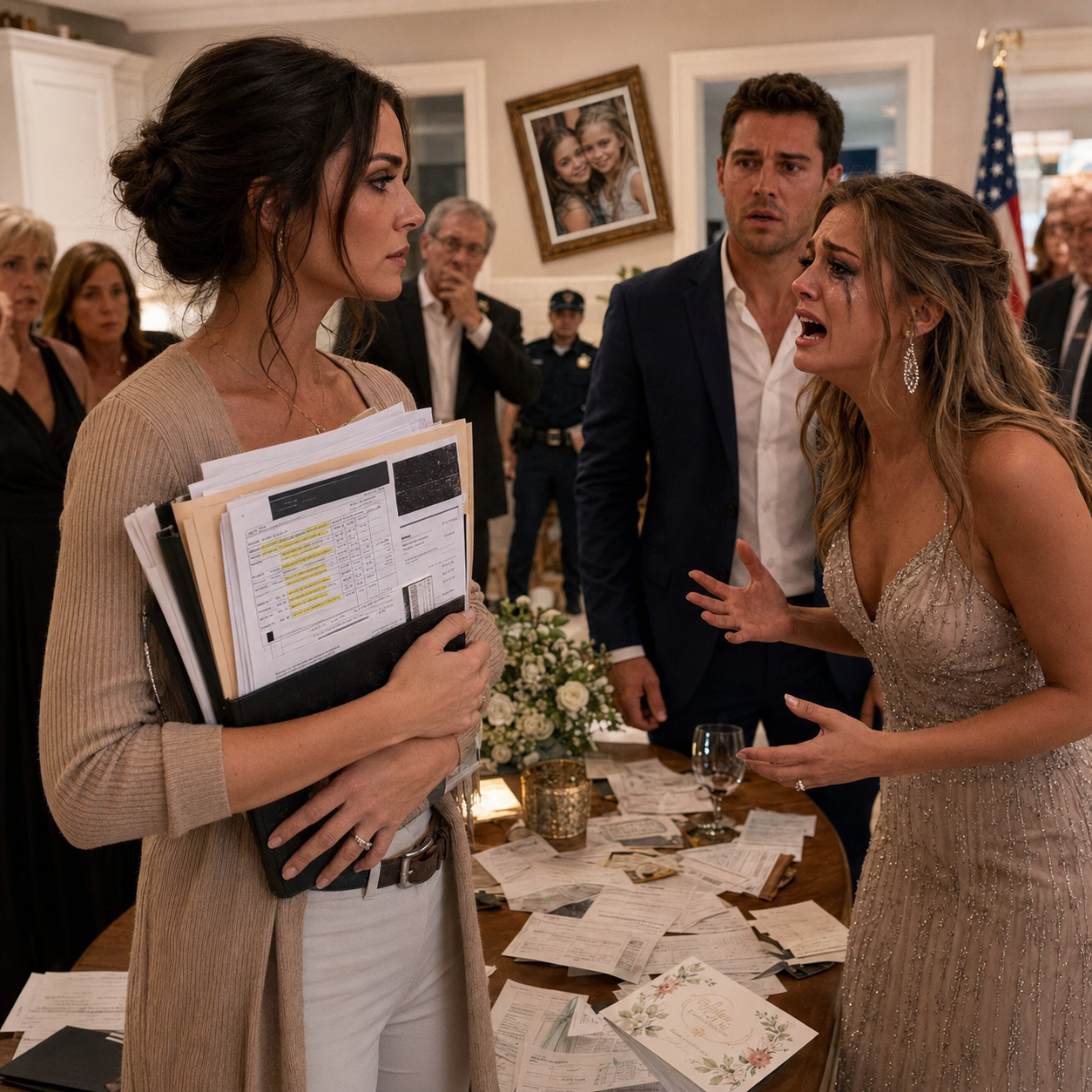
My name is Ava, and the first thing you need to understand about my sister is this:
Tessa never thought consequences were real.
Growing up in Columbus, she learned early that tears worked faster than honesty. If she broke something, she cried before anyone could ask questions. If she borrowed money, she acted embarrassed long enough for people to feel guilty bringing it up again. If she insulted someone, she called it sarcasm. If she hurt you, somehow you ended up apologizing for being hurt.
And our family let her.
Especially our mother.
I was the older sister. The dependable one. The practical daughter who worked double shifts in college, remembered birthdays, paid bills on time, and quietly fixed problems nobody else wanted to touch.
Tessa was different.
Beautiful. Emotional. Magnetic.
The kind of woman people rushed to protect even while she was actively setting fires behind them.
For years, I convinced myself none of it mattered.
Then I got engaged.
His name was Nalin, and loving him felt like finally exhaling after years of holding my breath.
He was calm in all the ways my family wasn’t. Gentle without being weak. Thoughtful without needing praise for it. He remembered tiny details about me nobody else noticed, like how I hated carnations because they smelled like funeral homes.
We spent two years saving for our wedding.
Nothing extravagant.
A restored barn outside Asheville. Eighty guests. String lights. Good food. A live acoustic band. The kind of wedding built carefully by two people who understood exactly how much everything cost.
By January, we had saved twenty-three thousand dollars.
Part of it sat in my personal account.
The rest was in a shared wedding savings account.
My mother contributed five thousand dollars from my late father’s life insurance payout.
She handed me the envelope quietly one afternoon and said, “Your father would’ve wanted to walk you into something happy.”
That money meant everything to me.
Not because of the amount.
Because it felt like one final gift from my dad.
Three months before the wedding, Tessa called crying.
Real crying.
The dramatic, breathless kind she weaponized better than anyone I’ve ever known.
She said she and her fiancé Brandon were behind on their apartment deposit.
She said she was scared he’d realize she was irresponsible.
She said she just needed three thousand dollars temporarily.
I should’ve recognized the pattern immediately.
Instead, I hesitated.
Old habits are dangerous that way.
I told her I couldn’t touch the wedding account without talking to Nalin first.
She started crying harder.
“Ava, I’m your sister. I’m not some stranger asking for charity.”
For once in my life, I said no.
The crying stopped instantly.
She hung up.
Two days later, my mother called me sounding disappointed.
“Tessa says you humiliated her.”
I remember gripping the kitchen counter so tightly my knuckles hurt.
“She asked for money from my wedding fund.”
“She’s family.”
“So is Nalin.”
My mother sighed the way she always did when I refused to play my assigned role.
“You’ve always been too hard on her.”
That sentence followed me around for days.
A week later, I logged into the wedding account to pay the photographer’s second deposit.
The balance looked wrong immediately.
Not low.
Gone.
Twenty-one thousand six hundred dollars had disappeared through three separate transfers.
For a second, I genuinely thought the bank website was malfunctioning.
Then my stomach dropped.
Nalin came home early, and we sat side by side at the kitchen table pulling transaction records.
Every transfer led to an account tied to Tessa.
I didn’t cry.
Not yet.
Instead, something inside me went very still.
People think betrayal creates chaos.
Sometimes it creates focus.
I started documenting everything immediately.
Screenshots.
Transfer timestamps.
Transaction IDs.
Bank contacts.
Login records.
Nalin asked the obvious question.
“How did she get access?”
Then I remembered.
Months earlier, when the bank website crashed while we were visiting my mother, Tessa helped me reset the login credentials on her laptop.
She must’ve saved them.
My phone rang before either of us could say anything else.
Tessa.
I answered on speaker.
She didn’t sound guilty.
She sounded annoyed.
“Ava, before you freak out—”
That was the moment I knew everything.
Not “What happened?”
Not “I’m sorry.”
Before you freak out.
I asked her where the wedding money was.
Immediately, she started crying.
“I borrowed it.”
Nalin shut his eyes.
I asked quietly, “You stole twenty-one thousand dollars?”
“It’s not stealing if I’m paying it back!”
“Without permission?”
Then her tone changed completely.
Cold.
Sharp.
“You were being selfish, Ava.”
I actually laughed at that.
Selfish.
She had drained our wedding account and was calling me selfish.
Then she explained.
Apparently, she and Brandon had invested the money into a “business opportunity” that was supposedly going to double within six months.
That was the moment I asked the only question that truly mattered.
“Where’s Dad’s money?”
Silence.
Long enough to answer everything.
Finally she whispered, “It’s all together, Ava. Stop being dramatic.”
That nearly broke me.
Not the theft.
Not even the amount.
The fact she used our dead father’s money like casino chips.
I hung up immediately.
Then the texts started.
“I’m going to pay it back.”
“Don’t tell Mom everything.”
“If you call the police, you’ll destroy this family.”
I screenshotted every message.
By evening, the family group chat exploded.
Aunts calling it a misunderstanding.
Cousins insisting family shouldn’t involve police.
Relatives who had contributed absolutely nothing to my life suddenly becoming experts on forgiveness.
I finally typed one message.
“Tessa stole $21,600 from my wedding account. I have records and written admission. I will handle this legally.”
Then I left the group chat.
My phone became unusable for the next hour.
Calls.
Voicemails.
Guilt.
Pressure.
One cousin actually texted, “Weddings last one day. Sisters are forever.”
I stared at that message thinking about how easily people romanticize loyalty when they’re not the ones being robbed.
Brandon finally texted me too.
“You need to calm down. Tessa made a mistake.”
I replied with one question.
“Did you receive the money?”
No answer.
Interesting.
Nalin wanted to call the police immediately.
He was right.
But I waited until morning because I wanted everything organized perfectly.
No emotional accusations.
Just evidence.
At nine o’clock sharp, I contacted the bank fraud department.
At ten-thirty, I filed the police report.
At noon, I hired an attorney named Dana.
By evening, Tessa knew.
She showed up at our apartment screaming outside the front door while the Ring camera recorded everything.
First she cried.
Then she screamed.
Then she accused me of ruining her life.
Then she yelled something that became extremely useful later.
“She’s too scared to actually press charges!”
I saved the footage in three separate locations.
Two days later, Tessa pivoted strategies.
She posted a crying selfie online with the caption:
“Sometimes the people closest to you punish you for struggling.”
Hundreds of sympathy comments appeared immediately.
My aunt wrote, “Real family knows your heart.”
I screenshotted everything.
Nalin asked how I was staying so calm.
I told him the truth.
“I’m not calm. I’m focused.”
Inside, I was grieving everything at once.
The money.
The wedding.
The father I missed.
The sister I never really had.
And maybe hardest of all, the realization that my family still expected me to absorb damage quietly so Tessa wouldn’t have to feel consequences.
But this time, I refused.
The bank investigation moved quickly.
The transfers came directly from Tessa’s laptop using saved credentials.
Two transfers went into her personal account.
The third went into Brandon’s business account.
Suddenly Brandon wanted to negotiate.
He called Nalin instead of me.
Coward.
Nalin placed him on speakerphone while I listened silently.
“This got out of control,” Brandon said nervously.
Nalin replied, “You received stolen money.”
“I didn’t know it was stolen.”
I wrote that sentence down immediately.
Then Nalin asked why he ignored me after I confronted him.
Silence.
Finally, Brandon offered five thousand dollars upfront and installments for the rest.
I shook my head before Nalin even looked at me.
“Talk to the lawyer,” he said.
Brandon’s voice hardened instantly.
“You’re really letting her do this?”
Nalin answered calmly.
“She’s doing this. I’m supporting her.”
I loved him more in that moment than I can explain.
A week later, my mother came over.
She sat stiffly on my couch and said, “I know what Tessa did was wrong…”
Then came the real sentence.
“But pressing charges could ruin her future.”
There it was.
The family religion.
Protect Tessa from consequences at all costs.
I looked at my mother and asked quietly, “What about my future?”
She started crying.
I didn’t comfort her.
That was new for both of us.
Then I finally said the thing I’d needed to say for twenty years.
“You taught her that if she cries hard enough, someone else pays for what she does.”
My mother covered her mouth like I’d slapped her.
Maybe emotionally, I had.
The wedding got postponed.
Not canceled.
Postponed.
And strangely, strangers showed us more kindness than most of my relatives.
The venue owner moved our date without charging fees.
The caterer reduced payments.
The photographer gave us extra time.
It hurt realizing how much compassion existed outside my family while I spent years begging for scraps of it inside.
Then came Tessa’s bridal shower.
Yes, she still planned to get married like nothing had happened.
My aunt asked if I’d attend.
I said no.
But I sent a gift.
A small white envelope.
Inside was a copy of the police report.
Along with one sentence.
“For the bride who believes family never presses charges.”
Tessa called screaming within the hour.
“You humiliated me!”
I answered calmly.
“No. I documented you.”
“You’re ruining my wedding!”
“You stole from mine.”
Then I hung up.
That moment scared me a little.
Because for the first time, I understood how easy revenge could become addictive.
I didn’t want cruelty.
I wanted accountability.
So after that, I let the lawyers handle everything.
Then Tessa made the single worst mistake possible.
She sent me a three-minute voice note.
In it, she admitted taking the money and said, laughing, “Your wedding was going to be boring anyway. At least Brandon and I tried to turn it into something bigger.”
I forwarded it directly to Dana.
Her reply came seconds later.
“She’s extremely helpful.”
A month later, criminal charges became official.
No dramatic arrest scene.
Just paperwork.
Court dates.
Consequences finally becoming real.
The family split immediately.
Some relatives stopped speaking to me entirely.
Others secretly admitted I was right but begged me not to mention their support publicly.
Cowards always prefer privacy.
Three weeks later, my mother showed up carrying a cardboard box.
Inside were my father’s watch, old photographs, and his handwritten breakfast recipe book.
She said quietly, “Tessa asked for these last year.”
Then she handed them to me instead.
It was the first boundary I had ever seen my mother enforce against her.
Late.
Tiny.
But real.
Eventually, Tessa accepted a plea deal.
Restitution.
Probation.
Community service.
Formal apology.
No contact order.
Two days later, Brandon ended their engagement.
Not because he suddenly discovered morals.
Because consequences made her inconvenient.
Our wedding finally happened in October.
Smaller.
Quieter.
Forty guests instead of eighty.
And it was perfect.
Not because everything looked expensive.
Because every person there genuinely wanted us happy.
Nalin cried when he saw me walking down the aisle.
My mother tied my father’s watch around my bouquet and whispered, “He’d be proud of you.”
For the first time in years, I believed her.
At the reception, our venue owner raised a glass and said, “Most couples plan a wedding. These two fought for a marriage before it even started.”
Everyone applauded.
But the greatest revenge wasn’t Tessa losing Brandon.
Or court.
Or restitution.
It was this:
Being loved without needing to earn protection first.
Months later, the final restitution payment cleared.
Every dollar returned.
Including legal fees.
Nalin and I used part of the money to create a scholarship fund for foster youth.
I wanted something beautiful to grow from money rooted in betrayal.
A year later, I saw Tessa in a grocery store.
She looked smaller somehow.
Not physically.
Emotionally.
She quietly told me she was in therapy.
Then she apologized.
A real apology this time.
Not manipulative.
Not dramatic.
Just sad.
I looked at her for a long moment and finally said, “I hope you become someone who never does this again.”
Then I walked away.
Because forgiveness is not the same thing as reopening the door.
And peace sometimes means refusing to carry someone else’s chaos anymore.
People still ask whether I regret pressing charges against my own sister.
I always say no.
I regret waiting so long to believe I deserved protection too.
Because family should never mean sacrificing yourself so someone else can avoid consequences.
And if someone betrays you, then calls your boundaries cruelty, understand something important:
They are not afraid of hurting you.
They are afraid you finally stopped protecting them from themselves.

![[FULL STORY] She Claimed: 'It's Not Cheating Since We're Not Married Yet' After I Learned She Slept With Her](https://social-media.rabedo.com/thumbnails/1776764387_13.png)