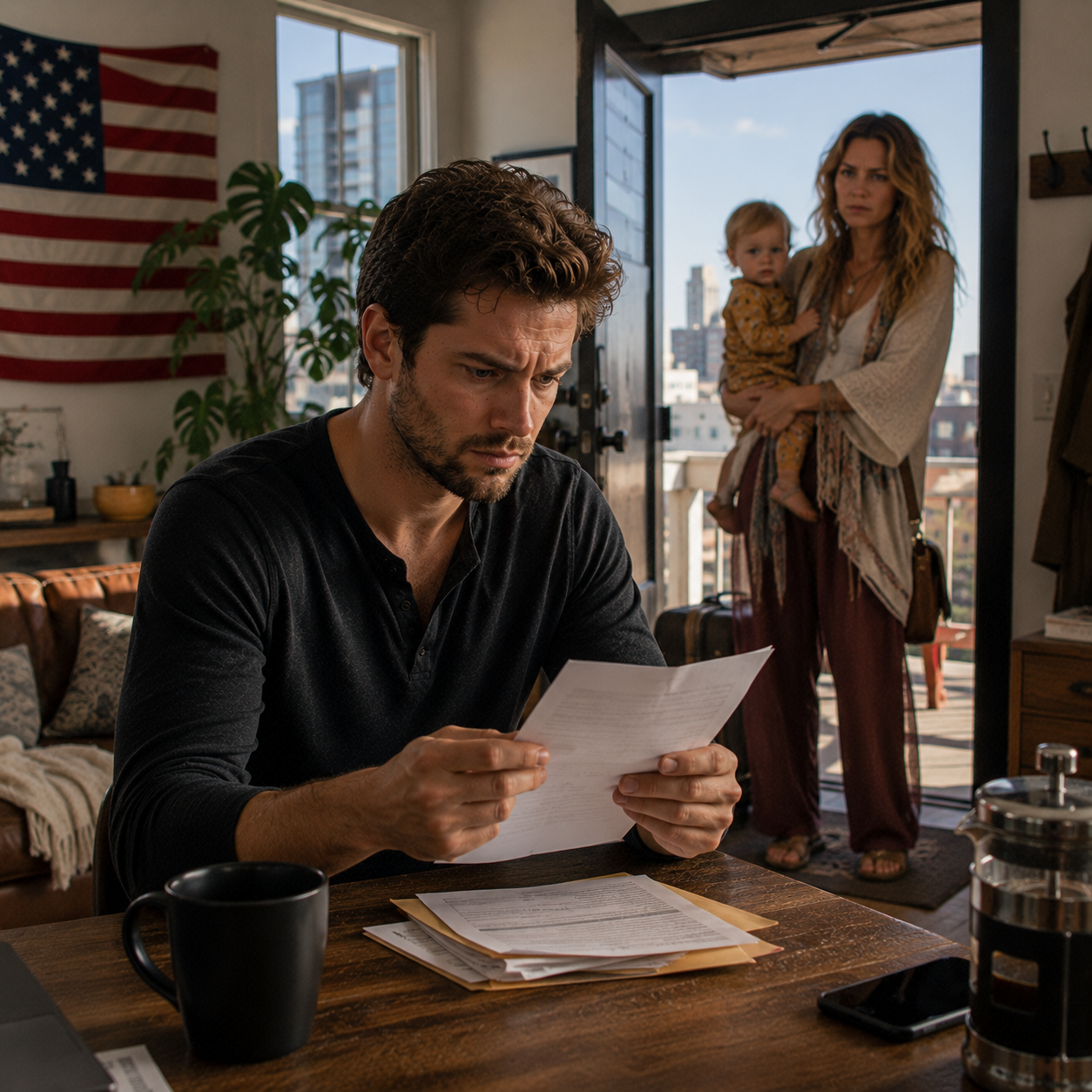
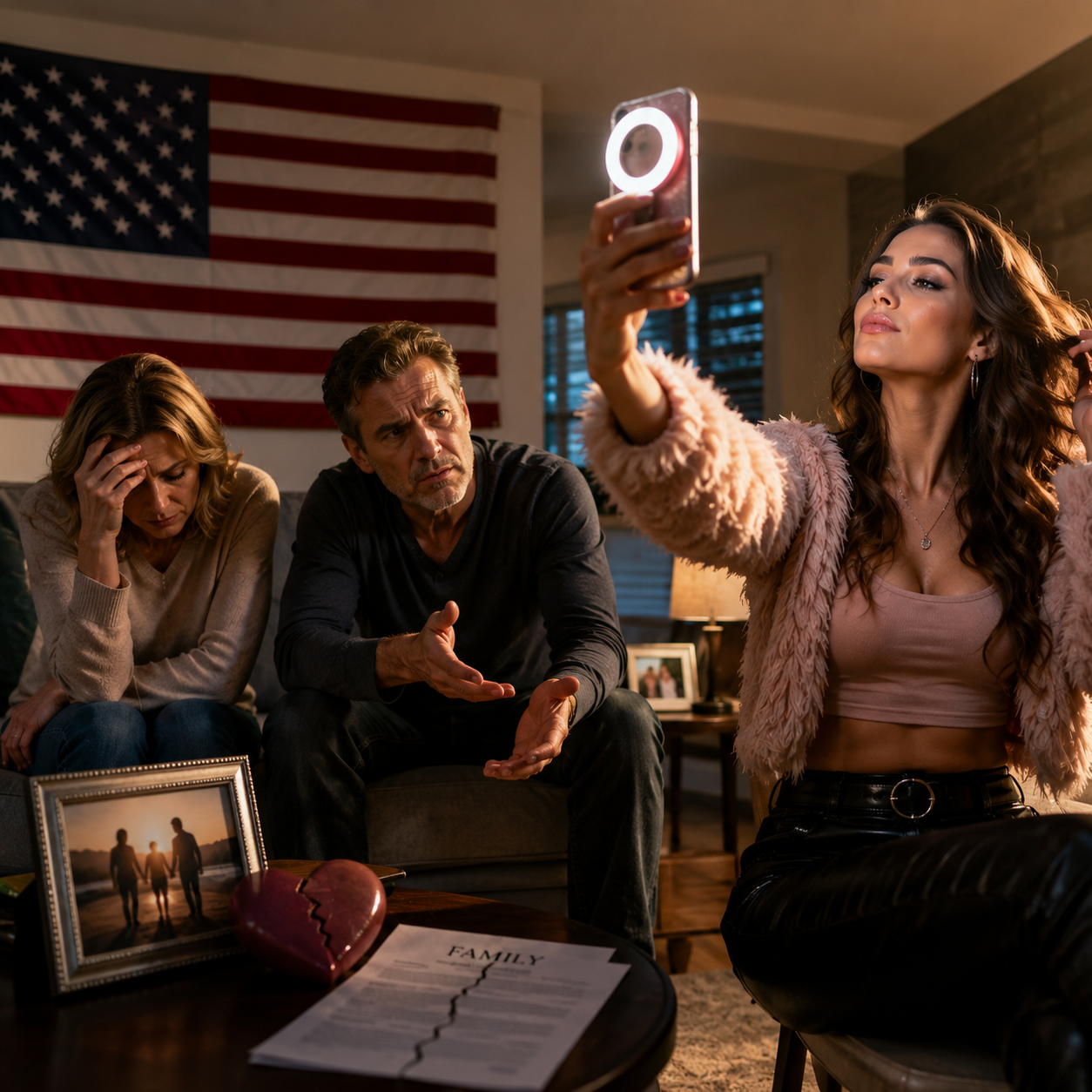
I never thought a phone screen could split a family in half.
When my daughter Mia first downloaded TikTok, I barely paid attention. She was sixteen, quiet, shy, and more comfortable with books and sketchpads than crowds or attention. She had always been the kind of girl who blushed when praised, the kind who hid behind her hair when relatives told her she was pretty.
So when she started making short videos with her friends, I thought it was harmless.
A few dances after school.
A few silly clips.
A few laughs.
Every teenager had something like that, I told myself. This was just her version of fun.
I had no idea that tiny app would become the thing that tore our home apart.
Before everything changed, our family was simple and close. My name is Greg. My wife, Lisa, and I had two children: Mia and Ethan. Mia was sixteen, thoughtful and reserved. Ethan was eleven, loud, curious, and full of energy. He loved space, video games, sports, and asking questions nobody was prepared to answer before breakfast.
Mia and Ethan had a bond I always admired. She looked after him like a second mother sometimes. She helped him with homework, listened to his strange theories about aliens, and laughed at jokes that made no sense to anyone but the two of them. He adored her. In his eyes, Mia was not just his big sister. She was his hero.
Our evenings used to be the best part of the day.
Dinner at the table.
Lisa telling stories from work.
Ethan interrupting everyone with random facts.
Mia smiling quietly, adding little comments that made us all laugh.
We were not perfect, but we were together.
Then Mia posted her first TikTok video.
It was nothing special, at least not to me. Just her and a few friends doing a dance to a trending song. She seemed nervous when she showed it to us, almost embarrassed. I remember smiling and saying, “That’s cute.”
The next morning, she came downstairs holding her phone with wide eyes.
“Dad,” she said, “it has ten thousand views.”
I laughed because I did not know what that meant.
To me, ten thousand views sounded impossible. To Mia, it sounded like a door opening.
After that, she posted more.
Then more.
Within weeks, her follower count jumped from a few hundred to ten thousand. Then fifty thousand. Then one hundred thousand.
At first, I was proud. I will admit that. My shy daughter had found something that made her feel seen. People liked her. They praised her. They called her pretty, funny, relatable, inspiring.
But slowly, the attention started changing her.
It was subtle at first.
She brought her phone to dinner more often. She checked notifications between bites. She stopped listening when Ethan talked. She stopped laughing at the little jokes that used to belong only to our family.
Then came the brand deals.
Small makeup companies.
Clothing boutiques.
Teen accessories.
Packages began arriving at the house with Mia’s name on them. She would film herself opening them, smiling at the camera in a way that looked practiced and unfamiliar. Her old shy smile disappeared, replaced by a polished expression she could turn on whenever the red recording light appeared.
I told myself she was just growing up.
Lisa told me the same thing.
“She’s building confidence,” Lisa said. “Let her enjoy it.”
I wanted to believe her.
But confidence was not what I saw.
I saw obsession.
Mia’s phone became an extension of her hand. She filmed before school, after school, during meals, in the hallway, in the car. She spoke in phrases that sounded borrowed from influencers twice her age.
“My audience needs consistency.”
“This is my brand.”
“You don’t understand engagement.”
She was sixteen years old, and suddenly she spoke like a marketing department.
The first time I felt truly uncomfortable was when she posted a video about an argument Lisa and I had in the kitchen.
It was not a serious fight. Just one of those tired-parent disagreements about bills, schedules, and who forgot to pick up groceries. But Mia had filmed part of it from the hallway and uploaded it with dramatic text across the screen.
“Parents think kids don’t notice the tension.”
The video got thousands of likes.
Strangers commented things like, “You’re so brave for showing real family life,” and “This is why parents need therapy.”
I felt exposed.
That was our home. Our private life. Our tired voices after a long day. And now strangers were analyzing it like entertainment.
I told Mia to delete it.
She rolled her eyes.
“Dad, it’s not a big deal. People relate to it.”
“It is a big deal,” I said. “You filmed us without asking.”
She sighed like I was being unreasonable. “That’s how content works.”
That sentence scared me.
Because to Mia, the word “content” had started to erase the word “family.”
After that, nothing felt safe.
If Ethan cried, I wondered if she was filming.
If Lisa and I disagreed, I checked the hallway.
If I tried to discipline Mia, she would sometimes glance at her phone like she was deciding whether my frustration could become a post.
The house began to feel less like a home and more like a stage.
Ethan noticed it too.
At first, he tried to compete with the phone. He would sit beside Mia and ask her to play video games. He would bring her drawings. He would ask if she wanted to watch movies like they used to.
Most of the time, she barely looked up.
“Later,” she would say.
But later never came.
One evening, I found Ethan sitting alone on the stairs with tears in his eyes.
“Dad,” he asked softly, “why doesn’t Mia like me anymore?”
The question broke something in me.
I sat beside him and pulled him into my arms, but I had no answer that would make sense to an eleven-year-old. How do you explain that his sister had not stopped loving him exactly, but had become addicted to strangers applauding a version of her that did not include him?
I tried talking to Mia again that night.
I told her Ethan missed her. I told her he was hurting. I told her fame meant nothing if it cost her the people who loved her before anyone knew her username.
She barely listened.
“He’ll get over it,” she said. “He’s just mad because I don’t have time to play with him all day.”
That was the moment I realized I was not reaching her.
The Mia I raised would have cared.
This Mia only checked her comments.
The final straw came a few weeks later.
I had asked Mia, again, to stop posting private family conflicts online. I tried to stay calm, but months of fear, hurt, and frustration had been building inside me.
“You are turning our lives into entertainment,” I said. “You are hurting your brother. You are hurting this family.”
Mia stood in the kitchen with her phone in her hand, her face cold.
“You just don’t want me to succeed,” she snapped.
“That is not true.”
“Yes, it is,” she said. “You can’t handle that I’m doing something important.”
I raised my voice then. Not because I wanted to scare her, but because I felt like my daughter was standing right in front of me and still somehow unreachable.
“Mia, this is not success if you have to destroy your family to get it.”
She did not answer.
The next day, I found out why.
She had recorded the argument.
But she did not post the whole thing. She edited it. She cut out the parts where I begged her to think about Ethan. She cut out the parts where I talked about privacy. She only posted the few seconds where my voice was raised.
The caption said:
“When your dad tries to ruin your future because he doesn’t understand your passion.”
The video went viral.
By that evening, strangers were calling me controlling, abusive, toxic, jealous, and bitter. People who knew nothing about me, nothing about my family, nothing about the months leading up to that moment, decided I was the villain.
Mia watched the comments pour in with shining eyes.
She did not look ashamed.
She looked validated.
That night, Ethan came to me again.
He looked smaller than usual, wrapped in a blanket on the couch, his eyes red from crying.
“Dad,” he whispered, “why is Mia doing this to us?”
I looked toward the hallway, where Mia’s door was closed and the faint sound of her recording voice drifted through the house.
And I knew I had to make a choice.
I could stay and keep trying to save Mia while Ethan continued breaking in front of me.
Or I could protect the child who was still reaching for me.
It was the hardest decision of my life.
I told Lisa I was leaving with Ethan for a while. We would stay with my parents. We needed space.
Lisa stared at me like I had betrayed her.
“She’s just a teenager,” Lisa said. “This is a phase.”
“It stopped being a phase when she started using us for views.”
Lisa shook her head. “You’re overreacting.”
I looked at her, exhausted and heartbroken.
“No,” I said. “I’m reacting too late.”
Packing that night felt like admitting defeat.
Ethan stood quietly by the door with his backpack in his hands. He looked sad, but beneath the sadness, I saw something that hurt even more.
Relief.
My son was relieved to leave his own home.
That was how bad things had become.
Mia did not come downstairs to say goodbye. She stayed in her room, probably filming, probably telling thousands of strangers that her father had abandoned her dream.
As I walked out with Ethan, guilt crushed my chest.
I felt like I was leaving my daughter behind.
But I also knew that if I stayed, I might lose my son completely.
The weeks that followed were quiet.
At my parents’ house, Ethan slowly began to breathe again. He played outside. He slept better. He smiled more. Sometimes he still asked about Mia, and every time he did, I felt the same sharp pain in my chest.
I missed my daughter.
Not the influencer. Not the public persona. Not the girl who had learned to turn pain into engagement.
I missed Mia.
The girl who drew pictures at the kitchen table.
The girl who used to read under a blanket with a flashlight.
The girl who once told Ethan that monsters were not real because she would fight them first.
Lisa stayed at the house with Mia. For a while, she kept defending her. She said the followers were growing. She said bigger brands were reaching out. She said Mia might really have a future in social media.
But then the internet did what the internet always does.
It got bored.
Mia needed bigger drama to keep people watching. Small family clips were no longer enough. Her followers wanted conflict. Tears. Accusations. Explanations.
The attention that had once made her feel powerful began demanding more from her than she knew how to give.
And without Ethan and me in the house, she had less content to exploit.
Her views dropped.
Her comments became cruel.
People who once called her brave began calling her fake. People who had defended her started picking apart her face, her voice, her clothes, her family, her story.
Fame had made her feel loved.
Then it reminded her that strangers do not love you.
They consume you.
Three months after Ethan and I left, Mia called me.
It was late. I almost did not answer. But when I saw her name, my hand froze, and then I picked up.
For a few seconds, neither of us spoke.
Then I heard her crying.
Not filming crying.
Not dramatic crying.
Real crying.
“Dad,” she whispered, “I think I ruined everything.”
I closed my eyes.
Part of me wanted to run to her immediately. Part of me was still so hurt that I could barely breathe.
“You hurt us, Mia,” I said quietly. “Especially Ethan.”
“I know,” she sobbed. “I know. I didn’t think it would go this far. I just liked feeling like people cared about me.”
That sentence broke my heart in a different way.
Because underneath the arrogance and obsession, there was still a lonely sixteen-year-old girl who had mistaken attention for love.
I told her healing would not be instant. I told her apologies would not erase what happened. I told her Ethan had the right to be angry and afraid.
But I also told her she was still my daughter.
A week later, Mia deleted most of the videos about our family. She posted one final message saying she had crossed boundaries, hurt people she loved, and needed to step away.
Some followers supported her.
Some mocked her.
Some forgot her immediately.
That was the lesson.
The internet moves on faster than the damage it helps create.
Mia started therapy. Lisa did too. Eventually, so did I. Ethan agreed to see Mia only when he felt ready, and the first visit was painfully awkward. He sat on the opposite side of my parents’ living room, quiet and guarded.
Mia looked at him with tears in her eyes.
“I’m sorry,” she said. “I should never have made you feel like you didn’t matter.”
Ethan did not forgive her that day.
And honestly, I was proud of him for not pretending.
Forgiveness should never be forced just because someone finally feels guilty.
But months passed, and tiny steps followed.
A short conversation.
A shared meal.
A movie night where nobody touched a phone.
A quiet apology that was not filmed, posted, edited, or performed.
Our family did not go back to the way it was.
Maybe no family ever truly goes back after something breaks that deeply.
But we began building something more honest.
Mia learned that attention is not the same as love.
Lisa learned that supporting a child does not mean ignoring the harm they cause.
Ethan learned that his pain mattered enough for someone to protect him.
And I learned that sometimes being a father means making a choice that feels unforgivable in the moment because staying would destroy the child still standing beside you.
I still carry guilt.
I probably always will.
But when I see Ethan laughing again, and when I see Mia trying, really trying, to become a person instead of a performance, I believe we still have a chance.
Not the old family.
Not the perfect one.
But a real one.
And this time, no camera gets to own it.
![[FULL STORY] I Switched My Husband’s Drink After I Heard Him Planning My Death](https://social-media.rabedo.com/thumbnails/1777501289_7aa24349-c107-4152-acd9-140ba0381154.png)
![[FULL STORY] My Ex Invited Me to His Wedding to Humiliate Me—So I Showed Up With His Children](https://social-media.rabedo.com/thumbnails/1776743312_D64.jpeg)