I didn't sleep that night.
I spent the hours between 1:00 AM and 6:00 AM sitting at my kitchen island, a cup of black coffee getting cold in my hand. The silence of the apartment felt heavy—not peaceful yet, but laden with the ghost of the life I thought I had.
Julia’s parting shot about my "unethical side-business" was buzzing in my brain like a hornet. I knew exactly what she was referring to. Three years ago, I’d helped a college friend set up the logistics for his small e-commerce startup. I’d done it on my own time, using my own equipment, and it had never once conflicted with my primary job. In fact, I’d disclosed it to HR at the time.
But "anonymous tips" aren't designed to be true. They’re designed to create smoke. And in the corporate world, people assume smoke means a fire.
At 7:00 AM sharp, I walked into the glass-walled office of my boss, Richard. He was a man who valued two things above all else: integrity and results. He looked like he hadn't slept much either.
"Mark," he said, gesturing to the chair across from him. "Sit down."
I sat. "Richard, I assume this is about the anonymous tip."
He sighed, tossing a printed email onto the desk. It was a mess of accusations. It claimed I’d been using company software and proprietary data to run a competing logistics firm. It was written with enough industry jargon to look credible to an outsider, but it had Julia’s fingerprints all over it. The phrasing—"systematic extraction of data"—was exactly how she talked when she was trying to sound smarter than everyone else.
"I know this is garbage, Mark," Richard said, rubbing his temples. "But HR has to investigate. Because of the seniority of the Director role we were discussing, the board is being... cautious. They’ve frozen the promotion process entirely until this is cleared."
I felt a surge of anger, but I forced it down. Julia was still trying to control the narrative, even from the wreckage of her own life.
"Richard," I said, my voice steady. "I disclosed that consulting work three years ago. I have the signed approval from the previous HR director in my safe deposit box. I never used a single line of company code. I’ll have the documentation on your desk by noon."
"I believe you," Richard said. "But there’s more. We received another call this morning. From a man named Marcus Miller? He’s claiming you’ve been harassing him and his wife. He’s threatening a restraining order and a lawsuit against the firm if we don't 'handle' you."
I almost laughed. Marcus was desperate. He was losing his wife, his house, and likely his job, and he was trying to use me as a scapegoat to prove to Elena that he was the "victim" of my "manipulation."
"Marcus Miller is having an affair with my wife, Richard," I said plainly. "Or rather, my soon-to-be ex-wife. She was his direct report. I exposed them last night at my anniversary dinner. Elena Miller, his wife, is already filing for divorce and has the evidence of their workplace misconduct. Marcus isn't threatened by me; he’s threatened by the truth."
Richard stared at me for a long beat. The tension in his shoulders dropped. "Jesus, Mark. You’ve been going through all this while keeping the department running at 110%?"
"Methodical," I said with a wry smile. "It’s what I do."
"Get me that paperwork," Richard said, standing up. "I'll talk to the board. And Mark? Take the rest of the week off. Sort your life out. When you come back, I want this mess behind you."
I walked out of the building feeling like I’d dodged a bullet, but the war wasn't over.
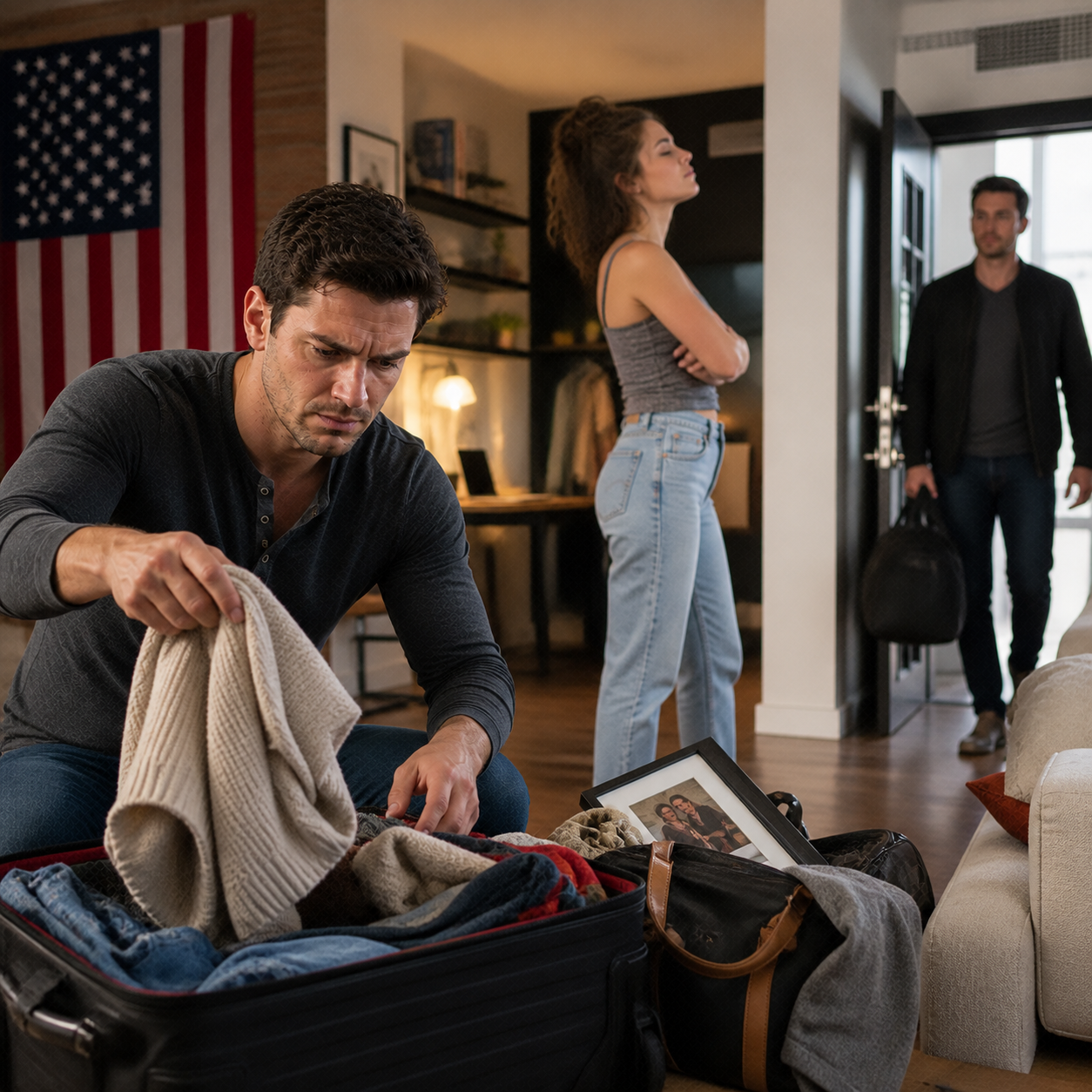
When I got home, the apartment had been tossed. Not by a burglar, but by a whirlwind. Julia had been there. She’d taken the television—which I’d bought. She’d taken the expensive espresso machine—which was a gift from my parents. She’d even taken the rug from the hallway. It was a petty, frantic attempt to "reclaim" something, anything, from the man she couldn't break.
But she’d left something behind. On the kitchen counter was a legal notice.
She wasn't just filing for divorce; she was suing me for "emotional distress" and demanding "emergency spousal support." Her lawyer—some bottom-feeder she’d clearly found on short notice—was claiming that my "six-month surveillance" had created a "hostile and traumatic living environment" that prevented her from working.
My phone buzzed. A private number.
"Hello?"
"You think you can just kick me out?" Julia’s voice was jagged, hysterical. "I’m at my parents' place in Ohio. They're horrified, Mark. My dad is talking to his friends in the JAG office. You’re going to be tied up in court for the next five years. I’ll make sure every cent you saved for that Director role goes to my legal fees."
"Julia," I said, leaning against the bare wall where our wedding photo used to hang. "You’re in Ohio? That’s a long drive. I hope you took the espresso machine with you. It makes great lattes for when you’re filling out unemployment forms."
"Screw you!" she screamed. "I’m going to tell everyone! I’ll go on social media! I’ll tell them you’re a cold, calculating freak who spied on his wife!"
"Go ahead," I said. "But before you post anything, you might want to check your email. I just sent you a little 'anniversary gift'."
I hung up.
What I’d sent her wasn't a recording of her mocking me. It wasn't a text to Marcus.
It was a copy of the pre-nuptial agreement we’d signed four years ago. The one she’d laughed about at the time, calling it "just a formality" because "we’re going to be together forever."
In that agreement, which I’d insisted on because of my inheritance, there was a specific "Infidelity Clause." It stated that in the event of documented adultery, the unfaithful party waived all rights to spousal support and any claim to pre-marital assets.
I’d had that document reviewed by three different lawyers over the last six months. It was airtight.
Ten minutes later, my phone started ringing again. Julia. Then her mother. Then her father. I blocked them all.
I spent the next three days in a whirlwind of my own. I changed the locks. I hired a professional cleaning crew to scrub every inch of the apartment, as if they could wash away the smell of her perfume and her lies. I met with my lawyer, handed over the mountain of evidence, and watched his eyes widen as he scrolled through the "Marcus" thread.
"This isn't a divorce case," he muttered. "This is a massacre."
By Friday, I was exhausted, but I felt a strange sense of lightness. I went to a small bar around the corner—a place Julia hated because it was "too blue-collar." I sat at the wood-paneled counter and ordered a bourbon.
The door opened, and Sarah walked in. She looked tired, but she smiled when she saw me.
"Hey," she said, sitting down. "I heard she moved to Ohio."
"Yeah," I said. "She’s currently trying to sue me for the air I breathe."
"She won't win," Sarah said, swirling her drink. "The office is a mess, Mark. Marcus was escorted out by security yesterday. Apparently, Elena sent HR a 'care package' that included company credit card statements. He’d been charging their hotel rooms to the firm as 'client entertainment'."
I shook my head. "The stupidity of people never ceases to amaze me."
"It’s not stupidity," Sarah said, looking at me intently. "It’s arrogance. They thought they were better than everyone else. They thought you were too 'predictable' to fight back."
We talked for an hour. It wasn't romantic—it was the conversation of two people who had survived a storm. Sarah told me she’d quit the firm. She couldn't stand the sight of the empty desks and the whispering. She was starting over.
"To starting over," I said, raising my glass.
"To starting over," she echoed.
I walked home that night under a clear sky. For the first time in six months, I wasn't looking over my shoulder. I wasn't wondering what Julia was doing. I was just... Mark.
But as I reached my door, I saw a package sitting on the mat. No return address. Just a plain brown box.
I took it inside, my "Analyst Mode" kicking back in. I opened it carefully.
Inside was a single, framed photograph. It was from our wedding day. But Julia’s face had been scratched out with something sharp—a key, maybe. And on the back, written in thick, black ink, were four words:
“This isn’t over yet.”


![[FULL STORY] My Wife Sat With Her Friends, Sneering, “We’ve Decided To Divorce You.” I Calmly Asked, “So None Of](https://social-media.rabedo.com/thumbnails/1776411068_d9207cb1-ed7a-4191-9729-fce41ef461b7.png)
![[FULL STORY] “I’ve found my real soulmate.You’re just a failure.”This message was sent to me by my girlfriend](https://social-media.rabedo.com/thumbnails/1776917090_6.png)