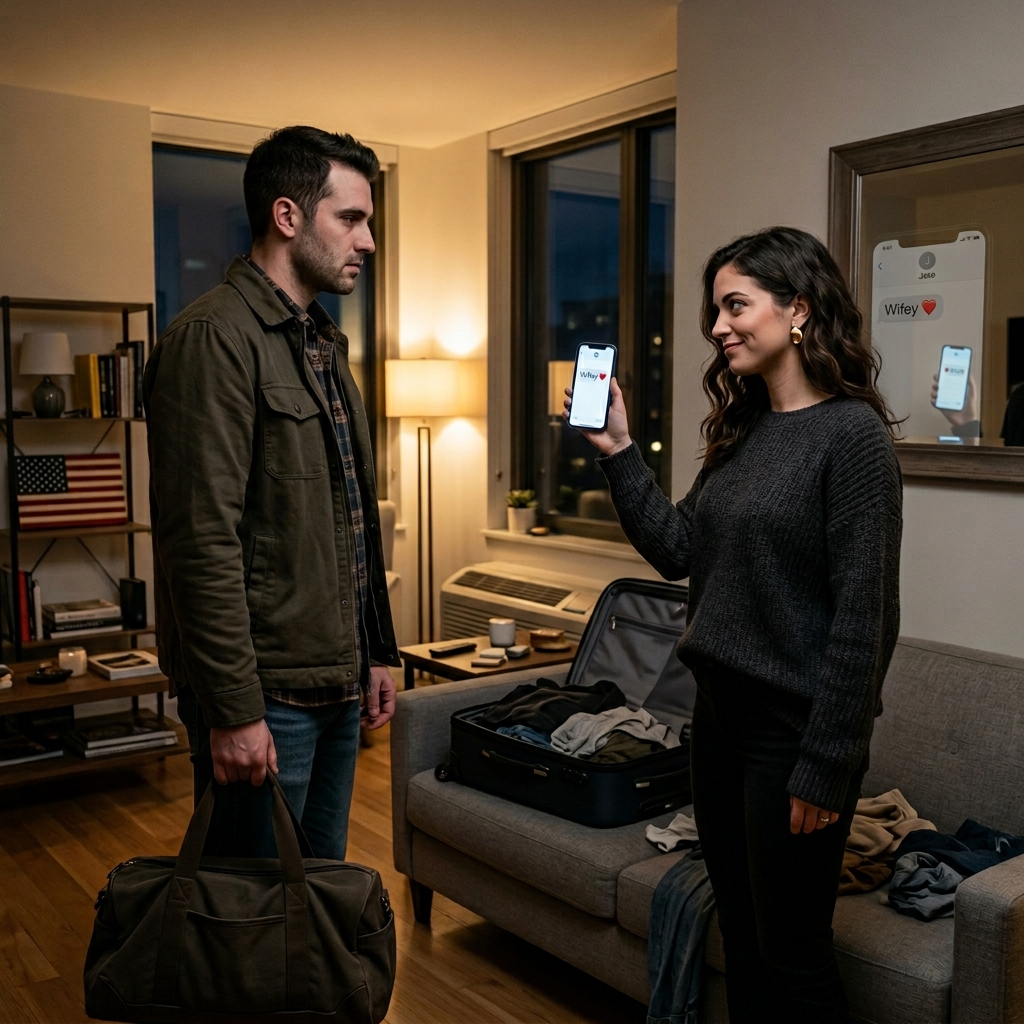
She thought I was blind.
I just hadn’t spoken yet.
—
My name is Victor. I’m 35, and I work as a risk consultant in Chicago. My job is built around identifying problems before they become obvious.
You don’t wait for something to break.
You look for the signs that it will.
Most people ignore those signs.
They assume everything is fine until it isn’t.
I don’t.
And that’s why I noticed.
Long before she thought I did.
—
We had been together for almost four years.
Living together for just under two.
From the outside, everything looked stable. Routine. Predictable. The kind of relationship people assume is secure.
But stability isn’t about appearances.
It’s about alignment.
And ours had started to shift.
Not dramatically.
Quietly.
—
The first change was timing.
Lena started coming home later.
Not drastically late.
Just… inconsistent.
Thirty minutes one night.
An hour the next.
Each time, there was an explanation.
Work.
Traffic.
Something that made sense individually.
But not collectively.
—
The first time I asked, I kept it simple.
“You’ve been getting home later,” I said.
She didn’t hesitate.
“Work’s been busy.”
“What changed?”
She shrugged.
“Nothing major.”
That answer wasn’t wrong.
It just wasn’t complete.
—
The second time, I asked something more specific.
“Who are you working with late?” I said.
She looked at me differently.
“Why?”
“Because it’s consistent,” I replied.
She smiled slightly.
“You don’t trust me?”
“I didn’t say that,” I said.
“You’re acting like it,” she replied.
—
That was the shift.
From explanation to defense.
From clarity to control.
—
After that, I stopped asking.
Not because I believed her.
Because I recognized the pattern.
—
If someone expects confrontation, they prepare for it.
And once they’re prepared, confrontation doesn’t give you truth.
It gives them control.
—
I didn’t want control.
I wanted clarity.
—
So I stayed quiet.
—
From her perspective, that confirmed something.
That I didn’t notice.
That I didn’t understand.
That I wasn’t paying attention.
—
From mine, it gave me time.
—
The second phase wasn’t about what she said.
It was about what she stopped hiding.
—
Her phone stayed closer.
Face down more often.
Notifications muted.
Quick responses followed by short explanations.
—
Again, none of that proves anything.
But patterns don’t exist without cause.
—
One night, she said she had a work dinner.
That alone wasn’t unusual.
But the way she said it was.
Too quick.
Too practiced.
—
“Where?” I asked.
She paused.
Then answered.
“Downtown.”
“Which place?”
She smiled.
“Why does it matter?”
I nodded.
“It doesn’t,” I said.
—
That was the last question I asked.
—
After that, I changed my approach.
—
I stopped engaging.
Stopped reacting.
Stopped participating in those conversations entirely.
—
Instead, I observed.
—
Not obsessively.
Just… consistently.
—
Times she left.
Times she returned.
Patterns that didn’t align.
—
The first confirmation came from something simple.
—
She texted around 9:30 one night.
“Still at dinner.”
—
I replied with “Okay.”
—
Then I did something I hadn’t planned.
I went downtown.
—
I didn’t go inside.
I didn’t need to.
—
I walked past the place she mentioned.
—
She wasn’t there.
—
I checked another place nearby.
—
That’s where I saw her.
—
Not with a group.
Not in a professional setting.
—
With one person.
Close.
Comfortable.
—
That was enough.
—
I didn’t go in.
Didn’t confront.
Didn’t call.
—
Because at that point, the conversation didn’t matter.
—
The pattern did.
—
The next phase wasn’t emotional.
It was structural.
—
I started making adjustments.
—
First, finances.
We had shared expenses.
I separated them.
Quietly.
—
Second, the apartment.
The lease was in my name.
She had moved in later.
—
I spoke to the landlord.
Prepared for a move.
—
Third, documentation.
—
Dates.
Times.
Transactions.
Patterns.
—
Not emotional.
Clear.
—
Because when you speak, it should be final.
—
The final confirmation came from something she didn’t realize mattered.
—
A message.
—
She left her phone on the counter.
It lit up.
—
I didn’t pick it up.
Didn’t open it.
—
But I saw enough.
—
“Same time tomorrow?”
—
That was it.
—
No explanation needed.
—
That night, I made the decision.
—
Not to confront.
To conclude.
—
Two days later, I told her.
—
We were sitting in the living room.
Normal setting.
Which made it easier.
—
“I’m moving out,” I said.
She looked at me.
Confused.
“What?”
“I’m ending this,” I clarified.
—
Her reaction followed the expected pattern.
—
Confusion.
Then denial.
Then irritation.
—
“Why?”
I looked at her.
“Because I understand what’s happening,” I said.
“You don’t,” she replied immediately.
“I do,” I said.
—
She laughed.
Nervous this time.
“You’re overthinking again.”
I shook my head.
“No,” I said.
“I’ve already thought it through.”
—
That slowed her down.
—
“What are you talking about?” she asked.
—
I leaned back slightly.
Then said it.
—
“I saw you,” I said.
—
Silence.
—
“Where?” she asked.
I didn’t answer immediately.
Because it didn’t matter.
—
“It doesn’t matter where,” I said.
“It matters that it happened.”
—
She tried to recover.
To explain.
To reframe.
—
“It’s not like that.”
“You’re misunderstanding.”
“You should’ve just asked me.”
—
I nodded.
“I could have,” I said.
“Then why didn’t you?”
—
I looked at her.
Then answered honestly.
—
“Because you thought I was blind,” I said.
—
Silence.
—
The last thing I told her before leaving was simple.
—
“I wasn’t,” I said.
“I just hadn’t spoken yet.”
—
I moved out that weekend.
No argument.
No scene.
Just execution.
—
A week later, she called.
Different tone.
Less confident.
—
“I didn’t think you knew,” she said.
“I did,” I replied.
—
She paused.
“Then why didn’t you say anything?”
—
I thought about that for a second.
Then answered.
—
“Because silence was more useful,” I said.
—
That was the last conversation we had.
—
Because at the end of the day, it wasn’t about catching her.
—
It wasn’t about proving anything.
—
It was about understanding the situation clearly enough…
—
That no explanation could change it.
—
She thought I was blind.
—
I just hadn’t spoken yet.
![[FULL STORY] My Girlfriend Said She Needed a Man With More Ambition. I Said, “I Need a Woman Who Can Recognize Value.” Three Months Later, She Begged to Come Back.](https://social-media.rabedo.com/thumbnails/1776936813_18.png)
![[FULL STORY] My Wife Said She Was Caring for Her Sick Mother — What My Daughter Showed Me Through the Window Ended Everything](https://social-media.rabedo.com/thumbnails/1777199965_453253fd-5145-4d29-86ad-11ef86897207.png)