
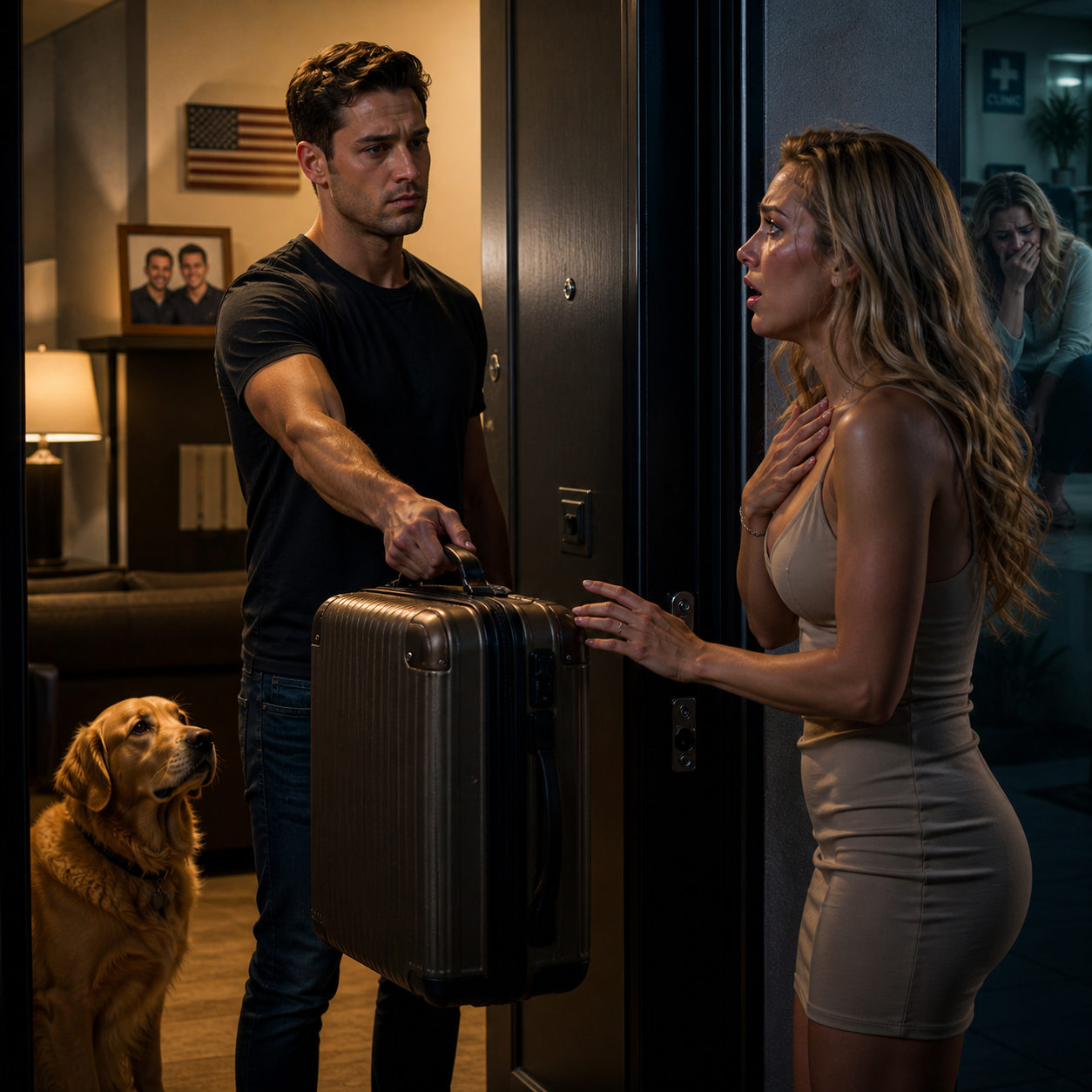
My girlfriend said, "Your grief is exhausting. I miss the old you." I said, "Then you should leave." 3 months after my brother's funeral, she turned my sorrow into an inconvenience. I opened the door, handed her a packed suitcase, and thought it was over. A week later, she was in my office lobby crying. Original post, I'm Travis, 34 M. My ex-girlfriend is Kelsey, 31 F. We were together a little over 3 years and lived together for 11 months in my apartment in Denver. The lease was in my name. I'm a physical therapist at a rehab clinic. Kelsey worked in event marketing and cared a lot about how things looked from the outside. In public, she was easy to like. She knew exactly how warm to sound and exactly how to look supportive.
At home, it was different. She liked comfort, plans, photos, and anything light. She did not like anything heavy unless she got praise for carrying it. My younger brother Mason died in a car accident in January. He was 29, married, one little girl. My mother called while I was at work, and from that moment life split into before and after. I did what needed doing because someone had to. I helped with the funeral, helped my sister-in-law Jenna with insurance forms, spent weekends at my parents' house fixing practical little things that suddenly felt huge to them. I took Mason's old lab Murphy because Jenna already had enough on her plate. I kept working, kept paying bills, kept functioning. Kelsey was patient for maybe 10 days.
After that, I became a problem she could not quite say out loud. She sighed when I canceled plans. She asked whether I really needed to spend another Saturday with my parents. She told me once that grief should not become my whole personality. What she really meant was this version of me was inconvenient. I stopped caring about date nights, weekend getaways, and being photographed for her social posts. I fell asleep early sometimes. I spent money helping Jenna with daycare twice a month and sending groceries to my parents when they were having rough weeks. We could afford it. I track everything. Kelsey still hated it because it was money and attention not being poured into the life she wanted back. The fight that ended it happened on a Sunday in April. I had just come home from my parents' house. My mother found one of Mason's old hoodies in a closet and collapsed crying, so I stayed longer than planned. I walked in around 8:00 carrying Murphy's leash and a bag of leftovers my aunt forced on me. Kelsey was at the kitchen island with her laptop open to a resort page for Sedona. Spa weekend, couples package. She had been pushing the trip for days. I kept telling her I wasn't up for it. She kept acting like I was undecided.
She asked if I had finally made up my mind. I said, "No, not now." She shut the laptop, looked at me for a second, and said she was tired of living in a memorial. I told her I wasn't asking her to come to my parents' place every time, and I wasn't stopping her from doing things on her own. She said that wasn't the point. The point was that I had become heavy, distant, exhausting. Then she said it clearly, "Your grief is exhausting. I miss the old you." I set the grocery bag down, took Murphy's leash off my wrist, and hung it on the hook by the door. Then I looked at her and said, "Then you should leave." She blinked like she honestly didn't understand the sentence, so I said it again. "If my grief is exhausting and you miss who I was before my brother died, then you should leave." At first, she laughed because she thought I was trying to scare her. Then she got angry. Said I was twisting her words, said any normal girlfriend would be struggling after 3 months of this, said she had needs, too, said she was allowed to want joy. I told her joy was allowed, contempt wasn't. Then I walked into the bedroom, pulled out the suitcase she used for work trips, and started packing. That was when the panic started. She followed me room to room saying I was having a breakdown. I wasn't. I was calmer than I had been in weeks. I packed methodically, dresses, toiletries, charger, makeup bag, shoes. She kept saying we needed to talk this through like the sentence hadn't already said everything for her. When I handed her the suitcase and an overnight bag, she switched to tears.
Asked where she was supposed to go. I said her sister Paige lived 20 minutes away and had a guest room. I knew because Kelsey complained about Paige using it for storage every holiday. She said I couldn't put her out over one bad sentence. I said it wasn't one sentence. It was the sentence that confirmed all the others. At the door, she made her last play. She said, "Mason wouldn't want this." That told me exactly who I was dealing with. I opened the door and told her not to use my dead brother to bargain with me. She left at 9:07 p.m. dragging the suitcase behind her. I locked the door, sat on the hallway floor with Murphy's head in my lap, and stared at nothing. The apartment was quiet in a new way, not peaceful yet, just honest. At 9:19, the texts started. "You are in shock. You need help. I didn't mean it like that. Please don't do this tonight." "You're punishing me for being honest." I replied once, "This relationship is over. Arrange pickup for the rest of your things this week. Do not contact my family." Then I muted the thread and went to bed still wearing my jeans. Update one, 3 days later, I found out Kelsey had been telling people I snapped. That was the word she chose, snapped, not left, not ended it, snapped. Like I was some unstable man broken by grief who threw out the woman trying to save him from himself. The first flying monkey was Paige. She texted from an unknown number saying Kelsey was devastated, and maybe I should give it a week before making permanent decisions. I replied, "This is permanent." She said my grief was exhausting and that she missed who I was before my brother died. There is nothing to discuss. The second was her friend Marissa who found me on LinkedIn and wrote, "I think in your current emotional state, you may be making choices you regret." That message went straight into a folder on my desktop labeled Kelsey. By then, I had started documenting everything. Texts, calls, voicemails, doorbell footage, dates and times. The moment someone starts telling people you are unstable, paperwork becomes self-respect. Kelsey came for the rest of her things that Thursday. I made it simple. Two boxes in the hall, one garment bag, one kitchen bin with the random drawer stuff people forget. I asked my friend Nolan to be there as a witness. Kelsey arrived looking fragile on purpose, puffy eyes, hair in a loose bun, no makeup, expensive denim. She walked in, looked at Murphy's bed by the couch, and started crying.
Then she asked if I was really okay doing this while I was still grieving. I told her grieving was exactly why I was doing it. That confused her. She expected grief to make me weaker, easier to guilt, more afraid of being alone. Instead, it had burned off my patience for pretending. She kept trying to get me alone in the bedroom to talk privately. I said, "No." Nolan stayed in the kitchen. I read each item from a checklist as she loaded her trunk. Cold, unromantic, perfect. Then she saw the framed photo of Mason and me at a Rockies game and started crying harder. She said she had only been trying to help me move on. I said moving on and being rushed are not the same thing. She said she couldn't live in a home where sadness was the center of every room. I told her no one had asked her to. Then she made it worse. She said, "I just thought by now you'd be trying harder." By now, 3 months, as if my brother had been a sprained ankle. Murphy got up from his bed and sat against my leg. I told Kelsey to take the rest of her things and leave. She stood there waiting for me to soften. I didn't. Eventually, she peeled out of the parking lot. That weekend, she posted an Instagram story about how some people weaponize their pain to avoid accountability. Then another about how loving someone through loss can destroy your own mental health. One mutual friend, Tessa, sent me screenshots. I saved those, too. The unexpected ally showed up Monday. Kelsey's mother, Dana, called and asked one direct question, "Did Kelsey really say your grief was exhausting?" I said, "Yes." Then she asked if Kelsey had used Mason's name at the door when she was leaving. I said, "Yes" again. Dana went silent for a few seconds, then said, "I buried my brother when I was 26. There are things you do not say to people in that kind of pain. I am sorry she said them to you." I thanked her. She told me Kelsey was insisting I had distorted the conversation. Dana said she didn't believe that because the denials sounded too rehearsed. Work got better, too. I took extra shifts because being useful felt better than sitting in the apartment listening to old silence. My director noticed and said I had a real shot at leading a new post-surgical program if I wanted it. I said, "Yes." Sorrow was still there every day. It was just cleaner without Kelsey talking over it.
Update about 2 weeks after the breakup, she stopped trying to look compassionate and started trying to win. She showed up at my clinic on a Tuesday morning pretending she needed physical therapy information for a family friend. Our receptionist recognized her from a photo on my desk I had forgotten to take down and buzzed me because she looked upset. I came into the lobby, saw Kelsey standing there with tears already loaded, and knew immediately what she was doing. She said she just wanted 5 minutes. I said no. She stepped closer and lowered her voice into that fake private tone she used in public. Said she had been loving and patient with me and I was rewriting our relationship because I needed someone to blame for my pain. I said, "Kelsey, this is my workplace. Leave now." Then she tried the line that got her escorted out. "Your brother is gone, Travis. You don't get to be gone, too." Reception froze. Two patients looked up. My coworker Elise came out from the treatment hallway because she heard my voice change when I repeated, "Leave now." Security arrived. Kelsey started crying the second they touched her elbow, told them she was my girlfriend and I was not in my right mind, that I needed help. Elise said clearly, "He asked you to leave twice. You need to go." Before lunch I requested the lobby footage from administration. Then came the voicemail campaign.
Unknown number after unknown number. Sometimes silence, sometimes breathing, sometimes little speeches about how grief was making me cruel. One voicemail said, "I know your light was on at 2:00 a.m. Are you even sleeping?" Another said, "If you ruin this over sadness, you'll regret it for the rest of your life." That was enough for a police report. The officer at the desk looked tired until I showed him the timeline. Texts, LinkedIn message, social posts, clinic incident, call logs from six different numbers over 9 days. He asked if I wanted it all attached. Yes, I did. 3 days later Kelsey escalated again. I met Tessa for coffee because she said there was something I needed to see. She handed me a screenshot from a group chat where Kelsey wrote, "He'll come back once he realizes nobody else will tolerate this version of him." That was the last piece I needed. My attorney, Caleb, sent a cease and desist the next morning. Cost me $325 for someone in a suit to say what I had already said for free. Stop contacting me. Stop appearing at my workplace. Stop misrepresenting my mental stability and stop sending people after me. For 4 days it worked. Then she saw me at dinner. Not alone. With Elise and two coworkers after a late shift. Just burgers on a patio, totally normal. Kelsey either followed me or got tipped off by one of her little information channels. She walked up in the red jacket I used to compliment and asked loud enough for nearby tables to hear, "If you can laugh with them, why was my support never enough?" I stood up, put cash on the table, and told Elise to stay seated. Then I said, "This is exactly why I had an attorney contact you. Leave." Kelsey reached for my wrist. I stepped back. She started crying again and told the entire patio I had abandoned her while she tried to love me through unimaginable pain. A waiter called the manager. The manager asked if we needed police. I said yes. When the officers arrived, Kelsey switched from sad to righteous. Said she only wanted closure. Said I had misread everything. Said grief had made me paranoid. The officer asked whether there had been prior contact. I handed him Caleb's letter on my phone. That helped. She got a trespass warning from the restaurant and was told not to contact me again. Caleb filed for a temporary protective order the next morning using the clinic footage, police report, voicemails, and Tessa's screenshot. Around the same time my promotion came through. Lead therapist on the post-surgical program. More money, better hours. I accepted the same day Caleb filed. Kelsey heard somehow and left one last voicemail saying, "Amazing how fast you got better once I was gone." Final update, the hearing came 6 weeks after the clinic incident. Kelsey showed up in a beige sweater, hair smooth, face gentle. The reasonable woman look. She brought a I brought Caleb, a binder, and emotional numbness. Her lawyer tried to frame it as heartbreak. A grieving boyfriend, a worried girlfriend, bad timing, misread signals, concern mistaken for harassment. He even used the phrase compassion fatigue like Kelsey had been doing volunteer hospice work instead of complaining that my dead brother had made weekends less fun. Caleb walked the judge through everything in order. The breakup text, Paige's message, Marissa on LinkedIn, the pickup checklist, the social posts, Dana's statement, the clinic footage, the voicemails from rotating numbers, the police report, the cease and desist, the restaurant trespass warning, the group chat screenshot where Kelsey said nobody else would tolerate this version of me. Then Caleb played the voicemail where she said, "I know your light was on at 2:00 a.m. Are you even sleeping?" The judge asked why she thought that was appropriate after being told not to contact me. Kelsey cried, said she loved me, said grief makes people push away the ones trying hardest, said she only wanted to save the relationship. The judge asked whether telling a man his grief was exhausting and that she missed who he was before his brother died sounded like saving him. Kelsey had no answer. Order granted. 1 year, no contact, no showing up at my home, clinic, or known routine locations. No third-party contact except attorneys. Outside the courthouse, Dana touched my arm and said, "I'm sorry for your brother and I'm sorry my daughter added to that pain instead of carrying any of it." I thanked her. 3 months later the apartment feels different. Grief did not end because a judge signed paper. Mason is still gone. His daughter is still growing up without her dad. My mother still has mornings she can't get through without calling me. Sorrow is not a villain you defeat. It is something you learn to carry without letting the wrong people make it heavier. Murphy sleeps by my couch every night. I still help Jenna with daycare twice a month. I still bring groceries to my parents when they are having hard weeks. I also got the promotion, painted the bedroom, started running again, and said yes to coffee with Elise after a Saturday volunteer fundraiser. Slow. Easy. No performance. Just two adults talking like pain is not a personal inconvenience. That alone felt revolutionary. What I learned is this. Sorrow shows you who can sit quietly beside you and who needs you cheerful so they can keep enjoying themselves. Some people do not mind your pain. They mind your pain when it interrupts their access to comfort, attention, money, trips, photos, and the polished life they plan to post. They call that concern. They call it honesty. They call it helping you move on. What they really mean is be sad in a way that is easier for me. My brother died. That was the original wound. Kelsey just proved she was never someone I should bleed near.

![[FULL STORY] “If You Love Me, You’ll Accept My Ex” — So I Let Her Plan It… Right Into Nothing](https://social-media.rabedo.com/thumbnails/1776864571_4543fe93-ef36-4d88-bc2c-be968d2fd342.png)


![[FULL STORY] My Wife Said I Couldn’t Afford a Lawyer—Then My Brother Walked Into Court](https://social-media.rabedo.com/thumbnails/1777349821_79685f54-b793-47e6-966c-8b6dbaa5b866.png)