The first time Noah Callahan heard the words that would destroy his future, he was folding laundry.
Not dramatic laundry. Not symbolic laundry. Just regular, warm laundry pulled from the dryer too late at night. His shirts. Her leggings. A towel that still smelled faintly like the lavender dryer sheets Haley always bought because she said the apartment felt more like home when everything smelled soft.
Then his laptop pinged.
A message appeared on the screen.
Don’t marry her.
No punctuation. No explanation. Just four words.
The sender was Delaney Carter.
Noah sat very still, a damp sock in one hand, staring at the name. Delaney was not a close friend. She was not an enemy either. She was a woman from Haley’s college years, the kind of person people called blunt when what they really meant was dangerous to anyone who preferred lies to stay comfortable.
Noah had barely spoken ten words to her in four years.
From the bathroom, he could hear Haley laughing softly to herself, humming a Fleetwood Mac song while the shower ran. Their wedding was nineteen days away. The honeymoon was booked. The playlist was almost finalized. The guest count had been argued over, confirmed, and argued over again. There were matching mugs in the cabinet with Mrs. Callahan written across one in cursive letters.
Everything in his life looked stable.
Until those four words.
Noah typed back, What are you talking about?
The answer came fast.
Meet me. Riverside Park. Come alone.
She did not say please.
She did not have to.
Autumn had settled into Portland by the time Noah reached the park. The air was sharp, the trees half bare, the walking path scattered with red and gold leaves that looked too bright against the gray sky. Delaney was waiting near a bench, wearing jeans, a hoodie, and the expression of someone who had decided kindness would be less merciful than truth.
She did not greet him.
She just held out her phone.
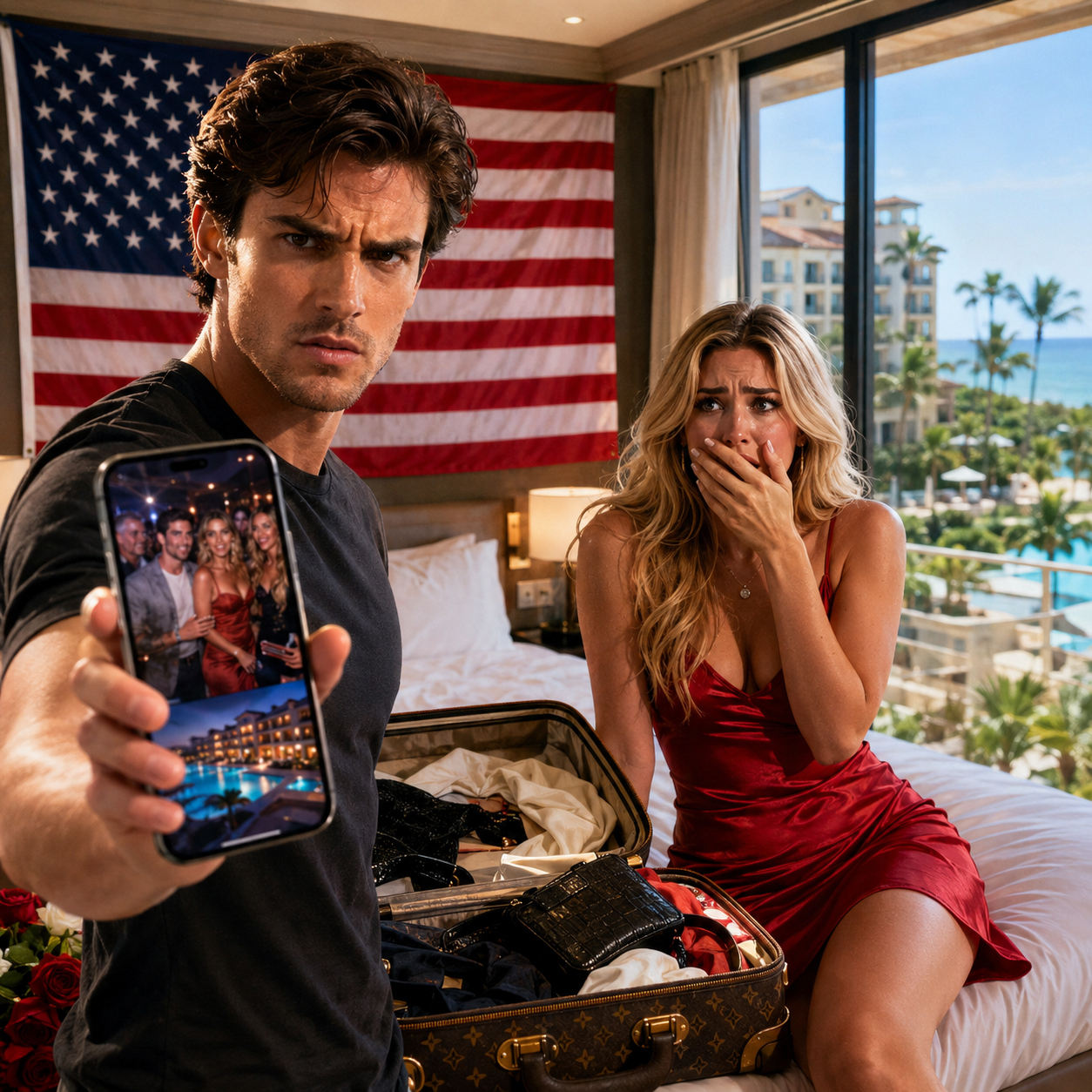
The first photo hit him like a physical blow.
Haley was in a crowded club, wearing a glittery bride-mode sash across her chest. She was sitting in a booth, one leg draped over a man dressed like a fake firefighter. His shirt was open. Her mouth was pressed against his. One of his hands had disappeared beneath the hem of her dress.
Noah stared at the screen, unable to breathe.
Delaney swiped.
Another photo.
Haley dancing on a table barefoot, her head thrown back, laughing like the world had no consequences.
Another.
Haley outside the club, leaning into the same man, his arm wrapped around her waist.
Another.
Haley getting into an Uber with him.
“That was Saturday night,” Delaney said. “She told everyone it was just tequila and dancing. But she went home with him. We all saw it.”
Noah’s fingers went cold.
“She asked people to delete the pictures,” Delaney continued. “Called it her final fling. Like it was cute. Like it was normal.”
Noah did not yell. He did not curse. He did not throw Delaney’s phone into the river or demand details he was not ready to hear.
He just nodded once.
Then he walked away.
That night, he did not go home.
Haley texted around midnight.
You okay? You’re not home.
Then another.
Please tell me you’re just at your brother’s.
Then another.
Babe?
Noah was in a roadside motel an hour south of the city, lying on top of a stiff blanket, staring at a water-stained ceiling while the photo replayed behind his eyes. The kiss. Her closed eyes. The hand under her dress. The casual cruelty of knowing she had gone home afterward and crawled into the life he still thought they were building.
The next day, her tone changed.
You’re scaring me.
Where are you?
If this is about Saturday, we can talk.
Still, he said nothing.
On day three, he turned his phone back on.
It rang within seconds.
Haley’s voice was trembling when he answered.
“Noah, please. Just let me explain.”
He said nothing.
“I was drunk. I didn’t mean to. It wasn’t what it looked like.”
“You left with him,” Noah said quietly.
A pause.
“No. I mean yes, but I didn’t sleep with him. That’s not what matters.”
“Then what is?”
“You’re really going to throw everything away?”
Noah closed his eyes.
“You already did.”
Then he hung up.
After that, Haley unraveled in waves.
Some messages were sobbing apologies. Some were furious accusations. Some were strange attempts at bargaining.
One voicemail stayed with him longer than the others.
You can sleep with someone too. Just once. Anyone. I won’t ask questions. Please come back.
Noah listened to that message twice, not because he was tempted, but because he needed to understand what kind of person thought betrayal could be balanced like a receipt.
She was not offering remorse.
She was offering math.
A week later, the door to his office opened.
It was not Haley.
It was her mother.
She stood there in a cream coat, her purse hooked over one arm, polished and composed like she had walked out of a luxury catalog.
“We need to talk,” she said.
Noah led her to the loading dock behind the office, away from coworkers and glass walls. The space smelled faintly of printer ink, cardboard, and rain.
“Haley is not well,” her mother began. “She’s barely eating. She’s shaking. She sobs constantly.”
Noah looked at her blankly.
“She made a mistake,” the woman said.
“No,” Noah replied. “She made a series of choices, then tried to hide them under lies.”
“She didn’t sleep with him. She swears.”
“I don’t believe her. That’s the point.”
Her mother’s mouth tightened.
“It was one lapse in judgment.”
“You know what I was doing that night?” Noah asked. “Finalizing the playlist. Choosing which version of our vows sounded more like us.”
For the first time, her mother blinked.
Then she recovered.
“You were always a little cold, weren’t you?”
Noah almost laughed.
“She planned every petal, every napkin, every hashtag. I followed her lead. If I’m cold now, maybe it’s because I finally realized I was engaged to someone who cared more about looking like a bride than becoming a wife.”
Her mother’s face hardened.
“You’re making a mistake.”
“No,” Noah said. “I’m correcting one.”
The next night, Haley’s father found him outside the motel, leaning against an Audi like this was a business negotiation.
“You embarrassed her,” he said. “You humiliated our family.”
Noah took a slow drag from his cigarette.
“No. She did that.”
“We spent nearly forty thousand dollars on this wedding.”
“Congratulations.”
“You owe us.”
Noah laughed softly.
“You’re coming to me like I cheated.”
“She’s still willing to forgive you.”
“How generous.”
“She’s your fiancée.”
“Was,” Noah corrected.
The man stepped closer.
“Listen, son.”
Noah dropped the cigarette and crushed it under his boot.
“I’m not your son. And if you think you can threaten me into marrying your daughter, go ahead and try.”
Haley’s father stared at him.
“You think this is over?”
Noah met his eyes.
“I’m counting on it.”
But it was not over.
Three days later, Haley showed up outside the motel.
I’m outside. Just five minutes.
Noah looked through the blinds.
She was sitting in her white Lexus, both hands gripping the steering wheel like she was holding herself together by force. Her makeup was perfect, but her face looked wrong beneath it. Too controlled. Too sharp. Like grief dressed up for a performance.
He opened the door.
Inside the car, Haley whispered, “I miss you.”
“No,” Noah said. “You miss control.”
Her lip trembled.
“If it helps, you can sleep with someone.”
Noah turned to look at her.
“Excuse me?”
“Anyone. Just once. I won’t ask questions.”
“You think that makes us even?”
“I think it’s a peace offering.”
“No. It’s pathetic.”
She flinched.
“I’m trying.”
“You’re bargaining.”
“I love you.”
“No,” he said. “You love winning.”
She reached for his hand.
He pulled away.
“You handed me a hall pass like a coupon. That’s not love, Haley. That’s strategy.”
Her face hardened.
“You’re heartless.”
“No. I finally stopped lying to myself.”
Then she slapped him.
It was not hard enough to injure him, but it was hard enough to clarify everything.
“I hate you,” she whispered.
Noah smiled bitterly.
“I believe you.”
Then he got out of the car and walked away.
After that, the desperation became harassment.
Voicemails. Emails. Messages from new numbers. Surprise visits. Public tears. Private threats. Every time Noah stayed silent, Haley escalated.
One morning, she appeared in the parking lot outside his workplace, wearing heels and a trench coat, pretending she had come for closure.
Noah did not even stop walking.
“Come one step closer and I’ll call the police.”
“You’d really do that to me?”
“I should have done it weeks ago.”
That night, Noah met with a lawyer in a small office above a dry cleaner. He laid out everything. Screenshots. Voicemails. Doorbell footage. Messages from her family. The slap. The workplace visit.
The lawyer clicked through the evidence slowly.
“You have more than enough,” he said.
“She’s not dangerous,” Noah said. “She’s unraveling.”
“Unstable people become unpredictable,” the lawyer replied. “You don’t have to hurt her. But you do have to protect yourself.”
Two days later, Haley was served with a restraining order.
No contact. No visits. No third-party messages. No workplace appearances.
Noah thought that might finally end it.
He was wrong.
The next week, he had just poured his coffee at work when the receptionist called down the hall.
“She says she’s your fiancée.”
Noah stepped out with his mug still in hand.
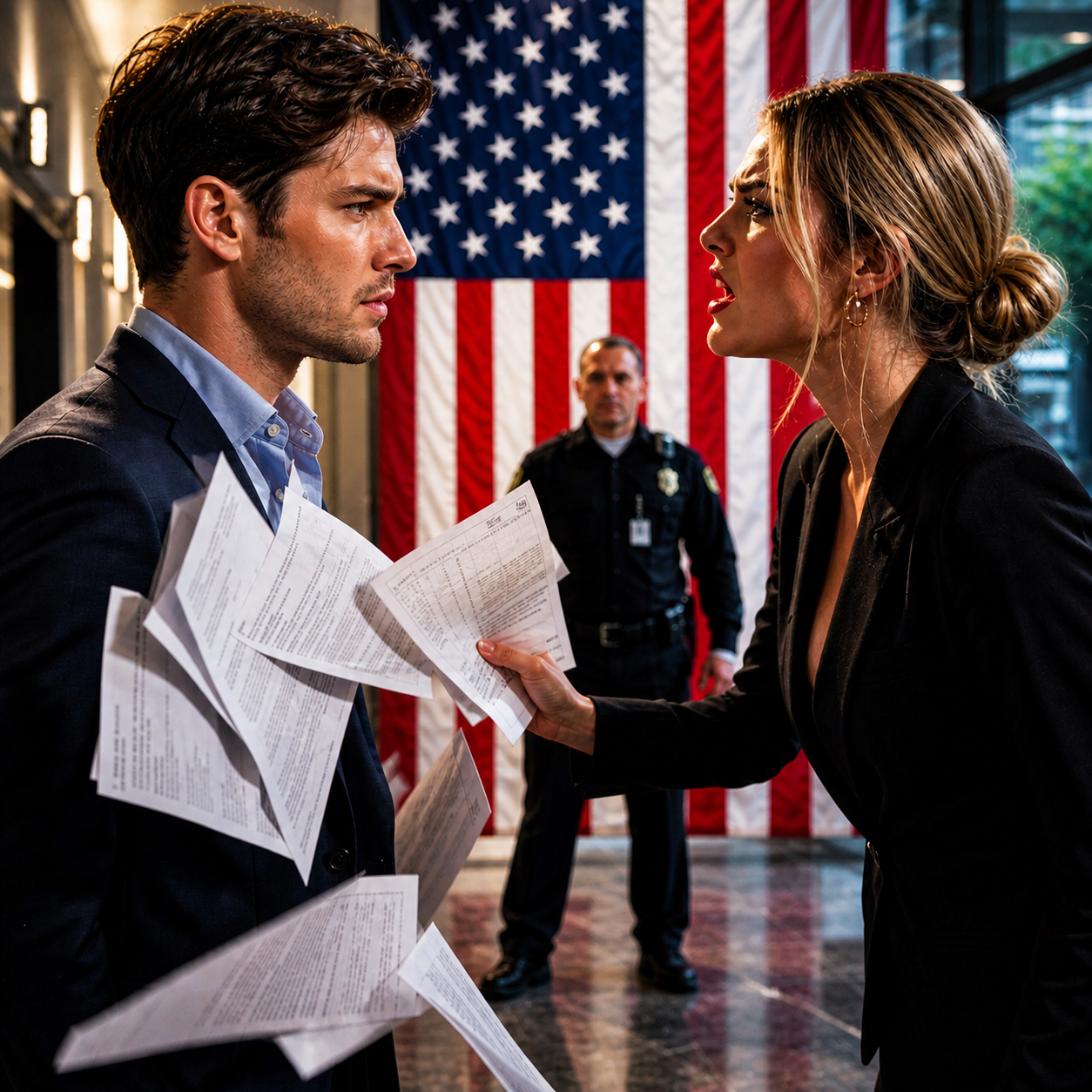
Haley stood near the front desk in a black blazer, red lipstick, and a posture so stiff it looked painful. In one hand, she held a stack of wrinkled legal papers.
Without a word, she threw them at his chest.
They scattered across the tile.
“You want war?” she hissed. “Fine. You’ve got it.”
Noah picked up the top page.
Monroe v. Callahan.
Civil claim.
Emotional distress.
Damages: $28,400.
“You’re suing me,” he said.
“We are suing you,” she snapped. “You humiliated me. You abandoned me. You ruined my reputation.”
“You ruined your reputation in a club bathroom mirror with a bride sash on.”
“I made one mistake.”
“You made it publicly, then lied privately.”
Her eyes narrowed.
“You think you’re the victim?”
“I was,” Noah said. “Until I walked away.”
Security was already moving toward them.
Haley jabbed a finger toward him.
“You think I’m done?”
Noah looked at her with a calm that made even the guard slow down.
“It ended the moment you let another man touch what you promised was mine.”
Later that day, the lawsuit papers sat on his lawyer’s desk.
The attorney barely needed five minutes.
“This is weak,” he said. “No contract tying you to her parents’ wedding expenses. No legal damages. She’s hoping you’ll settle to make her go away.”
“So what do we do?”
“We don’t blink.”
Noah did not blink.
He posted one sentence online.
The wedding is cancelled. Please respect our privacy. There will be no further statements.
The fallout was immediate.
Haley’s sister messaged first.
You’re destroying her. She hasn’t eaten in days. She’s barely human right now.
Noah did not reply.
Then came friends.
Some asked what happened. Some accused him of being cruel. Some repeated Haley’s version, where she was a heartbroken woman punished for one drunken mistake by a cold man who cared more about pride than love.
Noah stayed silent until Delaney contacted him again.
She sent one message.
Do you want the rest?
There was more.
Not just photos. Videos. Group chat screenshots. Haley laughing about her “final fling.” Haley telling her bridesmaids that Noah would “get over it because he’s too stable to leave.” Haley asking everyone to delete proof before “Mr. Accountability” found out.
Delaney had kept everything.
“I wasn’t going to get involved,” she told him later. “Then she started calling you abusive. I’m not letting her rewrite it.”
Noah gave the evidence to his lawyer.
The civil case collapsed before it ever became a real fight.
Haley’s attorney withdrew quietly after seeing the videos and messages. Her father stopped calling. Her mother sent one stiff email saying the family would no longer pursue reimbursement. It did not include an apology.
Haley tried one last time.
A letter arrived at Noah’s apartment three weeks later. Handwritten. Six pages.
It began with I’m sorry.
Then became I was scared.
Then became You abandoned me when I needed you.
Then became I hope one day you understand what you did to us.
Noah read it once.
Then he folded it, placed it in the evidence folder, and closed the drawer.
He did not answer.
Six months later, Noah had moved into a different apartment on the east side of the city. Smaller than the place he and Haley had chosen together, but quieter. The wedding gifts had been returned. The honeymoon cancelled. The matching mugs thrown away.
At first, the silence was unbearable.
Then it became clean.
He rebuilt slowly.
Morning runs. Dinners with his brother. Therapy on Wednesday evenings. Work that no longer felt like a place to hide, but a place to grow. He stopped explaining himself to people committed to misunderstanding him.
Delaney reached out once more, months later.
I heard she moved away.
Noah stared at the message.
Then typed back, I hope she learns something.
Delaney replied, That’s generous.
Noah looked around his apartment. The open window. The half-finished book on the coffee table. The laundry basket in the corner, full again, ordinary again.
Maybe it was generous.
Or maybe it was simply freedom.
Because he no longer needed Haley punished to know he had survived her.
A year after the cancelled wedding, Noah drove past the venue by accident. There was another wedding happening there. Guests in suits and dresses. Flowers near the entrance. A bride laughing beneath the white arch where Haley was supposed to become his wife.
For a moment, he felt the old ache.
Not for Haley.
For the version of himself who had stood so close to marrying a lie.
Then his phone buzzed.
A text from his brother.
Dinner tonight? Mom’s making pasta. Don’t be late.
Noah smiled.
He drove on.
That night, surrounded by family, warm food, and people who did not ask him to justify his pain, Noah realized the truth.
Walking away had not destroyed his life.
It had returned it to him.
Haley had called it one mistake.
But a mistake is forgetting a date, burning dinner, taking the wrong exit.
What Haley did was not a mistake.
It was a choice.
Then another.
Then another.
And when consequences finally arrived, she tried to call them cruelty.
Noah no longer accepted that.
Love does not demand that you ignore betrayal to prove loyalty. Forgiveness is not something owed to someone who is only sorry after being exposed. And a wedding is not a cure for dishonesty. It is a spotlight that makes dishonesty more expensive.
Noah lost the wedding.
He lost the future he thought he was building.
But he kept himself.
And in the end, that was the only vow that mattered.
![[FULL STORY] My girlfriend's sister came to me crying during our engagement ceremony.She placed something in](https://social-media.rabedo.com/thumbnails/1776997295_C6.png)
![[FULL STORY] My Fiancée Giggled: "I've Been Involved With Your Father for Half a Year " At Supper, I Responde](https://social-media.rabedo.com/thumbnails/1776918028_4.png)